REVIEW · HONG KONG SAR
Introduction to Watchmaking
Book on Viator →Operated by Amplitude - Watch Experience · Bookable on Viator
A day with a watchmaker beats another checklist. In a hands-on workshop in Sheung Wan, you take apart a Swiss pocket watch movement and put it back together with expert guidance.
I especially like that it’s practical, not just talk: you use screwdrivers and tweezers on a real manual-wind ETA 6497 movement. I also like that the session is described as tailor-made, so the pace feels suited to beginners through enthusiasts.
One thing to consider: this is only about 2 hours 30 minutes, so you’ll finish with a strong start and real confidence, not full “be able to repair anything” mastery. Also, it needs good weather, which can matter even for an urban activity depending on day-of conditions.
In This Review
- Key highlights at a glance
- A Workshop Day in Sheung Wan: Watchmaking in Hong Kong
- From Pocket Watch to Workbench: What You’ll Do Step by Step
- The ETA 6497 Movement: Why This Swiss Model Matters
- Tools and Technique: The Stuff That Makes Reassembly Click
- Meeting Point and Timing: Making the Most of 2 Hours 30 Minutes
- Private by Design: Who This Works Best For
- Price and Value: Is $236.16 Worth It?
- Practical Comfort: Getting There and Staying Smooth
- Should You Book Amplitude – Watch Experience?
- FAQ
- Where does the watchmaking workshop start?
- How long is the watchmaking experience?
- What movement will I work with?
- Is this a private activity?
- Do I get a mobile ticket?
- What’s the booking lead time like?
- Is there free cancellation?
Key highlights at a glance
- Private, hands-on workshop in Hong Kong focused on taking apart and reassembling a movement
- Manual-wind ETA 6497 Swiss movement is the star of the show
- You work with screwdrivers and tweezers, learning correct handling as you go
- Expert coaching includes crucial dos and don’ts during reassembly
- Mobile ticket and a simple start/end back at the meeting point
A Workshop Day in Sheung Wan: Watchmaking in Hong Kong
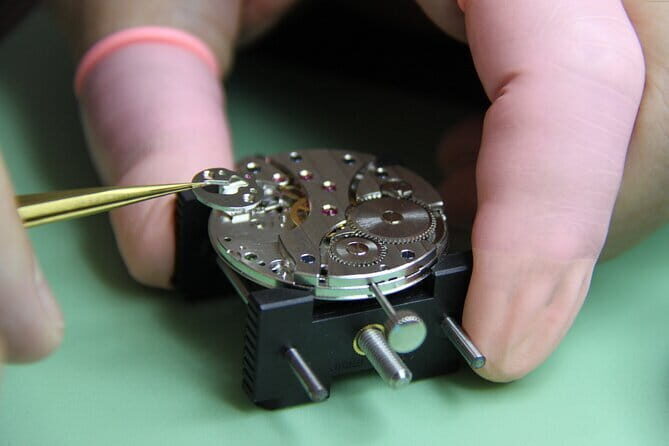
Hong Kong is famous for shopping and skyline views, but it also has a quieter side for people who like precision. This workshop is based in Sheung Wan, a neighborhood that’s easy to reach by public transit and feels like “real Hong Kong,” not a theme-park version of it.
The experience itself is straightforward: you spend the time at a bench, not sitting through slides. The setup is a tailor-made workshop, and the goal is simple—help you understand what mechanical watches actually do when they tick.
If you’ve ever wondered why small springs, gears, and levers matter, this is the kind of activity that answers that question with your hands.
You can also read our reviews of more tours and experiences in Hong Kong SAR.



From Pocket Watch to Workbench: What You’ll Do Step by Step
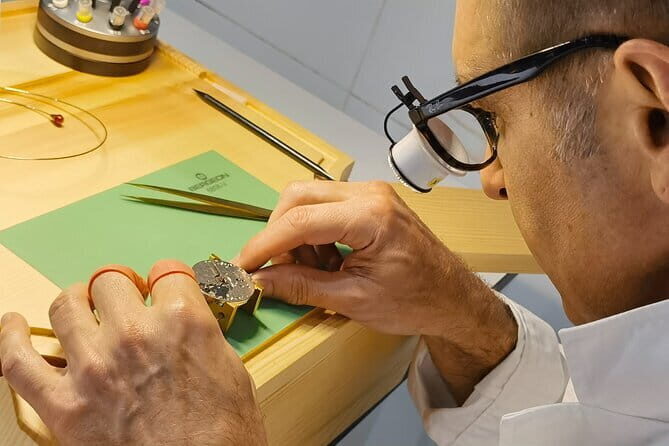
The heart of the course is disassembly and reassembly of a watch movement. You’ll become a watchmaker for the day, working under guidance while you take apart a Swiss pocket watch movement, then put the pieces back together.
Here’s the practical flow you can expect:
- You’ll learn the movement’s basic structure first, then start taking it apart
- You’ll handle components using screwdrivers and tweezers
- You’ll reassemble the movement with instruction and correction as needed
- You’ll connect what you’re seeing to how mechanical timekeeping works
This is not about memorizing names only. The value is that the mechanics start to make sense because you’ve handled the parts in the order they come apart and go back together. That mental map is what you want if you’re trying to read a watch’s behavior later.
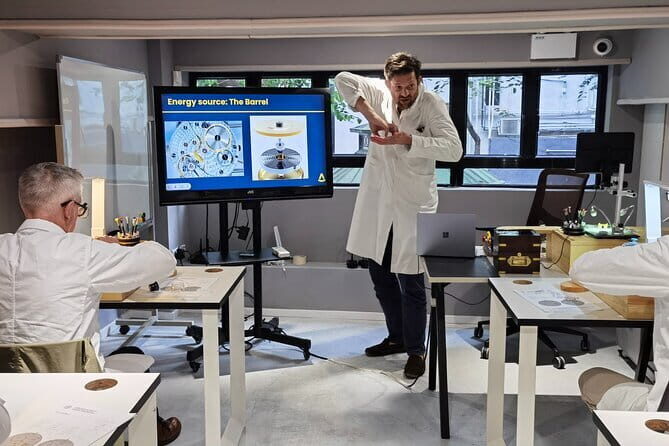
The session also includes history and context—enough to frame what you’re working on—so the technical work doesn’t feel random. You come away seeing mechanical watches as engineered systems, not just objects with a face.
The ETA 6497 Movement: Why This Swiss Model Matters
You’re working with a manual-wind ETA 6497 Swiss movement. That choice matters because it’s mechanical in a way that’s easy to learn from: it’s built around parts that do visible, logical jobs, and you can follow how energy moves through the system.
Even if you’re brand new, using a movement like this can help you understand big concepts quickly:
- What “winding” really changes inside the watch
- How components interact as one mechanism, not isolated pieces
- Why careful handling affects how everything behaves during reassembly
If you already like watches, you’ll likely appreciate that you’re not just opening a generic prop movement. ETA 6497 is a well-known workhorse platform, and learning on something like this can make later watch reading feel more intuitive.
Tools and Technique: The Stuff That Makes Reassembly Click
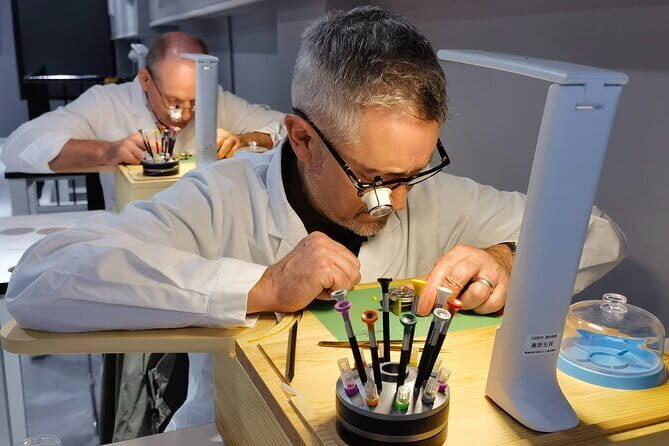
You’ll use a set of screwdrivers and tweezers, and the way you handle parts is part of the lesson. One of the strongest themes from the experience is guidance during reassembly—especially the small decisions that can make or break getting a movement back into working order.
In particular, the review feedback highlights a guide named Renaud, who guided the reassembling process and called out crucial dos and don’ts. That’s exactly what you hope for in a workshop like this: not just instructions, but the specific common mistakes to avoid.
A real-world tip you can take into the session:
- Move slowly on the parts that matter most for alignment and placement
- Treat tweezers like precision instruments, not “grabbers”
- If something feels off during reassembly, pause and ask rather than forcing it
Even though the workshop doesn’t claim to make you a repair professional, that kind of technique advice is what turns an interesting activity into useful knowledge you’ll actually keep.
Meeting Point and Timing: Making the Most of 2 Hours 30 Minutes

The workshop meets at Amplitude – Watch Experience, 64 Bonham Strand, Sheung Wan, Hong Kong. It ends back at the meeting point, so you’re not hopping across town trying to connect dots while you’re focused on tiny parts.
The duration is about 2 hours 30 minutes. That timing is a sweet spot for this kind of hands-on learning. You get enough time to:
- see how a movement is structured
- perform the disassembly steps without rushing
- come back through reassembly and finish with real understanding
But you also need to treat it like a “do the work” session. If you show up distracted, late, or expecting a fast photo-op, you’ll miss the learning. This is the kind of class where paying close attention is the difference between having fun and leaving with actual confidence.
Also note the ticket format: it uses a mobile ticket, which makes it easy to manage on your phone.



Private by Design: Who This Works Best For

This is listed as a private tour/activity, meaning only your group participates. That matters more than it sounds. When you’re working with small components, interruptions and waiting can get frustrating. A private format helps you get guidance when you need it, rather than competing with other schedules.
This experience is a good fit for:
- watch enthusiasts who want to understand how a movement is built
- complete beginners who want a true starting point
- curious travelers who like practical crafts instead of museum-only days
It’s also described as “most travelers can participate.” The data doesn’t specify age minimums or physical requirements, so if you have fine-motor limitations or concerns about standing and focusing, you’ll want to ask before booking.
And if you travel with a service animal, that’s supported.
Price and Value: Is $236.16 Worth It?

The price is $236.16 per person for a roughly 2.5-hour hands-on workshop. That isn’t cheap, but it can be fair value when you consider what you’re paying for: expert instruction, a real movement to work on, and time at a bench using tools.
Here’s how I judge value for workshops like this:
- Are you doing the work yourself, or just watching? (Here: you’re actively disassembling and reassembling.)
- Do you get coaching for mistakes? (Here: reassembly guidance and dos/don’ts are highlighted.)
- Do you leave with knowledge you can use? (Here: the goal is deeper understanding of mechanical watches.)
If you just want a quick souvenir or a casual look at watch parts, this price may feel steep. But if you’re the kind of person who keeps a curiosity about how things work, the money buys direct experience—one of the best kinds of travel value.
The average booking lead time is about 27 days in advance, which suggests it’s popular enough to plan ahead.
Practical Comfort: Getting There and Staying Smooth

The meeting point is fixed at a specific address: 64 Bonham Strand, Sheung Wan. The activity is described as near public transportation, so you should be able to reach it without too much hassle from most central areas.
Because it’s a workshop, plan for your time and energy. Wear clothes that let you focus for a couple of hours. You’ll be learning fine motor skills and paying attention to small parts, so comfort matters more than style.
Also, because good weather is required, keep an eye on day-of conditions. Even in a city like Hong Kong, that can affect how plans run outside or around the neighborhood.
Should You Book Amplitude – Watch Experience?

Book this if you want a real skill-based day. If you’re hoping for an interactive class where you take apart and rebuild a Swiss movement with guidance, this fits that goal extremely well—especially with instruction around reassembly.
Don’t book if you want a long, museum-style deep history lecture or a full “become a professional” training program. The session is shorter, and the focus is practical understanding of one movement rather than everything in watchmaking.
My quick decision rule:
- If you like hands-on learning and you want to understand mechanical watches through the parts themselves, it’s a strong choice.
- If you’re only casually interested and you’d rather browse watches than work with tools, you may feel the price more than the benefit.
FAQ
Where does the watchmaking workshop start?
It starts at Amplitude – Watch Experience, 64 Bonham Strand, Sheung Wan, Hong Kong, and ends back at the same meeting point.
How long is the watchmaking experience?
The duration is about 2 hours 30 minutes.
What movement will I work with?
You’ll use a manual-wind ETA 6497 Swiss movement and take apart (and reassemble) components during the session.
Is this a private activity?
Yes. It’s listed as a private tour/activity, so only your group participates.
Do I get a mobile ticket?
Yes. The experience includes a mobile ticket.
What’s the booking lead time like?
On average, it’s booked 27 days in advance.
Is there free cancellation?
Yes. You can cancel for a full refund up to 24 hours before the experience starts. If you cancel less than 24 hours before, the amount paid is not refunded.