REVIEW · CHENGDU
Jinjiang Theater: Eight-Face Changing-Legendary Sichuan Opera
Book on Viator →Operated by SUKHA Travel · Bookable on Viator
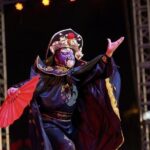
Eight-face changing is the kind of thing you can’t fully prepare for. At Jinjiang Theater, you get Sichuan Opera storytelling plus the jaw-drop precision of face-changing, including the eight-face changing highlight. I also love the small touch of a complimentary cup of traditional Sichuan Gaiwan tea as the show kicks off near Tianfu Square.
You’ll also get a full program, not just a trick: hand shadow art, martial arts, acrobatics, a puppet segment, and stylized dances like Water Sleeve and Ghost Immortal. One consideration: if you only came for face-changing, this performance gives you more stages first, so plan on enjoying the whole arc instead of waiting for the big moment.
In This Review
- Key things to know before you go
- Why Jinjiang Theater’s Eight-Face Changing Feels Like Real Sichuan
- The Story Spine: Little Sanqing and Mastery Under Pressure
- The 8:00 pm Program: From Opera Excerpts to Puppet and Dance
- Face-Changing and Eight-Face Changing: How to Watch Without Losing It
- Fire Breathing and Martial Arts: The Thrill, With a Calm Mindset
- Costumes, Puppet Theater, and Dances That Give the Night Shape
- Tea, Location, and Getting There Near Tianfu Square
- Price and Value: What $18 Really Buys You
- Who Should Book This Show (and Who Might Not Need It)
- Should You Book Jinjiang Theater’s Eight-Face Changing Show?
- FAQ
- Where is the performance at Jinjiang Theatre?
- What time does the show start?
- How long is the show?
- How much does it cost?
- Is the admission ticket included?
- What’s the highlight of the show?
- Is there anything included to drink?
- What happens if the experience is canceled due to poor weather?
Key things to know before you go
- Eight-face changing is the centerpiece alongside classic face-changing.
- A full Sichuan Opera program includes singing, recitation, movement, and martial arts.
- Fire breathing and rolling lantern deliver the high-energy set pieces.
- Costumes and dance (including water sleeve and Ghost Immortal) add elegance after the action.
- Teatime starts your night with Sichuan Gaiwan tea included.
- 1 hour 10 minutes keeps it focused, but come early enough to settle in.
Why Jinjiang Theater’s Eight-Face Changing Feels Like Real Sichuan
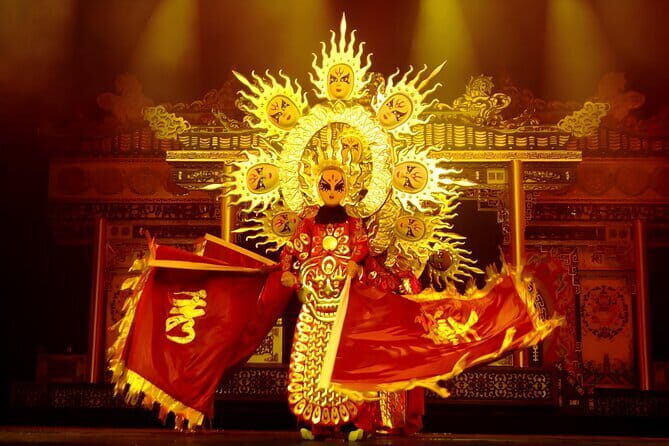
Chengdu is full of performances, but this one has a clean, practical appeal: you’re getting a concentrated dose of Sichuan Opera theater craft in about 80 minutes. The setting at Jinjiang Theater matters too. It’s the kind of historic venue where the whole room feels like part of the show, not just a backdrop.
The highlight is the face-changing family of skills, and then it escalates to the rarer eight-face changing technique. That matters because you’re not only watching a famous act—you’re watching how Sichuan Opera builds skill, tension, and payoff. I find that story-led structure helps you follow even if you don’t read Chinese lyrics.
You can also read our reviews of more tours and experiences in Chengdu.



The Story Spine: Little Sanqing and Mastery Under Pressure
The performance centers on the journey of Little Sanqing, who learns face-changing through adversity. That basic plot point gives you context for why the show keeps raising the stakes: you’re not just seeing effects, you’re watching progress toward the debut of the eight-face changing technique.
It also helps you understand the broader performance style. Sichuan Opera isn’t only one specialty. In this program, it mixes singing and recitation with movement and martial arts so the story can land in multiple ways—sound, rhythm, body, and sudden visual transformation.
You’ll likely appreciate how the acts connect through energy shifts: from dialogue-like recitation moments into action sequences, then into more stylized segments like dances and a puppet show.
The 8:00 pm Program: From Opera Excerpts to Puppet and Dance
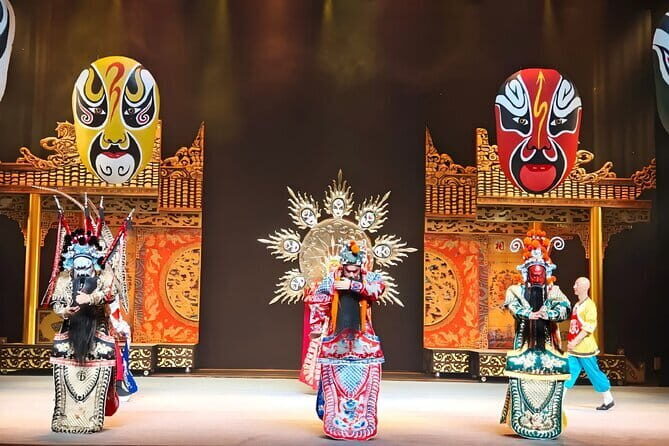
This show runs as a sequence of set pieces, and it’s smartly paced for an audience of mixed ages. Here’s the flow you can expect, and what each part does for the overall experience.
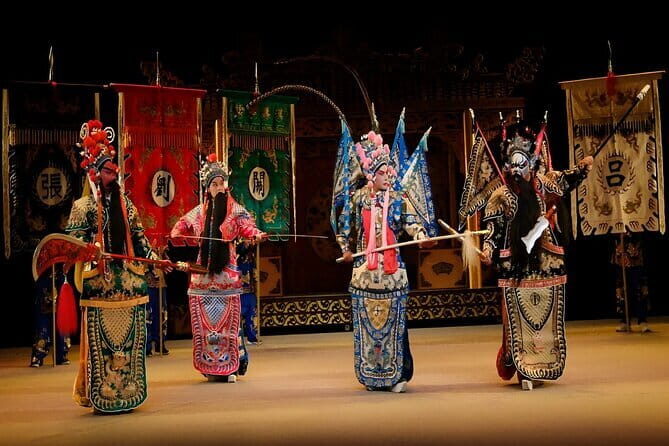
First up are Sichuan Opera excerpts and performance specialties, starting with The Three Heroes Fight Lü Bu. This opening sets a martial, dramatic tone. It also helps train your eyes: performers rely on sharp gestures and rhythm, and once you notice that pattern, the later tricks feel even more startling.
Next comes hand shadow art and then acrobatics like Umbrella Kicking. These moments shift you from storytelling mode into pure physical skill. If you’ve only ever seen staged kung fu clips, this is a reminder that live performance is about timing—how fast things land, and how controlled they look while happening.
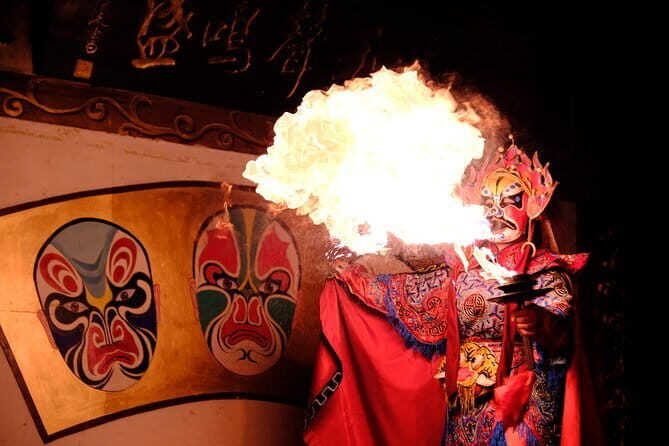
Then you’ll see specialties such as Hidden Knife, followed by another excerpt, Releasing Pei. After that, the show ramps up again with Fire Breathing. That act isn’t just about spectacle. It’s built to punctuate the drama and reset the room’s attention right when you’re fully warmed up.
Rolling Lantern is the next big spotlight. It’s designed to be visually dramatic and easy to follow, even if you don’t know the story language. If you like “big picture” moments in theater—stuff you can feel instantly—you’ll probably love this segment.
Midway through, acrobatics continue with Multi-Person Drum Kicking, which adds synchronized athletic rhythm. Then a puppet show called The Beauty of Life offers a different texture. It’s a nice break from full-contact intensity and gives the performance a family-friendly breath.
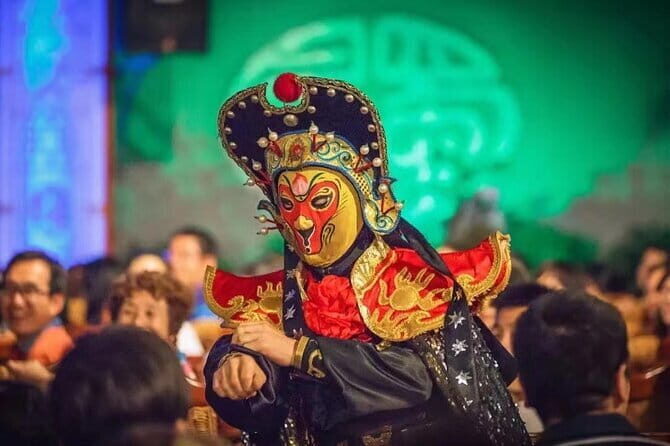
Then comes the core skills: Face-Changing and the exclusive Eight-Face Changing. After the climax, the program continues with Three Costume Changes and a Traditional Fashion Show. It’s like the show lowers the volume slightly to let you appreciate the craftsmanship of costumes and movement before ending with dance segments such as Water Sleeve Dance and Ghost Immortal Dance.
Face-Changing and Eight-Face Changing: How to Watch Without Losing It
Face-changing is fast. Eight-face changing is faster. The trick is that you don’t want to stare at one spot in panic. Instead, watch the performance’s rhythm: the performers build suspense with posture, gesture, and timing before the change happens.
When the show switches into face-changing, stay alert to small cues—where the performer is looking, how the hands position, and how the body stays balanced. That’s where you’ll start to feel why these techniques are so iconic. It’s not random motion. It’s precision under theatrical pressure.
With eight-face changing, the challenge is higher: multiple transformations happen in quick succession, and you may feel yourself trying to “catch the method.” Instead, try catching the pattern of timing. When you watch the performer’s control rather than chasing the exact moment of the change, the sequence becomes more satisfying—and you’ll notice the skill is in the consistency.
One more practical tip: if the lighting makes it hard to see faces close-up, don’t only aim for the center. Sichuan Opera uses strong body language and stage direction, so even from farther seats you’ll still understand when the transformation is happening. The show is built for audience perception, not just the performers.
Fire Breathing and Martial Arts: The Thrill, With a Calm Mindset
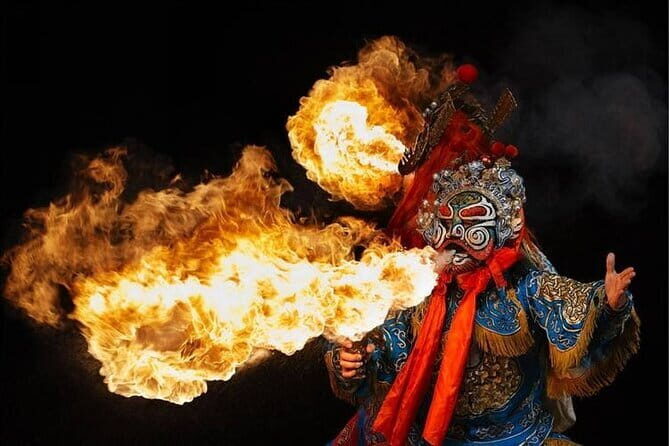
Fire Breathing usually draws the biggest involuntary reaction, because it’s an instant jolt of intensity. In a live theater setting, you’ll also notice how controlled the stagecraft is. Performers keep rhythm with the music and recitation, so the moment doesn’t feel like chaos—it feels like a planned climax.
Hidden Knife adds another layer of “wait, how?” energy. It plays with audience expectation by making you focus on movement details that feel impossible at first glance. The best way to enjoy this is to accept it as theater craft, not a magic trick you can solve. You’ll likely have more fun when you stop trying to prove it wrong and start appreciating how quickly the performers make the impossible look routine.
Umbrella Kicking and Multi-Person Drum Kicking are the action-heavy counterparts. They’re also a good reminder that Sichuan Opera performance can feel like a mix of dance, acrobatics, and martial arts. Your job as an audience member is simple: stay present for transitions. Many of the best moments happen right as one act ends and the next takes over.

Costumes, Puppet Theater, and Dances That Give the Night Shape
What I appreciate about this program is that it doesn’t only chase adrenaline. It gives you elegance after the thrills, and it uses different art forms so you don’t get “tricked-out” too early.
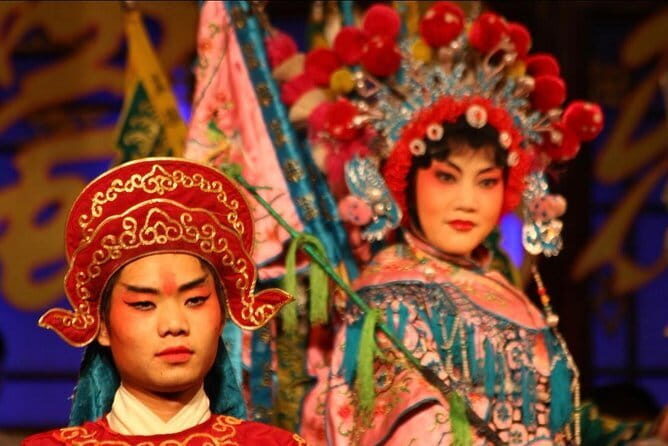
Three Costume Changes and the Traditional Fashion Show shift your attention to design and motion. Costume work in Sichuan Opera isn’t just about looks—it supports storytelling and helps performers communicate status and mood in a way that stays visible even from a distance.
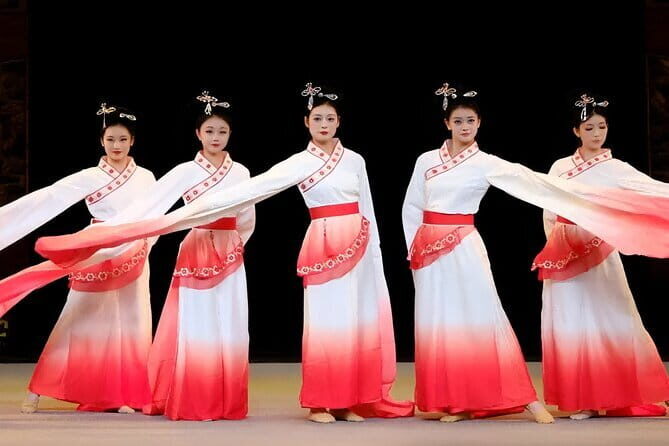
The Water Sleeve Dance is especially useful after the intensity of fire and acrobatics. Water sleeves are long, flowing costume elements, and they turn arm movement into a visual effect you can follow. Even if you don’t understand every lyric or storyline moment, you can track the shapes and rhythm of the sleeve movement.
Ghost Immortal Dance adds another stylized energy. It tends to contrast with the more “grounded” action earlier in the show, and it works well as a late-night closer.
Don’t skip The Beauty of Life puppet show segment, even if you think puppets are a break you could skip. It’s there to change tempo. It also gives a different artistic language—simple, direct, and easy to recognize.
Tea, Location, and Getting There Near Tianfu Square
The show includes a complimentary cup of traditional Sichuan Gaiwan tea. This is a small thing, but it helps you slow down and settle in before the performance gets loud and fast. Gaiwan tea also fits Chengdu’s food-and-tea rhythm, so it doesn’t feel like a tourist add-on.
Timing-wise, the start time is 8:00 pm, and the show lasts about 1 hour 10 minutes. That’s a good length for an evening plan because you can still eat beforehand and still have energy for dessert after.
The theater is near public transportation, and the address for the redemption point is Jinjiang Theatre, 54 Hua Xing Zheng Jie, Luomashi, Jin Jiang Qu, Cheng Du Shi, Si Chuan Sheng, China, 610017. I recommend giving yourself a little buffer so you’re not rushing right as the lights shift.
Good to know: this experience notes a weather requirement. If conditions aren’t ideal, you may be offered a different date or a full refund, so keep your schedule flexible when possible.
Price and Value: What $18 Really Buys You
The price is $18, and for Chengdu this is a straightforward value proposition. For that money you get much more than one specialty act. You’re seeing singing, recitation, movement, martial arts, acrobatics, shadow art, a puppet segment, costume changes, and multiple signature specialties like Face-Changing, Fire Breathing, and Rolling Lantern.
If you only do one evening show, this makes sense because it packs variety into one performance slot. You also get included admission, plus that tea cup. Even if the story language isn’t your focus, you’ll get something recognizable and satisfying: dramatic stagecraft, disciplined physical skill, and the face-changing escalation toward eight-face changing.
Who Should Book This Show (and Who Might Not Need It)
I think this performance is ideal for:
- People who want a classic Chengdu night without complicated planning
- Families and groups since it includes variety and a puppet show
- Anyone excited by face-changing, fire, and acrobatics
- Solo travelers who like clear, contained experiences
It may be less ideal for you if you’re very short on time and only care about one act. Because the show builds in stages, the face-changing highlight comes after several earlier segments. If you’re determined to see only one specialty, you’ll need to be okay waiting and enjoying the full arc.
Should You Book Jinjiang Theater’s Eight-Face Changing Show?
Yes, you should book it if you want an evening that mixes story, theater craft, and physical spectacle in one compact window. The combination of Face-Changing, exclusive Eight-Face Changing, and the high-energy signature acts like Fire Breathing and Rolling Lantern makes this a strong pick for first-timers to Sichuan Opera.
If you like performances that keep shifting gears—opera excerpts to acrobatics to dance—this fits your taste. And if you’re the type who values small authenticity touches, the included Sichuan Gaiwan tea pairs nicely with the theater atmosphere near Tianfu Square.
FAQ
Where is the performance at Jinjiang Theatre?
The redemption point is Jinjiang Theatre, 54 Hua Xing Zheng Jie, Luomashi, Jin Jiang Qu, Cheng Du Shi, Si Chuan Sheng, China, 610017.
What time does the show start?
The start time is 8:00 pm.
How long is the show?
It runs about 1 hour 10 minutes.
How much does it cost?
The price is $18.
Is the admission ticket included?
Yes, the admission ticket is included.
What’s the highlight of the show?
The exclusive skill is Eight-Face Changing, along with face-changing.
Is there anything included to drink?
Yes, you get a complimentary cup of traditional Sichuan Gaiwan tea.
What happens if the experience is canceled due to poor weather?
If canceled due to poor weather, you’ll be offered a different date or a full refund.