REVIEW · CHENGDU
Jinjiang Theater:Eight-Face Changing-Legendary Sichuan Opera
Book on GetYourGuide →Operated by SUKHA Travel · Bookable on GetYourGuide
A single gesture changes everything. This performance at Jinjiang Theater puts the world’s first eight-face changing technique right at the center of a full Sichuan opera program, plus you get traditional gaiwan tea during the experience. The drawback to plan around: no video recording is allowed, so you’ll want to experience it in real time instead of trying to capture every moment.
I also like that the show doesn’t treat face-changing as a one-off trick. You get a story thread with familiar Sichuan opera skills (singing, recitation, movement, martial arts, special skills) alongside acrobatics, shadow play, puppetry, and multiple role types. It’s a lot for 70 minutes, but that’s exactly why it works.
In This Review
- Key moments worth aiming for
- Jinjiang Theater location: easy to find near Tianfu Square
- What the show really is: Sichuan opera skills plus a story arc
- The 70-minute program: what happens in order
- Sichuan opera excerpt: The Three Heroes Fight Lü Bu
- Hand shadow art and market-style visual play
- Acrobatics: Umbrella kicking
- Specialty skills: Hidden knife, Fire breathing
- Rolling lantern and multi-person drum kicking
- Puppet show: The Beauty of Life
- Sichuan opera segment: Releasing Pei
- Water sleeves, fan dance, and role stylization
- Face-changing: Three costume changes and Eight-face changing
- Closing elements and the story resolution vibe
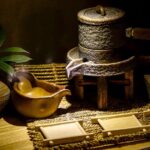
- The included tea: what the gaiwan bowl adds before showtime
- Practical rules that affect your experience (so you don’t get annoyed later)
- Is it worth $20? How to judge the value
- Who this performance fits best
- Should you book this eight-face changing Sichuan opera show?
- FAQ
- Where is Jinjiang Theater?
- How long is the performance?
- How much does it cost?
- What’s included with the ticket besides the show?
- Do I need my seat number and QR code to enter?
- Are video recordings allowed during the show?
- Is food allowed inside the theater?
- What about children’s tickets?
- Can I cancel after booking?
Key moments worth aiming for
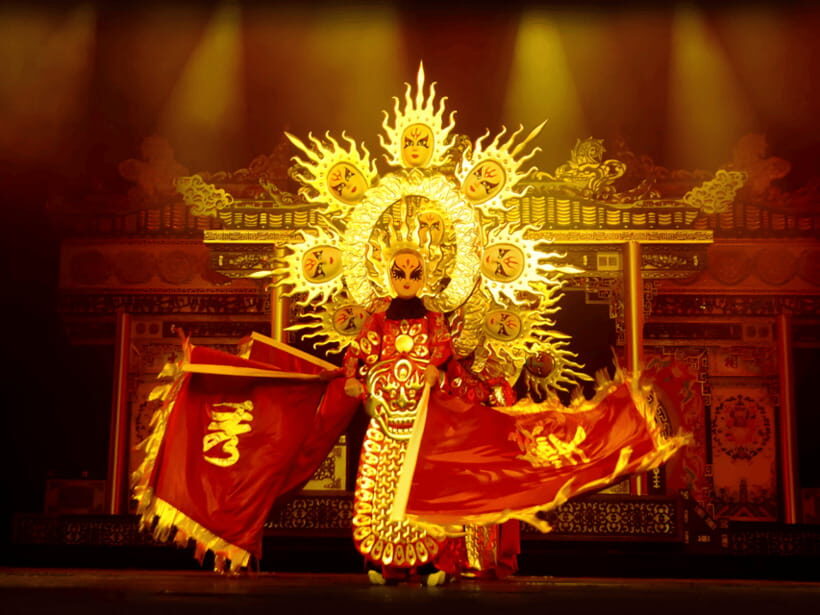
- Eight-face changing, framed as a craft: the art is treated as something earned through practice, not just displayed.
- Sanqinghui in Chengdu: the story is set at one of Sichuan opera’s birthplaces, tying the theater experience to the city.
- Gaiwan tea one hour before showtime: you’ll pick up a complimentary covered bowl tea at Yuelai Tea House next door.
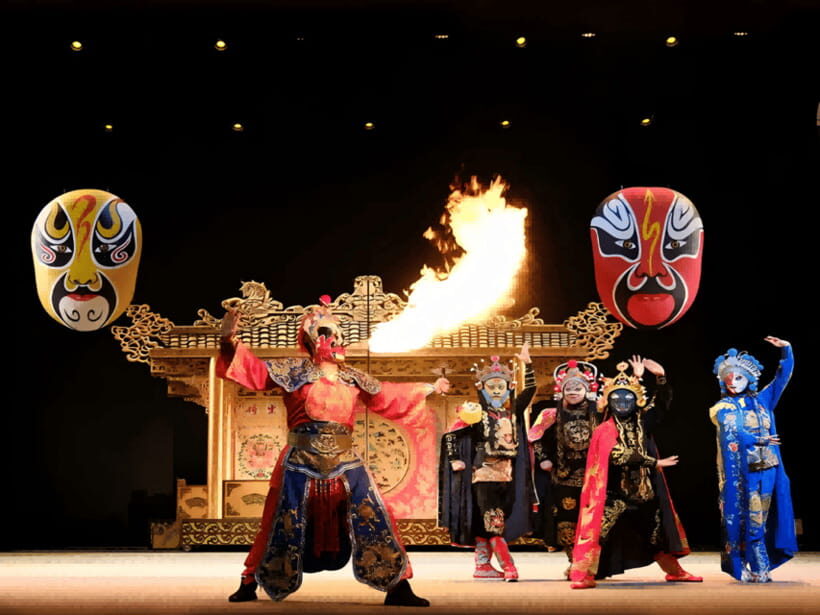
- A full Sichuan-opera menu: excerpted performances, then specialties like fire breathing, rolling lantern, and hidden knife.
- Role styles you can spot: stylized movements for Sheng and Dan, including Xiao Sheng and Xiao Dan segments.
- Stage spectacle plus tradition: market-scene shadow and puppet elements help modern staging feel rooted in older forms.
Jinjiang Theater location: easy to find near Tianfu Square
Jinjiang Theater is in central Chengdu, near Tianfu Square, at No. 54, Huaxing Street, Luoma City, Jinjiang District. The location matters because you can pair this with a pre-show wander—then come back for a tight, focused performance.
One practical note: your ticket entry depends on details in your email. You’ll need your ticket serial number and QR code plus your seat number. Without those, you can’t enter the theater. Seats are randomly assigned within the ticket area, so don’t expect to choose your exact spot.
You can also read our reviews of more tours and experiences in Chengdu.



What the show really is: Sichuan opera skills plus a story arc
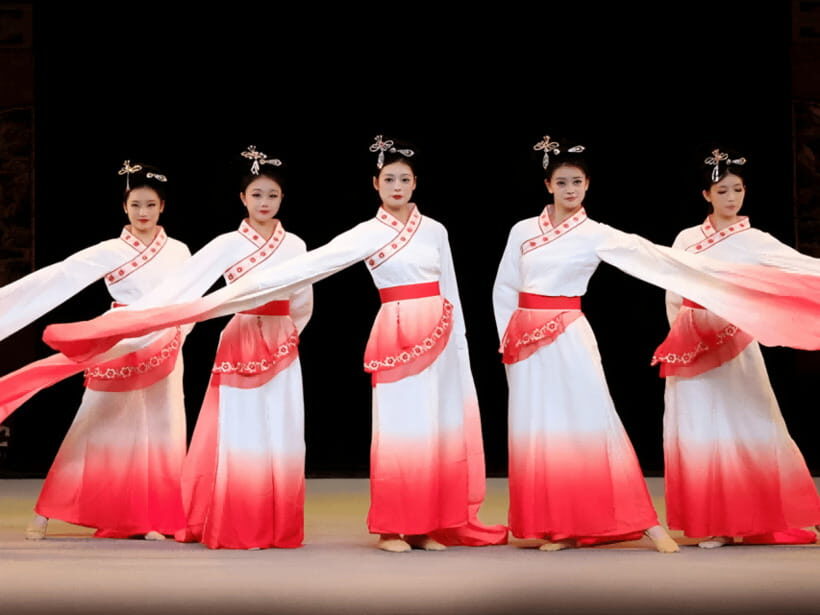
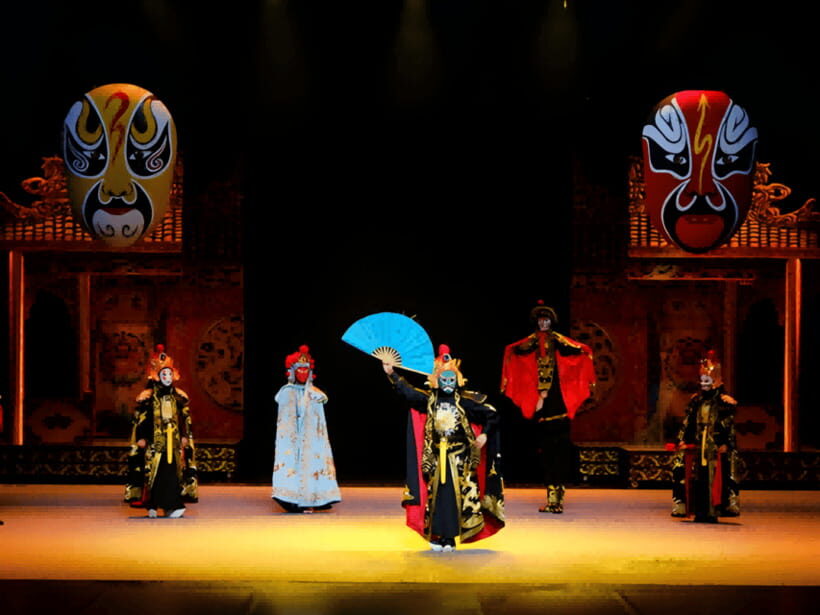
This isn’t a loose variety show where everything is thrown at you. It’s built around the core language of Sichuan opera—singing, recitation, stylized movement, martial arts, and special skills—and it threads a narrative through multiple segments.
The story centers on Little Sanqing, a dedicated opera student who grows from practice to performance. His master takes him as a disciple, and the emotional stakes ramp up with romance and conflict: Little Huanhua develops feelings for Little Sanqing, but Young Master Ma forces separation and cruelty, including an order to burn Little Sanqing’s face with fire. Little Sanqing survives by wearing a mask and hiding, while secretly honing his face-changing ability until he can perform eight-face changing in one smooth sequence.
For you, that matters because the face-changing moment doesn’t feel random. It’s tied to hardship, training, and transformation—the same way Sichuan opera often turns serious themes into highly theatrical form.
The 70-minute program: what happens in order
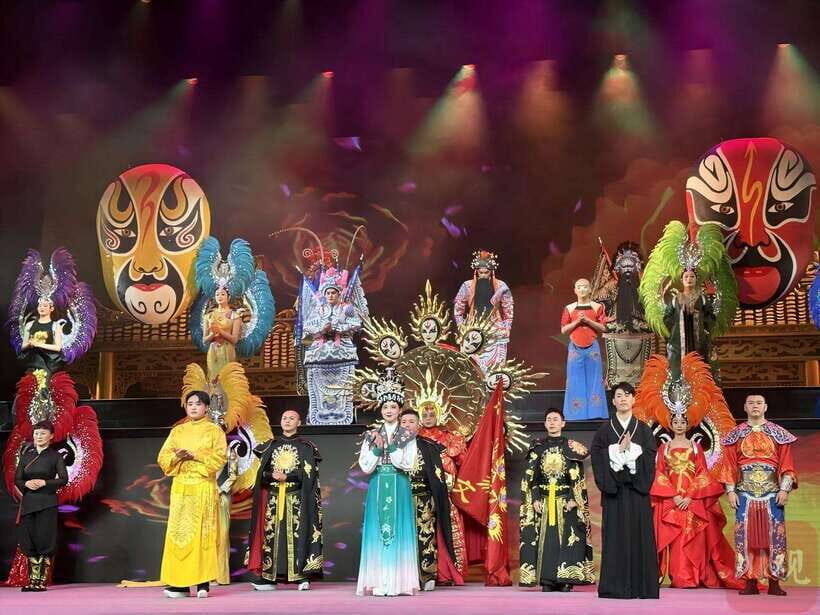
Expect roughly 70 minutes total, with a multi-segment flow. Here’s how the experience is structured, and what to watch for in each part.
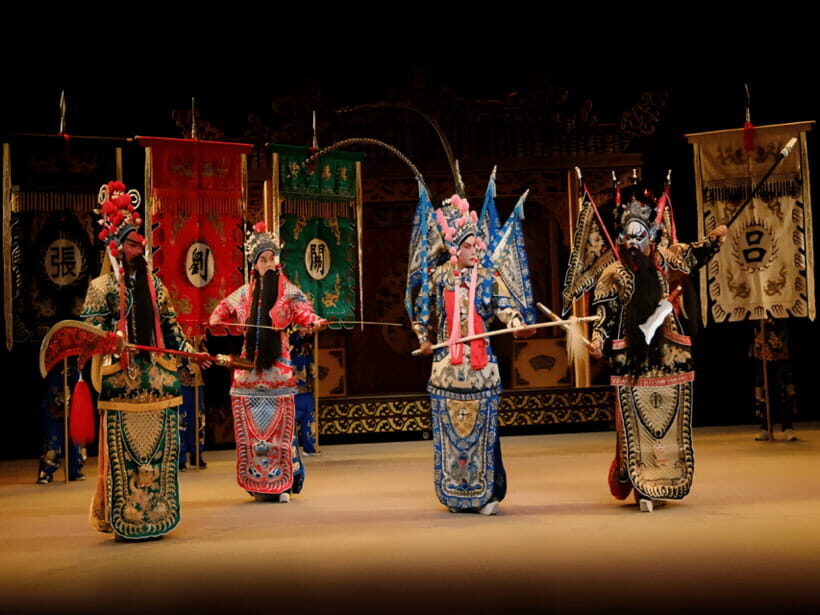
Sichuan opera excerpt: The Three Heroes Fight Lü Bu
This opening segment gives you a foundation in classic Sichuan opera energy—strong characterization, rhythmic performance, and the kind of dramatic fighting style Sichuan opera is famous for. Even if you don’t catch every line, the body language carries a lot: posture, timing, and the sharp transitions between actions.
If you’re new to the genre, this is a good early “orientation” piece. It sets the performance rules before the special tricks arrive.
Hand shadow art and market-style visual play
Next comes hand shadow art, followed by acrobatics and staged visual storytelling. You’ll see the kind of stylized “magic” feel that makes traditional Chinese stage arts so readable, even across language barriers.
Watch the transitions. The show uses multiple perspectives—so your job is simply to keep your eyes open as the visual focus shifts across the stage.

Acrobatics: Umbrella kicking
This is where the physicality ramps up. Umbrella kicking is quick, precise, and visually playful. It also connects to a broader pattern in the program: even when the action changes form, the choreography stays rooted in performance skill.
Don’t treat it as a break from Sichuan opera. Think of it as one of the ways the show keeps tension high for all ages.
Specialty skills: Hidden knife, Fire breathing
Then the program highlights signature Sichuan opera special skills:
- Hidden knife (sleight-and-surprise style)
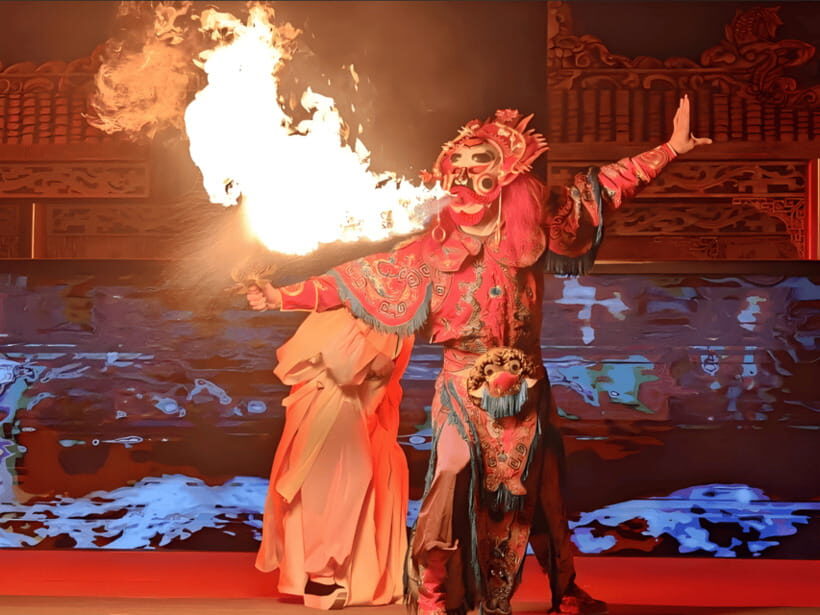
- Fire breathing (high-impact, dramatic focus)
These moments are the kinds of things that make people say they “can’t believe it.” Your best approach is to watch for the setup and the timing. The show has more than one kind of “reveal,” and the craftsmanship is in how cleanly it lands.
Rolling lantern and multi-person drum kicking
You’ll get rolling lantern followed by multi-person drum kicking. This is stage geometry and rhythm on display. Lanterns and drumming both create strong visual cadence, so even without translation, you can feel when the story beats shift.
This segment is also a reminder that Sichuan opera isn’t only about faces and fire. It’s also about patterns—movement grouped into tight visual designs.
Puppet show: The Beauty of Life
A puppet show segment—The Beauty of Life—adds another storytelling layer. Puppetry can feel like a different universe, but within this program it works as a palate cleanser between high-physicality specialties.
For you, it’s a good chance to notice how different performance mediums still follow the same stage logic: clear character intent, deliberate gestures, and strong stage timing.
Sichuan opera segment: Releasing Pei
You’ll also see another Sichuan opera excerpt: Releasing Pei. This kind of excerpt tends to underline character emotion and vocal style—so if you’re into the traditional singing side, this is a segment to pay extra attention to.
Water sleeves, fan dance, and role stylization
The program also includes dance performances like:
- Water sleeve dance
- Ghost Immortal dance
- group fan dance
- and other stylized movement tied to Sichuan opera roles, including Sheng (male roles) and Dan (female roles)
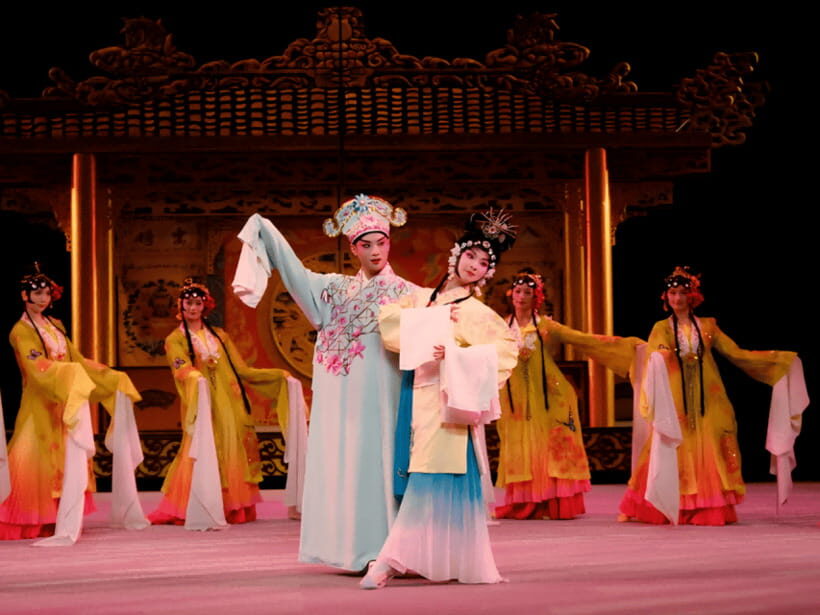
If you’re watching closely, this is where you’ll notice how Sichuan opera uses movement as grammar. Sleeves, fans, and posture aren’t decorative here. They help show emotion, power, grace, and conflict.
Face-changing: Three costume changes and Eight-face changing
Now you’re heading toward the centerpiece:
- Three costume changes
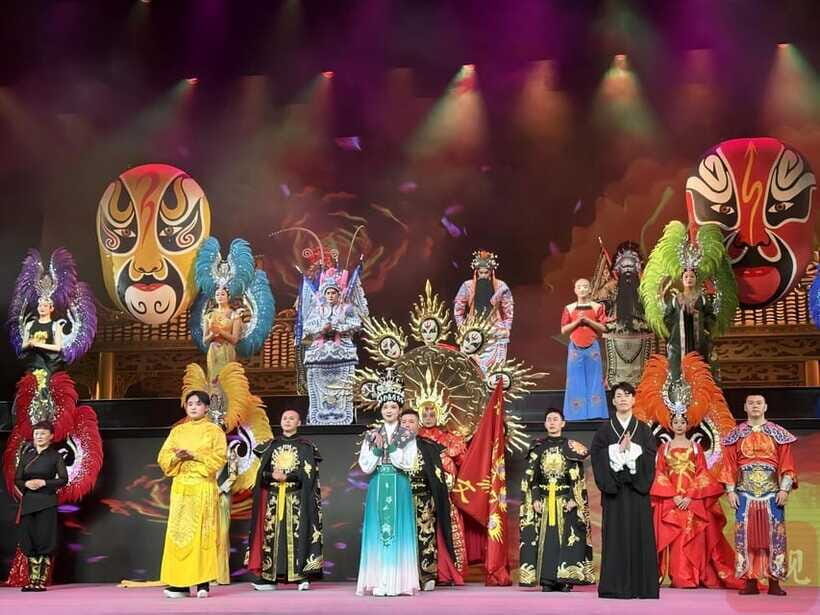
- then face-changing, including the Exclusive Skill: Eight-face changing
This is the moment everyone comes for. But don’t just watch for the final reveal. Watch the costume changes and the pacing leading into them. In this story, Little Sanqing’s artistry is a culmination of years of hidden practice.
When the eight-face changing sequence comes, it lands as one connected performance rather than separate tricks. That’s the difference between seeing a novelty and witnessing a craft presented as a theatrical journey.
Closing elements and the story resolution vibe
Finally, the performance brings the story thread to a satisfying theatrical conclusion: after the hardship and years of hiding, Little Huanhua eventually finds Little Sanqing again, and the two bring their brilliance back to the Sichuan opera stage.
The emotional tone matters here. You leave not just amazed, but with a sense that the face-changing art form has lineage—passed through struggle and training, and expressed through stage skill.
The included tea: what the gaiwan bowl adds before showtime
One of the easiest “value upgrades” here is the tea. Your ticket includes a complimentary covered bowl tea at Yuelai Tea House, located right next to the theater, one hour before the performance starts.
That timing helps you get settled without rushing. It also adds a sensory layer before the stage action. Tea is calm. Then the show arrives like a drumbeat.
Practical tip: go to the tea house early enough to get your bowl, then keep your ticket details handy. You’ll be using your serial number or QR code there.
Practical rules that affect your experience (so you don’t get annoyed later)
There are a few constraints that shape how you enjoy this kind of show:
- No video recording during the performance. Plan to rely on your eyes, not your phone.
- No food inside the theater.
- No alcohol and drugs.
- You should respect the performance and copyright rules.
Also, your seat is randomly assigned within the ticket area. That means arriving early is still smart, even if you can’t pick seats. You’ll want to find your row quickly, then settle in so you don’t miss the opening excerpt.
Is it worth $20? How to judge the value
At about $20 per person for a 70-minute show with a full program, you’re paying for more than face-changing.
You’re also getting:
- multiple Sichuan opera excerpts (not just a single scene)
- several specialty skills (hidden knife, fire breathing, rolling lantern)
- acrobatics and stage illusions
- hand shadow art and a puppet show
- dance segments like water sleeve and fan dance
- the included gaiwan tea before the show
If your goal is a single, high-density introduction to Sichuan opera with the most famous special skills, this is a strong value. If you want something slow, contemplative, or heavily translated line-by-line, this style may feel fast. But most people come to Chengdu for exactly this kind of theatrical concentration.
Who this performance fits best
You’ll likely love this if:
- you want a classic Sichuan opera sampler in one sitting
- you’re curious about face-changing and want it tied to a story
- you prefer visual spectacle you can follow even without perfect Mandarin
- you’re traveling with kids and want variety (music, dance, acrobatics, puppets)
It may be less ideal if:
- you strongly need your phone for recording, because the show bans it
- you prefer long-form narrative over rapid segment switching
- you don’t enjoy high-energy stage skills and stage combat styles
Should you book this eight-face changing Sichuan opera show?
If you want one must-do Sichuan performance in Chengdu that packs together story, signature specialties, and stage showmanship, I’d book it. The eight-face changing is the headline, but the real win is how the program layers different Sichuan opera elements—singing and movement, martial skill, and special tricks—into a single 70-minute arc.
Before you go, do this one thing: check your email for the serial number, QR code, and your seat number. Without those, entry is blocked. Then plan to arrive in time for the included tea at Yuelai Tea House.
If that all sounds workable, this is an excellent use of an evening in Chengdu.
FAQ
Where is Jinjiang Theater?
Jinjiang Theater is at No. 54, Huaxing Street, Luoma City, Jinjiang District, Chengdu City, Sichuan Province, China.
How long is the performance?
The performance lasts about 70 minutes. Starting times vary, so check availability.
How much does it cost?
The price is listed as $20 per person.
What’s included with the ticket besides the show?
Your ticket includes a complimentary bowl of covered bowl tea at Yuelai Tea House, located right next to the theater, one hour before the performance begins.
Do I need my seat number and QR code to enter?
Yes. You cannot enter the theater without the ticket details from your email, including your ticket serial number/QR code and your seat number.
Are video recordings allowed during the show?
No. Video recording is not allowed during the performance.
Is food allowed inside the theater?
No food is allowed in the theater.
What about children’s tickets?
One adult ticket includes one child under 1.2 meters free of charge (the child does not occupy a seat). Children over 1.2 meters need a full-price ticket.
Can I cancel after booking?
Free cancellation is available up to 24 hours in advance for a full refund.