REVIEW · BEIJING
Self-guided challenging hiking from Jinshanling to Gubeikou
Book on GetYourGuide →Operated by Great Wall Hiking Adventure · Bookable on GetYourGuide
The Great Wall feels almost yours. This self-guided trek links Jinshanling to Gubeikou, so you can set your own pace while still hitting classic, postcard-ready viewpoints.
I like that the day is built around walking segments that change constantly, from steep brick steps to quieter off-Wall trails.
I love the photo-and-watchtower progression. You start with the East-Five-Eye watchtower, then keep moving across Jinshanling’s partially restored section, before returning to the Wall at Gubeikou’s 24-Eye Watchtower and finishing on Dragon Hill. I also really like the practical support: unlimited bottled water, a detailed map and instructions, and WeChat support when you need a hand.
One possible drawback: navigation is on you. The map can be a little unclear at the off-Wall points and forks, and making the wrong turn can add extra distance.
In This Review
- Key points to know before you go
- Your day starts with an early drive to Jinshanling East
- Jinshanling’s East-Five-Eye watchtower: steep steps and big first views
- Walking westward across Jinshanling: up-and-down that stays interesting
- Leaving the Wall at Taochunkou: the hilly trail to Jinshanling West Gate
- Rejoining the Wall at Gubeikou’s 24-Eye: Tiger Hill views if weather cooperates
- Coiling Dragon Hill to the finish on Dragon Hill: easier walking at the end
- Self-guided navigation: how to avoid wrong turns and stress
- What to pack and how to keep the hike comfortable
- Price and value: is $235 per group a fair deal?
- Who this hike suits best (and who should skip it)
- Should you book this self-guided Jinshanling to Gubeikou hike?
- FAQ
- How long will the hike take from Jinshanling to Gubeikou?
- Are entrance fees included?
- Is lunch included?
- Is this tour guided while you hike on the Great Wall?
- What’s included besides transport?
- Is the route suitable for everyone?
Key points to know before you go
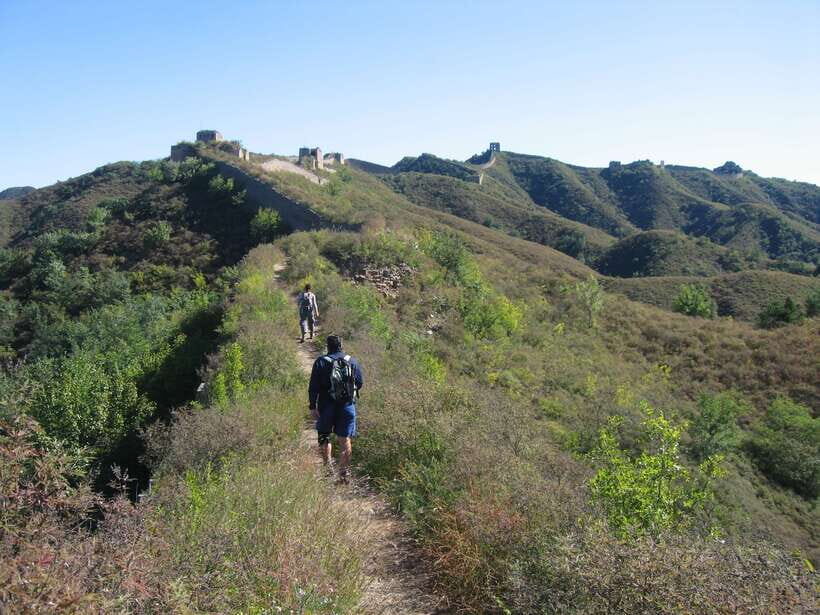
- East-Five-Eye to Gubeikou’s 24-Eye: the route is a watchtower-to-watchtower story, not one long straight walk
- Mostly on real Wall steps at Jinshanling: constant up-and-down, with big steps underfoot
- A wild finish on Dragon Hill near Gubeikou: you’ll see more rugged, less-managed feeling Wall
- Self-guided means you read the map: you’ll want to pre-check where the forks are
- Plan for heat: there’s a chance you stop after 4 hours at Jinshanling West if it’s hot and humid (July/August)
Your day starts with an early drive to Jinshanling East
Pickup is from your Beijing hotel at 7:00am, and you’ll drive about 2.5 hours to Jinshanling East. That early start matters because you’re not fighting crowds right out of the gate, and you can get on the Wall while the air is still clearer.
Once you arrive, expect a 40-minute walk up to the East-Five-Eye watchtower. This first climb is where the day sets its tone. Take it slow, breathe, and treat it as your warm-up for the bigger rhythm later.
You’ll also feel the value of “private group” here: no long waiting for other people, no awkward shuffle between start times. The driver is keeping the schedule steady so you can spend your energy on the hike.
You can also read our reviews of more guided tours in Beijing



Jinshanling’s East-Five-Eye watchtower: steep steps and big first views
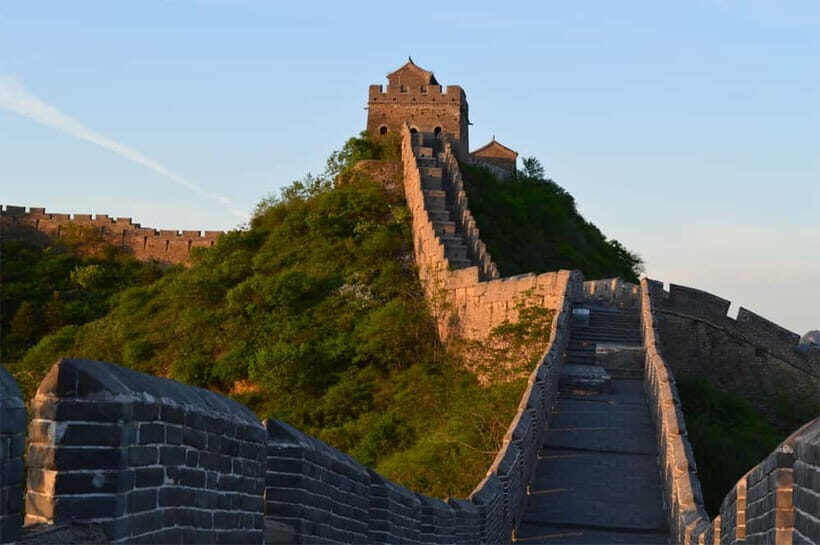
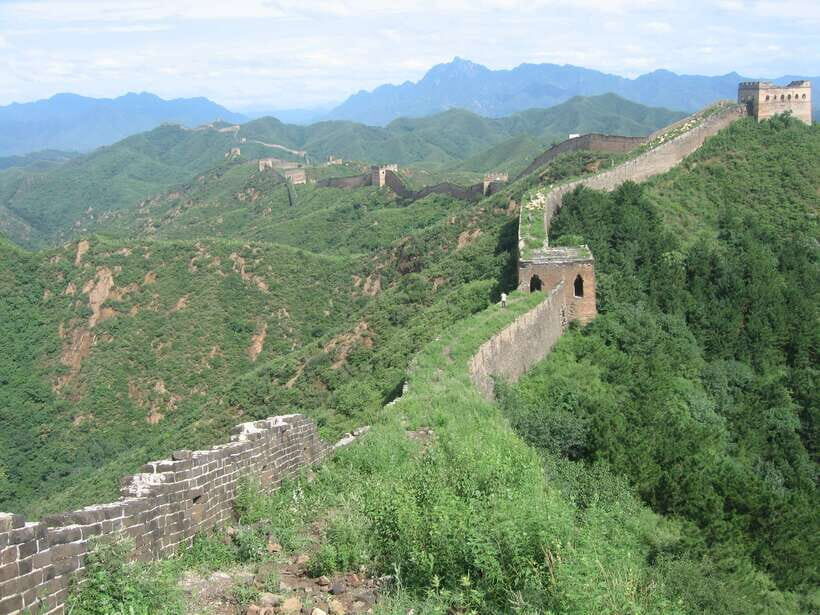
When you reach East-Five-Eye, the reward is immediate: a wide panoramic look over the Wall system. On a clear day, you can see Simatai, Jinshanling, and Gubeikou in the distance. That matters more than you’d think, because it gives you real context for what you’re walking on all day.
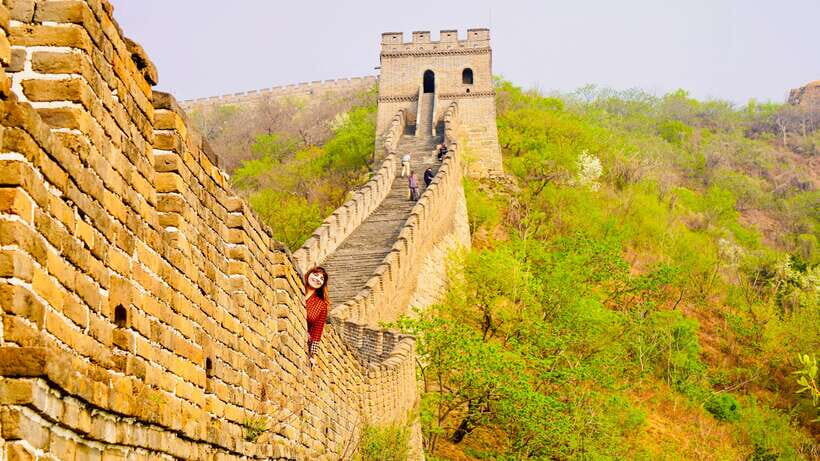
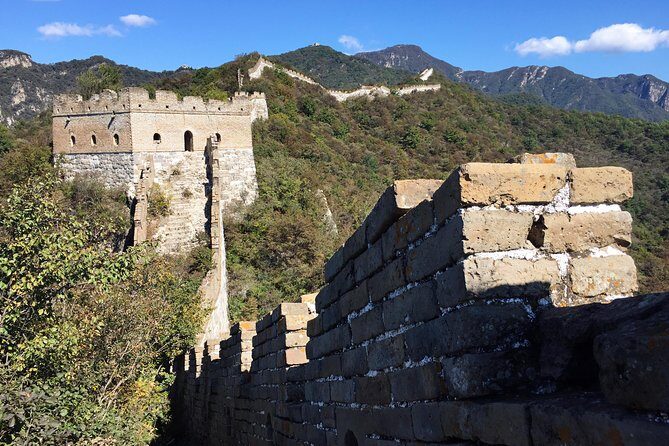
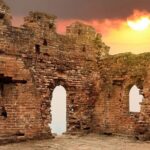
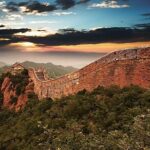
From there, you’ll move along the Wall in a section that’s partially restored, and the experience is very “photographer-friendly.” You’ll pass intact watchtowers and beacon towers with solid stonework, which creates strong visual lines for both wide shots and close-up details.
The terrain at Jinshanling is mostly brick steps, and some are large. Expect the Wall to keep rising and dropping. It’s not just tiring; it’s also mentally demanding because you’re constantly shifting footing and attention. The good news: you’re not trapped in one style of walking. The scenery changes at each watchtower, so you never feel like you’re doing the same thing forever.
Walking westward across Jinshanling: up-and-down that stays interesting
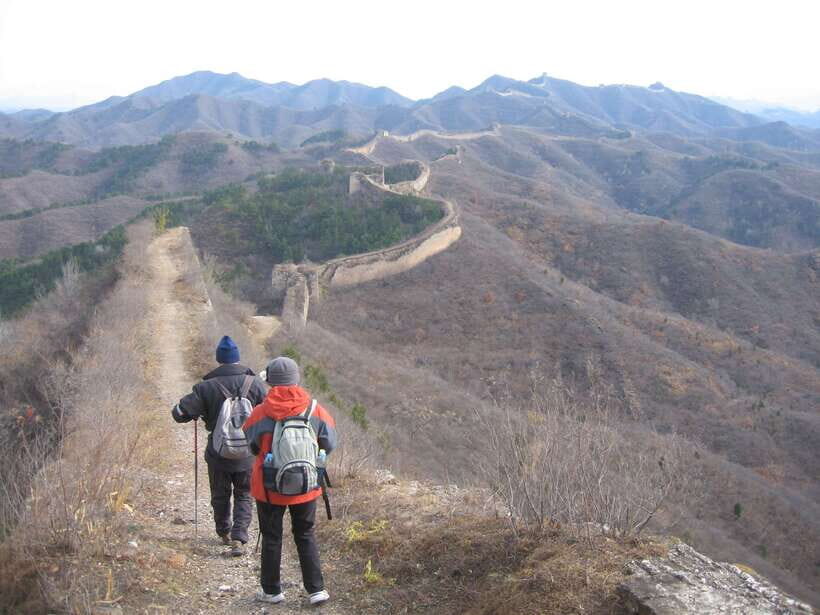
After a short break and photos near the first big viewpoint, the route continues westward along the partially restored section. You’ll go through Shalingkou and Zhuanduokou and then head off the Wall at Taochunkou.
This is the heart of why this hike works. Jinshanling’s Watchtower density means the hike constantly “resets” your attention. Each time you crest a rise, you’re greeted with a new alignment of towers, stretches of wall, and gaps that let your eyes travel farther than your feet want to.
If you’re a keen photographer, this is one of the best parts of the day. The Wall here is solid and defined, so the towers don’t just look dramatic from far away—they hold up when you zoom in. If you’re not into photography, you still get the best perk: frequent visual rewards that keep you moving.
One practical note: it’s easy to underestimate how much time you’ll spend simply pausing. Build in short stops, not long ones. You want the breaks, but you also want daylight and energy for what comes next.
Leaving the Wall at Taochunkou: the hilly trail to Jinshanling West Gate
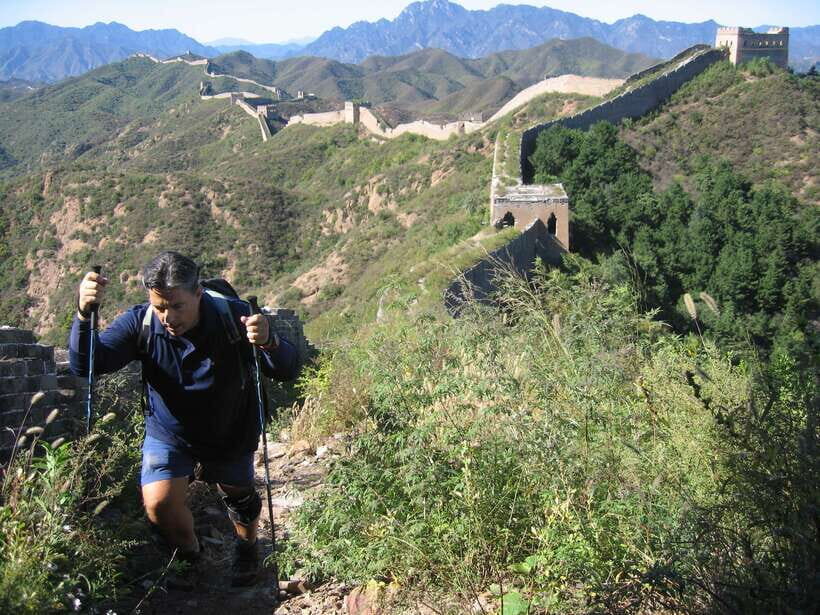
At Taochunkou, you step off the Wall and switch to a hilly trail for about 1 hour. The terrain here feels more “outdoors” than “museum Wall.” It’s a nice change, especially after hours of steps.
You’ll also get a break at the cottage at Jinshanling West Gate. This is where you should actually eat something—snacks, a sandwich, whatever you brought. Lunch is not included, so your fuel plan matters. Having a real pause helps you enjoy the rest of the route instead of pushing through on low energy.
Then you continue, walking through jungles for about 30 minutes to return to the Wall at Gubeikou’s 24-Eye Watchtower. That jungle link is part of the charm and part of the challenge. It’s not as steep as the Wall steps, but it can slow your pace and shift your focus to footing and humidity.
If you’re hiking in midsummer (July/August), there’s also a chance you can stop the trek after 4 hours at Jinshanling West if conditions get too hot and humid. I appreciate that the route plan has an “adjust for weather” option.
Rejoining the Wall at Gubeikou’s 24-Eye: Tiger Hill views if weather cooperates
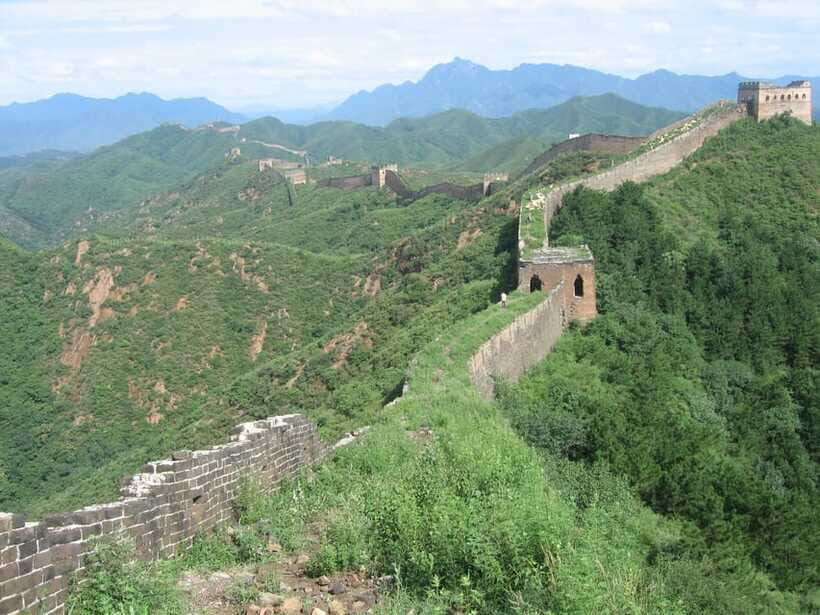
Once you reach 24-Eye Watchtower, you’re back in the Wall rhythm, but now you’re heading into a different feel. Gubeikou is where the experience turns more wild.
From this section, you may be able to spot Tiger Hill in the distance if weather permits. That kind of “maybe, depending on visibility” detail is common on the Great Wall, but it’s still worth aiming for—because when the air is clear, long views make the day feel bigger.
At this point, your pace depends on two things: how you managed your breaks at Jinshanling West, and how your legs feel after the steep section earlier. This is also where being self-guided becomes a real advantage if you like control. You’re not waiting on a group. You’re not stuck with a rigid walking pace.





Coiling Dragon Hill to the finish on Dragon Hill: easier walking at the end

The remaining walk is about 1.5 hours on Dragon Hill, and the terrain is described as relatively flat and easier compared with the earlier Wall steps. That doesn’t mean it’s effortless. You still have the Wall underfoot and constant attention needed for where you place your feet.
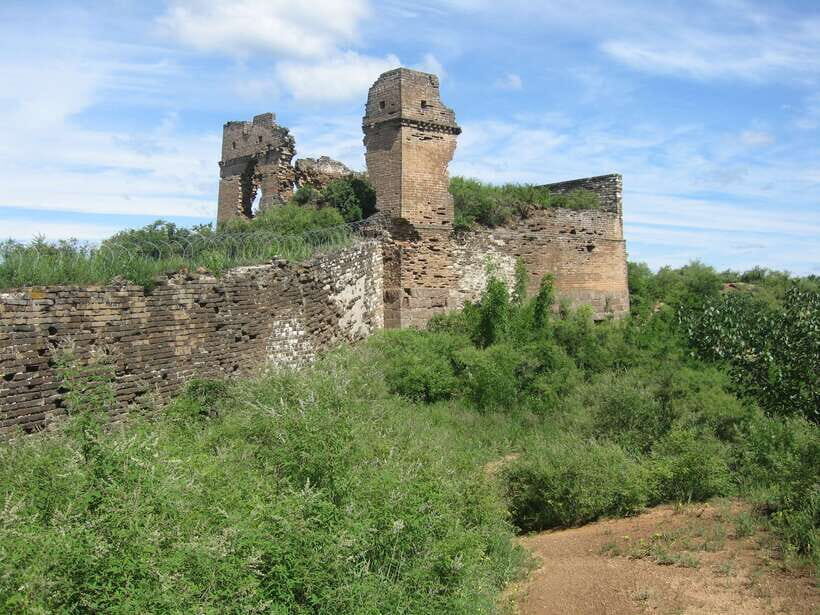
This is also the section tied to Coiling Dragon Hill at Gubeikou, which is the wild-feeling highlight. The Wall is less controlled here, more rugged, and that gives you a different kind of satisfaction. It feels like you’re walking a part of the Great Wall that people don’t always rush through.
When you reach the end in Gubeikou, the driver is waiting for you. Then you’re back in the car for the return drive to Beijing, about 2.5 hours.
Self-guided navigation: how to avoid wrong turns and stress
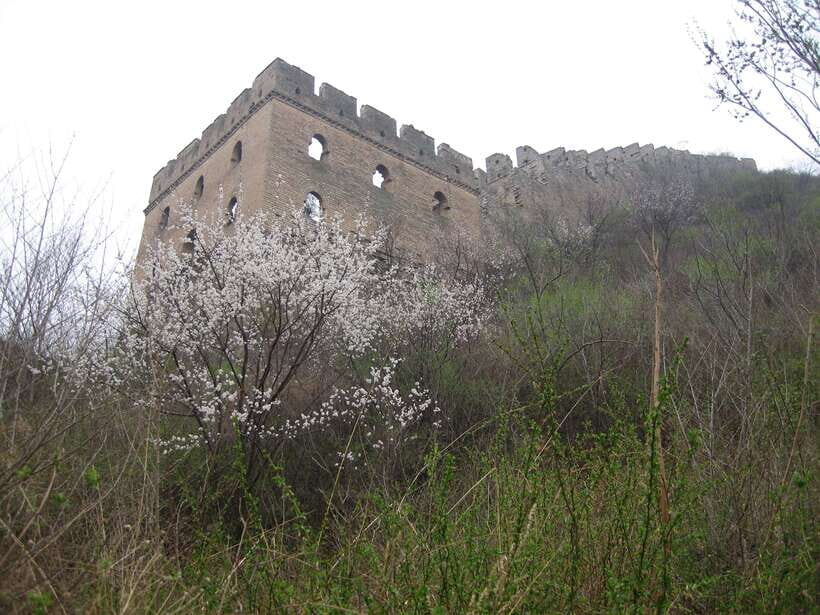
This is self-guided, so you’ll rely on the hiking map and instructions you receive after booking. That’s smart for flexible walking, but it means you should treat navigation like part of your day, not an afterthought.
A couple key tips based on real-world issues:
- When you leave the Wall toward the West gate carpark, look carefully at path forks. One wrong turn can send you onto a more rugged, dangerous track and add distance.
- The map drawing may not be super clear for off-Wall sections. On the Wall itself, it usually works fine, but the tricky moments come when you’re switching terrain.
If you want the safest setup, make sure you can communicate with the support system during the day. The tour includes WeChat support, and translation apps can also help. One booking noted strong translation support from someone named Liang, and another mentioned email support via Jenny when WeChat wasn’t available.
If you don’t use messaging apps comfortably, don’t wait until you’re confused. Save your questions for short moments before decisions become stressful.
Also: if you’re hiking after rain, expect the Wall steps to be slippery. The solution is simple—take it slow, shorten your stride, and keep three points of contact when you’re on steep sections.
What to pack and how to keep the hike comfortable
This day hike is very walk-and-sweat. The included and not-included details tell you what matters most.
Bring:
- Passport or ID card
- Comfortable shoes (non-negotiable)
- Sunglasses and sun hat
You also need your own food. Meals aren’t included, so pack snacks or a picnic lunch. The route includes breaks and a cottage at Jinshanling West Gate, but you still need to show up with your own supplies.
What’s included that helps:
- Unlimited bottled water
- A detailed map and hiking instructions
- A vehicle with an experienced driver who speaks limited English
- WeChat support during the hike
One small timing reality: you’re covering a lot of walking even with breaks. So the best “comfort hack” is to pack light but not underprepared. If you run out of water or energy, the last hour on Dragon Hill feels much longer.
Price and value: is $235 per group a fair deal?
The listed price is $235 per group up to 1, for a 1-day private hike with Beijing hotel pickup and return transport. You’ll also get unlimited bottled water, a detailed map and instructions, and support via WeChat. Entrance tickets are extra.
So is it worth it? For the right traveler, yes—because you’re paying for the parts that reduce risk and wasted time:
- Private transfer from Beijing cuts the hardest logistics. The drive is long enough that you really feel the value of a car.
- Skip the ticket line matters when entry times are busy.
- The route is self-guided, but you’re not doing it cold without tools; you get a map, instructions, and messaging support.
Where value can shift is group size. The pricing is per group, not per seat. If you’re traveling alone, that can make it feel steep. If you’re traveling as a small group, the per-person value usually improves fast, since you’re splitting the private transport piece.
Entrance fees to budget for:
- CNY65 for Jinshanling
- CNY33 for Gubeikou
And remember: there’s no cable car or chairlift included, so the day is genuinely about walking.
Who this hike suits best (and who should skip it)
This is ideal for you if:
- You want a self-guided day on the Great Wall, with room to stop for photos and pacing
- You’re comfortable walking steep steps and switching between Wall and trail
- You like the feeling of being on the Wall more than in a crowd
It’s not a great match if:
- You’re pregnant
- You use a wheelchair
- You’re hoping for an easy stroll. This route includes big steps, constant up-and-down early on, and long total walking time.
Also, if you’re easily stressed by navigation, spend extra time studying the map and thinking through fork points. Self-guided works best when you like doing a little problem-solving on purpose.
Should you book this self-guided Jinshanling to Gubeikou hike?
I’d book it if you want Great Wall hiking that feels active and personal—especially if you care about watchtower views and want stretches that don’t feel overcrowded. The best reason to choose it is the structure: you get classic Jinshanling Wall drama, then a more rugged Gubeikou feel, and the day ends with a relatively easier Dragon Hill finish.
Skip it (or choose a different style) if you need a fully guided walking experience on the Wall, or if you’re not comfortable handling route forks and changing terrain on your own. The route can be challenging in heat and it demands attention on steep steps.
If you do book, plan like a hiker: good shoes, sun protection, snacks, and patience at the first big climb. Then enjoy the payoff—watchtower after watchtower, with plenty of room to take your time.
FAQ
How long will the hike take from Jinshanling to Gubeikou?
The walking time is typically around 6–7 hours depending on breaks and pace. The route includes multiple segments: a climb to East-Five-Eye, continued Wall walking across Jinshanling, an off-Wall hilly trail and cottage stop, then the jungle link back to the Wall and the final 1.5 hours on Dragon Hill.
Are entrance fees included?
No. You’ll pay separately for tickets: CNY65 for Jinshanling and CNY33 for Gubeikou.
Is lunch included?
No. Lunch isn’t included, so bring your own snacks or a picnic lunch. There’s a break stop at the cottage at Jinshanling West Gate, which is a good moment to eat what you brought.
Is this tour guided while you hike on the Great Wall?
It’s self-guided. You’ll rely on the detailed hiking map and instructions, with support via WeChat during the day, and the driver handles the transport and waiting at the end in Gubeikou.
What’s included besides transport?
You get an air-con vehicle with an experienced driver (limited English), unlimited bottled water, a detailed hiking map and instructions, and WeChat support on the hiking. You also get skip-the-ticket-line handling, but tickets themselves are not included.
Is the route suitable for everyone?
It’s not suitable for pregnant women or wheelchair users. The route includes steep sections and steps, so it’s best for people who can handle a challenging day on uneven terrain.