REVIEW · BEIJING
Summer Palace Ticket with optional Guided Tour
Book on Viator →Operated by Catherine Lu Tours · Bookable on Viator
If you want the Summer Palace without wasting time, this helps. You get a structured walk through the sites that define the park, plus a guide option that turns big scenery into clear stories. I like that the visit keeps moving (about 2 hours), and I also like that the service uses a mobile ticket so you’re not scrambling at the gate. The main thing to consider: if you book only the entrance ticket, there’s no guide and no pickup, so you’ll be on your own to connect the dots.
Capped at a small group size (up to 15), this is a practical way to see the essentials around Qing-era power and garden design—especially the Long Corridor and the Cixi-related spaces. One quick heads-up: the route focuses on key spots, so some add-ons inside the broader complex may not be part of your included stops.
In This Review
- Key highlights to look for
- Summer Palace in 2 hours: the smart “greatest hits” plan
- Ticket vs guided tour: what actually changes at the gate
- Price and logistics: is $8 actually good value?
- Meeting point and pacing for a 2-hour visit
- Stop 1: Hall of Benevolence and Longevity (1750 → rebuild story)
- Stop 2: Kunming Lake (the park’s massive water backbone)
- Stop 3: Hall of Happiness and Longevity (Cixi’s living quarters)
- Stop 4: Long Corridor at the Summer Palace (728 meters of paintings)
- Why the guided option often feels worth it
- What you’ll likely feel walking this route
- Who should book this Summer Palace highlights experience
- Quick decision: should you book it?
- FAQ
- FAQ
- What’s included in the price?
- Does this include a combo ticket?
- How long does the experience take?
- Is pickup included?
- Where do I meet the group?
- How big is the group?
- Do I need to provide passport details?
- Can I request a language for the tour?
- Is the Tower of Buddhist Incense included?
- What if I need to cancel?
- Is the experience near public transportation?
Key highlights to look for
- Small group size (max 15) keeps the pace manageable and questions possible
- 4 focused stops cover the Summer Palace’s most iconic viewpoints and buildings
- Guide option turns architecture and palace function into something you can actually follow
- Mobile QR entrance ticket arrives before you go, which helps your entry go smoothly
- Long Corridor length and art detail (728 meters; 4 season gazebos; 14,000+ paintings) is a wow-factor moment
Summer Palace in 2 hours: the smart “greatest hits” plan
The Summer Palace is huge. That’s the problem and the promise. Huge parks make you feel free—until you realize you’re also spending your vacation doing laps trying to figure out where to go next. This experience is built to avoid that.
You’re given a set route through four major sights. You don’t get every corner of the park. Instead, you get a tight sequence that helps you understand the design logic: government-facing spaces, then the big water landscape, then the private living/ceremonial zones tied to Empress Dowager Cixi, and finally the Long Corridor that visually links movement with art.
Because the tour runs about 2 hours, it’s also a good fit if you’re juggling a packed Beijing itinerary. You can see real highlights without turning the whole day into just walking and waiting.
A few more Beijing tours and experiences worth a look



Ticket vs guided tour: what actually changes at the gate
This is one of those moments where it matters which option you select. The “guided tour” choice adds a guide and (when offered in your package) pickup, while the “only ticket” choice is just the entrance ticket—no guide, no pickup.
Here’s how to think about it:
- If you like structure and want context for what you’re looking at, the guided option is the safer bet.
- If you’re confident navigating on your own and you mainly want the convenience of a pre-booked QR code, the ticket-only option can work.
One important detail: regardless of which option you choose, the booking is for an entrance ticket, not a combo ticket. That matters if you’re hoping one ticket automatically covers extra attractions.
Also, the experience uses a mobile QR ticket. In practical terms, that usually means you get your entry code before you arrive—helpful when queues are long and you’d rather spend your time looking, not sorting out paperwork.
Price and logistics: is $8 actually good value?
At $8 per person, the value is mostly about what you prevent:
- You prevent ticket-entry headaches.
- You prevent aimless walking.
- With the guided option, you prevent “beautiful… but I don’t know what I’m seeing” moments.
If you book ticket-only, you’re paying for entry convenience. If you add the guide, you’re paying to make the same architecture and views easier to read. Either way, the included price is clear: it covers admission for the listed stops, not a bundle of add-ons.
The route is designed for efficient sightseeing in a single sitting (around 2 hours). That tight duration is part of the deal. If you’re spending money and time in Beijing, a visit that stays focused usually feels better than a long, slow wandering day.
Meeting point and pacing for a 2-hour visit
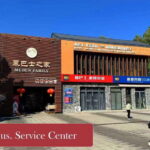
You’ll meet at East Gongmen Post And Telecommunication Office (address shown as X7XJ+FW5, Yi He Yuan Lu, Hai Dian Qu, Beijing 100091). It’s described as near public transportation, which helps if you’re not sure you’ll want a taxi.
The experience caps at 15 travelers, and that matters more than it sounds. With small groups, you’re less likely to lose track of your tour timing, and it’s easier for the guide to keep everyone together through the flow of the park.
The itinerary uses short stops—roughly 20 to 30 minutes each—so you’ll want to treat this like a highlights walk, not a slow museum visit. Wear shoes you can keep moving in. You’re visiting the kind of palace-garden complex where the scenery rewards walking, but your legs still do the work.
Stop 1: Hall of Benevolence and Longevity (1750 → rebuild story)
This first stop sets the tone. The Hall of Benevolence and Longevity was originally built in 1750. It was later burned down in 1860 by English and French troops and then rebuilt in 1888 under Empress Dowager Cixi. That timeline alone makes the building more than a pretty facade—you’re looking at a structure shaped by political history and restoration.
The function matters too. This hall was used for administering government affairs, receiving greetings, and receiving foreign envoys. Translation: it wasn’t just a decorative showpiece. It was part of the formal, state-facing world of the Qing court.
Why this stop is a strong start:
- It gives you the palace mindset. Before you see lakes and corridors, you understand power and ceremony.
- It creates a mental map for the rest of the visit. Once you see the hall’s role, the later Cixi-related spaces feel more connected.
Practical drawback: because it’s only around 20 minutes here, you won’t have time to linger on every architectural detail. If you’re the type who loves reading every plaque, you might want to take a quick photo first, then circle back later on your own if time allows.
You can also read our reviews of more guided tours in Beijing





Stop 2: Kunming Lake (the park’s massive water backbone)
Next comes Kunming Lake. It takes up about 75% of the park, so even if you only get a short look, you’re seeing the scale-defining element.
What makes this lake interesting is the transformation story: it used to be a much smaller water source near Beijing. Over time, it became a man-made reservoir and then expanded into what you see in the Summer Palace today. That’s classic palace landscaping—turning geography into designed scenery.
Even with a brief stop (about 20 minutes), Kunming Lake does two useful jobs for your visit:
- It breaks the heavy building focus and gives your eyes a wide open space.
- It helps you understand sightlines. Later, you’ll notice how buildings relate to the lake.
A small consideration: short stops mean you may not see the lake from every possible angle. If you’re dreaming of one perfect photo position, keep expectations flexible and aim for the best viewpoint you’re at when the group moves.
Stop 3: Hall of Happiness and Longevity (Cixi’s living quarters)
This is where the tour turns from state business to court life. The Hall of Happiness and Longevity refers to the living quarters of Empress Dowager Cixi. It’s a large complex with a prime position—facing Kunming Lake and backing onto Longevity Hill.
That orientation matters. It’s telling you how the court wanted comfort, privacy, and viewing together. This isn’t just “look at a building.” It’s “look at how power and daily life shared the same landscape.”
Stop length is about 30 minutes, which gives you a bit more time than the lake and first hall. Use it to notice how the space is arranged toward the water. If you’re the kind of traveler who likes to connect spaces, this is often the moment when everything starts clicking.
One consideration: because the route is still time-limited, don’t expect a full, slow exploration of every corner of the complex. This stop is ideal for getting the big picture and then enjoying the architecture with less pressure.
Stop 4: Long Corridor at the Summer Palace (728 meters of paintings)
If you only remember one thing from this tour, make it the Long Corridor. It’s 728 meters long, which is hard to grasp until you’re standing next to it and realizing it keeps going.
It also includes four octagonal gazebos, representing the four seasons. That’s a neat design touch: the corridor isn’t just a passage. It’s a seasonal storytelling device.
Then there’s the detail that makes people stop mid-walk. The beams and ceilings are decorated with over 14,000 paintings depicting scenes—built to make the corridor feel like a long gallery you move through.
The tour stop is about 20 minutes, and that’s enough to feel the scale and get a few strong views, but not enough to analyze every painted panel. If you love art, you’ll probably want to slow down outside of your tour window too.
One practical tip drawn from real experience: don’t assume all nearby attractions are included. For example, the Tower of Buddhist Incense is not included in this route. You can purchase a separate ticket at the tower entrance if you decide you want it.
Why the guided option often feels worth it
The most praised part of the experience is the guide. In one standout case, the guide’s name was Jenny, and the impression was clear: she was energetic, good at connecting details, and able to make the place feel understandable, not just impressive.
That’s what a strong guide does in a palace complex:
- They give you a framework (what each building was for).
- They point out the “why” behind the layout.
- They help you avoid wandering the wrong direction chasing photos.
If you’ve visited big sites before, you know the trap: you look at something gorgeous, then later you realize you don’t know what you saw beyond the postcard version. A guide changes that. Even during short stops, you end up with clearer memories.
If you choose ticket-only, you can still have a good time—just go in knowing you’ll be doing more self-explaining. In that case, plan to read signs quickly and accept that your visit will be more visual than analytical.
What you’ll likely feel walking this route
This tour works because it balances three types of “wow”:
- Power and form (the Hall of Benevolence and Longevity and its state function)
- Scale and openness (Kunming Lake taking over most of the park)
- Human story and design (Cixi spaces plus the Long Corridor art)
The pacing also helps. You’re not just staring. You move from building to water to another building cluster to a moving corridor. That keeps your brain engaged, and it reduces the fatigue that can set in when you’re touring in heat and crowds.
And since the group is kept small, you’re less likely to feel swept along. You’ll still need to stay aware of timing, but the experience is designed for a group that doesn’t feel like a moving wall.
Who should book this Summer Palace highlights experience
You’ll probably like this most if:
- You want a focused highlights visit in about 2 hours
- You’re okay with a set route and short stops rather than an all-day free-for-all
- You prefer learning context, especially if Qing-era palace function isn’t already familiar
- You like the idea of a pre-arranged entrance ticket that’s tied to your schedule
It also suits first-timers. If you’re new to Beijing palace gardens, starting with a government hall, then moving to lake scale, then to Cixi living quarters, and ending at the Long Corridor gives you a clear narrative arc.
If you’re an architectural super-nerd who wants to measure every roofline and read every sign slowly, you might find the time here a bit short. In that case, this is a great add-on visit, not your only plan.
Quick decision: should you book it?
Yes—if your priority is high-value sightseeing that stays organized. The big selling point is the combination of a low-cost entrance ticket and an optional guide that turns the Summer Palace from pretty to understandable. The fact that the process runs smoothly for people—especially with the QR code arriving ahead of time—also helps reduce stress.
Skip the guided option only if you’re confident navigating and you’re comfortable working from signs and your own research. If you want someone to explain why each stop matters, the guide choice is where the real payoff usually lands—especially given the strong impressions of guides like Jenny.
FAQ
FAQ
What’s included in the price?
Your booking includes an entrance ticket for the Summer Palace. If you select the guided tour option, a guide is included with that choice.
Does this include a combo ticket?
No. The provided ticket is an entrance ticket only, not a combo ticket.
How long does the experience take?
The visit is listed at about 2 hours.
Is pickup included?
Pickup is offered, but it depends on the option you choose. If you book only the entrance ticket, it means no guide and no pickup.
Where do I meet the group?
The meeting point is East Gongmen Post And Telecommunication Office (X7XJ+FW5), Yi He Yuan Lu, Hai Dian Qu, Beijing 100091.
How big is the group?
The tour has a maximum of 15 travelers.
Do I need to provide passport details?
Yes. You’ll need to provide all participants’ full names, passport numbers, and birth dates for ticket booking, and the provider requests a scanned copy of the passport front page.
Can I request a language for the tour?
Yes. You should note your language request on booking.
Is the Tower of Buddhist Incense included?
No. The Tower of Buddhist Incense is not included, and a separate, low-cost ticket can be purchased at the tower entrance.
What if I need to cancel?
Free cancellation is available up to 24 hours in advance for a full refund. Changes within 24 hours aren’t accepted.
Is the experience near public transportation?
Yes. The meeting point is described as near public transportation.