REVIEW · XI AN
The Legend Of Camel Bell In Xi’An
Book on GetYourGuide →Operated by Noble Tour · Bookable on GetYourGuide
Camel bells deserve their own theater.
This production is interesting because it blends a Silk Road legend with full-on stage spectacle, including a 360-degree rotating stage on water and an interactive-feeling setup where you’re kept in the action. I especially love the best-seat show setup included in the price, so you’re not hunting for view angles. One consideration: if your seats are on the lower side (rows below 11), you may get splashed, so plan for that.
The story behind the show starts from a speech about Shaanxi as the starting point of the ancient Silk Road, with the mood of camel bells echoing across mountains and desert smoke drifting by. I like how the staging uses big physical effects—volcano eruptions, heavy snow, rising Buddha statues, and a roaring river feel—to make the legend feel real instead of like a slow narration. Still, it’s not a small, quiet performance, so if you prefer subtle theater, you’ll want to come with the right mindset.
On the practical side, you’ll get hotel pickup and drop-off, and the show runs about 60 minutes inside a wider experience window. Tickets are checked about 30 minutes before the performance, with showtimes ranging from 11am to 7pm, so you can pick what fits your day. In the way the operator coordinates bookings, Noble Tour (with help from Noble Liu) comes across as responsive—quick ticket handling and even same-day fixes have been part of their track record.
In This Review
- Key things to know before you go
- Silk Road legend meets big stage magic
- Where the show happens: a massive water-and-stage setup
- Your 3-hour window: hotel pickup, ticket check, and the 60-minute show
- Seating strategy: why rows below 11 can be wet
- The scenes: camel bells, desert danger, and Xuanzang’s route
- How the provider keeps things smooth (and what to copy for yourself)
- Price and value: what $68 buys you in Xi’an
- Who this show suits best (and who should think twice)
- Should you book the Legend of Camel Bells?
- FAQ
- How long is the show?
- Does the tour include hotel pickup and drop-off?
- What time do the shows run?
- When do I need to check in?
- Are tickets and seating included in the price?
- Is food or drinks included?
- Can I cancel for a full refund?
Key things to know before you go
- Hotel pickup and drop-off means less stress in Xi’an traffic.
- Best seats included so you don’t gamble on visibility.
- A 60-minute show that still fits into a roughly 3–4 hour overall outing.
- Ticket check about 30 minutes early keeps the timing smooth.
- Lower rows can get wet; rows below 11 may mean splashes.
- Noble Tour coordination (including Noble Liu) is fast and practical if plans change.
Silk Road legend meets big stage magic
The Legend of Camel Bells is built around one idea: the Silk Road wasn’t just trade, it was connection—people moving, stories traveling, and cultures meeting. The camel, the bell, the desert crossings, and the eventual arrival in the Buddha’s country all get staged as a myth you can watch, not just read.
What I like about this approach for your trip is that it works even if you know little about the historical Silk Road. The show communicates through visuals first—motion, weather effects, and the way scenes flow into each other—so you’re not stuck translating every detail to enjoy it. If you come with curiosity about Xi’an and Tang-era storytelling, you’ll pick up more on the emotional meaning as the scenes stack.
There’s also a clearly national-feeling theme in the framing: a sense of warmth about Shaanxi’s role as a starting point, and a message about openness and friendship along long routes. One of the strongest “value” points here is that you’re paying for a story-world experience, not just a seat in a room with performers.
You can also read our reviews of more tours and experiences in Xi An.



Where the show happens: a massive water-and-stage setup

This isn’t a typical theater with a flat stage and a fixed viewpoint. The venue is engineered for large effects, including a stage that rotates around you and sits over water. The production notes that the theater used 2,000 tons of water, and the complex includes 3,000 auditoriums—that scale is the reason effects feel physical instead of simulated.
I find this matters for you because it changes what you focus on. You’re not only watching performers; you’re watching a whole environment change around you. The set, screen, stage, and audience are treated like one system, and at scene changes the audience is transferred to the next position so the “best view” stays matched to what’s happening.
In practical terms, you’ll get the feeling of being inside a moving landscape—desert crossings, erupting danger, and religious imagery all show up in a way that tries to stay consistent from seat to seat. It’s also why raincoats are smarter than you might think. If you end up in the wetter lower section, you’re basically choosing to be part of the effect.
Your 3-hour window: hotel pickup, ticket check, and the 60-minute show
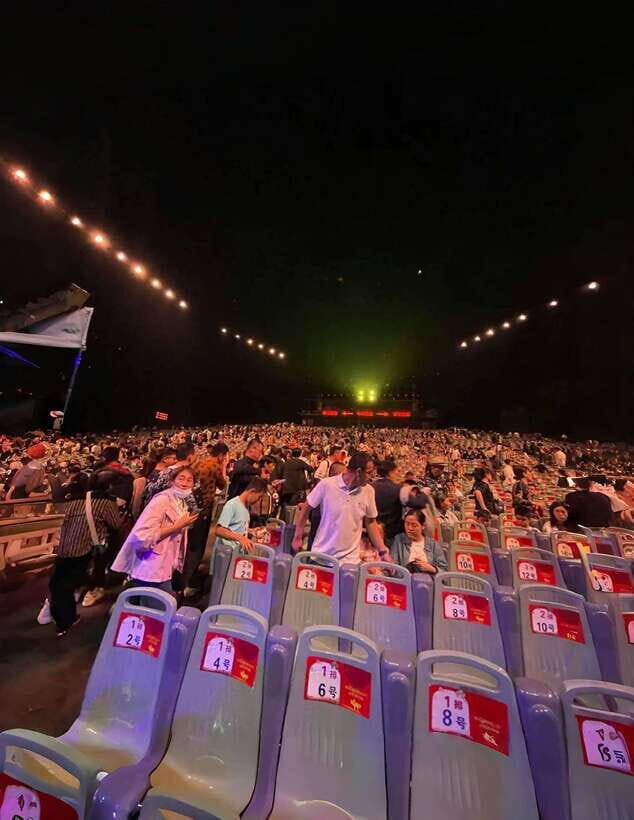
Your outing is simple: get picked up, go to the show, check in early, watch the performance, then go back to your hotel.
Here’s the rhythm you should plan for. First, you’ll be collected from your hotel and transferred to the theater area. You’ll then need to be ready for a ticket check about 30 minutes before the show starts—this is where delays can happen if you show up late. The show itself lasts about 60 minutes, which means you’re not trapped for hours watching the clock.
The time you choose matters because showtimes run from 11am until 7pm, and the schedule can include about 4 to 11 shows a day depending on the day. So if you want a late evening slot (often better for photos and calmer city logistics), you can. If you want to avoid night crowding, choose earlier.
After the performance, you’ll return via the included hotel drop-off. I’d treat this as a contained evening plan: it’s one fixed activity that doesn’t spill into half your day.
One small coordination detail that can affect your first minutes: the meeting point process involves sending a photo of the driver. That’s the kind of thing that sounds minor until you’re standing with luggage and no one can find you. So send the requested photo promptly and keep your phone charged.
Seating strategy: why rows below 11 can be wet
The show is designed so the staging stays impressive from many angles, and that’s part of why this tour includes the best seats. Still, “best” doesn’t automatically mean “dry.” A clear note from real bookings: if you take rows below 11, you may remain wet.
So here’s the practical move: if you’re sensitive about getting splashed—especially if you don’t want damp pants, shoes, or a camera risk—choose a time and seat arrangement that keeps you higher if that option exists in your ticketing. The tour includes seats for you, but if you have strong preferences, it’s smart to flag them early so you’re not surprised.
Also consider what you’ll wear. Wear something you don’t mind re-wearing later, and bring a small plastic bag for valuables. If you’re with kids, plan for the possibility that the “wow moment” might come with a little water.
This matters because the show’s “water stage” concept isn’t decorative. It’s part of the effect engine, so splashes are not just a rumor—they’re tied to how the lower seating interacts with the stage action.
The scenes: camel bells, desert danger, and Xuanzang’s route
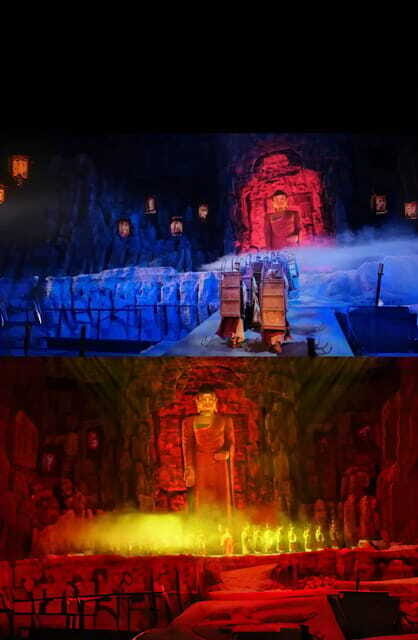
The show is structured around dramatic transitions, with the audience carried from one moment to the next. The legend has a clear arc: departure from the desert, confrontation and trials along the way, and a final arrival connected to Buddhist scripture and the Silk Road opening.
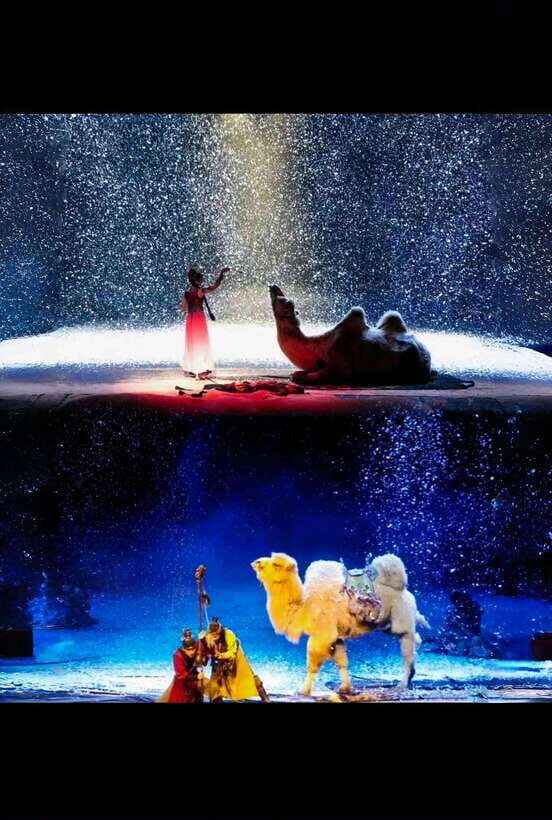
Early on, the camel comes from the desert and listens to the camel bell as it crosses wide stretches—so the atmosphere leans into isolation and distance. Then the tone shifts to threat: wolves rush toward the camel, and the staging pushes intensity so you feel the danger rather than just hear about it.
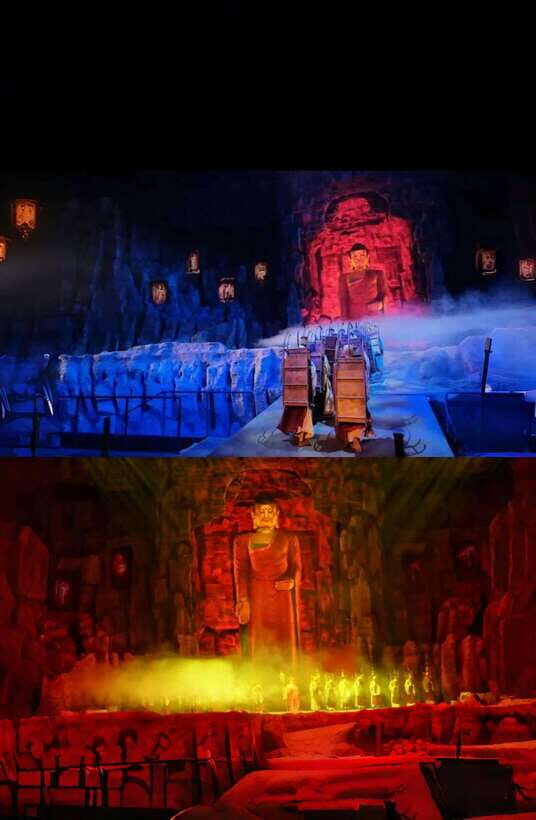
After that, the production leans hard into “weather and earth” effects. You’ll see a volcano erupt, heavy snow fall across the sky, Buddha statues rise, and a roaring river sound-and-effect shows up like real scenery. It’s dramatic, yes, but it’s also controlled. The point is to make the legendary journey feel like a series of escalating obstacles.
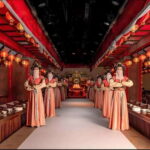
The final chapters land in spiritual and historical storytelling. The camel team meets Master Xuanzang, who takes scriptures, and the show frames that as the moment the Silk Road becomes truly “opened” and connected. The ending pushes toward a Tang-era sense of celebration—different nations coming to court in friendship and ceremony.
Why I think this is worth your time, even for a first Xi’an trip: it compresses big themes—journey, risk, faith, and cultural exchange—into one hour of high-impact visuals. You get the emotional shape fast, and then you can decide what parts you want to explore more in museums or historic sites later.


How the provider keeps things smooth (and what to copy for yourself)

This is one of those tours where the main value isn’t only the show—it’s how you get there and how your ticket situation is handled.
Noble Tour, with Noble Liu involved in communication, has a track record of being quick to respond and practical about ticket retrieval. In a same-day situation, booked guests have received tickets and even had someone wait at the entrance when plans ran late by about two hours. That tells you something important: their process is built for real travel messiness.
You can use that to your advantage. After booking, expect to be contacted for ticket coordination and instructions on how to get your tickets, since ticket pickup isn’t something you handle completely on your own. If you’re traveling with a tight schedule, message early and confirm the timing so you’re not scrambling when you arrive.
It also helps to keep your phone ready, since coordination is described through quick messaging (including WhatsApp in the feedback). If you’re the type who likes to pin everything down in writing, screenshot the instructions they send you.
Price and value: what $68 buys you in Xi’an
At $68 per person, you’re paying for more than entry to a performance. The price includes best seats, plus hotel pick up and drop off, and you’re getting a full-scale production built on a 60-minute runtime inside a larger scenic-theater experience.
The value angle here is straightforward. If you had to buy the show ticket alone in the local market and then handle transport separately, you’d likely spend time and money assembling the pieces yourself. This tour solves the “logistics tax” so your effort goes into the show, not into figuring out where to stand and how to catch the right entry timing.
Another value point: showtimes are frequent, from 11am to 7pm, with multiple showings across the day. That flexibility can matter when you’re planning around other Xi’an priorities—city tours, Terracotta Army logistics, meals, and rest time.
So yes, it’s not the cheapest evening activity in town. But it’s also not a generic performance. You’re buying a production with big physical staging, a rotating multi-position audience setup, and major effects that are hard to replicate with a normal theater ticket.
Who this show suits best (and who should think twice)
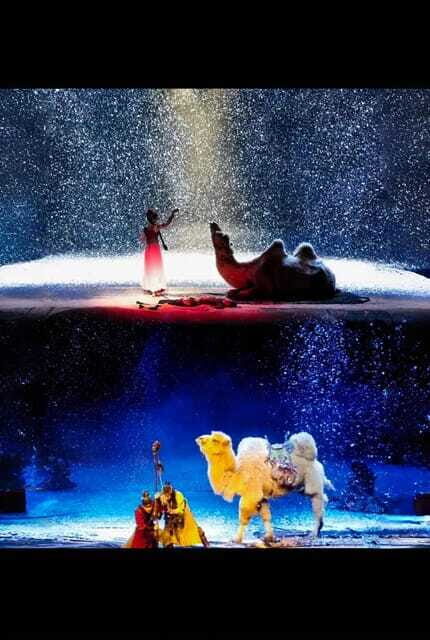
This is a strong pick if you want an evening plan that feels like a “destination experience.” You’ll probably enjoy it most if you like theater with visuals, special effects, and story pacing that stays clear even without deep background knowledge.
It’s also a good fit for families. The staging is designed to keep attention and deliver clear emotional beats—desert, danger, eruption, and arrival. And because hotel pickup is included, it’s less of a burden for parents managing kids in a new city.
If you’re very particular about dryness, consider that lower seating can get wet. If you hate crowds and noise, the big-scale nature of the venue might feel intense. And if you only want small, intimate performances, the size of this production may feel too “spectacle” for your taste.
Still, for most visitors doing a first or second pass through Xi’an, it’s the kind of activity that gives you a memorable visual reference point for the Silk Road ideas you’ll see in sites around town.
Should you book the Legend of Camel Bells?
I’d book it if you want one planned, high-impact night in Xi’an that runs on a tight schedule, includes transport, and delivers a full story experience on a stage engineered to move around you. The included best seats and hotel pickup/drop-off make it easy, and the production’s mix of desert, wolves, volcano, snow, and Xuanzang gives you a lot to remember.
Skip it if you strongly prefer dry seating, quiet venues, or you only want low-effort sightseeing with no early ticket check. If you do book, pack for possible splashes, arrive with time to spare for that 30-minute early ticket check, and pick a showtime that matches your energy level.
If you can handle a little water and you like legend-driven storytelling, this one is worth your evening.
FAQ
How long is the show?
The performance itself lasts about 60 minutes, and the whole experience is planned for roughly 3 hours (sometimes listed as 4 hours including transfers).
Does the tour include hotel pickup and drop-off?
Yes. Hotel pick up and drop off are included.
What time do the shows run?
Shows run from 11am until 7pm, with multiple showings each day.
When do I need to check in?
You need to check the tickets about 30 minutes before the show starts.
Are tickets and seating included in the price?
Yes. Best seats for the show are included, and the provider coordinates ticket access after you book.
Is food or drinks included?
No. Food and drinks are not included.
Can I cancel for a full refund?
Yes. Free cancellation is available up to 24 hours in advance for a full refund.