REVIEW · XI AN
Xi’an: Han Yang Ling Tomb Archaeology Tour with Options
Book on GetYourGuide →Operated by Ping's Tours · Bookable on GetYourGuide
A Han tomb that reads like a lesson. I like how this tour pairs private guiding with real access to the Yangling Tomb site, including the underground archaeology area and the above-ground exhibition room. I also love the focus on why things look the way they do, like the small, armless figurines. One drawback to plan around: meals aren’t included, so you’ll want to sort food timing yourself.
You’ll get picked up in your Xi’an hotel lobby (within the 3rd ring road) and ride in a private vehicle, which keeps the day from turning into a logistics puzzle. You’ll also skip the ticket line, so your time stays on the site and not in queues. The whole outing runs about 5 to 8 hours, with roughly 3 hours on-site, then you return downtown or continue based on your selected option.
Good guides matter here, and the names that show up often are Becky, Lisa, and Rosa—each praised for clear English and strong explanations. Still, if you want maximum freedom to wander without any structure, this private, guided approach may feel a bit more planned than you’d like.
In This Review
- Key highlights worth your attention
- Yangling Tomb in plain terms: why Emperor Jingdi’s site matters
- The private guide advantage: how Han art and ideas become understandable
- Emperor Jingdi (Liu Qi): the policies behind the tomb
- Understanding the site itself: how underground finds change your viewpoint
- Timing on the ground: what the 5 to 8 hours really feels like
- Skip-the-line, private vehicle, and the value of a focused day
- What to bring and the on-site rules you’ll want to know
- Who should book this Han Yangling Tomb tour?
- Should you book it? My practical recommendation
- FAQ
- How long is the Han Yang Ling Tomb Archaeology Tour?
- What is included in the price?
- Is a meal included?
- Where do you pick me up in Xi’an?
- What language is the guide?
- What should I bring and what rules apply?
- FAQ
- Can I cancel for a refund?
- Is the tour suitable for everyone?
- Do I need to share passport details for ticket booking?
Key highlights worth your attention
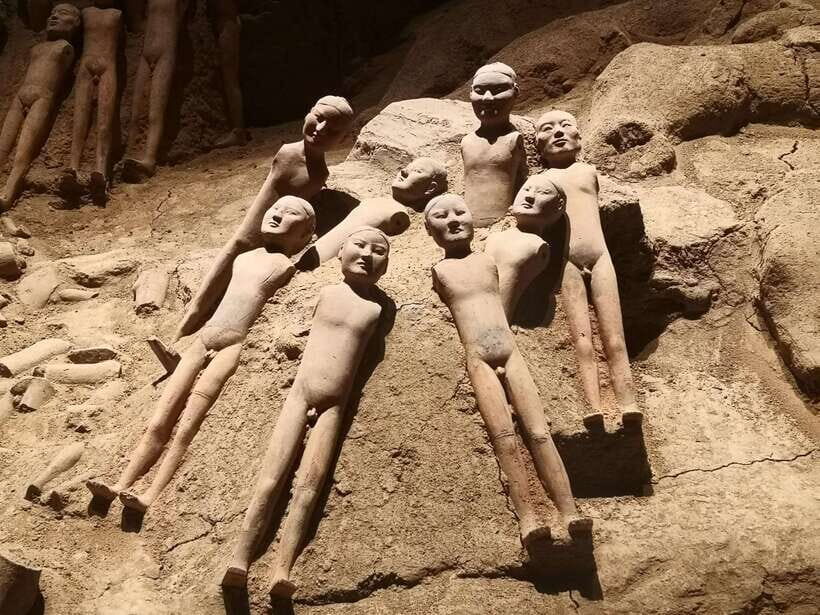
- Underground + exhibition access at Yangling Tomb, so you see both the finds and the story behind them
- Emperor Jingdi (Liu Qi) context: policies, culture, and frontier strategy explained in plain terms
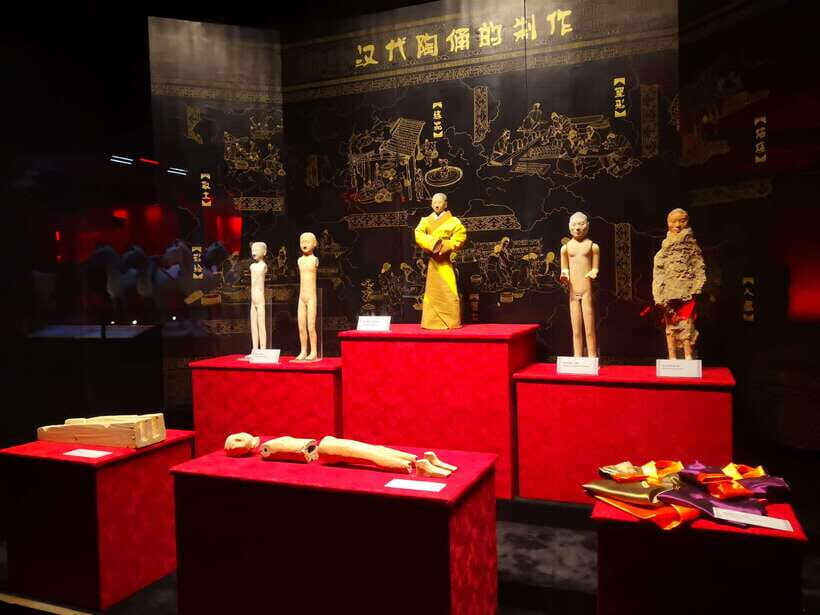
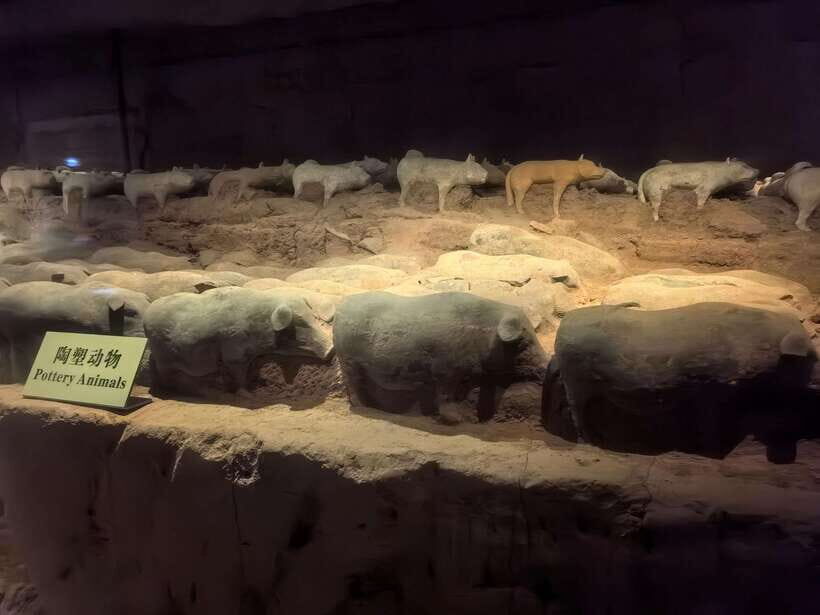
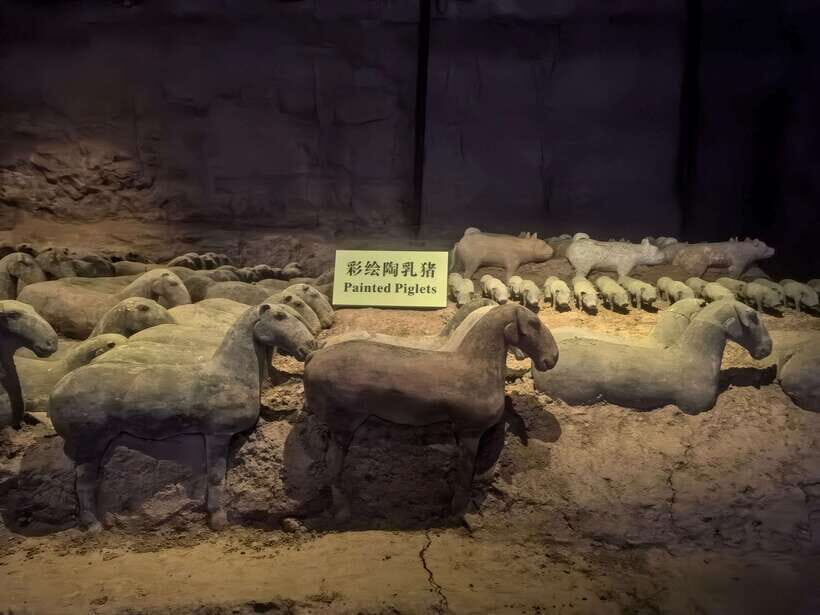
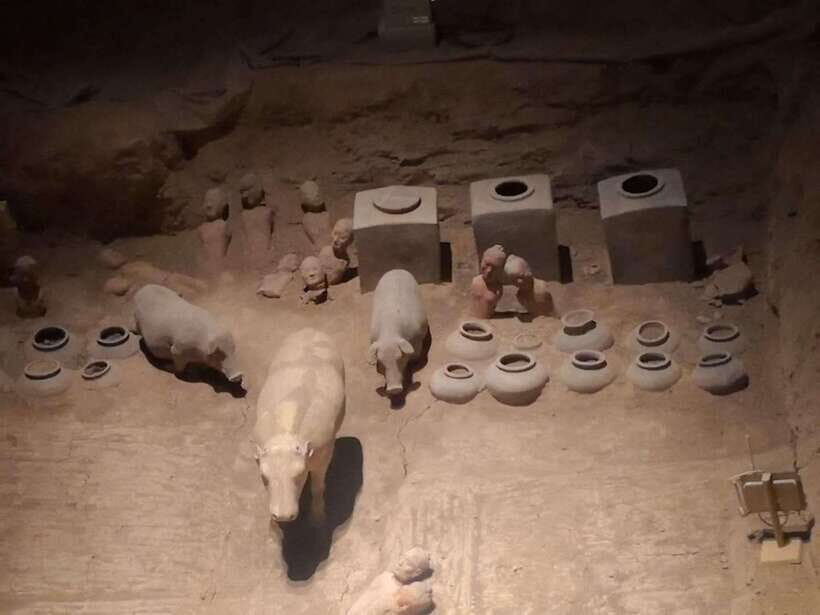
- Figurines with an explanation: why they’re small, missing clothes, and don’t have arms
- Typically calmer than the Terracotta Army area, with fewer crowd pressures at your pace
- Skip-the-line entry + private pickup, which saves time in Xi’an
Yangling Tomb in plain terms: why Emperor Jingdi’s site matters
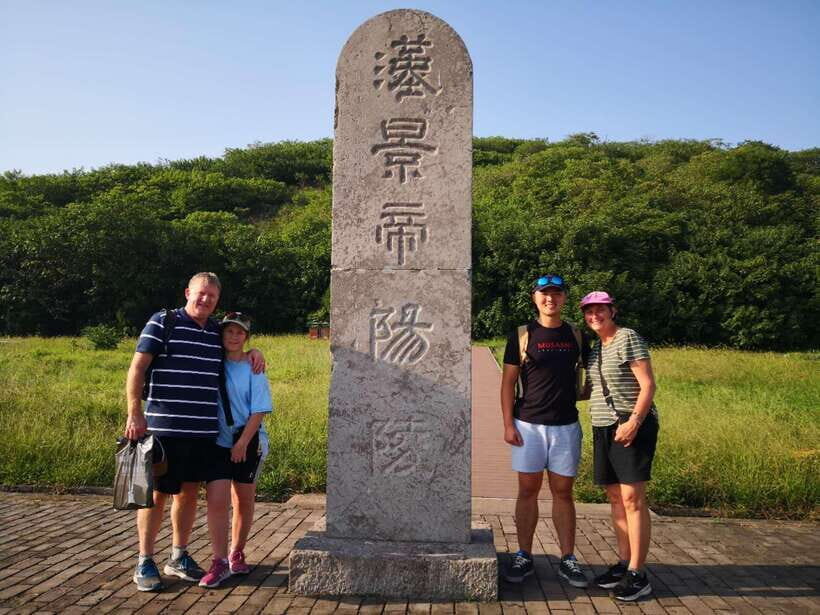
Yangling Tomb is centered on Emperor Jingdi, the 4th emperor of the Han Dynasty, and it’s called the Mausoleum of Emperor Jingdi in many descriptions. In practice, what makes it compelling is the mix of archaeology and interpretation. You’re not just looking at artifacts behind glass—you’re learning how the site is organized and what it’s trying to communicate about Han beliefs, planning, and daily life.
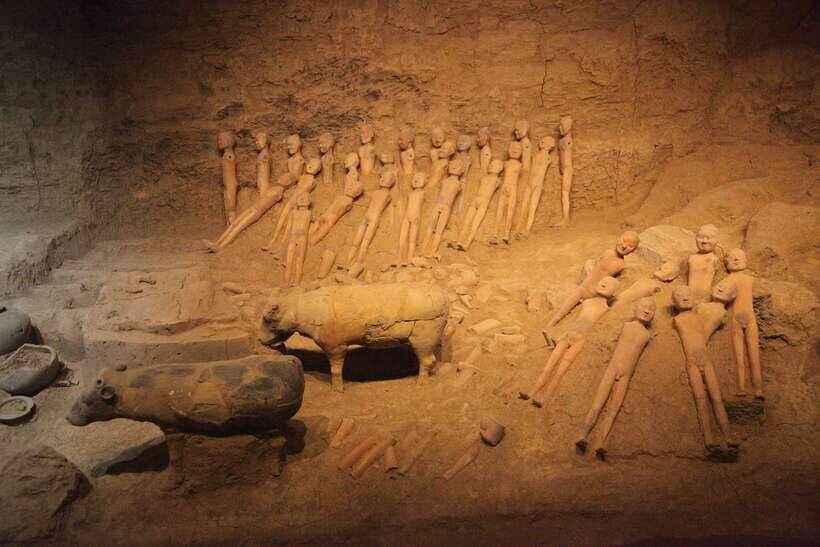
The tomb complex is split into two parts: an underground archaeological site and an above-ground exhibition room. The underground area is the main reason this is an archaeology stop rather than a quick museum visit. It’s built to show you how the discoveries were handled and how the buried materials fit together as a system.
If you’ve already seen big “highlight” attractions in Xi’an, this is a different kind of satisfying. The Terracotta Army tends to wow you with scale. Yangling Tomb tends to reward you with meaning—how the Han government thought, how it represented people, and what it wanted to preserve for the afterlife.
You can also read our reviews of more tours and experiences in Xi An.



The private guide advantage: how Han art and ideas become understandable
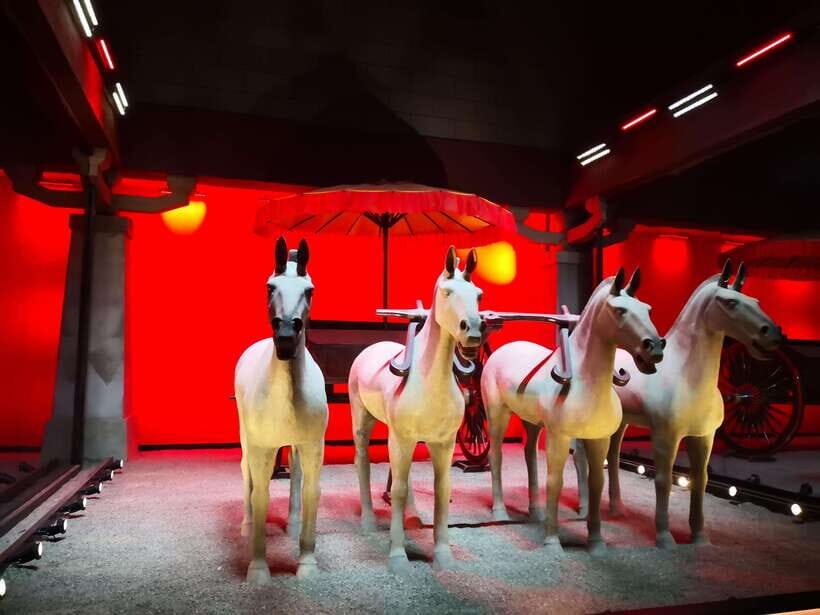
This tour is built around a live guide in Chinese or English, and that matters because the Han Dynasty can feel distant unless someone turns it into everyday logic. The guide’s job here is to connect culture, art, and philosophy to what you’re actually seeing on site.
You’ll cover topics like Han Dynasty culture and art and how the era connects to the Silk Road. You’ll also learn why the figurines are portrayed in a particular way—specifically that many figures are small, don’t wear clothes, and are armless. Those details aren’t just trivia; they’re clues. The guide helps you understand that artistic choices often reflect function, symbolism, and the practical limits of what craftsmen were making.
A second thing I like about guided archaeology: you don’t have to guess what you’re looking at. Without context, a tomb visit can become “look, admire, move on.” With a private guide, you can ask follow-up questions and get answers that match the artifact you’re standing in front of.
Emperor Jingdi (Liu Qi): the policies behind the tomb
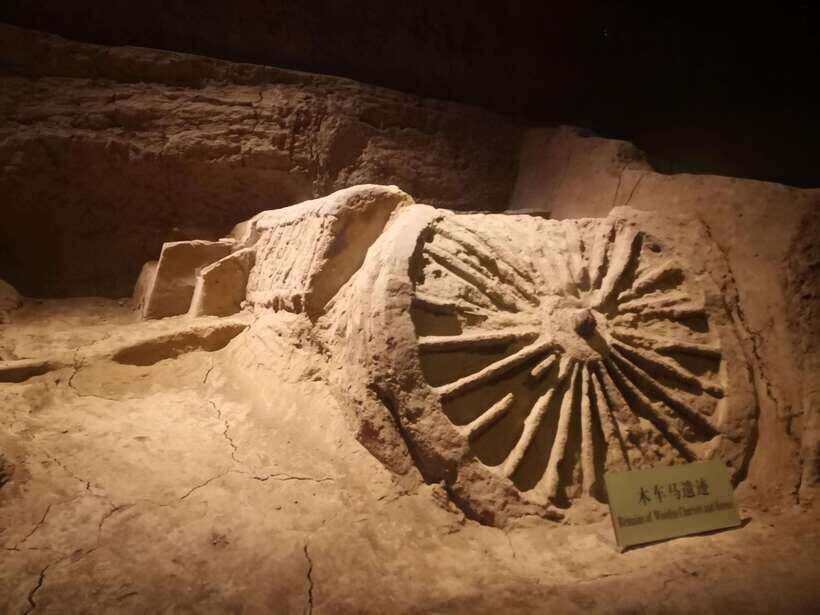
One of the most useful parts of the tour is how it frames the person behind the mausoleum. Emperor Jingdi’s personal story is tied to his policies, and those policies show up as themes in how the Han state managed society and its borders.
His name was Liu Qi, and he became crown prince when he was 10. He died in Weiyang Palace in 141 BC at age 48, and he was buried in Yangling. That timeline sets up a “why this person, why this site” feeling. You’re not just touring a place; you’re learning the logic of the ruler it’s associated with.
Here’s what you’ll walk through in explanation form, because the guide doesn’t treat it like a list. You’ll hear how Jingdi inherited the Huang–Lao approach linked with Emperor Wendi, which emphasized giving people a chance to rest. The state is described as favoring agriculture and putting constraints on business, with light taxes, strict frugality, and a policy leaning toward reduced punishment. Even etiquette and culture and education get attention in the story, which helps you see the Han government as more than warfare and administration.
On the foreign policy side, you’ll hear about the strategy of soothing Jinyue in the south and strengthening Hu in the north. Peace-making with the Xiongnu (Huns), pacifying the South Yue, and keeping active defense all appear in the explanation. Border customs systems and trade arrangements with the Xiongnu are also part of what you’ll learn, so the frontier feels connected to daily administration rather than being treated like a separate chapter.
This matters for your visit because the tomb isn’t floating in time. The site becomes a lens for how the Han world worked—how leaders tried to stabilize society and manage power across regions.
Understanding the site itself: how underground finds change your viewpoint
Once you’re at Yangling Tomb, the underground area is the moment that shifts the visit from “tourist viewing” to “archaeology thinking.” You’ll get to experience the site with structure: you’re shown the tomb complex as divided between what’s below ground and what’s presented above ground.
The above-ground exhibition room is where you typically get the clearer, “put it together” interpretation: how objects and sections relate, what you’re meant to notice, and how the finds are presented as a coherent story. The underground archaeological area is where you can feel the weight of the work—this is where the discoveries start as buried context before interpretation.
Even if you’re not an archaeology nerd, this two-part format works because it stops the common problem of tomb visits: you only see the finished display. Here you see the bridge between the actual archaeological reality and how it’s communicated to visitors.
Timing on the ground: what the 5 to 8 hours really feels like
The tour runs about 5 to 8 hours, and the on-site exploration is about 3 hours. That’s enough time to avoid rushing, but not so long that you feel stuck. For many people, the sweet spot is using the guide time to ask questions while you’re still fresh, then using the remaining time for a calm look at the details you care about most.
Your day starts with a hotel lobby meeting with the guide and driver, and then you head directly to Yangling Tomb. After your historical exploration, you return to your downtown hotel. Some options allow you to continue the tour after the tomb visit, depending on what you selected.
Practical tip: because the only explicitly listed omission is meals, treat food like your main planning job. If you know you’ll get hungry, eat before pickup or plan a nearby stop once you return. You don’t want to spend your mental energy hunting for food while the tour is otherwise flowing smoothly.

Skip-the-line, private vehicle, and the value of a focused day
At $104 per person for a private guide and private transport plus entry tickets, the value is strongest if you care about efficiency and context. This isn’t priced like a bargain group bus where you buy a seat and hope for answers. You’re paying for a guided experience with direct pickup and drop-off, which reduces the “wasted travel” feeling.
Here’s what’s included, and why it matters:
- Private guide and driver: you get explanations matched to what you’re seeing
- Hotel pickup and drop-off: you’re not navigating from central Xi’an on your own
- Private vehicle transport: less hassle, fewer coordination headaches
- Entrance ticket included: your entry is handled without extra ticket wrangling
The “skip the ticket line” detail is also real value. In Xi’an, lines can eat time fast, and you’d rather spend that time looking at the exhibits than watching other people filter through gates.
One logistics consideration: pickup is included only for hotels within the 3rd ring road of downtown Xi’an. If your hotel is outside that area, there may be an extra payment. Check your hotel’s location early, so you don’t lose the day to a last-minute surprise.
What to bring and the on-site rules you’ll want to know
Before you go, bring your passport or ID card. You also need to provide your name and passport number on the booking page for ticket advance booking, so have that info ready.
You should also know the basic “no nonsense” rules that keep things smooth:
- No weapons or sharp objects
- No smoking in the vehicle or indoors
- No alcohol and drugs
- No making fire
These rules are mostly standard for Chinese cultural sites, but it’s worth scanning them once so you’re not stuck at check-in figuring out what you can bring.
If you like moving light, you’ll probably be happiest traveling with just the basics: ID, water plan, and a layer. Even if the day feels calm, archaeological sites and exhibitions can involve time standing and walking.
Who should book this Han Yangling Tomb tour?
I’d book this if you like history that has a human angle—policy, culture, and how a state thought about people. You’ll also like it if you’re after an experience that feels different from the most famous Xi’an sites. The descriptions you get from guides such as Lisa, Rosa, and Becky emphasize how the visit can be calmer, with fewer crowd pressures than the Terracotta Army area.
You might skip it if you want an unstructured, wander-at-will museum day. The format is private, guided, and designed around 3 hours of on-site explanation, so you’ll be nudged to follow that pace.
And there’s a clear age note: it’s not suitable for people over 95 years. If anyone in your group is near that age, I’d treat that as a hard requirement, not a suggestion.
Should you book it? My practical recommendation
Book this tour if you want a Han Dynasty visit that explains itself. The combination of private guiding, skip-the-line entry, and access to both underground and exhibition spaces is the core reason it’s a strong use of time in Xi’an. At $104, the price feels fair when you compare it to what you’re getting: transport, tickets, and a guide focused on interpretation rather than just pointing.
I also think it’s a smart second history stop. If you’ve already done Terracotta Army or plan to do it, Yangling Tomb gives you a complementary perspective—less about massive figures on display, more about the logic behind how a Han emperor’s world was represented.
If you’re the type who likes details—like the reasons figurines may be small, armless, and lacking clothes—this is exactly the kind of tour that turns those details into understanding.
FAQ
How long is the Han Yang Ling Tomb Archaeology Tour?
The duration is listed as 5 to 8 hours, with about 3 hours spent exploring the Yangling Tomb site.
What is included in the price?
The tour includes a private guide & driver, hotel pickup and drop-off, private vehicle transport, and an entrance ticket.
Is a meal included?
No. Meals are not included.
Where do you pick me up in Xi’an?
Pickup is from your hotel lobby within Xi’an’s 3rd ring road. If your hotel is outside that area, extra payment may be required.
What language is the guide?
The live guide is available in Chinese and English.
What should I bring and what rules apply?
Bring your passport or ID card. You should also follow site rules such as no smoking in the vehicle or indoors, and no weapons/sharp objects.
FAQ
Can I cancel for a refund?
Yes. You can cancel up to 24 hours in advance for a full refund.
Is the tour suitable for everyone?
It’s listed as not suitable for people over 95 years.
Do I need to share passport details for ticket booking?
Yes. You’re asked to note your name and passport number on the booking page for advance ticket booking.