REVIEW · BEIJING
3-Hour Private Hutong Walking Tour with Drum Show at Drum Tower and Tea Tasting
Book on Viator →Operated by Beijing Tour Guide · Bookable on Viator
A morning stroll through Beijing’s old lanes is a lot more than photos. This private hutong walking tour pairs classic Houhai-area sights with a real tea ceremony and a drum show at the Bell and Drum Towers, so you get culture, not just walking. I love that it feels personal because your guide can tailor the pace to what you care about, and I also like that entrance fees are handled (so you’re not hunting for tickets mid-walk). One drawback to consider: you’ll do some stair climbing at the towers, so wear shoes you trust.
You’ll start with hotel pickup, then spend the bulk of the time wandering narrow alleys, crossing through key landmarks, and learning what these places meant (and still mean) in daily life. If you want a short trip that covers multiple styles of Beijing in a tight window—old street grid, lake scenery, and performance—you’ll like the format.
One extra bonus: in at least one case, the guide (May) was able to step in even during a holiday, and the tour felt genuinely planned around the group’s interests rather than a rigid script. That kind of flexibility makes a big difference when you only have a few hours.
In This Review
- Key Things to Know Before You Go
- Beijing Hutongs, Without the Guesswork: What This 3-Hour Tour Really Delivers
- Hotel Pickup and the Private Guide Advantage
- Stop 1: Houhai Lake (Back Lakes) for a Strong Sense of Place
- Stop 2: Yinding Bridge and the Sycee-Shape Detail
- Stop 3: Yandai Xie Street (Tobacco Pouch Street) for Local Flavor
- Stop 4: Bell and Drum Towers—Climb, Watch the Drumming, Then Taste Tea
- Tea Ceremony and Tea Tasting: What You’ll Actually Get
- Price and Value: Is $72 Per Person Worth It?
- Practical Tips That Make This Tour Smoother
- Who This Private Hutong Tour Is Best For
- Should You Book This Tour?
- FAQ
- How long is the private hutong walking tour?
- Is hotel pickup included?
- What’s included in the price?
- Where do the tour activities take place?
- Is the tour private or shared?
- Does the tour offer different departure times?
- Is there an admission cost for the stops?
Key Things to Know Before You Go
- Private guide, private pace: You walk as only your group, so questions and detours stay easy.
- Tea tasting inside the Bell Tower area: It’s not a quick sip—tea tasting is built into the experience.
- Drum show from the top of the Drum Tower: You climb stairs, then watch and listen to the performance.
- Hotel pickup is included: Starting logistics are simpler than taking taxis or figuring out public transit.
- Entrance fees are included: You’re not adding surprise ticket costs for key stops.
Beijing Hutongs, Without the Guesswork: What This 3-Hour Tour Really Delivers
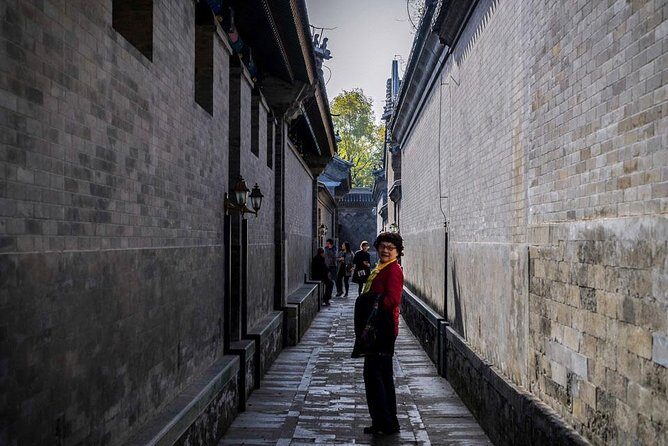
Beijing’s hutongs are the kind of place where you can wander for hours and still feel like you’re only skimming the surface. This tour keeps the good parts—old lanes, recognizable local landmarks, and the atmosphere around Houhai Lake—while giving you context as you walk. In other words, you’re not just passing scenes. You’re learning how to read them.
The best value here is the mix. You get street-level Beijing (alley walking and bridge views), then you shift to a more formal cultural setting at the towers. That pairing makes the time feel full even though the duration is only about 2 to 3 hours. You’re also not juggling tickets, because entrance fees are included, and some stops are free to enter.
I also like the private setup. If you’re the type who asks a lot of questions (or just wants quieter time to look), a private guide makes it smoother. There’s room to match the pace to your group rather than being pushed along with a crowd.
One small consideration: you are still walking. The tour includes multiple short stops across a compact area, and you’ll climb stairs at the towers. If you’re not into steps, that’s the moment you’ll feel it most.
You can also read our reviews of more walking tours in Beijing



Hotel Pickup and the Private Guide Advantage
This is one of those tours that’s easier to use than it sounds. Hotel pickup is included, which matters in Beijing where getting from point A to point B can be quick—or annoyingly slow—depending on traffic and where your hotel sits.
Because it’s private, you also get a calmer rhythm. You’re not trying to hear your guide over other groups. You can ask about what you’re seeing—street life, architecture, why certain areas became well-known—and adjust the plan if your interests lean more historical or more practical.
If you’re traveling during a busy time, that personalized approach becomes even more valuable. In one instance shared in the feedback, the operator managed to arrange a guide despite a holiday situation, and the result felt attentive rather than rushed. That’s reassuring if you’re booking for a limited window.
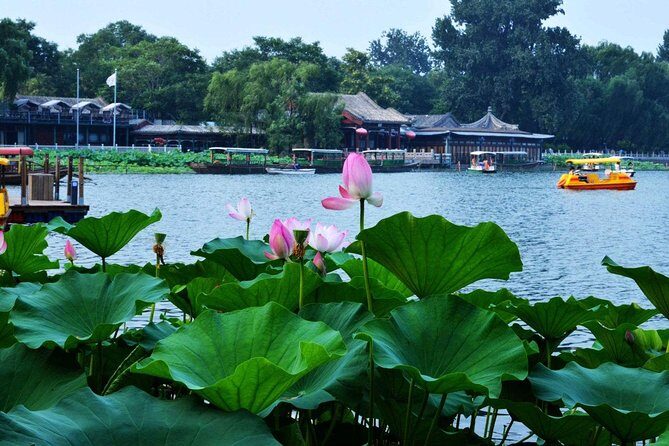
Stop 1: Houhai Lake (Back Lakes) for a Strong Sense of Place
The tour begins around Houhai Lake (Back Lakes), which is a smart first stop. It gives you an immediate sense of what the area is about: water, walkable paths, and that old-Beijing feel people come to see. You’ll start your walking tour in the ancient hutong setting, then transition from the lake area into narrow streets.
This is a good place to reset your expectations. Houhai isn’t just a pretty backdrop. It’s a starting point where you can feel the neighborhood rhythm—how the lanes connect, where viewpoints open up, and how the broader historic layout influenced daily movement.
You’ll spend about 40 minutes here, with admission ticket free indicated for this stop. That time works well because it’s long enough to slow down, but not so long that you feel stuck before the main sights.
If you’re wondering what to do with your camera here: aim for angles where the lanes meet the lake paths. That contrast—water openness versus tight alleys—helps the whole tour make more sense later.
Stop 2: Yinding Bridge and the Sycee-Shape Detail
Next up is Yinding Bridge, a short stop of about 10 minutes. The detail that matters is the shape. The bridge is described as being in the form of a silver sycee, which is why it’s called Yinding Bridge. (A sycee, in simple terms, is a traditional Chinese ingot shape people associate with wealth and trade.)
This kind of stop is easy to overlook if you treat it like a photo-op only. But with a guide, a small landmark like this becomes a clue. It tells you the area wasn’t designed just for function. It also carried symbolism—how communities liked to mark important connections and public spaces.
Since it’s also marked as free admission, there’s no reason to rush. Take the few minutes to look at how the bridge frames the space around it, then keep moving while your guide ties it into the street network you’re about to walk.
Stop 3: Yandai Xie Street (Tobacco Pouch Street) for Local Flavor
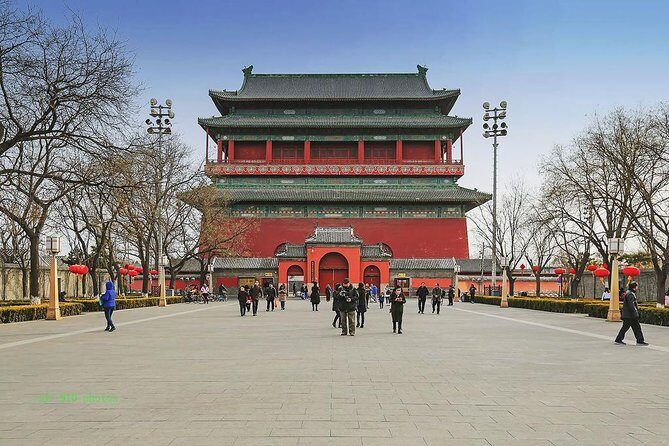
After the bridge, you head to Yandai Xie Street, also known by a name that references tobacco pouches. This matters because it hints at the street’s older commercial purpose—specializing in items like tobacco pouches, calligraphy and paintings, and jade.
This is where the tour starts to feel more like daily Beijing—people, trade, and the way certain streets developed reputations over time. Even if you’re not shopping, you’ll still pick up why the street became associated with crafts and cultural goods.
The time here is about 30 minutes, again marked as free admission, so you’re not paying just to wander. Instead, you’re paying in your time to see how the commercial identity of a historic street still shows through in how it looks and how people move.
Quick practical tip: if you’re visiting and your feet start to feel the alley walking, this is a good moment to slow down. You’ve got enough time to observe details without sprinting to the next stop.
You can also read our reviews of more food & drink experiences in Beijing




Stop 4: Bell and Drum Towers—Climb, Watch the Drumming, Then Taste Tea
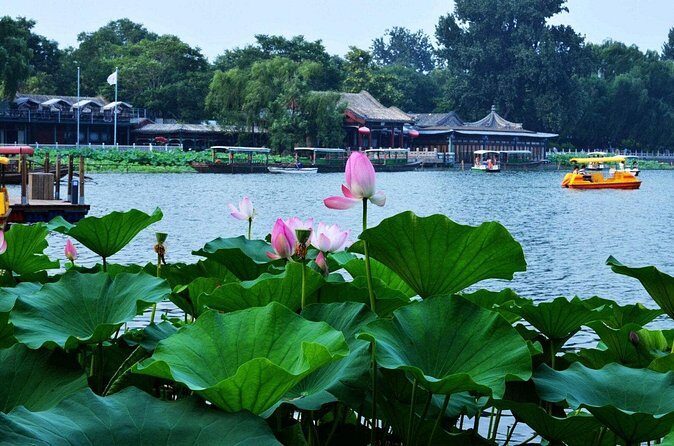
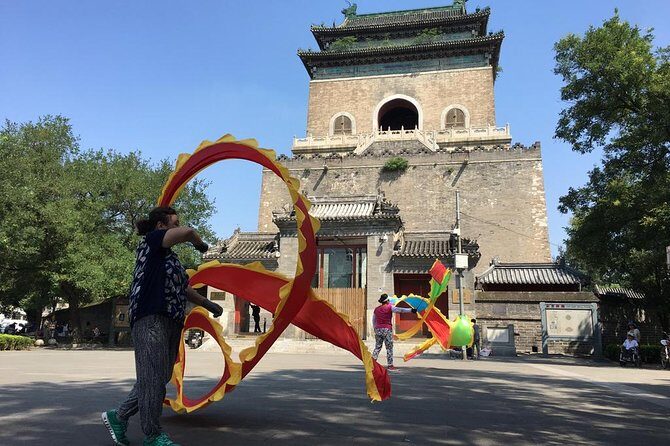
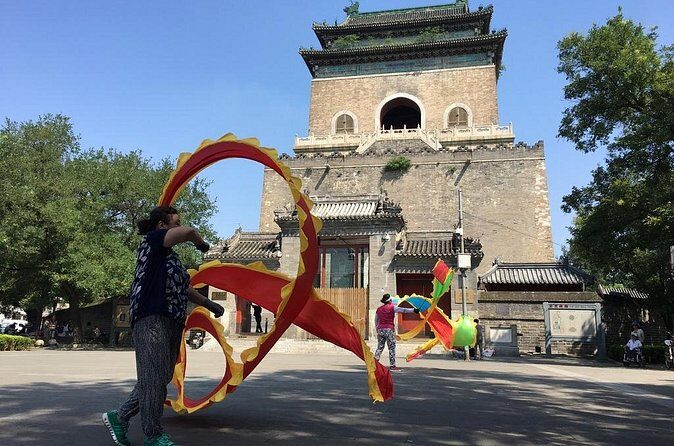
This is the cultural “anchor” of the tour. You’ll make your way to the Bell and Drum Towers, climb stairs up to the top of the Drum Tower, and then listen to the history explained by your guide before enjoying the drum show.
Two things make this stop worth your time:
First, you’re not just watching a performance. You’re getting the background right before it happens, which makes the drumming feel tied to place and tradition—not like a staged show with no context.
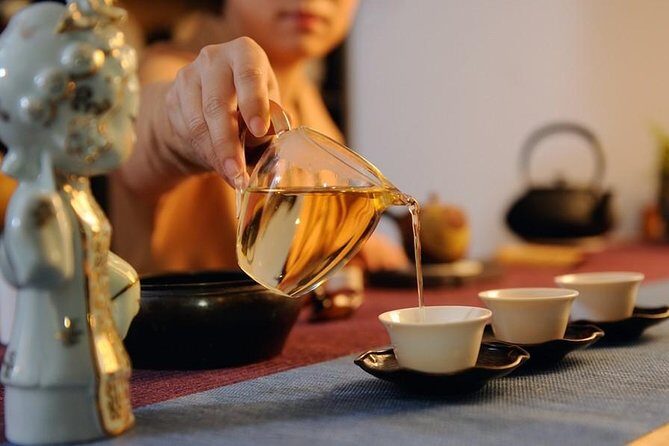
Second, the schedule cleverly pairs performance with tea tasting. After the climb and drumming, you visit a tea house inside the Bell Tower area for a tea ceremony experience. The change of pace—sound and height, then quiet tea—lands well after active walking.
The stop is about 1 hour, with tea tasting included and the tour description indicating the experience at the Bell Tower side. Entrance for this portion is part of the included entrance fee setup, so you don’t get an extra bill right here.
One consideration: stair climbing. If you have mobility issues, this is the moment to plan carefully. If stairs are fine for you, it’s also the moment where the tour feels most rewarding, because the performance is tied to the tower experience itself.
Tea Ceremony and Tea Tasting: What You’ll Actually Get
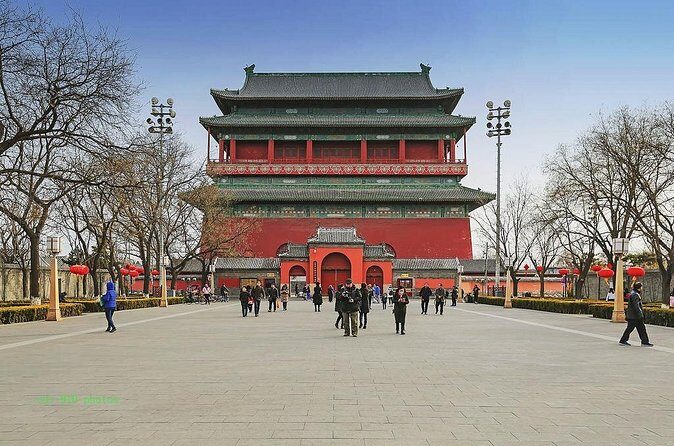
Tea ceremonies in Beijing can range from quick explanations to longer, more formal experiences. In this tour, you’re promised tea tasting, and it’s placed inside the Bell Tower tea house. That placement matters, because it turns tea into a cultural pause rather than a rushed add-on.
You can expect to slow down, learn the basics your guide wants to highlight, and taste the tea as part of the experience. If you like hands-on cultural stuff—rather than only landmarks—this is the best “do something” portion of the tour.
If you’re not a big tea person, don’t worry too much. The tasting is short and structured, and your guide is there to explain what you’re tasting and why. You’ll leave with a better feel for what tea culture looks like in this setting, not just the taste.
Price and Value: Is $72 Per Person Worth It?
At $72 per person for a private tour that lasts 2 to 3 hours, the value comes from bundling. You’re paying for:
- a local guide (the biggest reason it feels meaningful)
- hotel pickup
- tea tasting
- a drum show experience tied to the towers
- entrance fees provided
Some parts of the walk are marked as free admission, like the Houhai and bridge areas, but the towers portion is where you’d normally expect ticket costs. Bundling those helps you budget calmly.
Also, private walking time in central sightseeing areas costs money. Here, you get the best mix of scenic walking and paid cultural stops without adding multiple separate tickets or coordinating multiple guides.
My take: if you’re already planning to do a towers visit plus tea and you want a guided explanation for the hutongs, this is a straightforward way to do it without extra planning strain. If you’re only looking for general scenery with zero interest in tea or drumming, you might not get full value from the bundled activities.
Practical Tips That Make This Tour Smoother
A few things can make your experience feel smoother right away:
- Wear comfortable shoes. The towers include stair climbing, and hutong walking adds uneven ground.
- Bring a light layer. Your time splits between outdoors around Houhai and a tower/tea house environment.
- If you care about certain details, tell your guide early. This tour is private, so adjustments are possible and can make your tour feel more yours.
- Use the mobile ticket if that’s how you receive it, so you don’t waste time at entry points.
If you’re short on time in Beijing, this is a good choice because it’s compact: lake area, bridge landmark, historic street identity, then performance and tea.
Who This Private Hutong Tour Is Best For
This tour is a strong fit if you want:
- a guided hutong walk without getting lost in logistics
- a cultural combo: drum show + tea tasting
- a short Beijing experience that still feels varied
- hotel pickup and a private group setup
It also works well for couples and small groups who like a calmer pace than large group tours. If you’re traveling with kids, the information says children must be accompanied by an adult and that most travelers can participate, but you’ll still want to consider the stairs at the towers.
If you’re a solo traveler, the private format can still make sense because you’re buying clarity. You’ll know what you’re seeing and why it matters, and you won’t have to keep guessing.
Should You Book This Tour?
Book it if you want a short, focused hutong experience with built-in culture: tea tasting at the Bell Tower area and a drumming show at the Drum Tower. The best reason to choose it is the structure. You get the hutong setting, then you get an actual performance and a tea moment that feels like part of the same story.
Skip it or reconsider if stairs are a deal-breaker for you, or if you’re only after scenery with no interest in tea or drumming. Also, if you dislike walking at all, the 2 to 3 hours may feel like a lot.
If you like guided context and you want a low-stress plan with entrance fees handled and hotel pickup included, this is a solid booking.
FAQ
How long is the private hutong walking tour?
The experience runs about 2 to 3 hours.
Is hotel pickup included?
Yes, hotel pickup is included. Hotel drop-off is not listed as included.
What’s included in the price?
The package includes a local guide, tea tasting, entrance fees, and hotel pickup.
Where do the tour activities take place?
You’ll walk around the Houhai Lake area, stop at Yinding Bridge, visit Yandai Xie Street, and then go to the Bell and Drum Towers for the drum show and tea tasting.
Is the tour private or shared?
This is a private tour/activity, meaning only your group participates.
Does the tour offer different departure times?
Yes. You can choose a morning or afternoon departure when booking.
Is there an admission cost for the stops?
Entrance fees are provided. Some listed stops show admission ticket free, while the towers experience has entrance included as part of the tour.