REVIEW · HONG KONG
Hong Kong: Big Buddha Tour & Skip-the-Line NP360 Cable Car
Book on GetYourGuide →Operated by Ngong Ping 360 Limited · Bookable on GetYourGuide
The NP360 cable car ride sets the tone fast. This short, focused tour mixes big views with quiet Buddhist sites on Lantau, plus a skip-the-line setup that helps when queues balloon. I like that you’re not rushed through everything; you get a real sequence of stops, from the Big Buddha up to the Wisdom Path and the Grand Hall of Ten Thousand Buddhas. One consideration: it’s not built for people with mobility limits, and there’s walking and steps involved.
Two things I especially like are the cable car’s 360-degree panorama approach and the chance to learn the meaning behind what you’re seeing. The guide experience matters here, and you’ll hear context on Buddhist stories, mediation, and the sites’ cultural role. A possible drawback is weather risk: if the cable car is canceled for inclement weather or other reasons, the guided tour is canceled too.
In This Review
- Key highlights you’ll feel on the ground
- NP360 Cable Car: The Part You’ll Remember First
- Tung Chung Setup: Meeting Points and the “Don’t Be Late” Rule
- Ngong Ping Village to the Big Buddha: Bronze Calm and Sacred Details
- Wisdom Path: 38 Columns, Heart Sutra Meaning, and a Different Kind of Calm
- Grand Hall of Ten Thousand Buddhas: A Whole Complex, Not One Shrine
- Skip-the-Line Cable Car Value: How Time Buys Calm
- Coach Transfer and Group vs. Private Options: Small Detail, Real Impact
- Food, Add-Ons, and How to Choose Wisely
- Who This Tour Fits Best (and Who Should Rethink It)
- Guides: Why the Explanations Matter Here
- Price and Value: Is $537 a Good Deal?
- Should You Book This Big Buddha and NP360 Tour?
- FAQ
- How long is the Big Buddha Tour and NP360 Cable Car experience?
- Where do I meet for the tour?
- What does skip-the-line include?
- What stops are included in the itinerary?
- Is the tour guided?
- What should I bring?
- Is this tour suitable for people with mobility impairments?
Key highlights you’ll feel on the ground
- NP360 “skip-the-boarding-queue” so you can move past the heaviest cable car lines
- Big Buddha visit with the pedestal interior and its worship/relic area
- Wisdom Path with 38 towering wood columns tied to Heart Sutra calligraphy
- Grand Hall of Ten Thousand Buddhas with multiple halls and an education-focused layout
- Optional add-ons like Motion 360, Cable Car Discovery Centre, and more
NP360 Cable Car: The Part You’ll Remember First
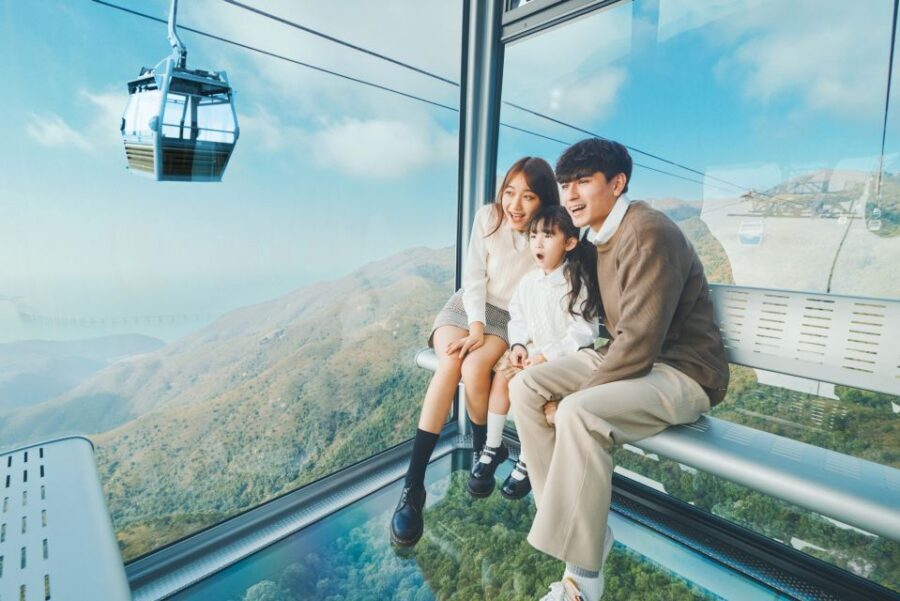
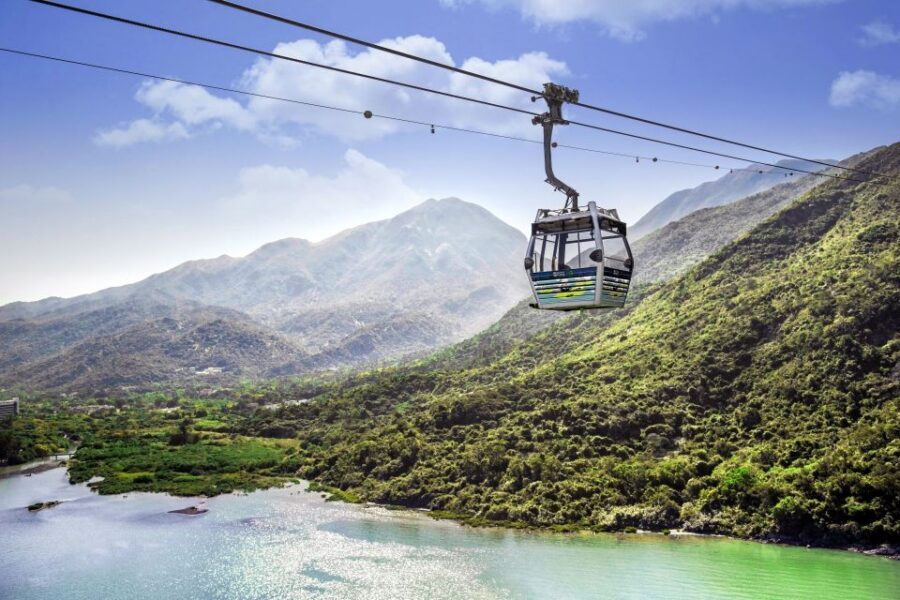
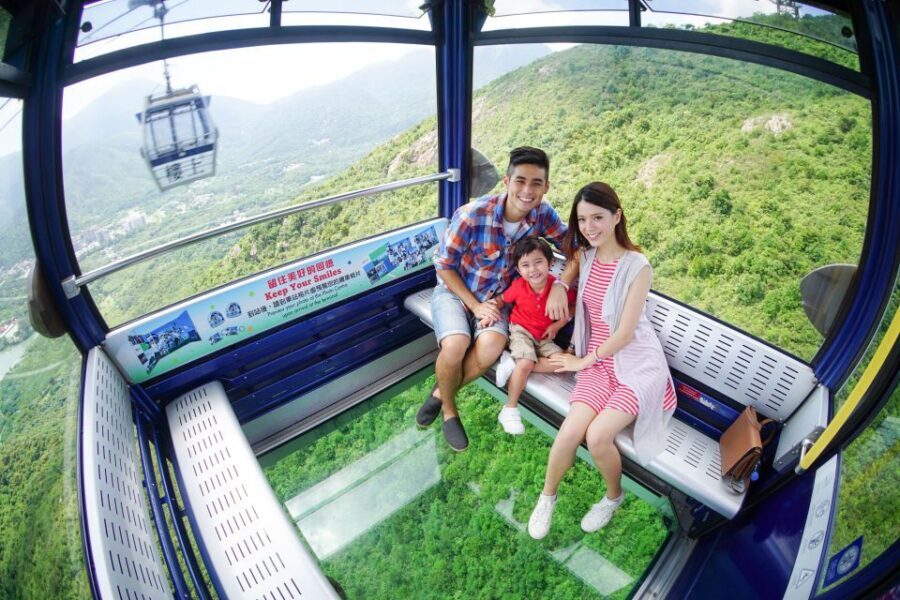
The best intro to Ngong Ping is the cable car itself. You board the Asia’s longest bi-cable ropeway and ride high above rolling greens and open water views. The tour is timed so you catch the big panorama from the cabin, with a full 360-degree sightline moment baked into the experience.
This matters because the cable car isn’t just transportation. It’s the setting change from busy Hong Kong energy to a calmer, more ceremonial place. Even if you’ve seen photos online, being up there in real air—seeing sky and sea and the island shape—changes how you feel about the stops that come next.
Also, the skip-the-line aspect kicks in at the cable car end. If you go at a popular time, the regular boarding line can run long. The express-style setup is what keeps the day from turning into queue management.
A few more Hong Kong tours and experiences worth a look
Tung Chung Setup: Meeting Points and the “Don’t Be Late” Rule
Plan on doing two parts: voucher redemption at Tung Chung, then the tour experience at Ngong Ping. The meeting instruction is specific:
- Your ticket redemption happens at the designated counter at the Ticketing Office, Tung Chung Cable Car Terminal.
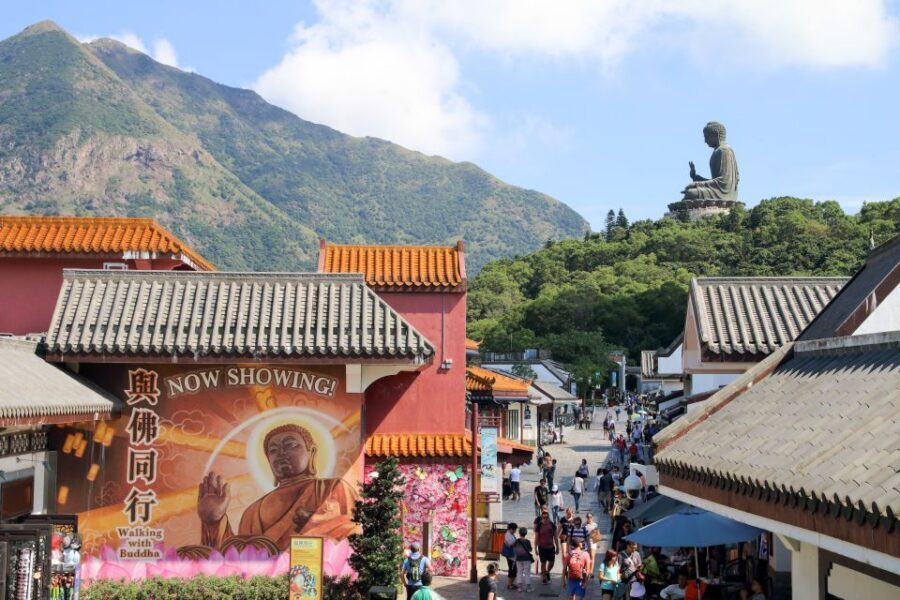
- The tour itself starts at the 360 Information Center, Ngong Ping Village.
You can reach Tung Chung by MTR to Tung Chung Station (Exit B), with the cable car terminal next to it. Buses also serve the area if you’re staying farther out.
Timing is another reason this tour works well. The schedule lists a start at 13:00, with the Big Buddha visit around 13:50 and a return by 16:00. That tight structure is exactly why you should build in cushion time. Latecomers won’t be entertained and there’s no refund for lateness.
A practical tip: bring a compact umbrella. Even when it starts fine, weather can shift quickly at the top area. Comfortable shoes help too, since you’ll be walking.
Ngong Ping Village to the Big Buddha: Bronze Calm and Sacred Details
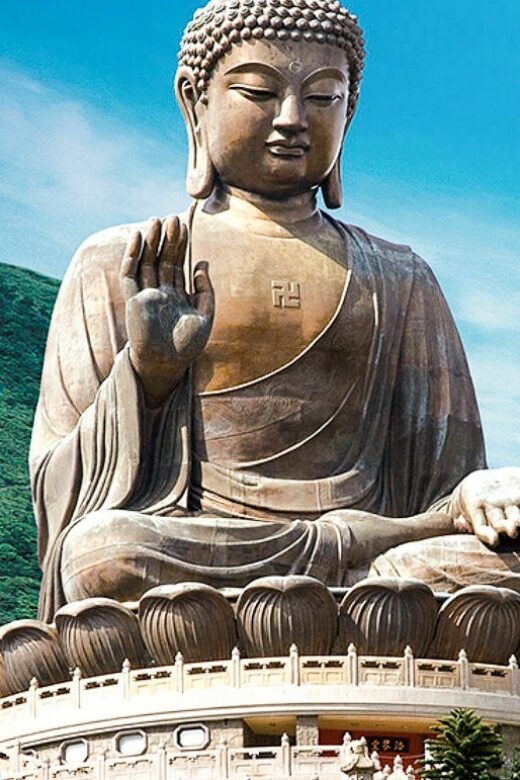
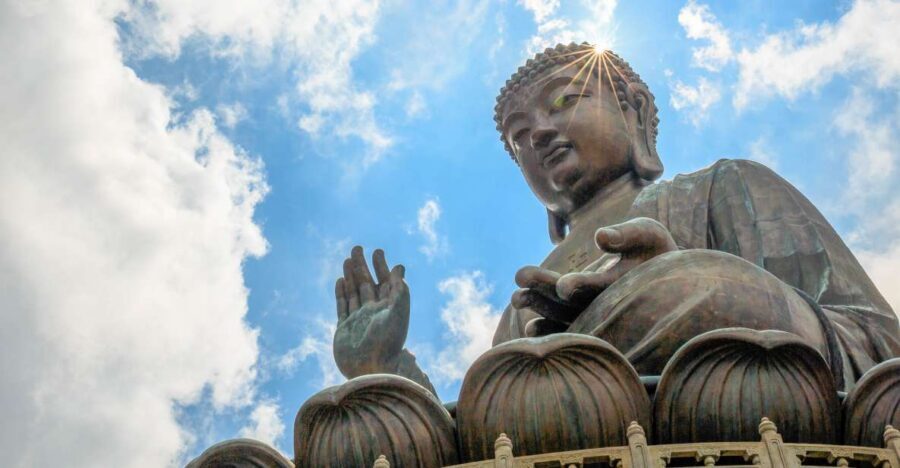
After you arrive at Ngong Ping, the day’s first major anchor is the trip to the Big Buddha pedestal area. The tour description centers on the Big Buddha as an experience, not just a landmark, and that’s the right mindset.
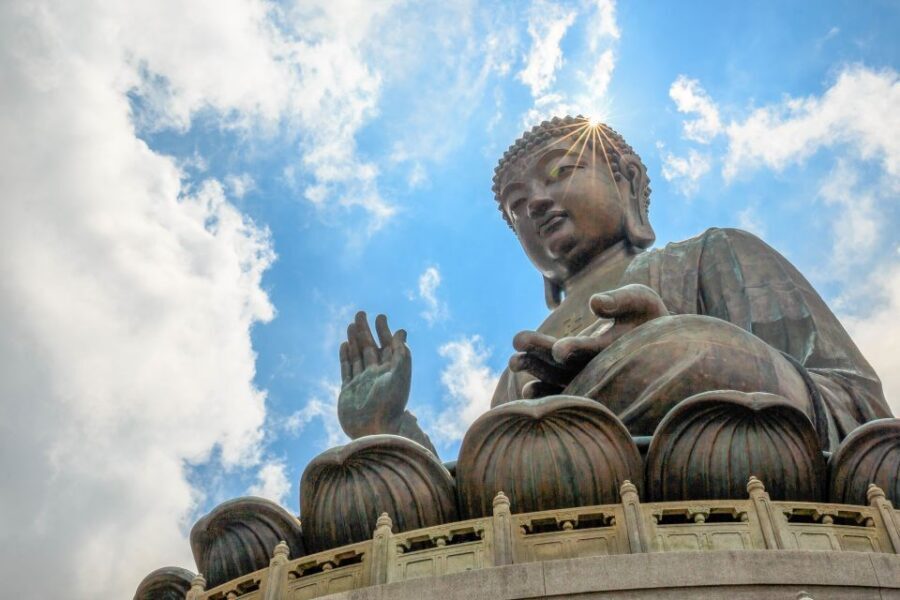
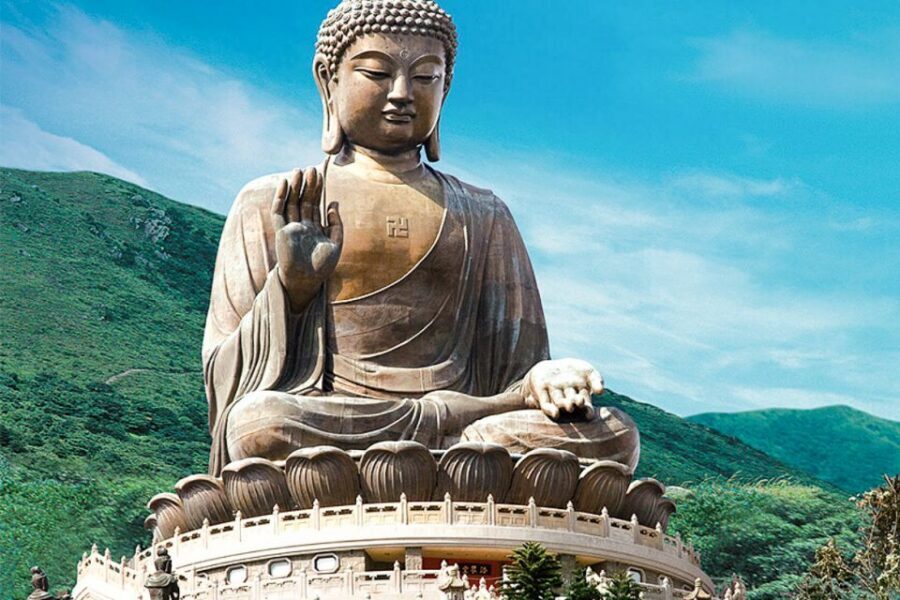
You’ll reach the statue around 13:50, which is helpful because daylight can affect how the bronze face reads from different angles. The statue is described as a world-renowned outdoor seated bronze Buddha, measuring about 30 square meters, cast as a single piece. That scale sounds like trivia until you see it: it makes the calm facial expression feel more present, less like a distant sightseeing object.
Then you can appreciate the religious layer. The experience includes the chance to see the Buddha’s relic area inside the pedestal, plus worship space in the exhibition hall. This is where the guide adds real value. Listening to Buddhist stories and how meditation and worship fit into the broader culture makes the architecture feel purposeful rather than decorative.
One consideration: the Big Buddha route includes stairs and walking. The tour is not suitable for mobility impairments, so if you have limits, you’ll want to rethink it or talk to the operator before committing.
Wisdom Path: 38 Columns, Heart Sutra Meaning, and a Different Kind of Calm
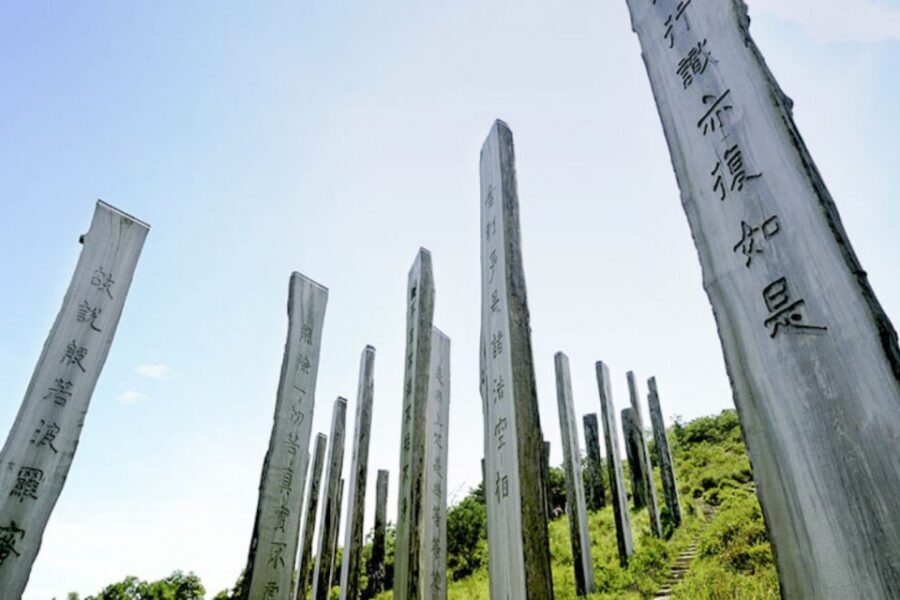
After Big Buddha, the tour moves to a site that’s more thought-based than postcard-based: the Wisdom Path. Here, you’ll see an arrangement of 38 giant wood columns, each about 8–10 meters tall and roughly 1 meter wide. The columns display calligraphic works by Professor Jao Tsung-I, as part of the site’s interpretive design.
What makes this stop special is the structure. The columns are arranged in an “∞” pattern, and the text is from a famous Buddhist classic called the Heart Sutra. You’re not just reading words on plaques. You’re walking through a physical layout that’s meant to symbolize wisdom and the depth of Buddhist teaching.
If you’re the type who likes quiet spaces where you can slow down, this is the part that often feels most personal. If you’re the type who only wants classic sightseeing, you might find it less visually flashy—but the guide’s storytelling usually turns it into something more memorable. I like that this stop encourages reflection instead of constant movement.
Also, it’s a good counterbalance after the large open statue viewing area. The Wisdom Path feels like a transition from “wow, that’s big” to “okay, now what does it mean?”
Grand Hall of Ten Thousand Buddhas: A Whole Complex, Not One Shrine
The last major temple complex stop is the Grand Hall of Ten Thousand Buddhas. The tour describes it as a five-storey complex covering more than 6,000 square meters. Instead of one room and done, it’s a collection of spaces designed for education, meditation, artifacts, and worship.
You’ll see references to the Main Shrine Hall of Buddha, a scripture library, an abbot’s chamber, a mediation hall, a permanent altar, and an exhibition hall for Buddhist artefacts. There are also multi-functional spaces. In other words, this is built like a center, not a quick stop.
For you as a visitor, that matters because you can match your mood to the hall. If you want to focus on worship and scale, you can. If you want to learn the cultural story through curated displays and layout, there’s room for that too.
The guide ties it together with explanations about religious mediation, history, culture, and tourism’s role at the site. That combination is a big part of why this tour earns strong ratings: it turns architecture into understanding.

Skip-the-Line Cable Car Value: How Time Buys Calm
Let’s talk about the reason this tour is priced like a premium experience: the cable car bottleneck. The NP360 area can get crowded, especially around peak travel times and on days when weather or timing shifts affect the queue.
One theme from real experiences: skip-the-line isn’t just a perk. It’s the difference between enjoying the day and spending it in line. People have described situations with waits in the 45 minutes to an hour range without the express setup, and they also report that the skip-the-line entrance can feel like a VIP flow.
This tour includes skip-the-boarding-queue, plus a special queue for ticket redemption. That two-step advantage helps you avoid the most painful friction points: exchanging vouchers for real tickets, then lining up again for boarding.
If you only plan to do a half-day at Ngong Ping, saving time makes your day feel lighter. If you’re planning extra stops in Hong Kong afterward, it helps you stay on schedule.
Coach Transfer and Group vs. Private Options: Small Detail, Real Impact
This tour is flexible in format. You can choose a private or shared setup, and the itinerary supports both.
One inclusion depends on option type: the coach transfer to the Buddha is included for the group option. That’s meaningful because it can reduce how much you have to walk before you even start your Big Buddha and monastery loop.
If you choose the private option, the MTR Day Pass is included (per the details). That can help if your day plan includes using the subway multiple times before and after your Lantau excursion.
Net effect: think of the format as a way to tune the day. If you want the most efficient on-site flow, the group structure with coach support can be helpful. If you want a more conversational, personal pacing, private is the better fit.
Food, Add-Ons, and How to Choose Wisely
Your included base experience focuses on the sites and the cable car. But optional add-ons can add extra value depending on what you like.
If you select the meal voucher add-on, you’ll get lunch support at dedicated restaurants. There’s also a snack voucher for selected shops (if the add-on is selected). Additional options listed include Motion 360, the Chocolate Museum, and the Cable Car Discovery Centre.
My advice: don’t stack add-ons just because they’re available. Choose based on energy. If you’re the type who wants a hands-on, family-friendly supplement, Motion 360 or the discovery center can work. If you care most about the religious sites and views, you might skip the extras to keep the day calmer.
Also note the tour returns you to Tung Chung by cable car, and there’s time for refreshments and some self-exploration at Po Lin Monastery after 16:00. That free time is where you can browse souvenir shops or just sit and reset.
Who This Tour Fits Best (and Who Should Rethink It)
This is a strong choice if you want:
- a structured, half-day outing with clear timing
- guided context for Buddhist teachings, stories, and cultural meaning
- less waiting, more seeing, thanks to skip-the-line cable car
It may be less suitable if:
- you have mobility issues, because it’s not suitable for mobility impairments
- you hate stairs and longer walks, since reaching the Big Buddha involves climbing routes and walking segments
- you prefer pure independence, since the value here is the guide and the queue management
It’s also a good fit for couples and small groups who want shared pacing without planning every step. Reviews highlight that guides can make the whole experience feel personal, which is exactly what you want from a short tour.
Guides: Why the Explanations Matter Here
A key strength is the professional licensed guide, with live commentary in Chinese or English. You’ll learn Buddhist teachings and also get practical cultural framing about what you’re seeing.
Guide names you might encounter include Ivan, Alfred, Luna, Becky, and Alfred again (different trips). People highlight how prepared the guides are, and that shows in the way the tour’s story connects each site: Big Buddha → Wisdom Path → Grand Hall. Even the art and calligraphy feel more coherent when you understand why the Heart Sutra and the column design matter.
If you’re going mainly for photos, you can still enjoy this tour. But if you want meaning—why the relic is shown, what meditation halls are for, and how the complex functions as an educational base—this guide-led structure is the real differentiator.
Price and Value: Is $537 a Good Deal?
The listed price is $537 per group up to 10 for a 3.5-hour experience. That pricing makes sense when you compare two things you’re buying at once: guided interpretation and protected time on the cable car.
Here’s how I judge value:
- If you were to do this alone, you’d still need cable car tickets, then you’d likely spend time in long lines unless you’re traveling at an extremely quiet hour.
- You’re also buying the “how to look” part: guidance that turns the statue, the pedestal relic area, the Heart Sutra columns, and the multi-hall Grand Hall into something understandable.
In other words, you’re paying for less friction and more context. For groups of friends, the per-group pricing can be especially efficient. For solo travelers, the private/shared choice affects the best value, especially if you’re eligible for the private option benefits like the MTR Day Pass.
If you’re time-crunched or you hate waiting, this tour is easier to justify. If you’re flexible and don’t mind queues, you might feel less urgency about booking—but you’d still miss the guide-based context that makes the complex feel less random.
Should You Book This Big Buddha and NP360 Tour?
Book it if you want a smooth half-day plan with a guide and you care about Buddhist meaning, not just sightseeing. The skip-the-line cable car is the deciding factor for me: it turns a potentially slow, crowded outing into a more relaxed visit where the sights happen on your schedule.
Skip it (or choose a lighter plan) if stairs and walking are an issue for you, or if you’re seeking a purely independent day with no guided structure.
If you’re standing at the edge of the decision, here’s the quick test: if you’d be annoyed by a long wait for cable car boarding, this is exactly the kind of tour that reduces that frustration. If you’d be happy enough just riding up, wandering, and learning on your own, you might not need the premium queue savings.
FAQ
How long is the Big Buddha Tour and NP360 Cable Car experience?
The duration is listed as 3.5 hours. The day is structured to include the cable car ride and visits to the Big Buddha and monastery-related attractions, with return timing by 16:00.
Where do I meet for the tour?
Your ticket redemption happens at the designated counter at the Ticketing Office, Tung Chung Cable Car Terminal. The tour starts at the 360 Information Center, Ngong Ping Village.
What does skip-the-line include?
It includes skip the boarding queue and also a special queue for ticket redemption so you can exchange your ticket voucher faster before boarding.
What stops are included in the itinerary?
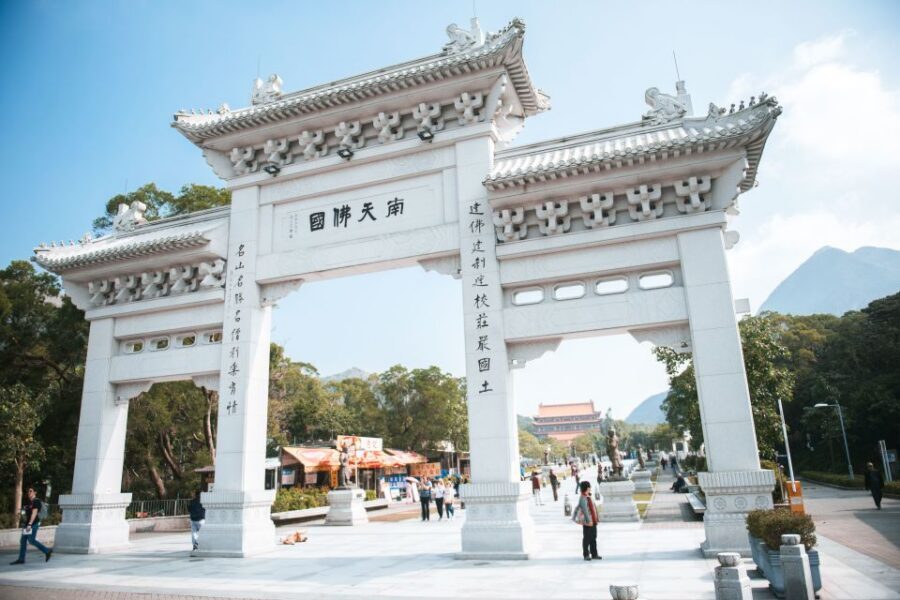
The tour includes the Ngong Ping Cable Car ride, the Big Buddha visit, Po Lin Monastery, the Wisdom Path, and the Grand Hall of Ten Thousand Buddhas.
Is the tour guided?
Yes. You’ll have a professional licensed live tour guide. Languages offered are Chinese and English.
What should I bring?
Bring a passport or ID card, comfortable shoes, and insect repellent.
Is this tour suitable for people with mobility impairments?
No. It is listed as not suitable for people with mobility impairments.