REVIEW · HONG KONG
Big Buddha: Walk with Skip-the-Line NP360 Cable Car
Book on GetYourGuide →Operated by Ngong Ping 360 Limited · Bookable on GetYourGuide
The cable car does the heavy lifting. With skip-the-line entry on Ngong Ping 360, you ride up to the Big Buddha area and then work through the major Buddhist sights without spending your day stuck in queues.
I love the mix of fast views and slow reflection, starting with the 360-degree cable car panorama and ending with time to appreciate the Buddha and the Grand Hall of Ten Thousand Buddhas. I also like how the guide ties the story of the Wisdom Path to the Heart Sutra carved into the site’s 38 giant wood columns.
One thing to think about: it’s a short tour, but it still involves walking, and it is not suitable for people with mobility impairments. Also, if the cable car is stopped due to weather, the guided outing can be cancelled.
In This Review
- Key highlights that matter
- Ngong Ping 360 Cable Car: the 360-degree opener
- Tung Chung meeting point and how the skip-the-line actually works
- Tian Tan Buddha and the pedestal relic area
- Wisdom Path: 38 wood columns and Heart Sutra symbolism
- Grand Hall of Ten Thousand Buddhas: turning teaching into space
- Po Lin Monastery refresh break and how to use your free time
- Price and value: why $94 can make sense here
- Who should book this tour (and who should skip it)
- Timing, weather, and the one thing to guard against
- Should you book the Big Buddha skip-the-line tour?
- FAQ
- How long is the Big Buddha walk with skip-the-line cable car tour?
- Where do I meet for the tour?
- What does skip-the-line mean for Ngong Ping 360?
- Which sights are included?
- Is this tour suitable for people with mobility impairments?
- What language is the guide?
- Are there add-ons I can select?
Key highlights that matter
- Skip-the-line access for the Ngong Ping 360 cable car, plus a special ticket-redemption queue
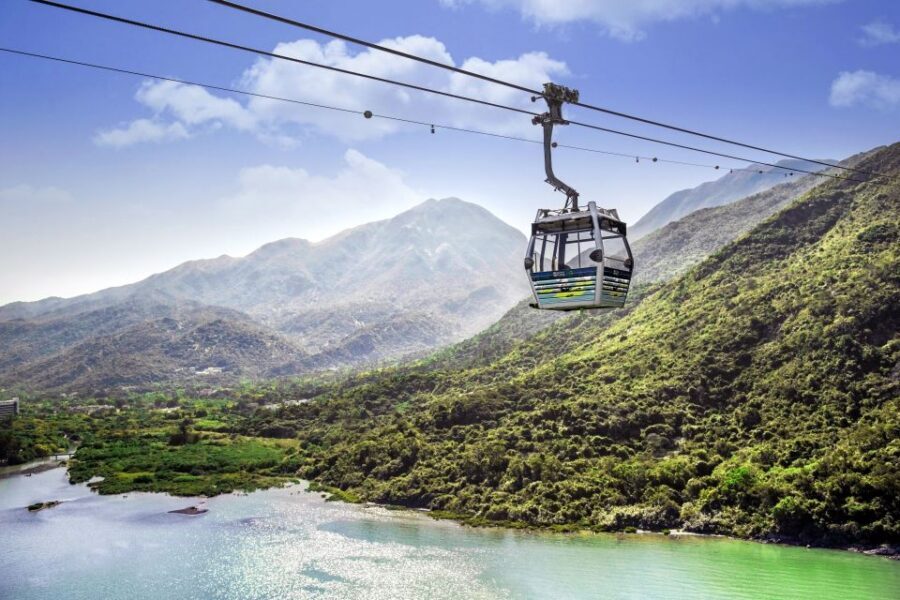
- A 360-degree cable car start on Asia’s longest bi-cable ropeway over Lantau
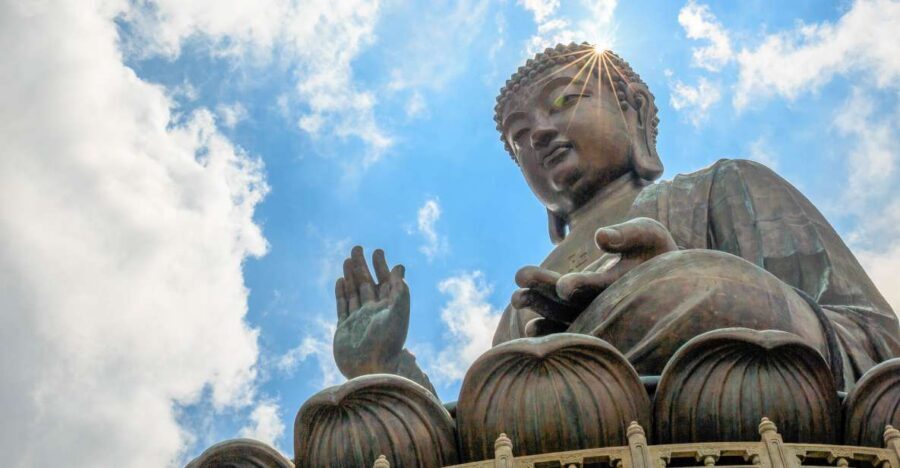
- Tian Tan Buddha close-up including a look at the relic area in the pedestal exhibition hall
- Wisdom Path’s Heart Sutra design using 38 towering wooden columns arranged in an ∞ pattern
- Grand Hall of Ten Thousand Buddhas with multiple halls, a scripture library, and Buddhist artefact displays
- Flexible shared or private tour format, with coach transfer for shared/group option only
Ngong Ping 360 Cable Car: the 360-degree opener
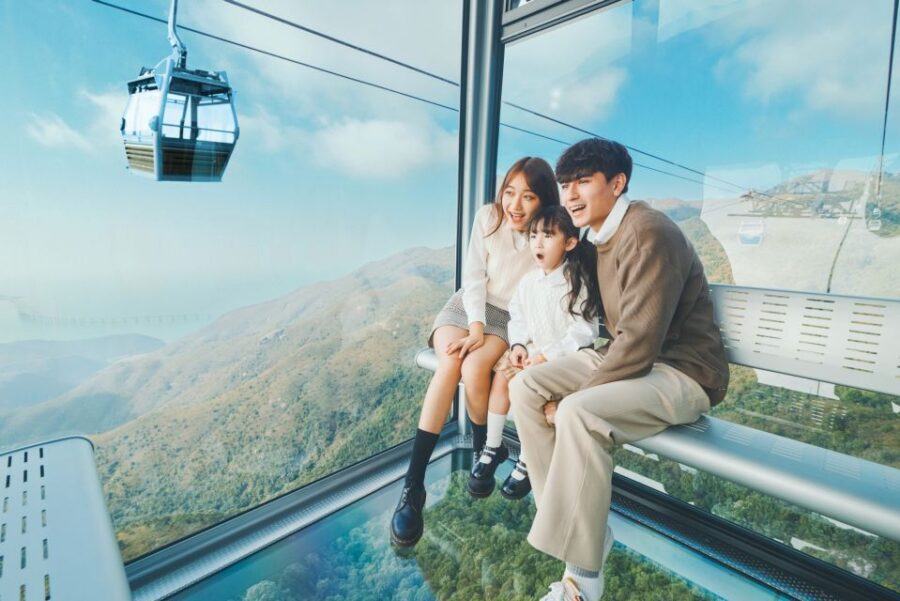
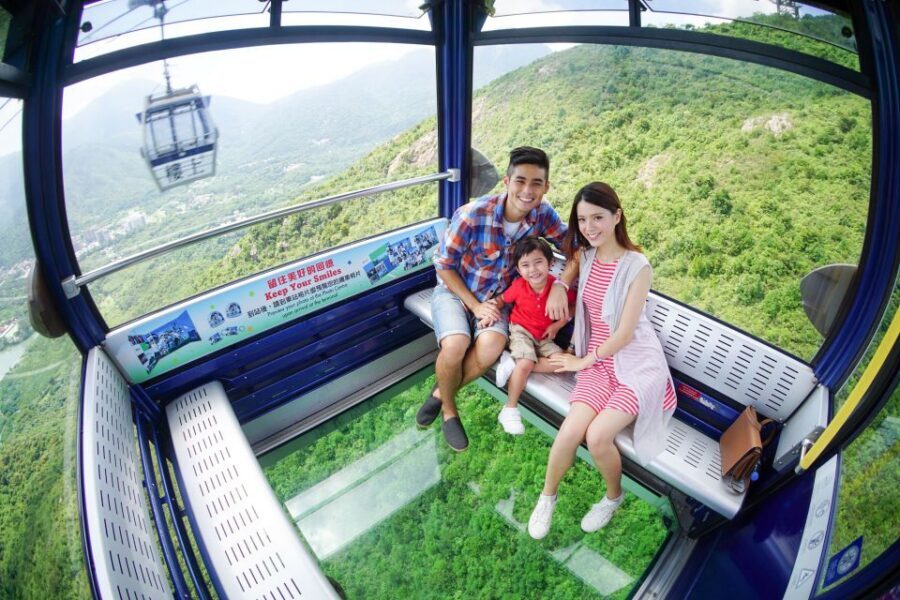
If your first stop in Hong Kong is a cable car, this is one of the best ways to do it. The Ngong Ping 360 ride gives you wide, high views over Lantau’s hills and the water beyond. The cabin lets you take in the panorama for a full 360 degrees, so it’s not just a transfer. It’s part show, part orientation.
Your tour time usually starts with the cable car at 13:00, so you’ll be moving during the afternoon window. That can be a good thing. You’re not rushing to beat dawn crowds, but you still get daylight for the views. Plan for the fact that weather can change fast up there, so keep an extra layer and something to protect you from wind and rain.
You can also read our reviews of more walking tours in Hong Kong
Tung Chung meeting point and how the skip-the-line actually works
This tour is built around one idea: save time where it hurts. The way they do it is by handling your ticket and queue flow before you ever line up at the cable car entrance.
You meet at the Ticket Redemption Point at the Tung Chung Cable Car Terminal, at a designated counter in the ticketing office area. The “skip-the-line” element works through a separate entrance and a special queue for ticket redemption. In plain terms: you should be ready for a quick but real check-in process at Tung Chung, then you move faster once your tickets are converted.
One practical tip: arrive a bit early to redeem your voucher. Some people find the pre-ticketing steps confusing at first, and the redemption line can take longer than expected. Once you have the physical tickets, the benefit shows up right away—your group gets routed ahead of the main boarding line.
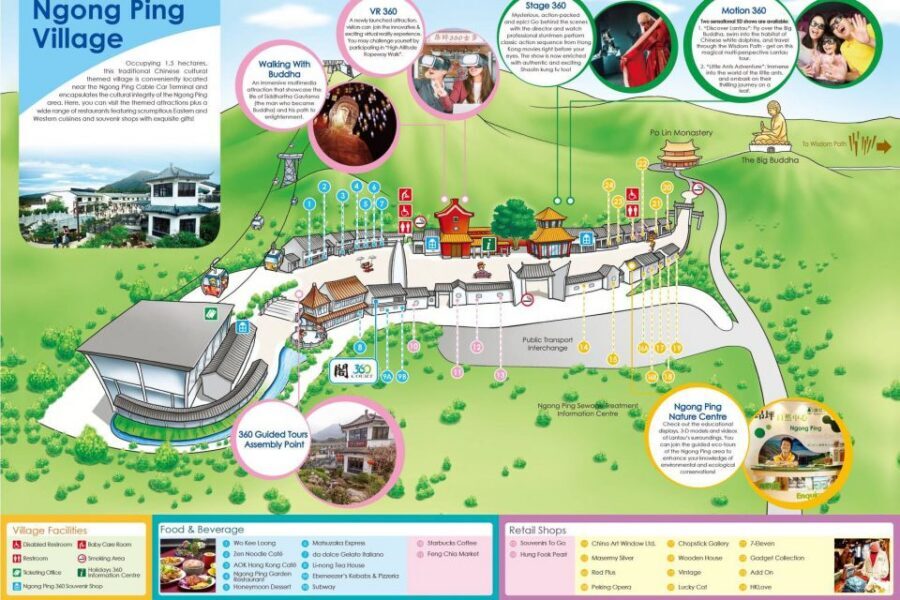
Also, don’t treat the tour as starting only when you reach Ngong Ping. Your day includes a meet-up after the cable car experience: the tour start point on the Ngong Ping side is the 360 Information Center, Ngong Ping Village. If you wander off immediately after arriving, you can slow the whole schedule.
Tian Tan Buddha and the pedestal relic area
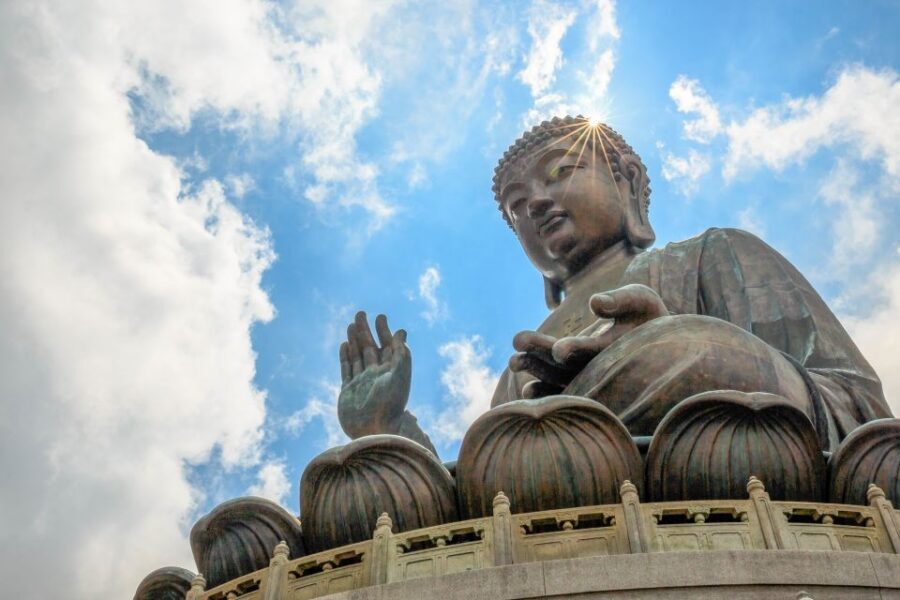
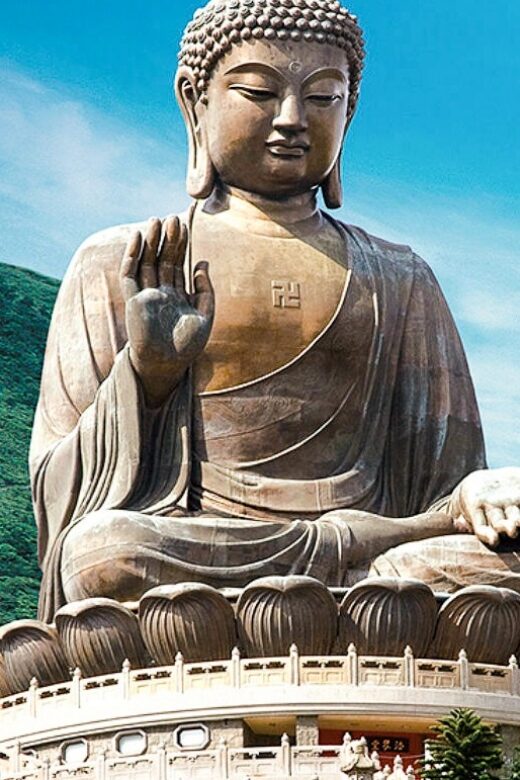
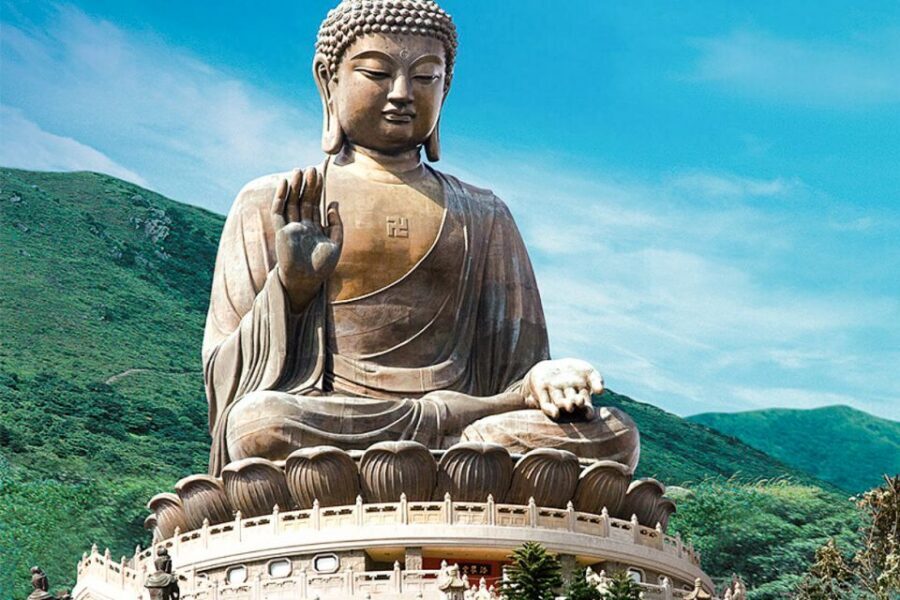
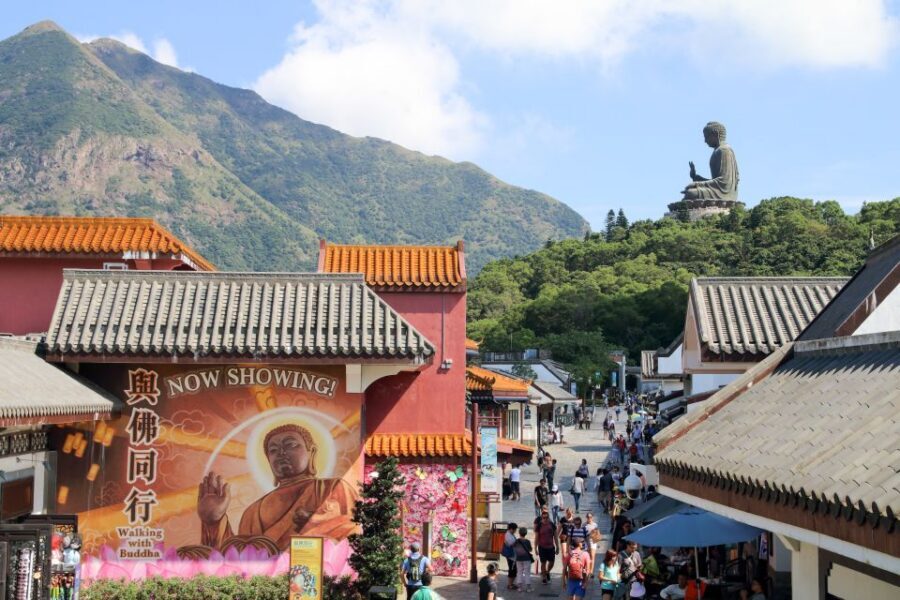
The main event is the Tian Tan Buddha, the large bronze statue set at the Big Buddha site. This is the kind of landmark that looks huge from a distance—and then feels even bigger when you’re at the base.
The statue area includes the outdoor seated bronze Buddha, described as 34 metres tall. If you appreciate craftsmanship, you’ll like the details: the solemn face is noted as being cast in a single piece, and the statue is associated with the most sacred Buddhist item mentioned here—the Buddha’s relic.
What makes the pedestal section worth your time is that it’s not only a photo stop. The pedestal area includes an exhibition hall where you can see the relic and participate in worship there. It’s a more “inside the meaning” moment than simply admiring a sculpture, and that can change how you experience the site.
Timing here is tight but clear. Your schedule includes reaching the Big Buddha pedestal area around 13:50. That’s early enough to keep your momentum without feeling like you’re rushing through everything. Still, wear comfortable shoes—paths are outdoors, steps can be uneven, and you’ll be on your feet a lot in a short block.
Wisdom Path: 38 wood columns and Heart Sutra symbolism
After the Big Buddha, the route turns from sculpture to words. The Wisdom Path is one of the more unusual parts of the whole complex.
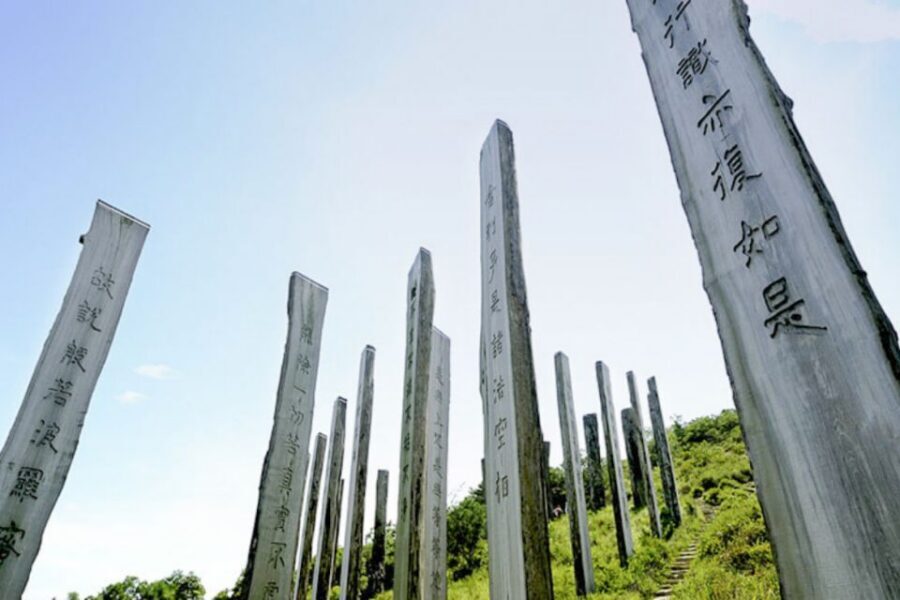
You’ll walk through an arrangement of 38 giant wood columns. Each column is described as about 8–10 metres tall and roughly 1 metre wide. The columns show calligraphic works by Professor Jao Tsung-I, and the columns are arranged in an ∞ (infinity) pattern.
Here’s why this stop is more than an artistic quirk: the words are from the famous Buddhist classic called the Heart Sutra. The tour frames the symbolism as the profoundness and wisdom of Buddhist teaching. In other words, it’s not just a photo backdrop. It’s a chance to slow down and read what you can, then let the overall pattern and repetition do their work.
If you like when a guide turns a site into a story you can actually use, pay attention here. Strong guides often connect the Wisdom Path to everyday questions—what it means to practice patience, reflect, and focus. In guide feedback, names like Ivan and Alfred get praised for explaining the meaning behind these details clearly, with patience for questions.
Grand Hall of Ten Thousand Buddhas: turning teaching into space
Next comes the Grand Hall of Ten Thousand Buddhas, described as a five-storey complex covering more than 6,000 square metres. This is where the tour becomes more architectural and educational.
You’ll see the main shrine hall, and the complex is also described as including:
- a scripture library
- an abbot’s chamber
- a meditation hall
- a permanent altar
- an exhibition hall for Buddhist artefacts
- a multi-functional hall
The key idea is that this isn’t just a single room with a statue. It’s a multi-part facility designed for worship, learning, mediation, and cultural interpretation. If you’re the sort of person who likes history and context, this is where you’ll feel the payoff.
One practical note: because there are multiple halls, you’ll want a calm pace. Try not to treat it like a race for photos. Look at how the spaces are organized, then let the quiet parts land. When guides are at their best, they point out what to look for so you don’t miss the “why” behind the layout.
A few more Hong Kong tours and experiences worth a look
Po Lin Monastery refresh break and how to use your free time
After the main complex sequence, the schedule brings you back to Po Lin Monastery at 16:00. At this point, you get a refreshment break and some time to tour at your own pace.
This is important because it gives you breathing room. Some people hit the Big Buddha and Wisdom Path and feel like the day is all structure. The monastery stop lets you slow down and decide what you want to see next.
What you can expect here is refreshments. The tour also notes that there can be meal or snack vouchers with certain add-ons, but even without add-ons, you should plan on this as the chance to sit, drink, and reset before the return cable car ride.
If you have extra energy, don’t rush the monastery areas. The calmer tone is part of why many people come. If you’re traveling with someone who prefers less walking, this is a good moment to balance the pace.
Price and value: why $94 can make sense here
At $94 per person for a tour block around 3.5 hours, this isn’t a cheap outing. But it can be good value if you factor in what you’re really buying.
You’re paying for:
- Round trip cable car
- skip-the-line boarding help (including a separate routing flow)
- a professional licensed live guide in English or Chinese
- coach transfer to the Buddha for the group option (not for private, per the info provided)
- and the structured flow so you spend your time seeing sites, not figuring out logistics
The skip-the-line piece matters because cable car lines can be long, especially late in the day. If you’re using a limited number of hours in Hong Kong and you hate wasting it standing in line, this can be one of the smartest spends of the trip.
It also helps that you can choose shared or private. The private option includes an MTR Day Pass. That’s not a universal benefit for everyone, but for travelers who plan to use the MTR a lot that day, it can soften the effective cost.
There are also add-ons, but treat them as optional. The list includes things like Motion 360, Chocolate Museum, and the Cable Car Discovery Centre, plus vouchers for dedicated restaurants or snacks depending on what you select. If you like museums and indoor attractions, add-ons can be a bonus. If you mainly want the sacred sites and the views, you can keep it simple.
Who should book this tour (and who should skip it)
This experience fits best if you want a guided, efficient route to the major Lantau religious sights without doing the whole day by yourself. It also works well for couples, families with older kids, and first-timers who want one organized afternoon that still leaves room to breathe.
You should also like this tour if:
- you want a guide-led explanation of Buddhist stories, architecture, and meaning
- you care about saving time on the cable car line
- you enjoy walking short-to-medium distances through iconic sites
You might not love it if:
- you are sensitive to walking and steps (the tour is not suitable for mobility impairments)
- you want total free-form wandering with no fixed route (this is a structured visit)
- you’re traveling with a very tight schedule, because the tour depends on cable car service running (weather can cancel the guided outing)
On the guide front, feedback repeatedly praises certain names like Ivan, Alfred, Becky, yiu cho, and Luna/Louna for clear explanations and for keeping arrangements smooth. In particular, one report noted a day-before WhatsApp reminder to help with meeting at the correct point, which is exactly the sort of practical support that makes a short tour feel less stressful.
Timing, weather, and the one thing to guard against
The tour’s rhythm is tight, so timing matters. Latecomers are not accommodated, and there’s no refund for arriving late. That’s not just fine print. For a 3.5-hour experience, missing part of the schedule can leave you stuck outside the intended flow.
Weather is the other risk. The cable car can be cancelled due to inclement weather or other reasons. In that situation, the guided tour is cancelled too. Even when the cable car runs, rough weather can cause delays once services restart after interruptions.
The tour tends to move fast—multiple major stops inside a short window. That’s great if you want an efficient afternoon. It’s less great if you’re expecting a slow, sit-and-chat day.
If you want to improve your chances of smooth sailing:
- dress for wind and rain
- keep an eye on your timing at Tung Chung during voucher redemption
- don’t get separated from the group after the cable car ride
Should you book the Big Buddha skip-the-line tour?
Book it if you want one guided afternoon that covers the big-ticket religious sites on Lantau, plus the Ngong Ping 360 ride, with skip-the-line help that can be worth real money in wasted time. I think it’s especially smart for first-timers who want structure and explanations rather than piecing it together on your own.
Skip it if you need maximum mobility support, or if you prefer a flexible, self-guided day with no fixed schedule. Also skip if you’re traveling during a period where you expect major weather disruptions and you’d rather not risk the outing getting cancelled due to cable car service pauses.
If you’re on the fence, my advice is simple: if the idea of standing in long cable car lines makes your skin crawl, and you want to focus on the Big Buddha, Wisdom Path, and the Grand Hall, this tour is built for you.
FAQ
How long is the Big Buddha walk with skip-the-line cable car tour?
The duration is listed as 3.5 hours. The guided sightseeing is described as covering about two hours within that overall time block.
Where do I meet for the tour?
You meet at the Ticket Redemption Point at the designated counter in the ticketing office, Tung Chung Cable Car Terminal. After the cable car ride, the tour start point is the 360 Information Center, Ngong Ping Village.
What does skip-the-line mean for Ngong Ping 360?
The tour includes separate access to board the cable car, plus a special queue for ticket redemption so you don’t have to stand in the main boarding queue.
Which sights are included?
The tour includes Ngong Ping Cable Car and visits to the Big Buddha area (including the pedestal exhibition hall), the Wisdom Path, and the Grand Hall of Ten Thousand Buddhas, along with time at Po Lin Monastery.
Is this tour suitable for people with mobility impairments?
No. The activity is listed as not suitable for people with mobility impairments.
What language is the guide?
The live tour guide is available in Chinese and English.
Are there add-ons I can select?
Yes. The add-ons mentioned include Motion 360, a Chocolate Museum ticket, and a Cable Car Discovery Centre ticket. There may also be meal and snack vouchers for certain add-ons, depending on what you choose before checkout.