REVIEW · HONG KONG
A Day in the life of a Hong Konger Tip Based Walking Tour
Book on GetYourGuide →Operated by Hong Kong Free Tours · Bookable on GetYourGuide
Kowloon markets change every block. This 2-hour Hong Kong market walking tour is a smart way to see daily life in Kowloon without getting lost, from the Goldfish Market to the Ladies’ Market. I especially like how the guide explains what you’re seeing in real context—goldfish in feng shui and the way people use vertical space—plus the food stories, including wife cakes. The one drawback: it is not suitable for wheelchair users, and you’ll be on your feet through busy streets and market corridors.
What makes it work is the pacing and the people. Guides like Michael, Stephen, and Grace come through with clear explanations, good energy, and enough time to ask questions. If you want a simple checklist tour, this may feel too focused on how locals think and shop. But if you want the real Hong Kong rhythm, you’ll feel it quickly.
In This Review
- Key highlights you’ll actually notice
- Kowloon at market speed: from Prince Edward to Ladies’ Market
- Goldfish Market: where feng shui meets everyday shopping
- Fa Yuen Street Market: pastries, eggs, and small daily rituals
- Fa Yuen Street Municipal Services Building: wet markets and vertical life
- Canton Road Market: live goods, Chinese medicine talk, and sharp facts
- Ladies’ Market: bargaining techniques and a living street culture
- Price and value: what $1.28 buys you in real-life learning
- Who this tour is best for (and who should skip it)
- Should you book this Hong Kong market walking tour?
- FAQ
- Where does the tour start and where does it end?
- How long is the tour?
- Is the tour guided in English?
- How often does the tour run?
- What’s included in the price?
- Is this tour suitable for everyone?
Key highlights you’ll actually notice
- Goldfish Market feng shui stories and the practical role of goldfish in everyday ritual talk
- Wife cakes and pastry lore, explained in plain language as you walk through bakeries
- Wet markets inside a municipal building, where Hong Kong’s vertical habits show up fast
- How locals judge quality (including the century egg and a live chicken test you’ll hear about)
- Ladies’ Market bargaining practice, with the atmosphere explained rather than ignored
Kowloon at market speed: from Prince Edward to Ladies’ Market
The tour starts at Prince Edward MTR Station Exit B, inside the station. That matters, because it gets you moving right away, before the crowds fully spool up and you’re still figuring out which direction is which. You end at the same meeting point, so you’re not stuck with a weird after-plan.
This is a 2-hour walking format with short guided stops, each about 20 minutes. In that time, you’re not just looking at stalls. You’re learning how locals relate to food, luck, and shopping—especially in places where tourism usually just skims the surface.
Comfort-wise, plan for walking and standing. Also note the tour is not suitable for wheelchair users, and it’s not designed for very young babies or people over 95 years old. If you fit the walking profile, you’ll get a lot more out of the explanations.
You can also read our reviews of more walking tours in Hong Kong

Goldfish Market: where feng shui meets everyday shopping
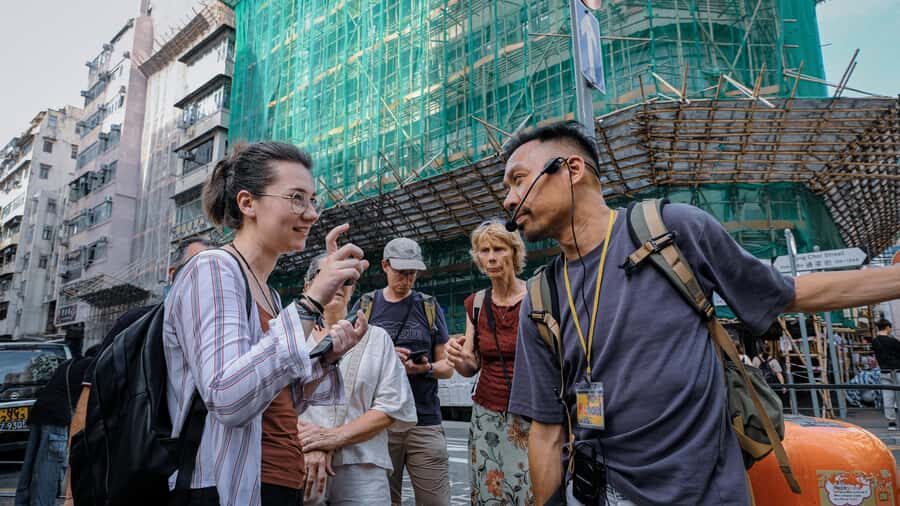
The first market stop is the Goldfish Market. This is where you learn the meaning behind what might look odd at first glance—goldfish aren’t just decorative here. You’ll hear how goldfish connect to feng shui and why the whole idea shows up in daily life, not just in fancy superstition talk.
I like this stop because the guide turns what could be a quick photo moment into a story about habits. You also get a look at how these markets work on a practical level, including the idea that you can find secret upstairs stores tucked into the market area. That’s classic Hong Kong: more life stacked above the obvious storefront, with commerce living on multiple levels.
One thing to keep in mind: this market is compact and active. You’ll want to keep your pace steady and leave room for people carrying bags. If you hate close quarters, you might feel a little cramped, but the trade-off is you learn how locals actually move through the space.
Fa Yuen Street Market: pastries, eggs, and small daily rituals
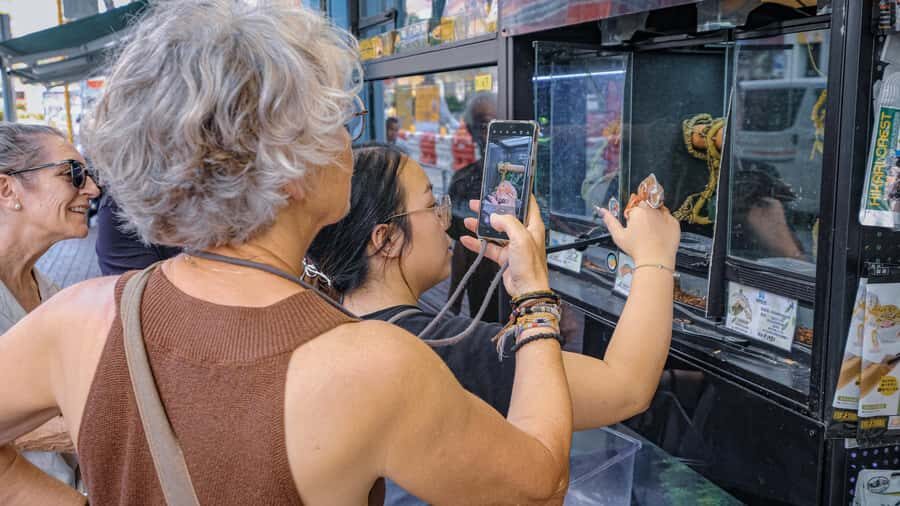
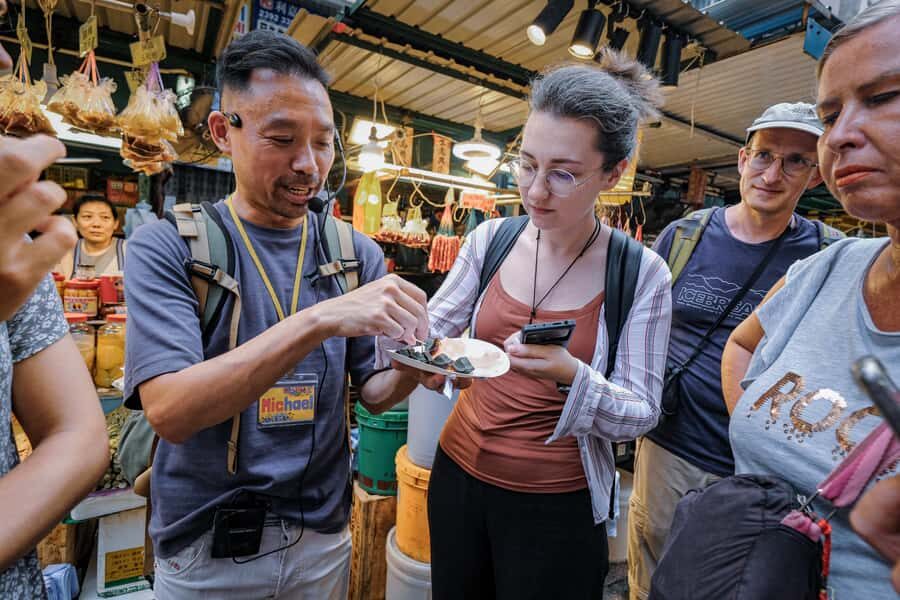
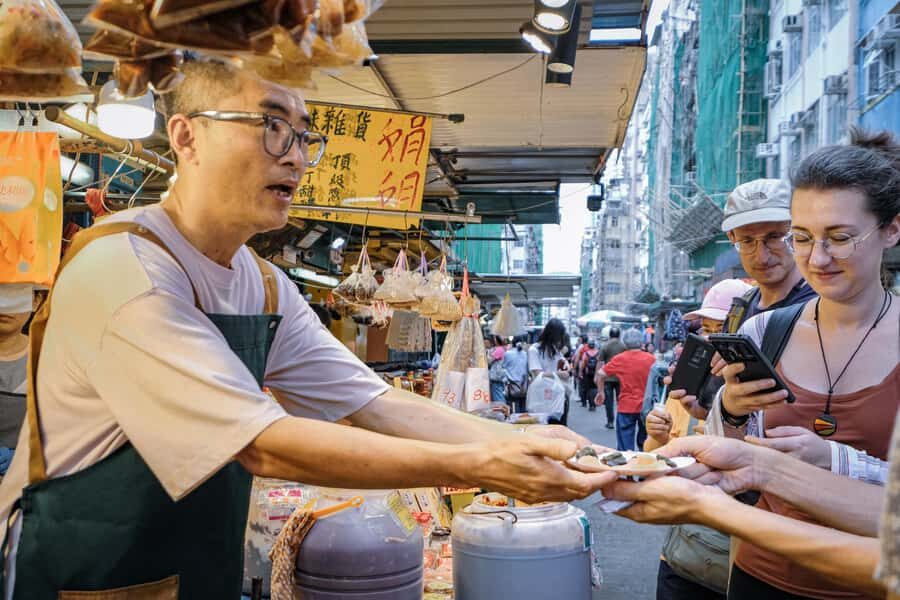
Next up is Fa Yuen Street Market, another 20-minute guided stop. This section is where the tour gets food-focused, with stories you’ll remember after the walk. You’ll learn about the stories behind Hong Kong pastries, including wife cakes—and why these items are more than sweets on a shelf.
You also get a glimpse into daily rituals and beliefs that show up in markets. Expect discussion of mahjong culture and paper offerings, plus how people interpret signs through everyday things. The guide keeps it from turning into a lecture by linking it to what people are buying and how they talk about it.
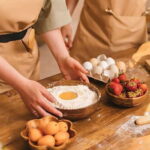
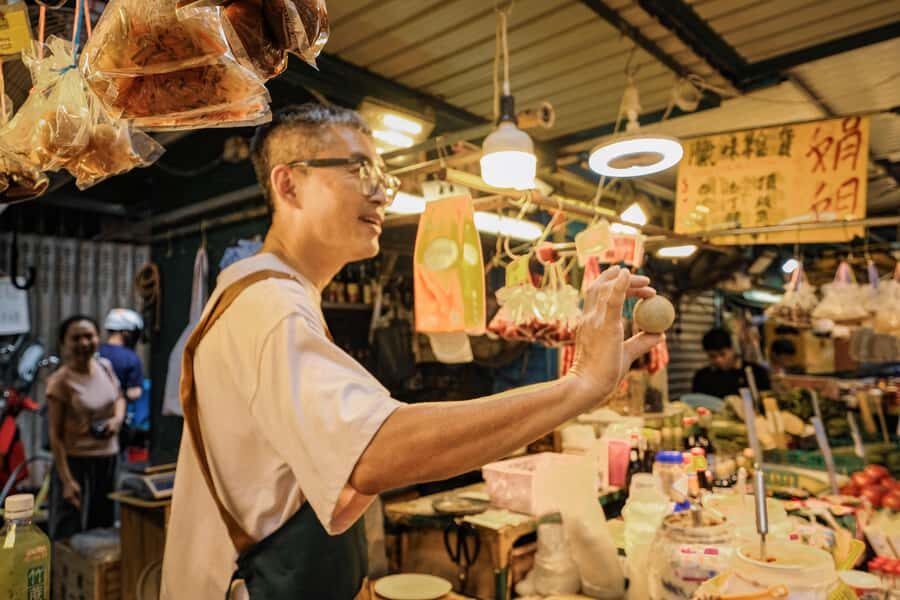
The tour also leans into the kind of food knowledge locals use casually. Based on what the guides cover, you may hear how to enjoy century egg like a local, not as a novelty. You’ll probably pick up little cues for quality too, which is useful if you’re the type who wants to eat with confidence instead of guessing.
Fa Yuen Street Municipal Services Building: wet markets and vertical life
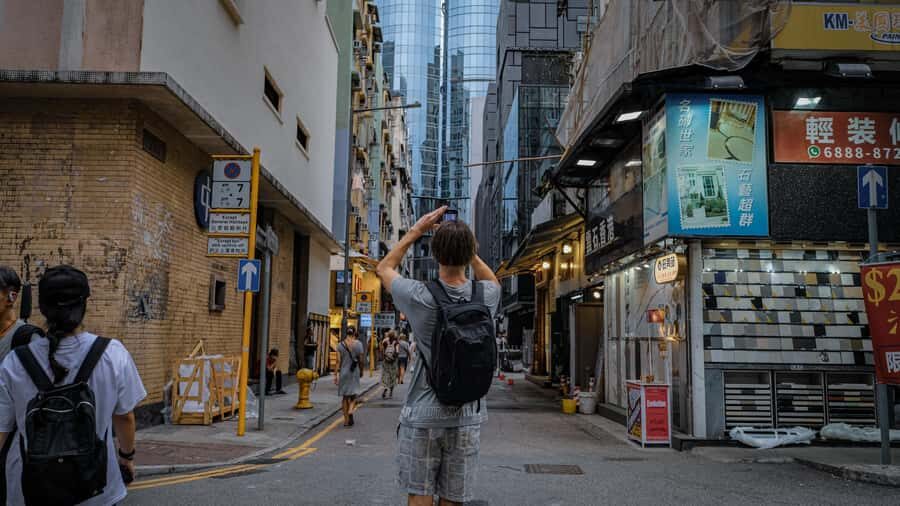
This stop is the one many guidebooks ignore: the Fa Yuen Street Municipal Services Building. You spend about 20 minutes here, and it’s a big reason the tour feels different from the usual “market photo walk.” The municipal building concept shows how Hong Kong concentrates services vertically.
Here’s what I love: you learn to see layout as culture. Markets stacked into a municipal setting highlight how practical the city is. People use every square inch, and you’ll notice how normal it feels for day-to-day life to happen across floors, not just on street level.
It also connects to the idea of wet markets—fresh meat, seafood, and traditional snack culture. Even if you don’t plan to buy anything, you’ll understand why locals treat these places like essential infrastructure, not a sightseeing stop.
A small drawback: because it’s a building with multiple levels and crowded aisles, it can be noisy and fast-moving inside. If you need quiet to think, you may find it a bit intense. But if you want to understand the pace of real Hong Kong, this is exactly the right place.
Canton Road Market: live goods, Chinese medicine talk, and sharp facts
At Canton Road Market, the guide keeps things hands-on and story-driven for another 20 minutes. This is where the tour starts feeling like a crash course in local decision-making: what good ingredients look like, and how you can tell.
You’ll hear examples like how to judge the quality of a live chicken by doing a quick test, described as blowing air on its butt. It’s odd the first time you hear it, but that’s the point—you’re learning a practical habit locals use without thinking too hard about it. You’re also learning how food knowledge gets passed along through tradition.
The tour also includes discussion around Chinese medicine—theories and ingredients—framed in a way that connects to what you see in markets. I appreciate that because it helps you avoid the common tourist trap of treating Chinese medicine as a black box. Instead, it’s presented as a set of beliefs people connect to real products they encounter daily.
If you’re squeamish about the idea of live goods, keep that in mind. This stop is not trying to sanitize the reality of market life. You get the facts, and the guide balances it with context.




Ladies’ Market: bargaining techniques and a living street culture
The finale is Ladies’ Market, where the tour leans into energy and shopping behavior. You’ll get bargaining techniques explained in a way that makes sense for how people actually negotiate here. The guide doesn’t just tell you to haggle; it explains why bargaining feels normal and how prices can be treated as a starting point.
This is also where you enjoy the lively atmosphere without feeling like you’re standing outside the fun. The goal isn’t to turn you into a street vendor. The goal is to help you understand what the market means to locals: a place to compare, ask, and browse with social confidence.
I like ending here because it ties together the whole day. Earlier stops covered beliefs, food, and daily routines. Here, you see the same logic show up in shopping—how people build relationships with sellers, how they read the moment, and how they take part in the city’s social flow.
One practical consideration: Ladies’ Market can get crowded, especially near popular stalls. Keep your phone secured and your bag zipped. You’ll have a better time if you slow down when the aisle tightens.
Price and value: what $1.28 buys you in real-life learning
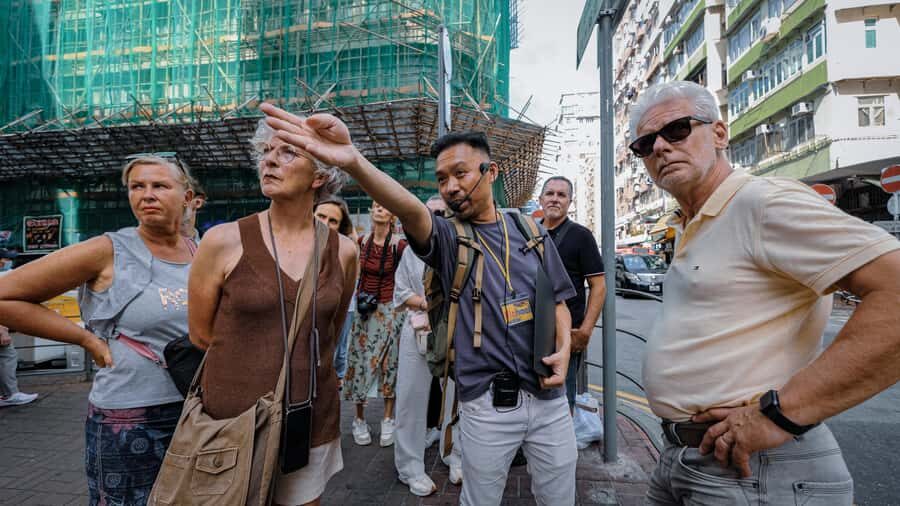
The price is listed as $1.28 per person, for a 2-hour live English tour guided by a local professional. At that kind of cost, the value isn’t just the walking route—it’s the translation layer. Markets are hard to interpret when you’re a stranger. This tour helps you read what you’re seeing, instead of just walking past it.
You also get guidance on cultural context that usually takes hours of research. For example, you learn how goldfish connect to feng shui, why paper offerings show up, and how mahjong culture fits into the broader rhythm of everyday beliefs. You’ll also learn food stories like wife cakes and century egg, which can instantly change how you choose what to eat afterward.
About what you’ll eat: the tour description mentions learning and local food know-how, and the feedback suggests you may get a couple tastes along the way, including things like eggs and exotic fruits. The exact items aren’t listed in the core details you provided, so treat this as a chance to sample rather than a guaranteed menu.
The big value point is pacing. Short, guided blocks keep you from drifting. Guides praised for an on-the-right-speed pace—especially names like Michael and Stephen in the feedback—seem to do well at keeping the day moving without rushing the stories.
Who this tour is best for (and who should skip it)
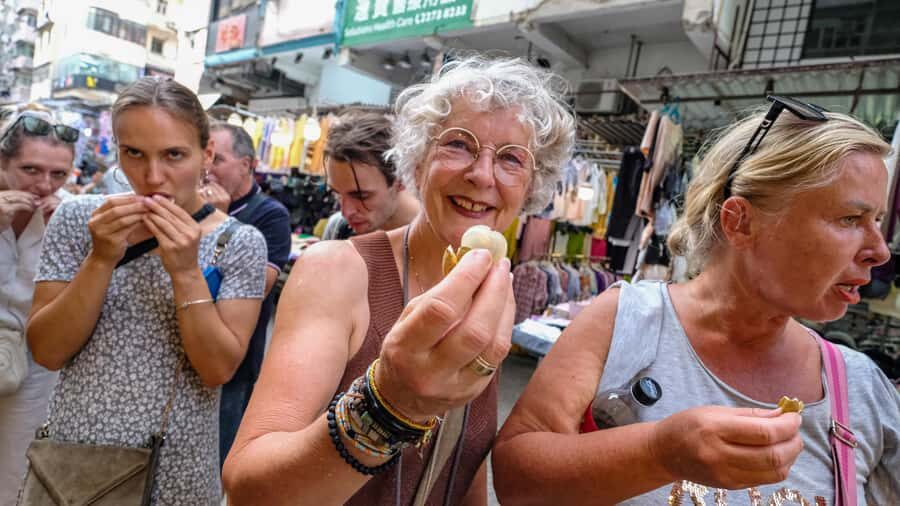
This works best if you want an English-speaking local guide and you enjoy markets as more than Instagram backdrops. If you like learning practical culture—why people do things, not just what they buy—this tour fits you.
I’d also recommend it if you’re curious about Hong Kong’s in-between life: wet markets, municipal building food spaces, and street bargaining. It’s not just about shopping. It’s about learning the logic behind the shopping.
Skip it if:
- You can’t manage walking and standing for about 2 hours.
- You want a calm, low-stimulation experience.
- You’re looking for only major landmarks instead of everyday neighborhoods.
Also, the tour lists some clear limitations: it’s not suitable for wheelchair users, and it’s not meant for babies under 1 year old or people over 95. If that affects you, it’s better to look for a more tailored option.
Should you book this Hong Kong market walking tour?
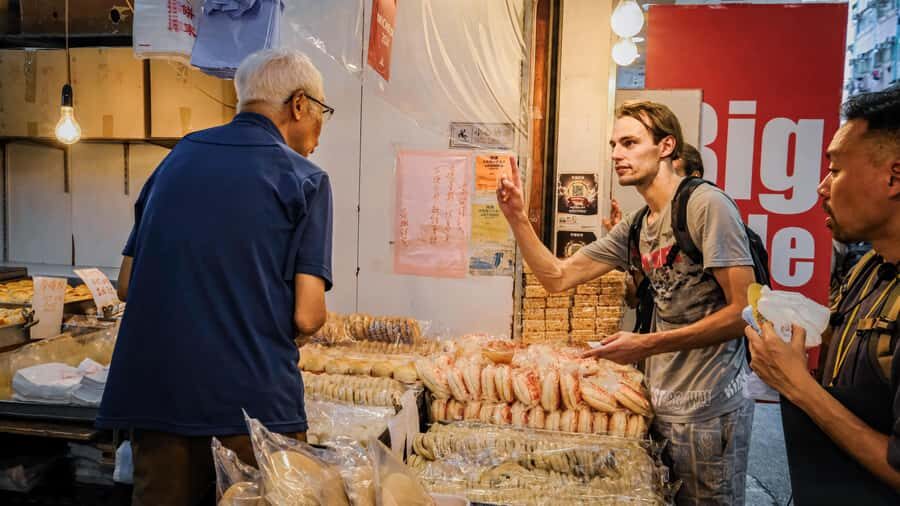
If you’re spending time in Kowloon and you want real context fast, I think this tour is an easy yes. The format is short, the guide support is live, and the learning is specific—goldfish feng shui, wife cakes, century egg know-how, municipal wet markets, and bargaining techniques at Ladies’ Market.
Book it if you’re the type who gets more excited by how people live than by sweeping views. You’ll walk away understanding why these markets matter to locals, and you’ll probably feel more confident eating and shopping on your own afterward.
Pass if you want a slow, quiet tour or if you hate crowds and close quarters. Markets are markets, and this one doesn’t pretend otherwise.
FAQ
Where does the tour start and where does it end?
It starts at Prince Edward MTR Station Exit B (inside the station) and it ends back at the meeting point.
How long is the tour?
The duration is 2 hours.
Is the tour guided in English?
Yes. The live tour guide speaks English.
How often does the tour run?
There are starting times listed for availability, so you’ll need to check the schedule to find your departure.
What’s included in the price?
The only item listed as included is a professional local guide.
Is this tour suitable for everyone?
No. It is listed as not suitable for wheelchair users, babies under 1 year, and people over 95 years.