REVIEW · SHANGHAI
Private 2-Hour Walking Tour of Shanghai’s Jewish Ghetto
Book on Viator →Operated by Shanghai Pathways · Bookable on Viator
Hongkou holds stories most visitors skip.
This private, 2-hour walking tour lets you see the Jewish Ghetto through the eyes of a local English-speaking guide, mixing the well-known sites with lesser-walked streets. You’ll start at the Ohel Moishe Synagogue area (now the Jewish Refugees Museum), then connect the dots to refugee aid, daily life in Hongkou, and even a Buddhist temple that once served a very practical role for the community.
I really like two things about this experience: first, the way the tour uses the Jewish Refugees Museum (Ohel Moishe Synagogue) as the anchor, so the story starts in the right place and doesn’t feel like a random highlight reel. Second, I like that you don’t stop at one museum stop—you get a park moment at Huoshan Park and a walk through everyday neighborhood life. One consideration: the route includes Xiahai Temple, a Buddhist site, so if your priority is strictly Jewish-only landmarks, the last segment may feel like a detour.
In the strongest versions of the tour, guides such as Annie, Mason/Masin, Mary, and Zoe are praised for clear English and for turning history into something you can picture. You also end right where you started on Changyang Road, which makes the logistics simple if you’re using public transport.
In This Review
- Key things to know before you go
- Why Hongkou’s Jewish Ghetto still feels human
- Stop-by-stop: the story arc in 2 hours
- 1) Changyang Road meet-up and an efficient start
- 2) Jewish Refugees Museum on the Ohel Moishe Synagogue site
- 3) Joint Distribution Committee: refugee help in real life
- 4) Huoshan Park and a memorial moment
- Hongkou’s neighborhood life: where history meets daily streets
- Xiahai Temple: why a Buddhist site belongs on this route
- Price and value: what $131.28 per person buys you
- Logistics that matter more than you think
- Who this tour suits best (and who should shop around)
- Should you book this walking tour of Shanghai’s Jewish Ghetto?
- FAQ
- How long is the Private 2-Hour Walking Tour of Shanghai’s Jewish Ghetto?
- Is this a private tour or a shared group tour?
- What are the main stops on the walking route?
- Are museum and temple admission tickets included?
- Where do we meet, and where does the tour end?
- Is hotel pickup or drop-off included?
- Are food and drinks included?
- What is the cancellation policy for a full refund?
Key things to know before you go
- Private for your party: you walk at a pace set for your group, not a large bus shuffle.
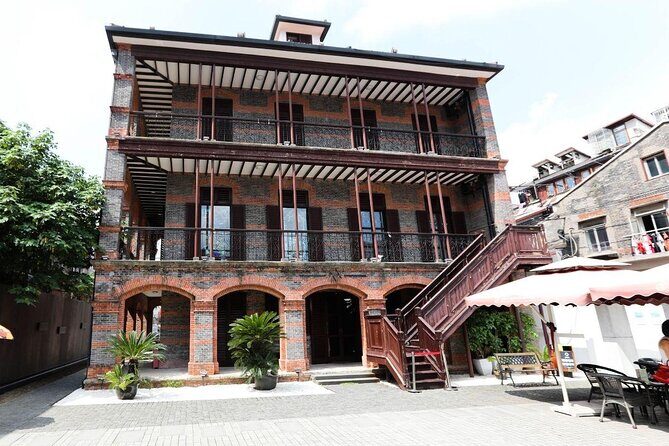
- Museum at the Ohel Moishe Synagogue site: the story begins where many refugees worshipped and gathered.
- Refugee aid stops, not just plaques: you’ll walk past the Joint Distribution Committee area to understand how help worked.
- You’ll see Huoshan Park and the memorial moment: reflection isn’t stuck inside a building.
- Daily life in Hongkou: beyond history, you get a sense of the neighborhood’s present-day texture.
- Xiahai Temple in the mix: the tour connects faith and survival in one of the most surprising stops on the route.
Why Hongkou’s Jewish Ghetto still feels human
Shanghai’s Jewish story isn’t confined to one tidy street or a single preserved building. In Hongkou, it’s woven into neighborhoods, parks, and side locations where people lived, organized, and tried to stay alive. This tour is built for that kind of understanding—short, focused, and led by someone who can point out what you might miss if you’re reading alone.
The private format matters here. You’re not just collecting facts. You’re asking questions, clarifying timelines, and getting “wait, what does that mean?” moments while you’re still standing in the place where it happened. When the guide is strong, that can turn two hours into a long-lasting mental map.
Just remember: the walking route is compact, so you’re not going to cover every famous ghetto site in the area. You’re getting the highlights plus a couple of meaningful “connective tissue” stops.
You can also read our reviews of more walking tours in Shanghai


Stop-by-stop: the story arc in 2 hours
This tour is designed as a walk with a clear emotional order. It starts with a sacred site turned museum, moves into refugee support, then shifts from memory to the living neighborhood before ending at Xiahai Temple.
1) Changyang Road meet-up and an efficient start
You meet on Changyang Road (Chang Yang Lu) in Yangpu District, then you end back at the same meeting point. That’s a practical choice: it keeps you from getting stranded at a far-off location and makes it easier to link the tour to your next subway ride.
Because the tour is about two hours, you should treat the route like a brisk city walk, not a slow gallery stroll. Bring comfortable shoes—you’ll be on foot for the whole experience.
2) Jewish Refugees Museum on the Ohel Moishe Synagogue site
Your first major stop centers on the Jewish Refugees Museum, built on the location of the Ohel Moishe Synagogue. This is where you get the foundation. The synagogue site helps you understand why refugees weren’t only looking for shelter—they also sought community, worship, and structure.
If you care about the Jewish history of Shanghai during the 20th century, this is the part that most justifies the guided experience. Even if you’re a confident self-guided traveler, the museum setting gains power when a guide connects it to the neighborhood around you.
3) Joint Distribution Committee: refugee help in real life
After the museum foundation, the tour walks past the area tied to the American Jewish Joint Distribution Committee. The point isn’t just to name organizations. It’s to show how refugee aid worked at street level—who helped, what help looked like, and why that support mattered for survival in Hongkou.
This segment tends to be especially valuable if you’re the kind of traveler who wants the human logistics behind big historical events. It makes the story feel less abstract.
You can also read our reviews of more private tours in Shanghai




4) Huoshan Park and a memorial moment
Next comes Huoshan Park. You’ll spend time near the park and its memorial setting for Jewish immigrants. Parks are useful on walking tours because they break the museum-only rhythm. Here, it also gives you a quiet mental reset so the tour doesn’t feel like facts on repeat.
This is a good moment to slow your pace, look around, and let the story land before the walk returns to day-to-day Hongkou life.
Hongkou’s neighborhood life: where history meets daily streets
After the museum and memorial stops, the tour shifts into something many “history tours” skip: the lived texture of the neighborhood.
You’ll walk through a local area where the guide talks about everyday customs and daily life in the Jewish Ghetto context—how residents lived, how communities organized, and how the surrounding streets shaped what people could do. Even if you only catch a snapshot, it changes the feel of the trip. Instead of treating the Jewish quarter as a sealed-in past, you understand it as a place people inhabited.
Some guides are especially good at making this part feel grounded rather than “performative sightseeing.” In the strongest-guided experiences I’ve seen described, the tour goes beyond the street view and includes stories that connect refugee life to the rooms and buildings people actually occupied. That’s rare on short city tours, and it’s one reason this can feel deeply moving for the right traveler.
Practical note: this isn’t a food tour and there’s no guarantee of a sit-down stop. There are fresh seafood stalls and small craft shops mentioned as part of the local scene, but food and drinks are not included—so plan to eat on your own schedule.
Xiahai Temple: why a Buddhist site belongs on this route
The last stop is Xiahai Temple, often described as the fish man’s temple in the past. On this tour, it’s not treated as a random cultural detour. The guide explains the role a Buddhist temple played within the Jewish Ghetto.
This is the segment that splits people into two camps:
- If you like history that shows how different communities used shared space and practical help, you’ll likely find it fascinating.
- If you came for strictly Jewish sacred sites and museum content only, you may wish the tour stayed focused longer on Jewish landmarks.
Either way, the key is to set expectations. Xiahai Temple is included because the tour is trying to show how survival, community, and faith overlapped in Hongkou—across lines that might look unrelated on a map.
Price and value: what $131.28 per person buys you
At $131.28 per person for about 2 hours, this is not a budget walking tour. It’s priced as a private guide experience with specific included admissions.
Here’s how I’d think about value:
- If you’re traveling as a couple or small group and you split the cost, the private format can feel reasonable for a specialized subject.
- If you’re solo, or if your group expects museum-heavy time, you may feel the price quicker than you want. One theme in feedback is that some runs can feel museum-and-temple heavy, meaning you’re not seeing every ghetto-related stop a more exhaustive self-guided plan might include.
Also, private tours succeed or flop on the guide’s storytelling. Many guides connected to this experience are praised for English clarity and for connecting the dots. But across all guide-led travel, there can be variation in how much historical depth each person brings.
If you want maximum Jewish focus, consider emailing ahead (before you go) and asking whether the guide can prioritize Jewish ghetto sites and time inside the Jewish Refugees Museum. That’s a smart move for any subject-heavy tour.
Logistics that matter more than you think
A few details are worth keeping in mind so the experience stays smooth:
- Meeting point: Changyang Road (Chang Yang Lu), Yangpu District. You’ll return to this same location at the end.
- Public transport nearby: it’s designed for people who use subways and buses rather than hotel pickup.
- Mobile ticket: expect your ticket to be handled digitally.
- Comfort: you’re walking the whole time, so wear shoes you can stand in for the full 2 hours.
- No hotel pickup/drop-off and no food/drinks included: plan accordingly so you’re not hunting for a meal right after.
On the timing side, your guide will likely move at a pace that keeps the stops within the two-hour window. If rain hits (Shanghai does that sometimes), it’s still a walking tour, so pack a small umbrella or rain layer.
Who this tour suits best (and who should shop around)
This walking tour is a strong match if you:
- care about Jewish refugee history in Shanghai and want a guided explanation tied to real locations
- like short, focused routes with museum content and street-level context
- value the private format so you can ask questions in real time
- are curious about how a community’s story connects to the wider city, including Xiahai Temple
You may want to adjust your plan—or consider a different tour—if you:
- want a longer, more museum-intensive Jewish-only itinerary
- feel strongly that Xiahai Temple’s role should take a back seat
- prefer a tour where every major ghetto-related site is covered in one go (this one is compact)
Should you book this walking tour of Shanghai’s Jewish Ghetto?
If your goal is to understand the story quickly, see the Ohel Moishe Synagogue museum setting, learn how refugee aid shaped life, and then connect history to the present-day Hongkou neighborhood, I think it’s a good booking. The private guide format is the real value here, especially when the guide can turn local details into a clear timeline.
I’d book it with one clear expectation: the route includes both Jewish landmarks and the practical role of Xiahai Temple. If that mix sounds like exactly what you want, you’ll likely leave with a strong sense of how the ghetto worked as a real place, not just a chapter in a book.
If you’re Jewish-history-only and you don’t want the Buddhist temple stop at all, then this may feel like the wrong fit. In that case, you’re better off planning a more museum-and-synagogue-focused day.
FAQ
How long is the Private 2-Hour Walking Tour of Shanghai’s Jewish Ghetto?
It’s listed as about 2 hours.
Is this a private tour or a shared group tour?
It’s a private tour. Only your group participates.
What are the main stops on the walking route?
You visit the Jewish Refugees Museum on the Ohel Moishe Synagogue site, you walk through the Jewish Ghetto area with stops around Huoshan Park and the Joint Distribution Committee, and you end with a visit to Xiahai Temple.
Are museum and temple admission tickets included?
Yes. Admission is included for the Shanghai Jewish Refugees Museum and Xiahai Temple, while other walking segments are noted as free.
Where do we meet, and where does the tour end?
You meet at Changyang Road (Chang Yang Lu) in Yangpu District, and the tour ends back at the same meeting point.
Is hotel pickup or drop-off included?
No. Hotel pickup and drop-off are not included.
Are food and drinks included?
No. Food and drinks are not included.
What is the cancellation policy for a full refund?
You can cancel up to 24 hours in advance of the experience for a full refund. If you cancel less than 24 hours before, the amount paid is not refunded.