REVIEW · SHANGHAI
Red Route Tour- Chinese Communist Party
Book on Viator →Operated by UtravelShanghai · Bookable on Viator
Propaganda posters meet real Shanghai streets. This Red Route tour connects the story of the Chinese Communist Party to places you can actually walk through in Xintiandi, with a professional historian guide doing the heavy lifting. I like the hotel pickup setup, because it keeps the start of your day from turning into logistics.
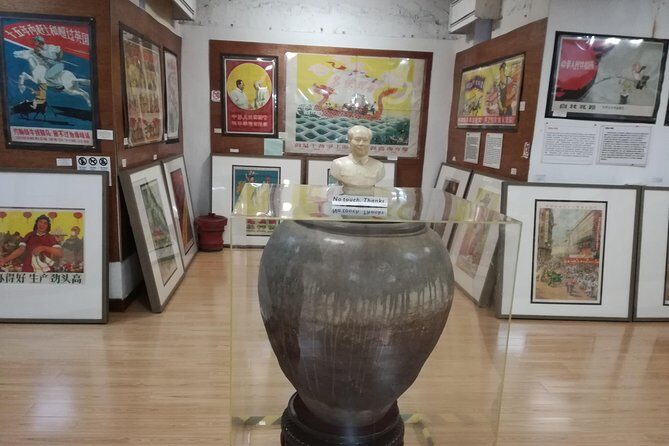
You’ll spend your time moving between key locations, not just staring at one slideshow. My other favorite part is the Shanghai Propaganda Poster Art Centre, where you’ll see Cultural Revolution-era materials close up and your guide can explain what you’re looking at in plain language.
One consideration: this tour focuses on the CCP narrative and the way it’s presented through party landmarks and propaganda-focused exhibits. If you’re hoping for a fully balanced political debate using lots of competing viewpoints, you may want to pair it with other history walks on your own afterward.
In This Review
- Key things I’d plan around
- Xintiandi Is the Perfect Starting Line for CCP Origins
- From First National Congress to the CCP Cradle on Foot
- Inside the Propaganda Poster Art Centre: Why Posters Still Matter
- XinTianDi BeiLi: Finishing in the Same Neighborhood for Better Connections
- Your 3-Hour Game Plan: Pickup, Transit Between Stops, and Walking
- Price and Value: What $85 Buys in Shanghai for Three Hours
- Who Should Book This CCP Red Route Tour (and Who Might Skip It)
- Tips to Get More Out of the Tour Without Overthinking It
- Should You Book It?
- FAQ
- How long is the Red Route Tour
- What does the tour cost
- Is hotel pickup included
- Are admission tickets included
- Is food or drinks included
- Is this a private tour
- What’s the cancellation policy
Key things I’d plan around
- Hotel pickup from a central Shanghai hotel saves time and stress before you even start walking
- A historian guide keeps the timeline understandable and helps you connect the sites
- Xintiandi as the entry point mixes upscale Shanghai streets with politically loaded landmarks
- Propaganda Poster Art Centre shows Cultural Revolution materials in an exhibit setting
- Free admission at stops plus a mobile ticket keeps costs and friction low
Xintiandi Is the Perfect Starting Line for CCP Origins
Xintiandi is one of those Shanghai zones where the city’s modern polish sits right next to layers of political meaning. The tour begins here because it’s an easy place to orient yourself quickly, and it gives your guide a strong “from then to now” thread.
Right after pickup, you start in the Xin Tian Di area and begin walking through streets where you’ll pass higher-end restaurants and fancy boutiques. That contrast matters. You’re seeing how a neighborhood that feels stylish today can still point back to major turning points in modern Chinese history.
This is a good setting for a short, focused tour because you don’t need to cross half the city to understand the theme. In about three hours, you can get a sense of how Shanghai frames the CCP story in public spaces.
You can also read our reviews of more tours and experiences in Shanghai.

From First National Congress to the CCP Cradle on Foot
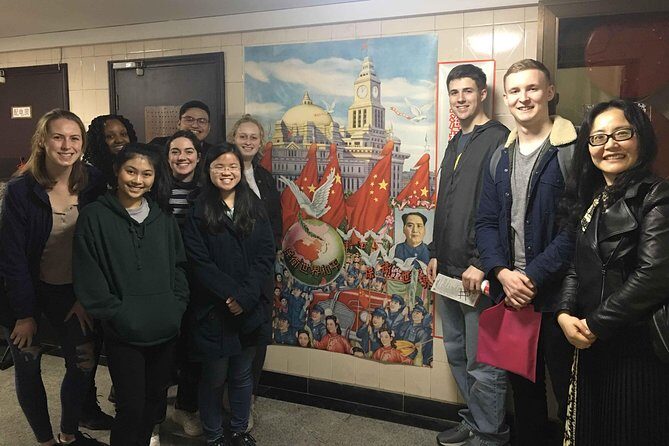
The core of the morning is the CCP origin story told through place. The first stop is Xintiandi, where you’ll be taken to the site tied to the party’s First National Congress, then you keep moving through the same general area as the narrative narrows into the party’s early formation.
The next stop is described as the Birthplace of the Chinese Communist Party, and the language used around the area frames it like a cradle—small enough to feel personal, but important enough that the guide can treat it as a starting point for everything that followed. You’ll get commentary that helps you follow the storyline without turning it into homework.
What I like here is that the tour uses walking to do the teaching. Even short stretches matter because they let you shift from one idea to the next—origins, growth, and then later how the party communicated to the population.
One practical note: the tour is built around walking, so comfortable shoes aren’t optional. You’ll also want to keep your phone ready since the experience uses a mobile ticket.
Inside the Propaganda Poster Art Centre: Why Posters Still Matter
The Shanghai Propaganda Poster Art Centre is the stop that turns history into something you can read. Instead of only hearing about events, you’re looking at artifacts from the Cultural Revolution—materials that were designed to carry messages fast and stick in your mind.
This is where a good guide earns their fee. When you’re standing in front of posters, you need context: what the messaging was trying to do, who it targeted, and how it fit the political moment. The tour’s structure supports that because you’re not stuck for hours in one room. You see the materials, get explanation, then move on while the meaning is still fresh.
If you’re the type who likes primary-source style learning, this stop can be extra satisfying. Even if posters aren’t your normal museum lane, you can still understand how repetition, slogans, and imagery were used to shape public memory.
Also, keep your expectations realistic. This is a museum stop focused on party-linked messaging, so it won’t read like a neutral art history detour. It’s built to show you how ideology looked on paper during major political campaigns.
XinTianDi BeiLi: Finishing in the Same Neighborhood for Better Connections
The final stop is XinTianDi BeiLi, still within the Xintiandi orbit. You don’t go far, but you do get closure. That matters because CCP history in China isn’t only about dates—it’s about how the story is presented in the built environment.
By finishing in this same area, you’re left with a sharper sense of place. You’ll be able to look at the street layout, the preserved or repurposed spaces, and the neighborhood’s modern shopping life, and understand that the tour’s theme is still running in the background.
This “stay local” approach also helps if your schedule is tight. With an approx. three-hour duration, you can fit this early in your day and still have time for independent wandering after.
A small thing I’d plan for: because you’re in a central neighborhood, you may have plenty of tempting options for food and shopping around you. The tour doesn’t include food or drinks, but your guide may suggest places to eat and what’s worth a look once you’re done.
Your 3-Hour Game Plan: Pickup, Transit Between Stops, and Walking
The tour is designed to feel efficient. You start with hotel pickup from a centrally located hotel and then begin in Xintiandi. From there, you’ll move between stops using public transit or a taxi, depending on what makes sense for the day and the group.
Important detail: transportation to and from attractions is listed as not included, so you should plan to cover any subway or taxi costs yourself if needed. The good news is that the tour includes near-public-transport access, so even if you’re thinking about meeting points later, the area isn’t hard to navigate.
The tour is also a private tour/activity for your group only. That tends to make a difference with political history tours because you can ask follow-up questions and your guide can adjust pace.
Because it’s about three hours, you won’t get slowed down by long museum-style time blocks at every stop. You should, though, keep enough attention to absorb the guide’s commentary. The best part of the experience is how the locations connect into one timeline.
If you’re coming with a phone battery that’s already low, charge it. You’ll want the mobile ticket ready and you’ll likely take photos in the Xintiandi area while you’re walking.


Price and Value: What $85 Buys in Shanghai for Three Hours
At $85 per person for an approx. three-hour private tour, this isn’t an ultra-budget activity. But the value story is solid when you look at what’s included.
You get a professional historian guide plus centrally located hotel pickup. Several stops are also marked free in the itinerary, which matters because it keeps you from adding hidden admission fees on top of the base price. On top of that, the tour has a mobile ticket, so you aren’t scrambling over paperwork.
The pricing also starts making sense if you’re the type who learns best with structured context. Walking around Shanghai on your own can be fun, but CCP-related sites aren’t always obvious or self-explanatory. Paying for the guide turns confusing signage and architecture into an actual timeline.
One more value clue: the experience has strong feedback, with a perfect rating across 23 reviews in the provided summary. People also specifically praised the guide’s ability to explain modern Chinese history in a concise and lively way.
If your group wants a tight route with minimal planning, this is the kind of tour that saves mental energy. You still need to think about transit costs and your own meals, but the core learning is handled.
Who Should Book This CCP Red Route Tour (and Who Might Skip It)
This tour fits best if you’re genuinely interested in modern Chinese political history and you want Shanghai-specific context. The sites are tied to CCP origins and later messaging, and the museum stop focuses on Cultural Revolution materials, so your time is spent on the party’s story rather than general sightseeing.
It also works well if you like meeting an expert in a walk-and-talk format. One of the guides mentioned in feedback is Penny, who was praised for being a fountain of knowledge and for helping people follow the timeline. That same guide also gave practical restaurant and shopping suggestions after the tour, which is a nice bonus if you’re not sure what to do next.
Here’s the balanced caution: because the focus is CCP history and party messaging, you should treat it as one framing of events. If you’re traveling with a strong preference for competing narratives, you may feel you need to round it out with other historical stops or independent reading.
Tips to Get More Out of the Tour Without Overthinking It
First, decide what you want from this visit. If your goal is to understand why the CCP story became so powerful in modern China, the itinerary supports that with origins plus propaganda materials.
Second, ask one question per stop that helps you connect the dots. For example, you can ask how the early party story connects to later messaging practices you’re seeing in the posters. This turns the museum visuals into meaning instead of just images.
Third, plan for comfort and timing. Wear shoes suited to walking, and keep water in mind even though food and drinks aren’t included. Since the tour doesn’t include hotel drop-off either, plan what you’ll do after pickup ends.
Lastly, if you’re pairing this with other Shanghai sightseeing, pick neighborhoods that complement political history. Staying in the central area after the tour can help you process what you learned while the locations are still fresh.
Should You Book It?
Book this tour if you want a guided, Shanghai-based understanding of the CCP’s origin story and its messaging tools, especially through the Propaganda Poster Art Centre and Cultural Revolution materials. The hotel pickup and free admission at stops make it feel smoother than many paid tours in big cities.
Skip or reconsider if you’re only interested in neutral museum history or you want a wide range of political interpretations in one session. This one is built around the CCP narrative and the physical places tied to it.
If your time in Shanghai is short and you want one structured history outing that’s actually about the party, this is a practical choice.
FAQ
How long is the Red Route Tour
The tour lasts about 3 hours.
What does the tour cost
It costs $85.00 per person.
Is hotel pickup included
Yes. You get pickup from your centrally located Shanghai hotel.
Are admission tickets included
Admission tickets are listed as not included, but the stops shown on the itinerary include free admission.
Is food or drinks included
No. Food and drinks are not included.
Is this a private tour
Yes. It’s private, so only your group participates.
What’s the cancellation policy
You can cancel for a full refund if you cancel up to 24 hours in advance of the experience start time.