REVIEW · SHANGHAI
Shanghai: Yu Garden with Entry Tickets(optional)
Book on GetYourGuide →Operated by Chinatravelhelper · Bookable on GetYourGuide
Ticketed calm in the heart of Shanghai. This Yu Garden entrance ticket is a straightforward way to see 450+ years of Jiangnan garden craft, especially the Ming and Qing design details like furniture, calligraphy, and careful stonework. The main thing to consider is timing: the garden closes at 4:30 PM and last entry is 4:00 PM.
I also like that pre-booking spares you the headache of buying on the spot, and the booking window itself stops at 3:30 PM. It’s easy to get there by metro or bus, and you can add an English live guide (optional) if you want help reading the place faster—just remember the garden is closed on Mondays.
In This Review
- Quick takes before you go
- Yu Garden’s Jiangnan charm: Ming and Qing details you can actually spot
- Price and what $14 covers in real-life value
- Choosing your visit window: 9:00 to 16:00 with an early cutoff
- Getting there without headaches: Metro Line 10 and New North Gate buses
- Metro
- Bus
- Your Yu Garden walk: what to look for once you’re inside
- 1) Ancient trees and the feeling of age
- 2) Ming and Qing furniture
- 3) Calligraphy and written art
- 4) The Grand Rockery and Jade Rock
- 5) Brick carvings, plaques, and couplets
- 6) Built “for retreat,” not for speed
- Optional English guide: when it’s worth the extra effort
- Timing tips so you don’t feel rushed
- Tickets, IDs, and the rules that affect your day
- Who should book this Yu Garden entry ticket
- Should you book this Yu Garden entry ticket?
- FAQ
- Is Yu Garden closed on any day?
- What are the entry hours?
- Where do I get off for public transport?
- Do I need a passport or ID card?
- Are children allowed, and is there a discount?
- Is cancellation allowed?
Quick takes before you go

- 450+ years of Ming and Qing Jiangnan garden style in one compact visit
- Skip-on-the-day ticket stress with advance entry planning
- Timings are tight: last entry at 4:00 PM, close at 4:30 PM
- What you’ll actually see: ancient trees, Grand Rockery, Jade Rock, calligraphy, and more
- English support optional, helpful if you want context for the cultural details
Yu Garden’s Jiangnan charm: Ming and Qing details you can actually spot
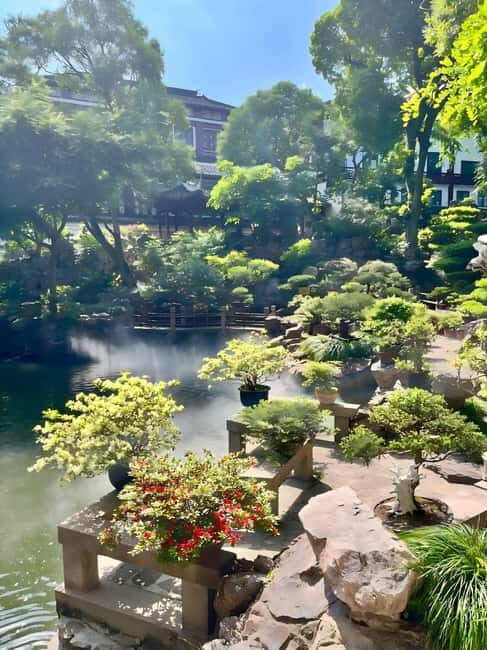
Yu Garden sits in the old-school Shanghai feel of the Huangpu District (168 Fuyou Road). It’s known for the classic Jiangnan garden approach—designed to feel serene and delicate even though the landscaping is planned down to the smallest carvings and motifs.
What makes it especially rewarding is that the garden isn’t just pretty scenery. It preserves a stack of traditional arts and objects, including Ming and Qing furniture, calligraphy, paintings, clay sculptures, brick carvings, and plaques/couplets. When you take your time, you start noticing the theme: everything is arranged to create layered views, then guide you from one “moment” to the next—like walking through a carefully written poem where the lines are stone, wood, and shade.
The garden is associated with the Jiajing and Wanli periods of the Ming Dynasty (so, yes, this isn’t new). The original owner, Pan Yunduan, built it as a quiet retreat for his father, Pan En—over about 20 years of construction effort. That parent-and-peace idea matters when you visit: Yu Garden is designed less for thrill-seeking and more for slowing down and looking.
You’ll also hear about the signature “small yet grand” aesthetic. The place uses elements like the Grand Rockery and Jade Rock to make compact spaces feel bigger through perspective and arrangement. If you like details—inscriptions, old materials, and crafted forms—you’ll get a lot out of this.
A few more Shanghai tours and experiences worth a look


Price and what $14 covers in real-life value
At $14 per person, this is one of the more sensible ways to experience Yu Garden without turning your day into a logistics puzzle.
Here’s what’s included:
- Yu Garden entrance tickets
- Service charge
- Guide (optional)
That matters because you’re paying for access to a specific site during a specific time window, not just “a booking.” For many Shanghai sights, the difference between arriving ready versus arriving to figure things out on the fly can be huge—especially if you’re trying to fit this into an already-packed day.
Also, because you’re booking entry in advance, you avoid the on-the-spot ticket friction. If you’re traveling with limited time (or you’re not the type who enjoys last-minute lines), that alone can make the ticket feel like better value than it first sounds.
Choosing your visit window: 9:00 to 16:00 with an early cutoff

Plan around the daily rhythm. Your visit time runs 9:00–16:00. The garden closes at 4:30 PM, with last entry at 4:00 PM.
Two practical tips:
- Arrive early enough that you’re not racing in the final hour. Even if you’re fast, you’ll want time to stop for photos and to read inscriptions.
- If you’re booking online, note that ticket booking stops at 3:30 PM. So don’t wait until the last minute if you can help it.
This is also a good stop if you want a cultural break mid-day. Yu Garden gives you a different pace from big city sights—more looking, less rushing.
And yes, the garden is closed on Mondays. Don’t build your schedule around it on that day.
Getting there without headaches: Metro Line 10 and New North Gate buses

You’ve got two easy ways to reach the area:
Metro
Take the metro to Yu Garden station, Line 10. This is usually the most straightforward option for visitors who like clear route planning.






Bus
You can also use buses 64 / 736 / 911 / 930, getting off at New North Gate station.
Why I like these options for your planning: they drop you close enough that you don’t need extra taxi time to start enjoying the garden area. When a sight like this is time-limited (last entry is 4:00 PM), shaving off transport friction is real.
Your Yu Garden walk: what to look for once you’re inside
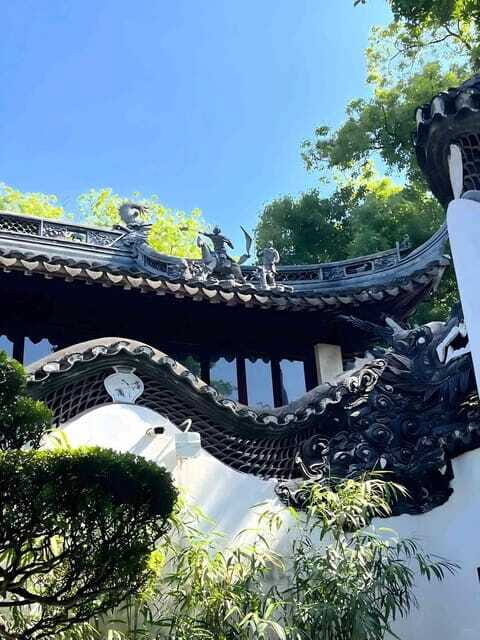
Yu Garden can feel compact, but it rewards slow movement. Think in terms of “pauses,” not “checkpoints.”
Here’s what you should plan to spend your attention on:
1) Ancient trees and the feeling of age
The garden preserves ancient trees. In a place like this, old trees aren’t just decoration—they shape light and shade, and they influence how the whole space feels. If you’re photographing, this is where you’ll get that soft contrast between bright paving and darker shade.
2) Ming and Qing furniture
One of the best parts is seeing Ming and Qing furniture within the garden setting. Even if you don’t know every term, you can appreciate how old craftsmanship sits naturally inside a designed environment. This is where a guide can help, because cultural context often turns a quick look into a deeper understanding.
3) Calligraphy and written art
Look for calligraphy as a repeating theme. Don’t just glance—if you can, take a moment to read what you can. Written art in Chinese gardens often ties to the mood of the space, and it’s one way the garden “speaks” without modern audio or screens.
4) The Grand Rockery and Jade Rock
The Grand Rockery and Jade Rock are key visual anchors. Even if you’ve seen images online, seeing them in person changes things: the scale, the angles, and the way pathways curve around the stones can make the “small yet grand” idea click fast.
5) Brick carvings, plaques, and couplets
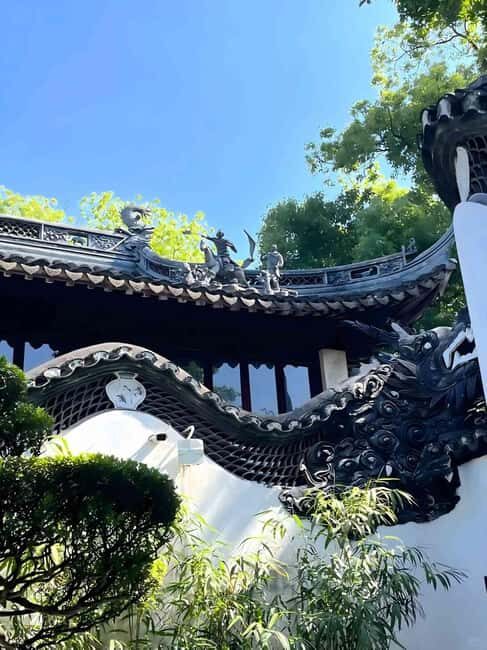
The garden preserves brick carvings, plaques, and couplets, plus items like clay sculptures and paintings. This is where you’ll notice that the garden is made for close viewing, not only wide scenic shots. If you like details, you’ll end up spending more time here than you planned.
6) Built “for retreat,” not for speed
Remember the origin story: it was designed as a peaceful retreat. That should guide your pacing. If you treat it like a sprint, you’ll miss what makes it work—quiet corners, structured views, and the crafted calm.
If you’re short on time, focus on the big anchors (Grand Rockery/Jade Rock) first, then loop back for close-up art like calligraphy and carvings. That’s the simplest way to avoid feeling like you wandered without a payoff.
Optional English guide: when it’s worth the extra effort
A live English-speaking guide is available as an option.
You’ll get the most out of a guide if:
- you want help connecting objects (like furniture, plaques, calligraphy) to what they mean in the garden context
- you’d rather spend less time trying to figure out what’s important on your own
- you want a quicker path to key sights without losing the calm tone
If you’re more independent and you like wandering freely, you can skip the guide and still get a satisfying visit. Just set aside time to slow down at inscriptions and preserved art pieces.
Timing tips so you don’t feel rushed
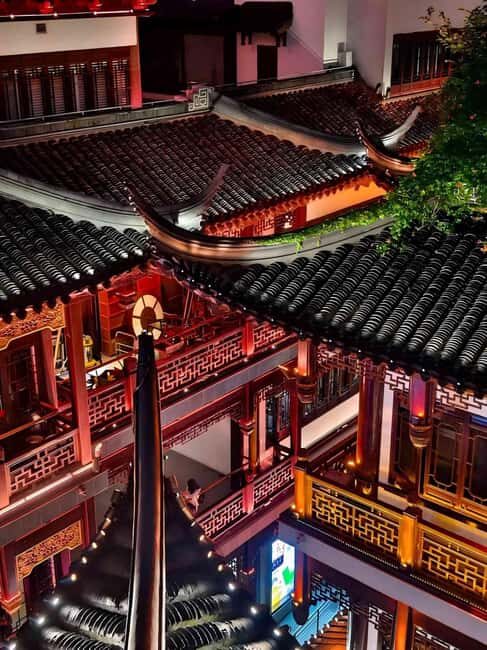
Because last entry is 4:00 PM and closure is 4:30 PM, I’d treat Yu Garden like a “half-day mission,” even though the posted visit time window is 9:00–16:00.
A sensible plan:
- Arrive earlier than you think you need, especially if you’re navigating transit.
- Give yourself time to pause at the rockeries and ancient trees, then do the calligraphy and carvings after.
- Don’t plan a long second stop right after 4:30 PM unless it’s very close by.
Tickets, IDs, and the rules that affect your day

You’ll need a passport or ID card. That’s the big one.
Not allowed: alcohol and drugs.
Children pricing rules (with proof):
- children under 6: free, but must be accompanied by an adult with proof of age
- children over 6 and under 18: half price
- seniors over 60: half price
A passport showing age can be used as proof.
Also important: after purchasing, you must send your expected visit date, full name (matching the passport exactly, including capitalization), and your passport number to [email protected]. You should receive a confirmation email once your reservation is complete.
Who should book this Yu Garden entry ticket

This works best if you want:
- a cultural Shanghai stop with a quiet, carefully designed pace
- a pre-planned entry that respects your time limits
- Ming and Qing details like calligraphy, plaques, and crafted furniture without turning it into a ticket-hunting project
- an option for an English live guide if you prefer context over guesswork
It’s also a strong pick for anyone combining Yu Garden with nearby old-town sightseeing, because you can shape your day around the garden’s closing time.
If you only like major modern landmarks with big crowds and constant movement, you might find this slower than you expected. But if you enjoy craft, writing, stonework, and the mood of old spaces, Yu Garden fits nicely.
Should you book this Yu Garden entry ticket?
Yes—if you value a smooth entry and you want to spend your energy looking instead of figuring out tickets on the fly.
Book it especially if:
- you’re visiting on a non-Monday
- you can arrive with enough time before last entry at 4:00 PM
- you want the included admission without extra on-the-day stress
Skip or reconsider if:
- you’re planning a very late arrival and can’t protect time for the early closing
- you’re unsure you can meet the ID/name details requirement (name must match your passport exactly, including capitalization)
If your goal is a calm, detail-rich Shanghai cultural moment, this is a practical way to get into Yu Garden and actually enjoy it rather than manage it.
FAQ
Is Yu Garden closed on any day?
Yes. Yu Garden is closed on Mondays, so you should not book for that day.
What are the entry hours?
Visit time is 9:00–16:00. Last entry is at 4:00 PM, and the garden closes at 4:30 PM.
Where do I get off for public transport?
By metro, get off at Yu Garden station on Line 10. By bus, take routes 64/736/911/930 and get off at New North Gate station.
Do I need a passport or ID card?
Yes. You need a passport or ID card.
Are children allowed, and is there a discount?
Yes. Children under 6 enter for free with an adult and proof of age. Children over 6 and under 18, and seniors over 60, can enter at half price with proof of age.
Is cancellation allowed?
Yes. You can cancel up to 24 hours in advance for a full refund.