REVIEW · SHANGHAI
Shanghai: Yuyuan, City God Temple Old City Tour-Tip Based
Book on GetYourGuide →Operated by MeMolaFreeWalkingTour · Bookable on GetYourGuide
Temple wishes and herb talk in Old Shanghai. In this tight 2-hour guided walk, I like how Yuyuan’s lanes and landmarks turn into a story you can follow, from zodiac animals and Taoism ideas to the folk-religion feel of the City God Temple. I also really value the guide-led stop at a traditional medicine shop, where you get a chance to sample the shop’s most famous herbs alongside practical explanations you can actually use when you see the goods.
One thing to consider: this tour is not suitable for mobility impairments, and you’ll be on your feet most of the time. Bring comfortable shoes and keep your belongings secure, especially in the busy temple and market areas.
In This Review
- Key things I’d circle on your map
- Why Yuyuan and the City God Temple fit into a 2-hour plan
- Getting to the meeting point without stress (and finding the group fast)
- Yuyuan Old Street: where the zodiac theme makes the old lanes make sense
- Tonghan Chuntang and the traditional medicine shop experience
- City God Temple of Shanghai: Taoism, folk religion, and what to watch for
- Lake Pavilion Tea House, the 9 Zig-Zag Bridge, and Mid-Lake Pavilion views
- Yuyuan Garden smallwares and the calm finish at Ancient City Park
- What the guide actually adds (beyond pointing)
- Practical value: what you get for your money
- Who this tour suits (and who should choose another plan)
- Should you book this Yuyuan City God Temple tour?
- FAQ
- How long is the tour?
- Is the tour guided in English?
- How many people are in the group?
- Where do we meet?
- How do I get there by metro?
- How do I get there by taxi?
- What’s included in the tour?
- Is there anything I should not do during the tour?
- What should I wear?
- Is it refundable if I cancel?
Key things I’d circle on your map
- Small group (up to 10) makes it easy to ask questions without getting steamrolled
- Live English guide (Jie is one of the guides who’s been praised for clear explanations)
- Taoism and folk religion at the City God Temple, with celebrations and beliefs explained in plain language
- Traditional Chinese medicine sampling at a medicine shop, including talk of the king of herbs
- Scenic garden moments like the 9 Zig-Zag Bridge and Mid-Lake Pavilion
- Yuyuan market browsing for small wares and local craftsmanship to take home
Why Yuyuan and the City God Temple fit into a 2-hour plan
If you only have a short window in Shanghai, this is the kind of tour that helps you use it well. You get a guided circuit that covers both the street-life feel of Yuyuan and the more ritual-focused atmosphere of the temple area, without turning it into an all-day marathon.
The best part is that the guide doesn’t just point at buildings. You learn what people believed there, why certain symbols show up, and how everyday traditions connect to the places you’re seeing. That makes the whole walk feel less like random sightseeing and more like understanding a working cultural neighborhood.
Price-wise, at about $2.36 per person for a 2-hour English guided experience, the value comes from what’s included: guided narration, a traditional medicine stop with sampling, and group photo moments at attractive landmarks. Even if you’re not a tea-and-herbs person, you’re paying for the context that makes the sights readable.
You can also read our reviews of more city tours in Shanghai

Getting to the meeting point without stress (and finding the group fast)
You’ll start around Yuyuan metro station, with the meeting tied to the Exit area near 豫园站. The location details you’ll want to double-check before you head out are:
- Starting location shows 豫园站 3号口
- The meeting point is listed as Yuyuan Garden station Exit 1 (豫园站1号口), Shanghai, Huangpu, 四牌楼
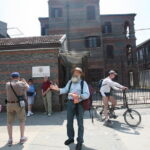
The tour also gives a simple strategy: find the red umbrella. If you’re arriving by metro, you’re looking at Metro Lines 10/14, and then you head to the Exit 1 area. If you’re taking a taxi, it’s easiest to tell the driver to drop you at Yuyuan metro station Exit 1.
In the first few minutes, you’ll likely get a quick sense of pace and expectations. With a group size capped at 10, it’s usually not hard to spot each other, get oriented, and settle into the walking rhythm.
Yuyuan Old Street: where the zodiac theme makes the old lanes make sense
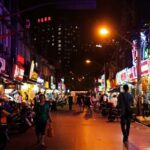
Your first big taste of the area is Yuyuan Old Street, a good opener because it sets the tone fast: shop-lined lanes, old-city atmosphere, and plenty of visual cues to explain. This is where your guide’s storytelling matters. When you know what to look for, the street turns from scenery into clues.
A standout stop in this early phase is the chance to see the Chinese 12 zodiac animals, each with its own costume look. The guide’s explanations help you connect the animal symbols to the cultural logic behind them, instead of treating them like decorative extras.
One practical tip: wear shoes that can handle uneven pavement and crowds. This is the kind of old-town environment where people move slowly in pockets, and you’ll want to be comfortable shifting with the group.
And yes, this area is the sort of place where you may spot snacks and street food around the lanes, even if the tour itself focuses more on the guided cultural walk than on a food crawl. If you want to snack, treat it as optional and keep your focus on the tour stops so you don’t lose the group timing.
Tonghan Chuntang and the traditional medicine shop experience
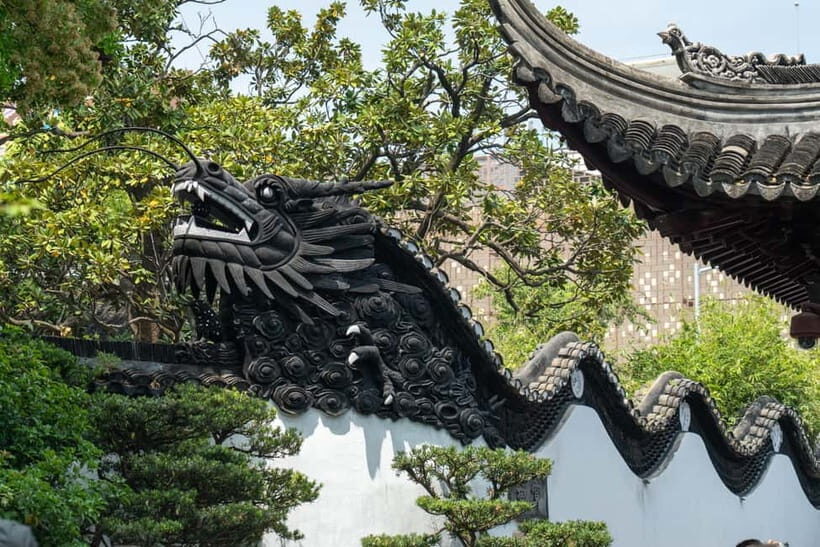
Next comes Tonghan Chuntang, where the theme turns sharply from symbols and streets to everyday health culture. In many Chinese medicine shops, the displays can look like a wall of mystery items until someone gives you a roadmap, and that’s what the guide helps with.
The tour includes a sampling moment tied to the shop’s famous herb theme. You’ll get a taste opportunity described as the king of herbs, with explanations built around what traditional Chinese medicine treats, how people think about balance, and why herbs are sold the way they are.
What I like about this stop for you: it’s not presented as a magic show. You’re not expected to believe everything on the spot. Instead, you’re learning the logic behind the tradition so you understand what you’re seeing when you walk past bottles and bundles on your own later.
A quick caution: if you have food sensitivities, let your guide know before anything is offered. The tour says there’s sampling, so it’s smart to be thoughtful about what you can safely try.
City God Temple of Shanghai: Taoism, folk religion, and what to watch for
This is the emotional center of the tour. At the City God Temple of Shanghai, you spend enough time to stop, look closely, and understand why the site matters to local religious life.
The guide focuses on Taoism and folk religion, including common beliefs and celebrations linked to the temple world. That matters because Chinese temple culture can feel layered: there’s ritual, storytelling through symbols, and community traditions happening alongside tourist curiosity. A guide helps you read it without turning it into a checklist.
You’ll also hear about the idea of the City God and how people relate to that figure in everyday belief. If you’ve ever wondered why temple spaces feel both spiritual and social, this is where the answer becomes practical. People come with intentions, and the temple environment is built to support that.
One more detail you’ll appreciate: you’re not only learning concepts. You’re also getting tips for observing the space respectfully and spotting the meaningful parts as you move.

Lake Pavilion Tea House, the 9 Zig-Zag Bridge, and Mid-Lake Pavilion views
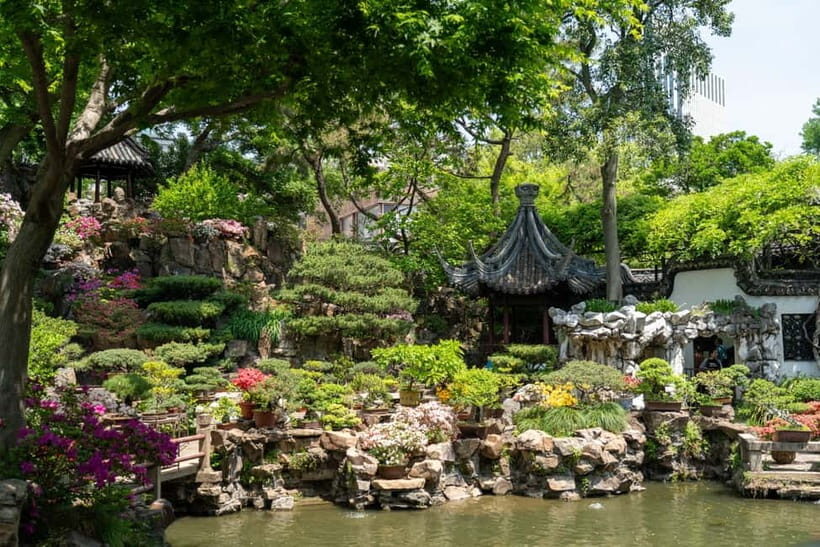
After the temple focus, the walk shifts into garden scenery with a tea-house moment at the Lake Pavilion Tea House. This is where you catch your breath without feeling like the tour slowed down too much.
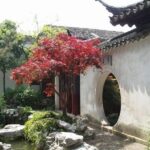
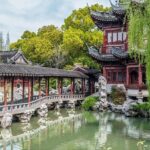
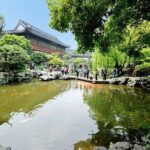
The tour includes scenic garden elements like the 9 Zig-Zag Bridge and the Mid-Lake Pavilion. Even if you’ve seen photos, seeing these features in real scale helps you understand why they’re favorites. They’re designed for views, pauses, and visual rhythm, and your guide helps you notice the composition instead of just passing through.
Tea house stops on short tours are also useful because they give you a soft landing point. Instead of thinking nonstop, you can reset, ask one more question, and enjoy the atmosphere before you head to the shop-and-stalls phase again.
If you want to bring home a memory, this is often the section where it’s easiest to take photos that look like the place rather than just photos of crowds.
Yuyuan Garden smallwares and the calm finish at Ancient City Park
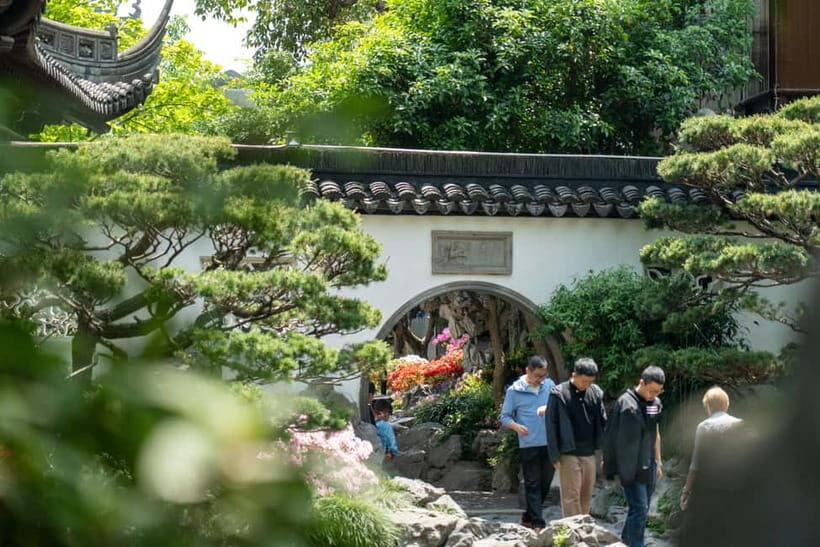
The final cultural sweep lands on Yuyuan Garden Smallware, a market-style stop for small items and local craftsmanship. This part is about turning what you learned into a concrete souvenir. You can browse with more intention now because the guide has already given you cultural context, so the items feel connected rather than random.
The tour ends at 古城公园 (Ancient City Park). Finishing in a calmer space is a smart design choice for a short tour. It lets you exit without the feeling that you’re still trapped inside the densest crowds.
If your schedule is tight, this ending location is also helpful because you’re not left scrambling for your next step. You can regroup, check your photos, and decide whether you want to wander further around Yuyuan on your own.
What the guide actually adds (beyond pointing)
This is a tip-based guided tour with a live English guide, and the consistent praise points to what you’re really buying: clarity and confidence while you’re standing in the middle of a complex cultural site.
I love tours like this because the guide can translate things fast:
- what symbols and animals mean
- why Taoism and folk religion show up the way they do
- how to interpret what you see in a medicine shop window
- what not to miss so you don’t end up just taking photos and moving on
If your guide is Jie, the feedback specifically highlights friendly energy, good preparation, and the ability to answer questions. That combination matters. You don’t want a guide who reads a script; you want someone who can respond when you’re staring at something and wondering what it is.
Also, the small group format helps. When there are fewer people, you can actually hear explanations and you’re more likely to get personal recommendations rather than getting rushed.
Practical value: what you get for your money
A tour priced at $2.36 might make you suspicious at first glance, but here the value seems to come from included experiences that cost time and interpretation even when you’re paying nothing else to enter. In this case, you’re paying for:
- a 2-hour guided route with specific stops
- English guidance
- medicinal herb sampling
- group photo moments at landmarks
- cultural interpretation that helps you enjoy the sights instead of just walking through them
The best value is for people who want cultural meaning, not just photo angles. If you’re the type who likes to understand why a place is shaped the way it is, this tour does a lot with a short amount of time.
Who this tour suits (and who should choose another plan)
This tour is a strong fit if you:
- want a guided introduction to Yuyuan and the City God Temple
- are curious about Taoism and folk religion
- like the idea of learning through a traditional medicine shop stop with sampling
- prefer a smaller group and real conversation
It’s not a great fit if you need wheelchair-friendly routes or have mobility limits, since the tour includes walking and temple/garden movement. Also, you should expect a comfortable-shoes pace rather than a sit-and-stare experience.
If you’re traveling with kids, it could work if they enjoy animals and symbols, but you’d want to watch energy levels because it’s guided throughout and still involves walking.
Should you book this Yuyuan City God Temple tour?
Yes, I think you should book it if your goal is to understand the old-town layers fast. The sweet spot is 2 hours: long enough to see the key areas, short enough that you don’t burn your whole day in a single neighborhood.
Skip it only if you need minimal walking or if you’re hoping for something focused on food experiences alone. This is culture-forward: temple beliefs, zodiac symbols, a traditional medicine stop, and a garden-and-market wrap-up.
If you want an efficient, guide-led way to make Yuyuan and the City God Temple feel like a story you can remember, this one is a solid choice.
FAQ
How long is the tour?
The tour lasts 2 hours.
Is the tour guided in English?
Yes. The tour includes a live tour guide in English.
How many people are in the group?
It’s a small group limited to 10 participants.
Where do we meet?
You meet at Yuyuan Garden station Exit 1. The starting location is also labeled as 豫园站3号口, so it’s worth confirming the exact spot with the provided instructions.
How do I get there by metro?
You can take Metro Line 10/14 and get off at Yuyuan garden metro station. Use Exit 1 (豫园站1号口).
How do I get there by taxi?
Ask the driver to go to Yuyuan garden metro station Exit 1 (豫园站1号口).
What’s included in the tour?
The tour includes a 2-hour guided tour through Shanghai’s Ancient City, cultural interpretation (including Taoism/folk traditions), sampling of traditional Chinese medicinal herbs, expert travel tips, and group photos at landmarks.
Is there anything I should not do during the tour?
Smoking is not allowed.
What should I wear?
Wear comfortable shoes for walking and keep your personal belongings secure.
Is it refundable if I cancel?
Free cancellation is available up to 24 hours in advance for a full refund.