REVIEW · SHANGHAI
Shanghai Uncommon Historic Sites Tour
Book on Viator →Operated by Jennys China Tours · Bookable on Viator
Uncommon Shanghai starts with unlikely buildings. This tour mixes colonial architecture with political landmarks, so you don’t just see old stuff—you understand how different Shanghai chapters shaped today’s city. I also like the fact that you’re guided with real clarity and photo help, and guides such as Peggy are specifically noted for excellent English.
I set my expectations for a relaxed stroll—and got a bit of structure instead. You’ll hit several major sites in one day, which makes it efficient, but the time at each stop can feel short, especially if you love lingering.
In This Review
- Key points to know before you go
- The “uncommon” promise: history you can see, not just read
- Timing and logistics: planning a smooth 9:00 am start
- Moller Residence in the French Concession: Gothic-Tudor Shanghai, 1936
- 1933 Old Millfun: an art-deco-adjacent slaughterhouse turned into dining
- Zhou Enlai’s former residence: a French-style house with political gravity
- Shanghai Ancient City Wall: Ming defense you can trace in today’s streets
- The Second National Congress site: why 1922 Shanghai matters
- Waibaidu Bridge: the steel engineering story (opened 1908)
- Lunch: authentic dumplings included, so you stay in the flow
- Price and value: where your $175 goes
- What this tour is best for (and the people who may not love it)
- Should you book Shanghai Uncommon Historic Sites?
- FAQ
- What time does the tour start?
- How long is the tour?
- Is pickup included?
- What’s included in the price?
- Are tickets included?
- Is this a private tour?
- Do I need an app or paper ticket?
- What’s the cancellation policy?
- Are tips included?
Key points to know before you go
- Hotel pickup and an air-conditioned vehicle make the long day easier, especially in Shanghai’s changing weather.
- Moller Residence delivers Gothic-Tudor style in the French Concession, built in 1936 by Eric Moller, a shipping magnate.
- 1933 Old Millfun turns the former Shanghai Municipal Council Slaughterhouse into shops and dining—an eerie concept made for curious photos.
- Zhou Enlai’s former home is a three-story French-style house from the 1920s, tied to a giant figure in modern China.
- Shanghai Ancient City Wall traces a Ming Dynasty defense built in 1553—then you follow its footprint through today’s streets.
- Waibaidu Bridge is a mechanical wonder: China’s first all-steel bridge and the only surviving camelback truss example in the country.
The “uncommon” promise: history you can see, not just read
If your Shanghai wish list is mostly the usual big-ticket highlights, this kind of tour is a refreshing shift. What I like is that the story is built out of buildings and places you can actually stand in front of. One stop feels like you’re looking at Western-influenced design in a China setting. The next is connected to a political turning point. Then you switch again to a defensive wall and a bridge that’s basically a lesson in engineering.
Because it’s a private tour/activity for your group, the experience also feels more flexible than the typical crowd-stuffed day. You can ask direct questions, and your guide can keep steering you back to what matters on the ground.
One practical note: with an 8-hour schedule and multiple stops, this is best approached with a “good pace” mindset. You’ll see a lot, but you won’t have endless free time at any one location.
You can also read our reviews of more historical tours in Shanghai
Timing and logistics: planning a smooth 9:00 am start
This tour starts at 9:00 am, and it runs about 8 hours. In practice, that means you’ll want to eat a real breakfast before pickup and bring a little patience for city traffic. The good news is you’re in an air-conditioned vehicle, and pickup is offered—both of which make a long day feel manageable.
Wear comfortable walking shoes. Some stops are more “look-and-learn” than “walk-a-lot,” but you’ll still be on your feet for photo angles, entrance/exit flows, and quick context from your guide.
Also, plan your day around lunch being handled for you. Lunch is included, and it’s an authentic dumpling meal, so you won’t need to hunt for something once you’re hungry and tired.
Moller Residence in the French Concession: Gothic-Tudor Shanghai, 1936
The day begins at Moller Residence, a colonial-era mansion tucked in Shanghai’s French Concession area. This place is easy to miss if you’re just passing by, which is exactly why it works on a tour like this. Built in 1936 by Eric Moller, who became wealthy from British shipping, the house gives you a clear sense of how international wealth and tastes left physical fingerprints in Shanghai.
What makes it especially interesting is the design mix: you get brown tiled Gothic and Tudor details. Even if you’re not a “style nerd,” you’ll feel the difference between this mansion and more modern architecture nearby.
Expect about one hour here. That’s enough time to view the exterior details, absorb what your guide points out, and take photos without feeling like you’re rushing. If you love architecture, you’ll probably wish you had more time—though the rest of the schedule is built to keep the momentum.
1933 Old Millfun: an art-deco-adjacent slaughterhouse turned into dining
Next up is 1933 Old Millfun, a complex of restaurants and shops where the Shanghai Municipal Council Slaughterhouse once stood—described as the largest slaughterhouse in Shanghai. The contrast is the whole point. You’re used to eating at places that feel “timeless,” but here the site’s past is heavy, and that tension makes it memorable.
Even if you prefer your history less “dark,” this stop is still a strong example of how Shanghai reuses space. Instead of erasing the past, the area repackages it, turning a grim industrial function into a visitor-friendly zone.
You’ll spend around one hour, and a lot of that time will go into recognizing the architectural shell and listening for what your guide highlights. If you like quirky settings for photos, this is a good one—especially because you can frame the industrial bones against modern signage and people dining nearby.
Zhou Enlai’s former residence: a French-style house with political gravity
Then you shift from industrial repurposing to political biography at the Former Residence of Zhou Enlai. Zhou Enlai (1898?1976) was the first Premier of the People’s Republic of China, serving from 1949 until his death.
The house itself is described as a three-story French style residence built in the 1920s. That detail matters because it lets you connect personal history to Shanghai’s earlier global influences—how the city looked, who lived where, and how political leadership ties back to specific places.
Expect about one hour. This stop is ideal if you want more than names and dates. You’ll get the sense of how Shanghai served as a stage for major national developments, not just a commercial city.
One small consideration: since this is a residence-style site, your time there can feel more “informational” than “panoramic.” If what you want most is huge views or wide outdoor scenery, this may feel quieter than some other stops.




Shanghai Ancient City Wall: Ming defense you can trace in today’s streets
After that, you move into older defense planning at the Shanghai Ancient City Wall. The key year is 1553, during the Ming Dynasty, when Shanghai built a wall to defend itself against Japanese pirates. That’s a detail that changes the vibe instantly. You’re not just looking at an old wall. You’re imagining a city treating maritime threats as a real, urgent problem.
The wall followed what are today Renmin Lu and Zhonghua Lu, and the original measurements are striking: 8.1 meters high (about 27 feet) and roughly 4.8 kilometers long (about 3 miles). Your tour time here is about 30 minutes, with admission included.
In half an hour, you’ll mainly get the “where it was and why it mattered,” plus a quick visual sense of the scale. If you want to study it more deeply, you can use the tour as your orientation point, then come back later on your own with the street alignment in mind.
The Second National Congress site: why 1922 Shanghai matters
The itinerary continues to the Site of the Second National Congress of the Communist Party of China, held in Shanghai between 16–23 July 1922. This congress is presented as a significant party meeting, and the focus is on how decisions made there shaped what followed.
Expect about one hour here, and admission is included. This is a good stop if you want context for how Shanghai fit into early Communist Party history, not only in terms of factories and foreign concessions, but also as a place where big strategic meetings happened.
A practical tip: bring a bit of curiosity. This kind of site can feel abstract if you’re only half paying attention. With a good guide, it becomes clearer fast—your job is just to listen for the “why this moment mattered” thread your guide connects.
Waibaidu Bridge: the steel engineering story (opened 1908)
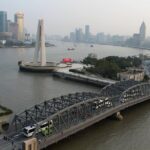
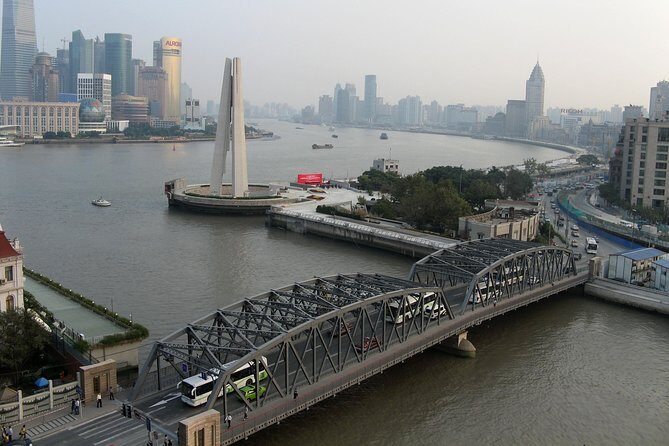
To end the political and architectural story, you’ll see Waibaidu Bridge, also known as the first all-steel bridge and the only surviving example of a camelback truss bridge in China. The current bridge was opened on 20 January 1908.
This stop is short on paper but big on effect. It’s one thing to admire old buildings; it’s another to realize how engineering choices from more than a century ago still shape the streets and skyline you experience today. If you like structures, this is your “wait, that’s real?” moment.
Because the bridge is an outdoor landmark, it’s also a good place to practice quick composition: railings, angles, and the way the truss shape creates repeating lines. You’ll probably get better results if you try a couple of angles rather than relying on the first shot.
Lunch: authentic dumplings included, so you stay in the flow
One of the best value signals in the tour details is lunch being included: an authentic dumpling lunch. I’m a fan of included meals on day tours because it removes one big stress point. You don’t have to decide where to eat mid-schedule, and you don’t risk ending up somewhere that’s convenient for the group but weak on food.
You’ll likely eat around the middle of the tour so you can keep going afterward without the energy crash. If you have dietary restrictions, you should check in with the operator ahead of time so you’re not surprised by ingredients.
Price and value: where your $175 goes
At $175.00 per person, this tour isn’t the cheapest way to spend a day in Shanghai—but it’s also not priced like a luxury museum experience. The value comes from what’s bundled:
- Lunch is included (dumplings).
- You get air-conditioned transportation for the day.
- All fees and taxes are included.
- Several site admissions are explicitly included, and other stops are handled with free admission tickets.
That’s the real math: you’re paying for a guided day that covers transport and reduces friction. In a city where moving between districts can take time, having pickup and a vehicle makes the schedule realistic.
There’s also a small demand signal baked into the booking trend: it’s typically reserved about 32 days in advance on average. That doesn’t mean it’s impossible to book last minute, but it does suggest it’s a popular format for people who want something more thoughtful than a generic highlights loop.
One thing to budget for: tips are recommended but not included. If you tip in line with what you’d normally do in Shanghai for a guide and driver, you’ll land on a total cost that feels more predictable.
What this tour is best for (and the people who may not love it)
This is a great match if you:
- like architecture and want to understand why buildings look the way they do
- want political context without only reading plaques
- enjoy walking around enough to notice details, but you still want someone else to manage the routing
It may feel less ideal if you:
- want long, slow museum-style time at one site
- get impatient with a schedule that moves every stop along after a set visit length
Should you book Shanghai Uncommon Historic Sites?
I’d book it if you’re the type of traveler who wants Shanghai beyond a single theme. You’ll see a Gothic-Tudor mansion with shipping wealth behind it, a former slaughterhouse turned into a modern hangout zone, Zhou Enlai’s French-style home, a Ming wall tied to maritime threats, and a steel bridge that’s basically Shanghai’s engineering bragging rights.
The tour also earns points for the human side. One guide named Peggy is highlighted for being easy to get along with, speaking excellent English, taking good photos, and helping shape a trip plan around what you actually want to do.
If your goal is a day where every stop has a specific reason to exist—rather than “here’s another photo spot”—this one fits.
FAQ
What time does the tour start?
It starts at 9:00 am.
How long is the tour?
The tour runs about 8 hours (approx.).
Is pickup included?
Yes, pickup is offered.
What’s included in the price?
The tour includes lunch (authentic dumpling lunch), an air-conditioned vehicle, and all fees and taxes.
Are tickets included?
Admissions are included for some stops. The tour details also indicate free admission for specific locations.
Is this a private tour?
Yes, it’s private, meaning only your group will participate.
Do I need an app or paper ticket?
A mobile ticket is provided.
What’s the cancellation policy?
You can cancel for a full refund up to 24 hours before the experience’s start time.
Are tips included?
No. Tips are recommended but not included.