REVIEW · HONG KONG
A Day in the life of a Hong Konger Tip Based Walking Tour
Book on GetYourGuide →Operated by Hong Kong Free Tours · Bookable on GetYourGuide
Kowloon feels like a live classroom. This Hong Kong walking tour turns everyday market errands into stories about daily life, including how people use vertical space and why rituals still matter in modern neighborhoods. I especially like the focus on market textures and real routines, from wet stalls to pastry counters, not just sightseeing photos.
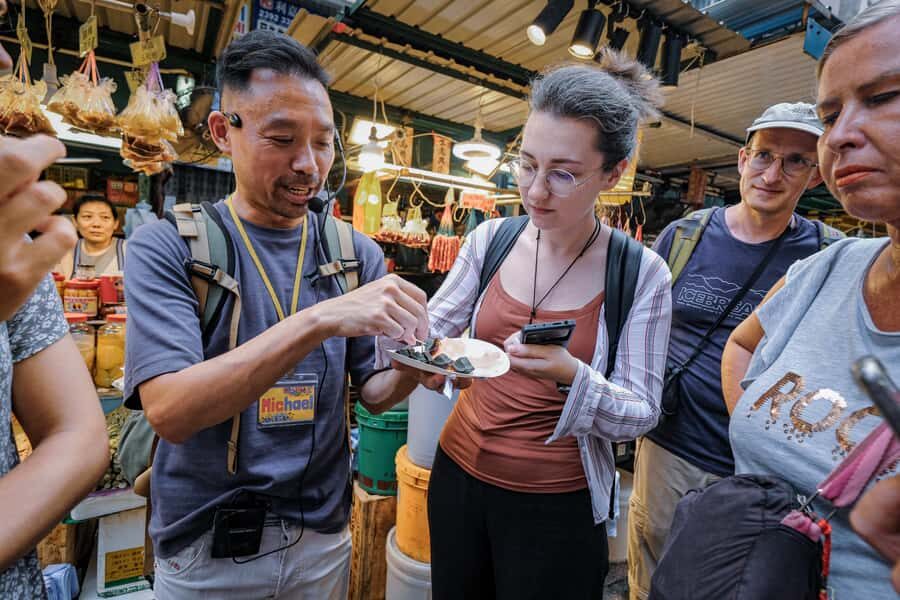
My second favorite part is the food-and-culture angle: you hear the reasoning behind things like goldfish in feng shui, mahjong culture, and the stories behind wife cakes. Guides such as Grace, Isaac, Summer, Michael, and Stephen are often described as energetic and funny, which makes the explanations stick. One thing to consider: it is not designed for wheelchair users, so you’ll want to be comfortable walking through busy market corridors.
In This Review
- Key things you’ll notice fast
- Meeting at Prince Edward and Getting the Kowloon Rhythm
- Wet Markets: Where Fresh Ingredients and Daily Rituals Meet
- Goldfish Market: Feng Shui, Vertical Shops, and the Stories Behind the Stalls
- Wife Cakes and Traditional Bakeries: What Makes the Pastry Feel Local
- Livestock Markets and Municipal Buildings with Restaurants Above
- Century Egg, Live Chicken Checks, and Chinese Medicine Street Logic
- Ladies’ Market: Bargaining Techniques and the Lively Atmosphere
- Price, Value, and the Real Reason It Gets High Scores
- Who This Tour Is Best For
- Should You Book This Hong Kong Markets Walking Tour?
- FAQ
- Where does the tour start?
- Where does the tour end?
- How much does it cost?
- What language is the tour in?
- What’s included in the price?
- What’s not included?
- Is the tour suitable for wheelchair users?
- Is it suitable for very young children or older adults?
- Can I pay later?
- When should I cancel for a full refund?
- What kind of experience will I get?
Key things you’ll notice fast
- Prince Edward MTR start inside Exit B: easy to find, and it sets you up for a practical Kowloon route.
- Wet markets in municipal buildings: you get upstairs dining plus downstairs shopping in one area.
- Goldfish Market beyond the obvious stalls: secret upstairs stores show a side many visitors miss.
- Wife cakes stories and pastry logic: you learn what makes these treats feel local, not touristy.
- Livestock market viewing with context: you’re taught how people think about freshness and handling.
- Ladies’ Market bargaining with real techniques: a lively atmosphere, but you’re given a method.
Meeting at Prince Edward and Getting the Kowloon Rhythm
Your day begins at Prince Edward MTR Station, Exit B inside the station. That detail matters. Instead of hunting around the surface streets first, you get oriented quickly and can start walking while the group is still together and calm.
This is the kind of tour where your guide helps you read the neighborhood. As you move, you’ll notice how Kowloon works like a stack of activities: shops at one level, services above, and apartments and daily life woven into the same tight footprint. You’ll also hear explanations that connect what you see to how people live their day-to-day lives.
If you’ve only visited Hong Kong by ferry or by major landmarks, this is the reset. Markets aren’t background noise here. They are where people plan meals, check ingredients, and carry on rituals without turning it into a show.
You can also read our reviews of more walking tours in Hong Kong

Wet Markets: Where Fresh Ingredients and Daily Rituals Meet
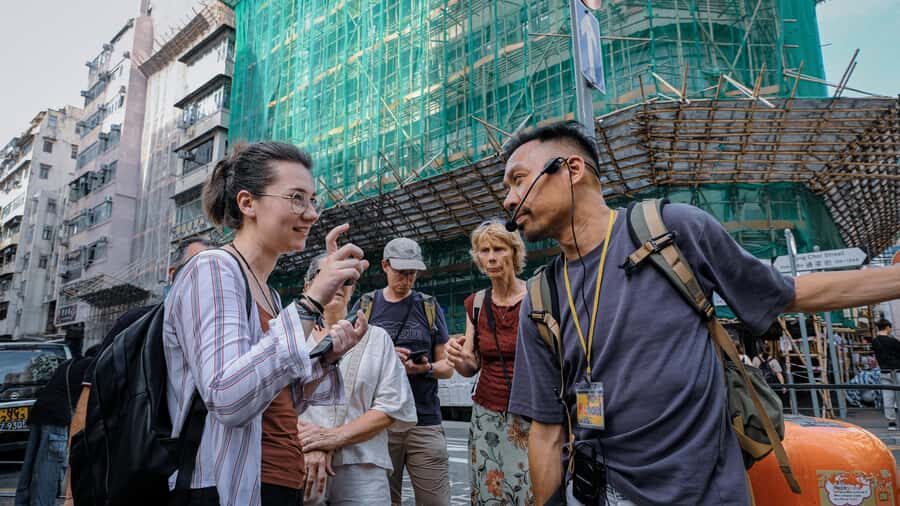
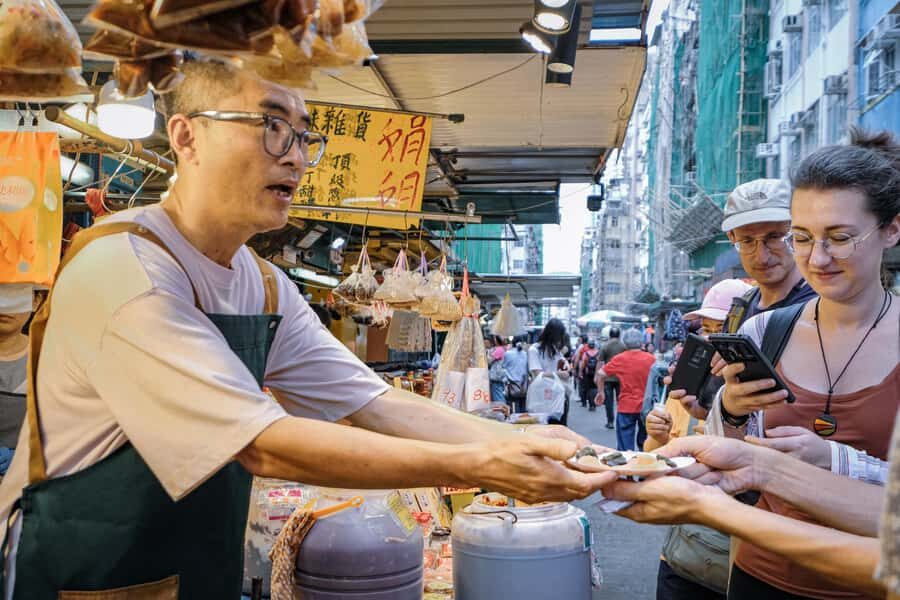
One of the best values in this tour is that it treats wet markets as culture, not just shopping. You’ll walk through places where fresh meat, seafood, and traditional snacks are sold, and you’ll get the logic behind how locals choose and handle what’s for dinner.
As you go, your guide explains daily habits and rituals that still shape behavior. You might hear how people think about offerings and symbolism, including the kind of paper items used for traditional practices. The point isn’t to treat it as folklore. It’s to understand why the beliefs are tied to everyday decisions.
You’ll also pick up practical “watch this” cues. For example, you learn how vendors present goods and how buyers move through the crowd with speed and confidence. It’s one of the easiest ways to learn Hong Kong without needing a long language lesson.
Practical tip: bring small bills if you plan to buy snacks. Even when the tour includes food stops, markets can tempt you with extra bites and fruit that don’t always appear on tourist menus.
Goldfish Market: Feng Shui, Vertical Shops, and the Stories Behind the Stalls
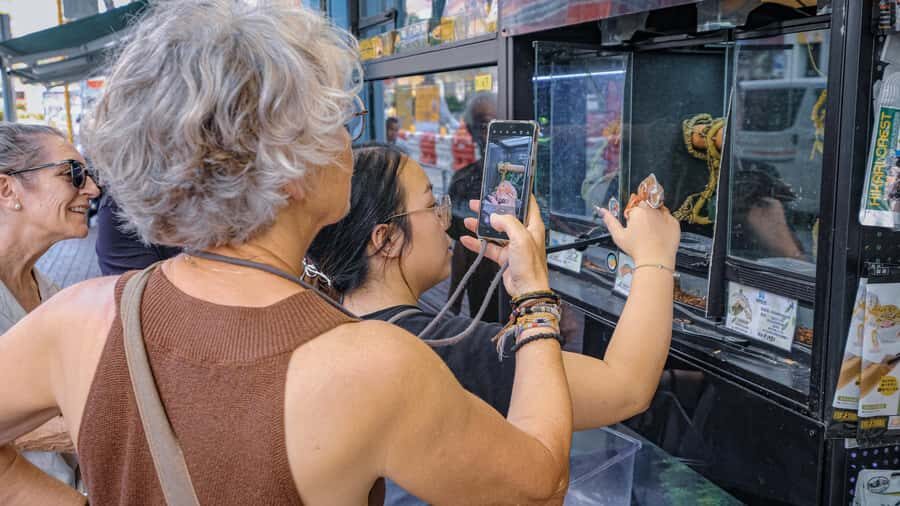
The tour highlights the famous Goldfish market, but what you’re really buying is context. You’ll learn about the role of goldfish in feng shui, and your guide connects the symbolism to why people still keep and display fish today.
Here’s the part I think is most useful: you see more than the street-level stalls. The experience includes secret upstairs stores where you can spot variations in supplies and setups that most visitors never notice. That vertical layout is a theme for the whole day, and it makes the city feel like one continuous machine instead of separate attractions.
You’ll also hear connections to other cultural threads, like mahjong culture, and how belief systems show up in everyday objects and routines. It’s a clever way to make the market feel less random. Instead, it starts to feel like a living network.
Possible drawback: the Goldfish Market area can be visually intense. If you’re sensitive to crowded aisles or prefer quiet sightseeing, you may need a slower pace and a quick break now and then.
Wife Cakes and Traditional Bakeries: What Makes the Pastry Feel Local
At some point, the tour turns from “look” to “taste.” You’ll step into traditional bakeries and learn the stories behind wife cakes (a Hong Kong Chinese pastry with a lot of cultural personality).
This is more than a snack stop. You’re taught how locals think about quality and technique, including what makes the flavors recognizable and why the same pastry can carry different meanings depending on how and when it’s enjoyed.
You’ll also learn to pay attention differently. Instead of asking only what it is, you start asking what it represents: comfort, sharing, celebration, and routine. That’s what makes the pastry part of the tour feel like culture education rather than a sugar break.
If you’re the type who likes learning how food traditions travel through generations, this segment is a highlight. And if you’re not, it still works because the explanations stay practical and tied to what’s right in front of you.
Livestock Markets and Municipal Buildings with Restaurants Above
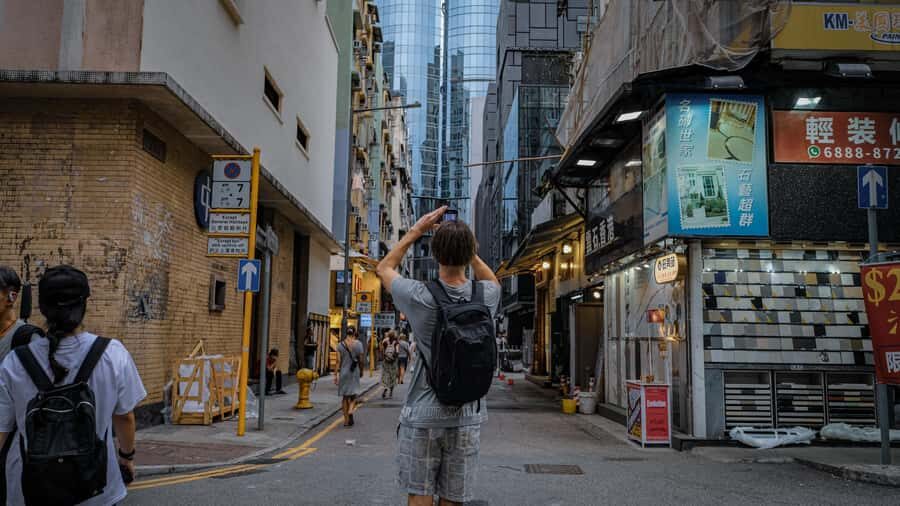
Another standout theme is how the tour handles the less comfortable side of market life. You’ll visit livestock markets and get context for what you’re seeing, instead of leaving you to guess.
Your guide also points out the surprising rhythm of Hong Kong space. You’ll encounter a municipal building with wet markets inside and restaurants above, which is a very “only in this city” arrangement. The idea is simple and smart: people can shop, then eat, without crossing half the city.
This is also where you learn that cleanliness and freshness aren’t abstract ideals. They’re visible habits: how goods are displayed, how stalls are arranged, and how customers judge quality based on what they observe in seconds.
If you’re expecting a gentle, purely scenic tour, this part may feel intense. But if you want real Hong Kong, it’s one of the most educational stops.
Tip for comfort: wear shoes with good grip and expect some tight walking lanes and short standing moments.



Century Egg, Live Chicken Checks, and Chinese Medicine Street Logic
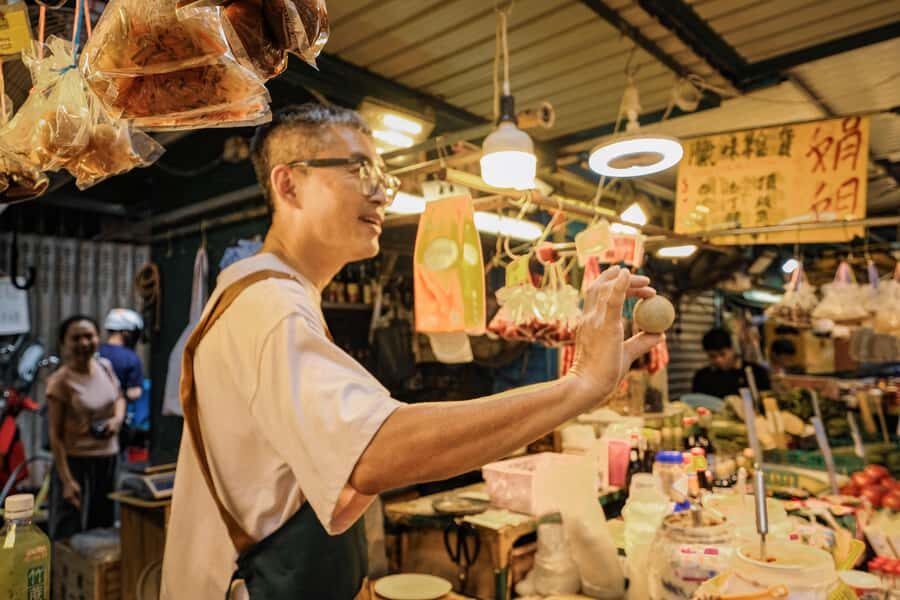
The tour includes several “only-a-local-would-say-that” moments that actually make sense once explained. You’ll learn how to enjoy Century Egg like a local, and you may get hands-on instruction on how people judge the quality of a live chicken by blowing air on its butt. Yes, it sounds strange. That’s why your guide explains the reasoning behind the street test.
You’ll also hear about Chinese medicine theories and ingredients in a way that connects to what you see in markets. Instead of treating it like a museum topic, the tour links it back to daily choices and ingredient logic.
This segment is valuable because it trains you to notice what locals notice. You’ll stop seeing items as random products and start seeing them as categories that fit into a bigger system of taste, health thinking, and tradition.
If you’re worried this will become heavy or academic, don’t. The tour format keeps it conversational. The goal is that you can walk away understanding the why, not just remembering the names.
Ladies’ Market: Bargaining Techniques and the Lively Atmosphere
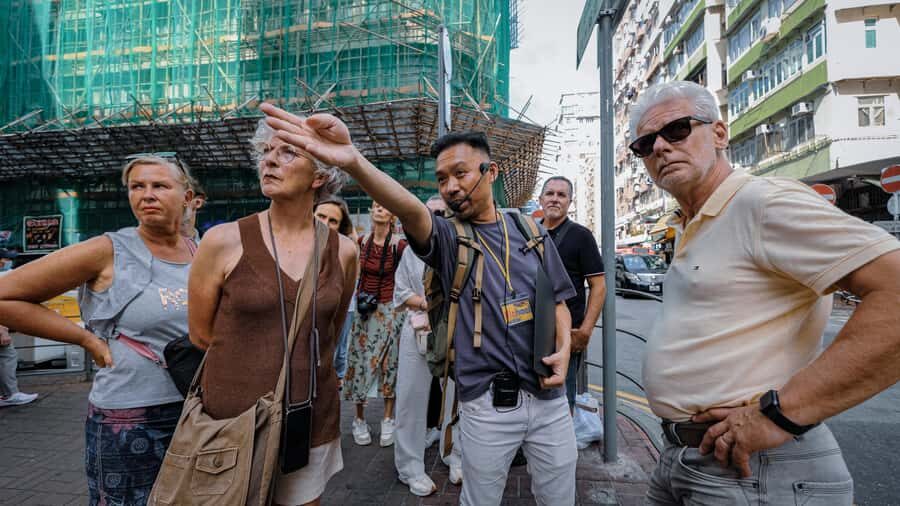
You’ll finish with Ladies’ Market, and the tour doesn’t treat it like a simple shopping street. You learn bargaining techniques so you don’t feel like you’re guessing from scratch.
Your guide also frames the market atmosphere. It’s lively, fast, and full of sensory cues, so having a method helps you relax. Instead of getting pulled along by hype, you can make decisions based on quality cues you’re taught to look for.
Even if you don’t plan to buy much, this part is still worth it. Bargaining training is basically a crash course in how negotiations work in Hong Kong markets: how offers are framed, how tone matters, and why speed and confidence are part of the process.
Practical tip: if you do buy something, keep it light. You’ll likely be moving around after, and market bags can get heavy fast.
Price, Value, and the Real Reason It Gets High Scores
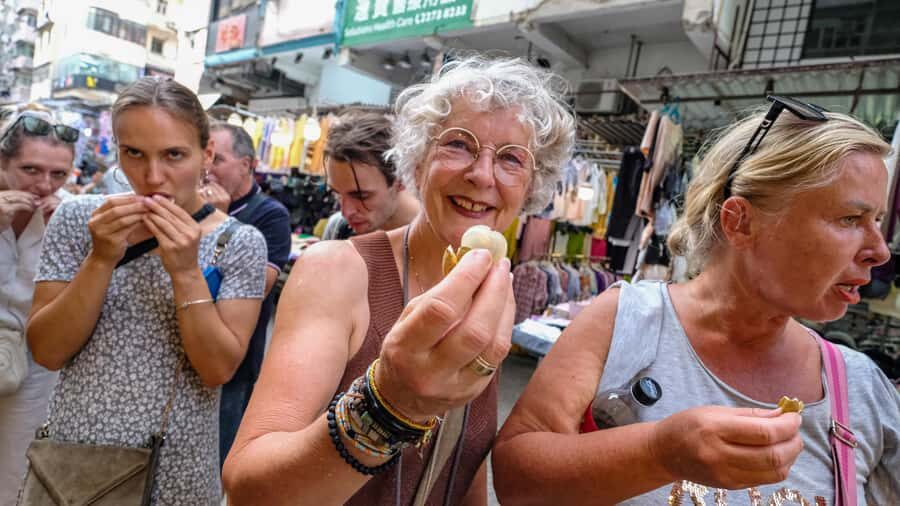
This tour is priced at $1.28 per person, which is unusually low for a guided walking experience with market tastings and cultural explanations. The value here isn’t just cost. It’s the amount of interpretation you get per minute.
A professional local guide leads you throughout, and the guide quality shows up in how the tour is described. People highlight guides with energy and humor, like Grace, Isaac, Summer, Michael, and Stephen. That matters because markets can be chaotic without a translator for the culture.
The overall rating is 4.8 from 69 reviews, which suggests consistency in what people care about: explanations that make sense, good pacing, and food moments that feel tied to the story.
What you should expect from a tour at this price: it likely prioritizes maximum local contact over big-ticket comfort. The win is that you’re spending time with people who know how the city works.
Who This Tour Is Best For
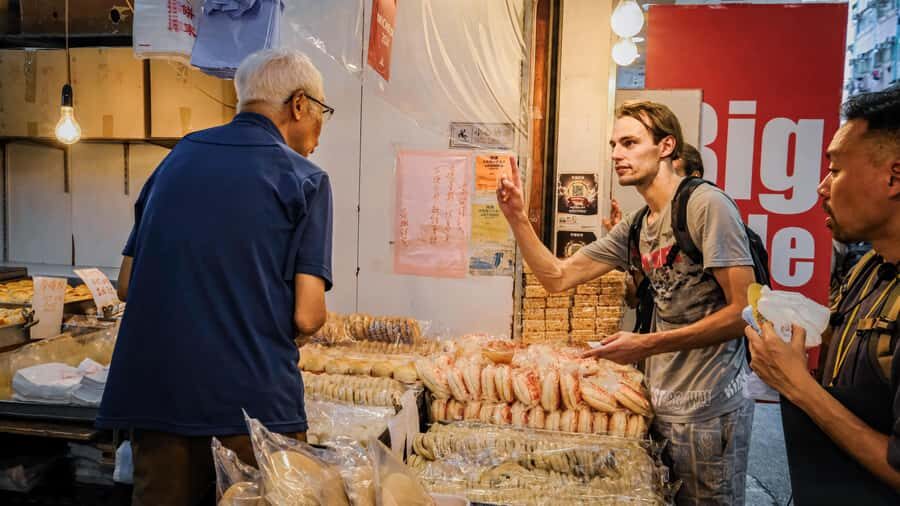
I think this fits best if you want Hong Kong through daily life, not only through landmarks. You’ll enjoy it if you like markets, food traditions, and hearing the meaning behind objects and rituals.
It’s also a strong pick if you like learning systems: how vertical space shapes shopping, how families shop for ingredients, how bargaining works, and how traditions still influence daily routines.
If you want a totally quiet, slow, low-traffic experience, this may not be your style. This is a walking tour through active market areas, with crowds and lots going on.
Also note: it is not suitable for wheelchair users, and it is not suitable for babies under 1 year or people over 95. Plan accordingly if you’re traveling with someone with mobility constraints.
Should You Book This Hong Kong Markets Walking Tour?
Book it if you want a practical, street-level understanding of Kowloon. The combination of wet markets, Goldfish Market context (including feng shui), wife cakes bakery storytelling, livestock market perspective, and Ladies’ Market bargaining skills is a well-rounded set of skills you can’t easily piece together on your own.
Skip it if your priority is major sights only, or if you’re uncomfortable with crowded market lanes and the intensity of livestock-market viewing. You won’t get a soft, scenic day here. You’ll get the real operating system of Hong Kong.
If you’re on the fence, think of it this way: for a price like $1.28, you’re not just buying snacks. You’re buying a guide’s ability to explain what you’re seeing so it becomes memorable, not confusing.
FAQ
Where does the tour start?
The tour starts at Prince Edward MTR Station Exit B, inside the station.
Where does the tour end?
The tour ends back at the meeting point.
How much does it cost?
The price listed is $1.28 per person.
What language is the tour in?
The tour is offered in English.
What’s included in the price?
It includes a professional local guide.
What’s not included?
Anything not mentioned as included is not included.
Is the tour suitable for wheelchair users?
No, it is not suitable for wheelchair users.
Is it suitable for very young children or older adults?
It is not suitable for babies under 1 year and not suitable for people over 95.
Can I pay later?
Yes, it offers reserve & pay later, meaning you can book and pay nothing today.
When should I cancel for a full refund?
You can cancel up to 24 hours in advance for a full refund.
What kind of experience will I get?
You’ll walk through Kowloon’s markets, learn about everyday Hong Kong life and traditions, and pick up practical knowledge like bargaining techniques and local food culture.