REVIEW · BEIJING
Chinese Kung Fu Experience Class in Beijing
Book on GetYourGuide →Operated by Beijing Sanfeng Tai Chi Club · Bookable on GetYourGuide
Kung fu in Beijing is more than stunts. This short class turns martial arts basics into something you can actually practice and remember. I like the English-friendly instruction and the beautiful Temple of Heaven garden setting that keeps the whole experience calm, focused, and culturally grounded.
One thing to keep in mind: you may get light impact demonstrations during partner drills, so ask for a heads-up if you want extra warning before any punches or strikes. In a private setting, the instructor can usually adjust to your comfort level, but it’s still good to speak up early.
In This Review
- Key things you will notice fast
- Temple of Heaven Gardens: A Calm Start for Kung Fu Basics
- The 1.5-Hour Class Plan: From Stances to Self-Defense
- Master Eric, English + Chinese Support, and How Instruction Actually Helps
- What You Learn: The Five Stance Fist Form and Key Control Skills
- Basic stances, kicks, and punches (mechanics first)
- The five stance fist form (a short routine you can repeat)
- Joint-locking techniques (control over force)
- Self-defense techniques (practical responses)
- Price and Value: What $68 Buys You in Beijing
- Logistics at the Temple of Heaven East Gate: Subway and Footsteps
- What to Do Before You Go (So You Get the Most From 90 Minutes)
- Who This Kung Fu Class Is Best For
- Should You Book This Kung Fu Experience?
Key things you will notice fast
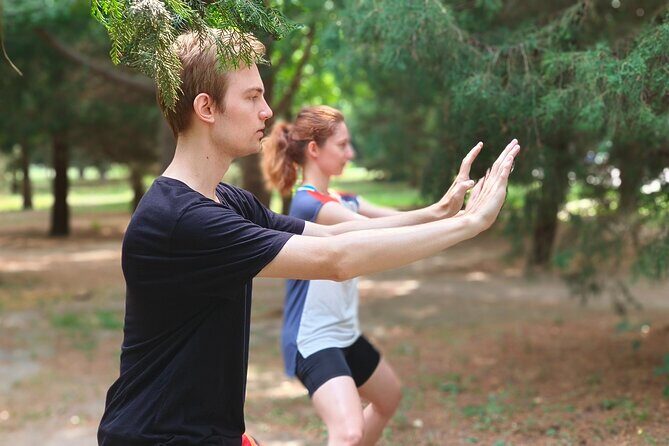
- Master Eric teaches with patience, keeping beginners from feeling lost
- Temple of Heaven gardens provide a peaceful outdoor training space
- You practice stances, punches, and kicks as real body mechanics, not just poses
- You learn the five stance fist form, plus joint-locking and self-defense basics
- It’s designed for a private group in about 1.5 hours, so you don’t waste time
Temple of Heaven Gardens: A Calm Start for Kung Fu Basics
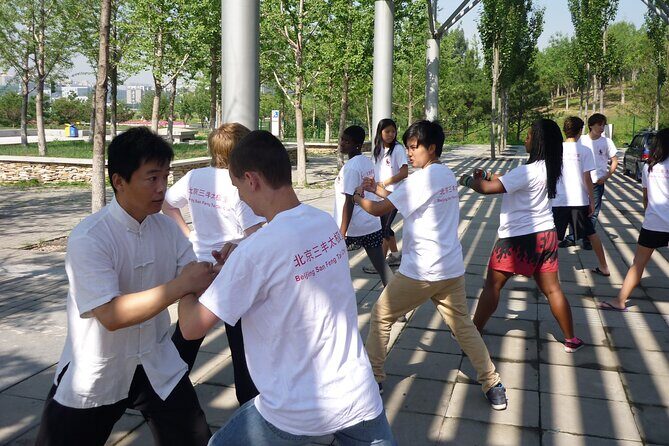
This class meets at the Temple of Heaven area, at the ticket office by the east gate. That matters because you’re not walking into a generic studio with mirrors and fluorescent lights. Instead, you train in a real public-cultural space, where the mood is softer and the pace feels less “performance” and more “practice.”
The setting is one of the biggest parts of the value. You get shade from trees, open air, and a park atmosphere that makes it easier to focus on what your body is doing. One class review specifically described the experience in the morning light with birdsong and calm energy. Even if your time slot is different, the overall idea stays the same: you’re learning kung fu in a place that feels tied to daily life and tradition.
Plan to arrive ready to move. You’ll start with basic body training, and you’ll get more out of the session if you’re already in comfortable clothes and not fiddling with your outfit during warm-up.
A few more Beijing tours and experiences worth a look


The 1.5-Hour Class Plan: From Stances to Self-Defense
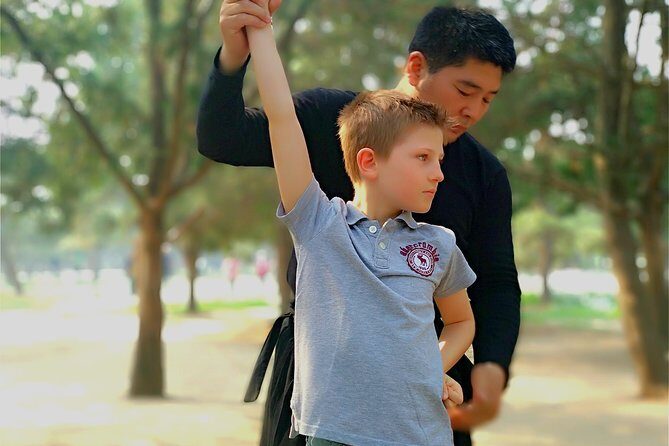
The schedule is tight by design. At 1.5 hours, you’re not trying to “master kung fu.” Instead, you’re building a foundation: how to stand, how to generate power through the body, and how to connect movements into a short sequence.
Here’s what you should expect to practice during the class:
- Basic kung fu training: stances, kicks, and punches
- Five stance fist form: a structured set of moves you can repeat afterward
- Joint-locking techniques: simple control ideas that emphasize technique over force
- Self-defend techniques: practical responses using what you just practiced
You’ll likely spend the middle of the class on the form and technique transitions. That’s where instruction quality shows. Good teaching helps you understand what changes between stances and why your hips, knees, and shoulders should cooperate. When the instructor keeps things step-by-step, you’ll feel less like you’re copying shapes and more like you’re learning a system.
Because it’s private, you can also adjust in real time. If you’re stiff, the instructor can slow it down. If you’re comfortable, you can move through faster. That flexibility is a big reason this kind of session can feel satisfying even for first-timers.
Master Eric, English + Chinese Support, and How Instruction Actually Helps
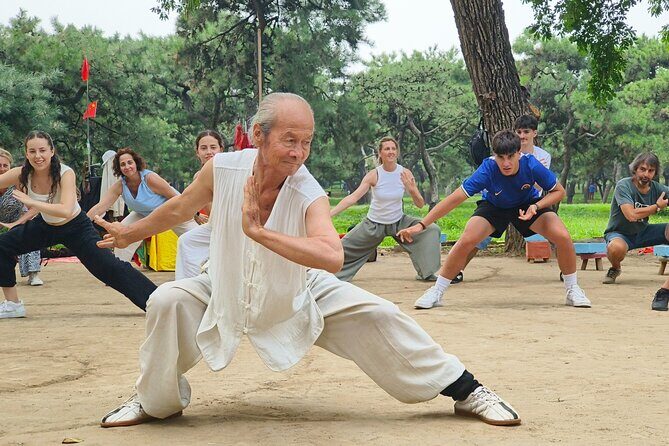
The instructor is listed as teaching English and Chinese, and reviews highlight Master Eric by name. That bilingual element is a practical win for travelers: you can ask questions in the language you’re most comfortable with and still follow corrections clearly.
What makes the instruction feel worth it isn’t just that it’s in English. It’s the teaching style. Multiple notes describe him as passionate and patient, and the class pace being supportive. In practical terms, that means you’re more likely to leave with a usable basic form, not just a blurry “I tried kung fu once” memory.
One review also mentioned internal and external kung fu concepts. You probably won’t turn into a scholar of internal training in one session, but you can still learn the difference in emphasis: external work looks more obvious (stances, strikes, alignment), while internal work focuses on coordination, balance, and control. Even a small introduction helps you understand why kung fu isn’t only about power.
If you want the best experience, go in with a simple mindset: ask questions when something feels unclear, and don’t be shy about requesting a safer demonstration approach.
What You Learn: The Five Stance Fist Form and Key Control Skills
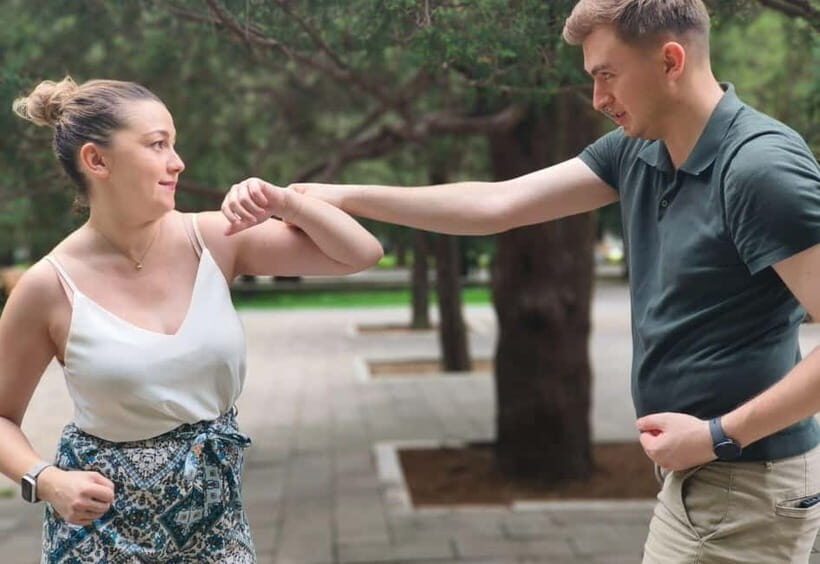
Most kung fu classes give you either flashy movement or abstract theory. This one focuses on foundational skill sets that connect. The “wow” factor comes after you understand the basics.
Basic stances, kicks, and punches (mechanics first)
You’ll practice the building blocks: how to stand correctly, how to move your weight, and how to execute kicks and punches with better alignment. That’s not a minor detail. Better stance control usually reduces fatigue and improves your accuracy fast.






The five stance fist form (a short routine you can repeat)
The five stance fist form is a real payoff because it gives you a sequence, not just isolated moves. You’ll learn a structured pattern that you can practice later. For travelers, that’s the difference between “I did kung fu” and “I can do kung fu basics at home.”
Joint-locking techniques (control over force)
You’ll also cover joint-locking techniques. The most important thing to notice is that joint controls are about leverage and positioning. In a beginner-friendly class, the goal is safety and understanding the concept, not wrestling someone into submission.
Self-defense techniques (practical responses)
Finally, you’ll get self-defense techniques. Even if your real-world plan is never to use them, learning basic principles helps your body react with more awareness. You start to recognize how stance and distance affect what’s possible.
Price and Value: What $68 Buys You in Beijing
At $68 per person for about 1.5 hours, this isn’t “cheap,” but it’s also not trying to sell you a long, crowded attraction. The value comes from three elements you can feel immediately:
- Private group format
- Qualified instruction with bilingual support
- Training content that goes beyond posing, including form and technique work
Also note what you’re not paying for: transportation, food and drinks, and gratuities. That’s normal for instruction-based experiences, but it matters for planning. You’ll likely want to budget separately for getting yourself to the East Gate area and buying water or a snack before or after.
If you’re doing only one “active” cultural thing in Beijing, this is a strong contender because it gives you skills you can carry with you. If you already train regularly and want advanced sparring, you might find the session too short and too basic. But for learning the art’s fundamentals, it’s a well-sized introduction.
Logistics at the Temple of Heaven East Gate: Subway and Footsteps
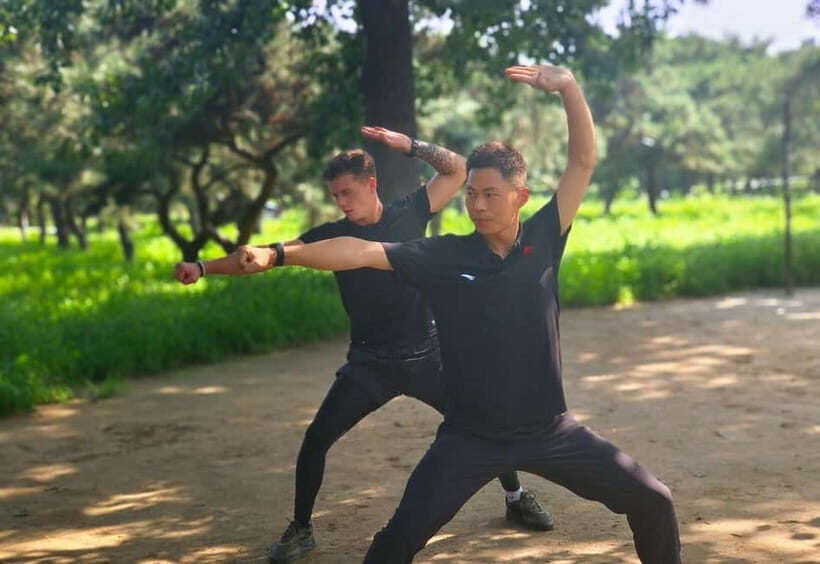
The meeting point is clear: ticket office of the Temple of Heaven east gate (天坛东门售票处).
Here’s the subway approach that keeps things simple:
- Take subway line 5
- Get off at Tian Tan Dong Men Station
- Walk out at Exit A
- The east gate is about 50 meters away
This matters because Beijing can be confusing if you’re not used to subway exits. A short final walk reduces stress, and it helps you arrive on time for an active class.
Bring comfortable clothes. You don’t need a kung fu uniform for a first session. Just choose something that lets you bend, kick, and twist without restricting you. If you’re traveling with layers, consider breathable options so you can move without overheating.
Also, the class is not suitable for pregnant women. If this applies to you, look for a different activity type that matches safe movement needs.
What to Do Before You Go (So You Get the Most From 90 Minutes)
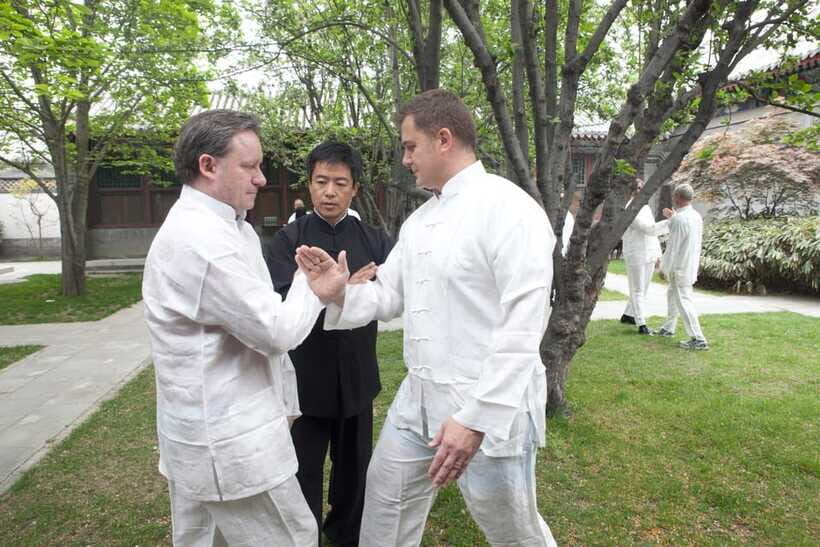
You’ll have the best time if you treat this like a skill workshop, not a performance. That means you should plan to:
- Arrive a little early so you can settle and warm up calmly
- Wear clothes you can move in right away
- Mentally expect corrections and repetition during stances and punches
- Speak up if you want extra caution during any partner or impact demonstrations
One review mentioned a punch demonstration with little warning, which is a fair reminder that martial arts training sometimes includes quick impact examples. Even if the contact is light, your comfort matters. If you’re sensitive to surprises, tell the instructor at the start that you prefer a heads-up before any strikes.
For families, the pacing can work well too. At least one class included a parent training with two children, and they were able to learn a basic form. That suggests the teaching can scale for learners at different levels when the instructor is given a clear group.
Who This Kung Fu Class Is Best For
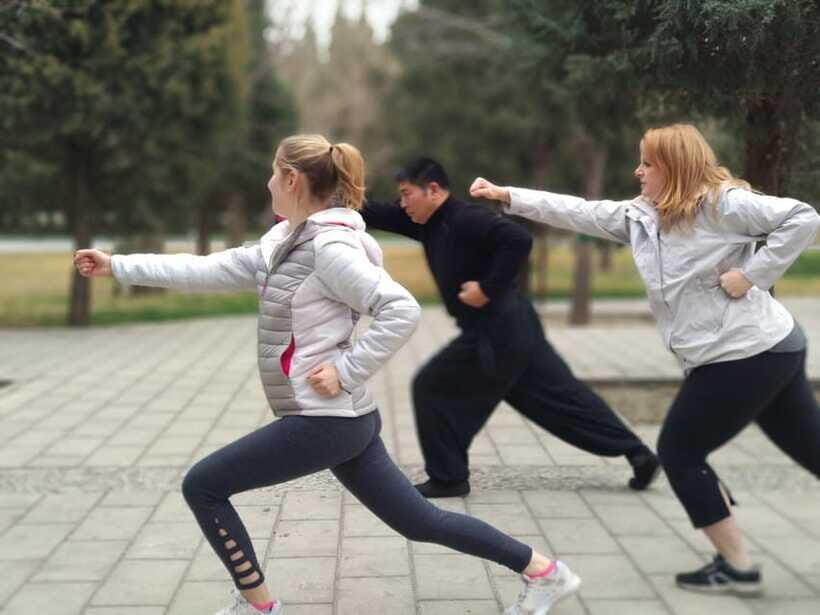
This class is a good fit if you want:
- A short, beginner-friendly introduction to kung fu
- A structured routine you can practice later (the five stance form)
- English support so concepts and corrections make sense
- A calmer outdoor location in the Temple of Heaven park area
You’ll probably enjoy it most if you like learning through doing—standing, moving, repeating—rather than only watching.
It’s less ideal if you want intense athletic conditioning, full-contact fighting, or advanced technique depth. The session is 1.5 hours, and the focus is fundamentals plus basic technique.
Should You Book This Kung Fu Experience?
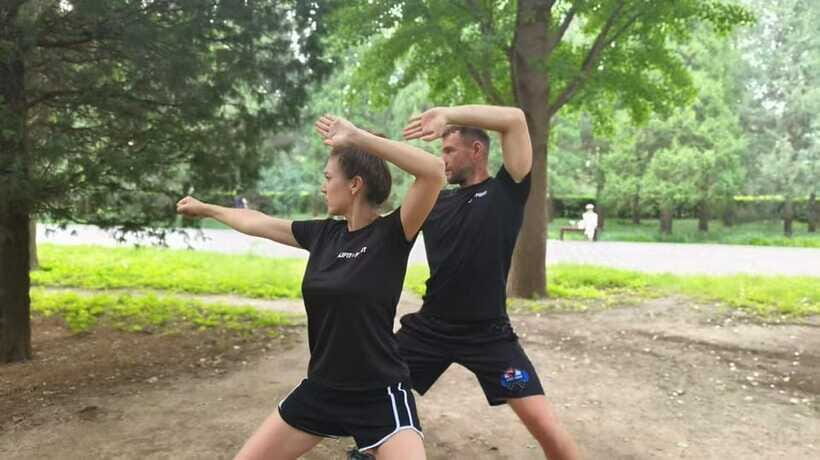
I’d recommend booking if you’re looking for a meaningful “active culture” stop in Beijing that teaches real basics: stances, the five stance fist form, joint-locking concepts, and self-defense fundamentals. The combination of Master Eric’s teaching, English support, and the Temple of Heaven garden setting gives you more than a souvenir memory.
Skip booking if you’re looking for sparring-heavy training, or if any impact demonstrations would make you uncomfortable. And if you’re pregnant, it’s specifically listed as not suitable.
If you want a smart, practical Beijing activity that feels authentic and leaves you with something you can repeat, this is one of the better bets in the category.