REVIEW · SHANGHAI
Full-Day Shanghai Classic Bike Tour
Book on GetYourGuide →Operated by China Cycle Tours · Bookable on GetYourGuide
Shanghai looks different when you ride it. This full-day bike tour lets you take in Taikang Road’s longtang alleyways and a guided Shanghai Museum visit without the usual museum-and-cab chaos. I like that it’s paced for real sightseeing, with time to stop, walk a bit, and ask questions. One thing to consider: the focus is classic central Shanghai, so if your must-do is lots of Pudong time, you’ll want to check whether your route includes the ferry ride.
The best part is the way the city pieces together like a story: old lanes and stone-house neighborhoods next to big, modern landmarks. You also get a true small-group experience, limited to 10 participants, and the tour cost includes bike rental, entrance fees, lunch, and even water—so you’re not doing mental math all day.
In This Review
- Key moments worth planning for
- Finding the Tour Start: Garden Hotel and a Bike You Can Actually Use
- Taikang Road and Dongtai Road: Seeing Longtang Lanes from the Saddle
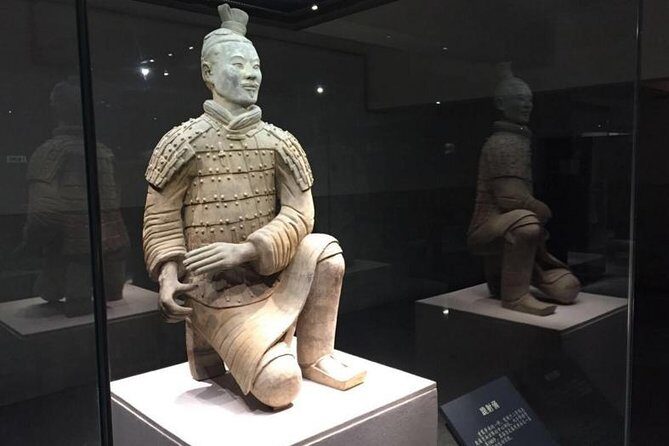
- Shanghai Museum: 5,000 Years of History Without the Full-Day Guilt
- People’s Square: A Central Pause Before the Neighborhood Story Continues
- Cite Bourgogne and Shi Ku Men: Stone Houses and the Meaning of Old Shanghai
- Lunch and Shop Time: Typical Chinese Food, Not a Time Sink
- Rain, Wind, and the Human Pace: How the Cycling Actually Feels
- Do You Reach Pudong? Ferry Tickets and What That Can Change
- Price and Value: Why $153 Can Work (If You Hate Hidden Extras)
- Guide Quality and Small-Group Cycling: The Difference Between Seeing and Understanding
- Who Should Book This Bike Tour—and Who Might Prefer Another Style
- Should You Book the Full-Day Shanghai Classic Bike Tour?
- FAQ
- How long is the Shanghai Classic Bike Tour?
- What is included in the tour price?
- How big is the group?
- Where do I meet the tour?
- Does the tour run in bad weather?
- Can I cancel or pay later?
Key moments worth planning for
- Taikang Road longtang alleyways: Pedal past the traditional lanes that make Shanghai feel like Shanghai.
- Shanghai Museum with 5,000 years of Chinese history: A big-history anchor without turning the day into a marathon.
- People’s Square + old/new contrasts: You’ll pause at a central hub, then move back into neighborhood streets.
- Cite Bourgogne and Shi Ku Men stone houses: See a specific style up close, not just from a distance.
- Lunch that’s built for locals, not just tourists: Typical Chinese food, plus some shop time to slow down.
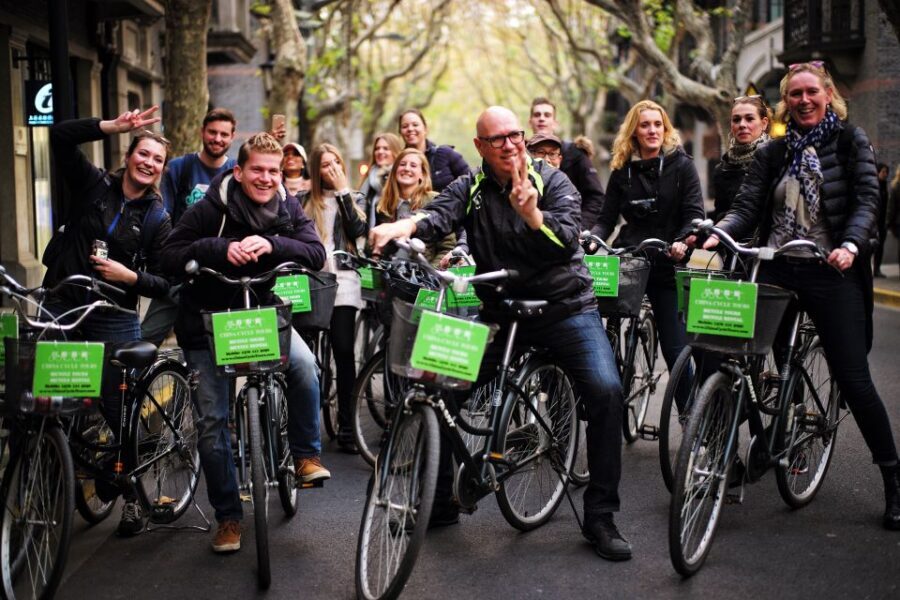
- Cycling kit and access included: Bike, helmet, ankle bands, entrance fees, and photos are part of the package.
Finding the Tour Start: Garden Hotel and a Bike You Can Actually Use
Your day starts near the Garden Hotel, right by Metro Line 1 South Shan Xi Rd Station (Exit 3). Walk about 1–2 minutes to the spot where your guide stands with a ChinaCycleTours sign.
Once you meet up, you’ll get your bicycle, a helmet, and ankle bands. Those ankle bands matter more than you might think. They help keep your shoes in place and give you confidence while you’re pedaling in city traffic.
This is also one of those tours where planning your outfit pays off. Wear comfortable shoes you can pedal in for hours, and bring layers you can adjust if the weather swings. The tour runs rain or shine, so a light rain layer is worth it even if the forecast looks friendly.
You can also read our reviews of more cycling tours in Shanghai


Taikang Road and Dongtai Road: Seeing Longtang Lanes from the Saddle
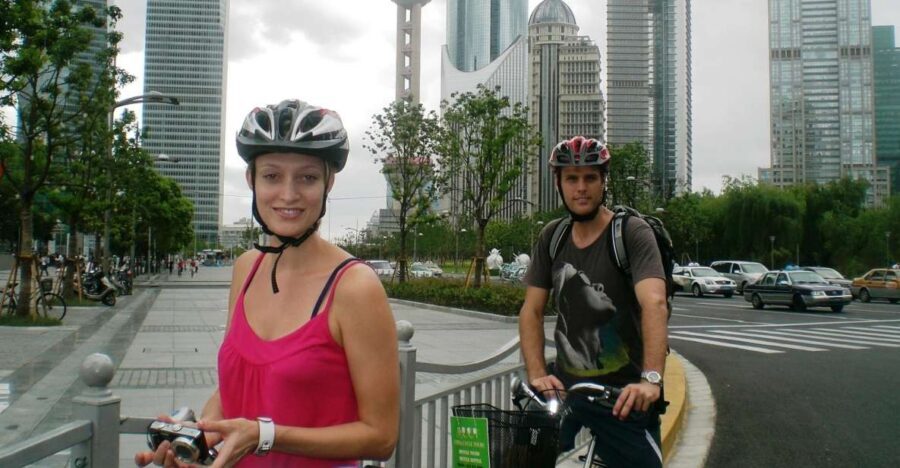
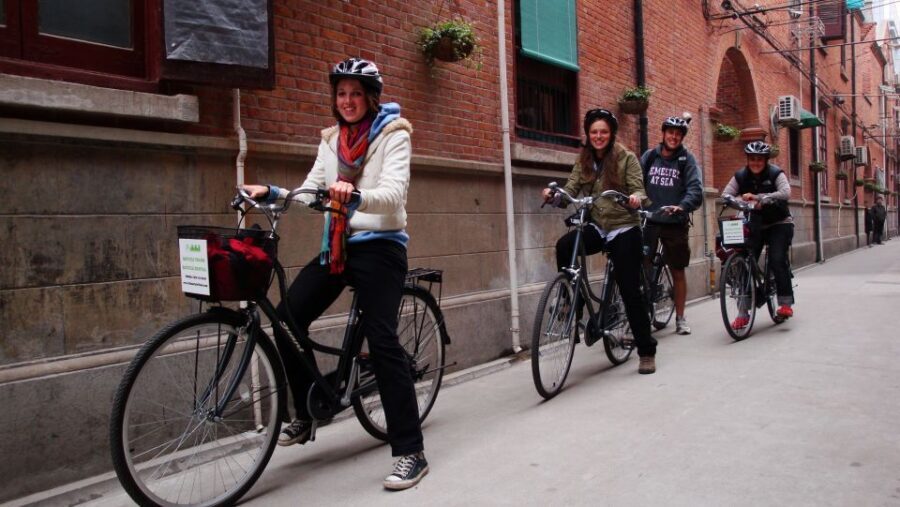
One of the main reasons to do this tour is that you get to ride streets you’d likely skip on your own. The itinerary includes classic routes like Taikang Road, famous for its traditional longtang alleyways—those clustered lanes where life spills onto the sidewalk.
From a cyclist’s perspective, longtang is different. On foot, you feel the narrowness and stop-start walking. From a bike, you can move smoothly while still seeing the details: the lane layout, the shopfront textures, the way the neighborhood shifts block by block. It’s an efficient way to catch the atmosphere without making you rush.
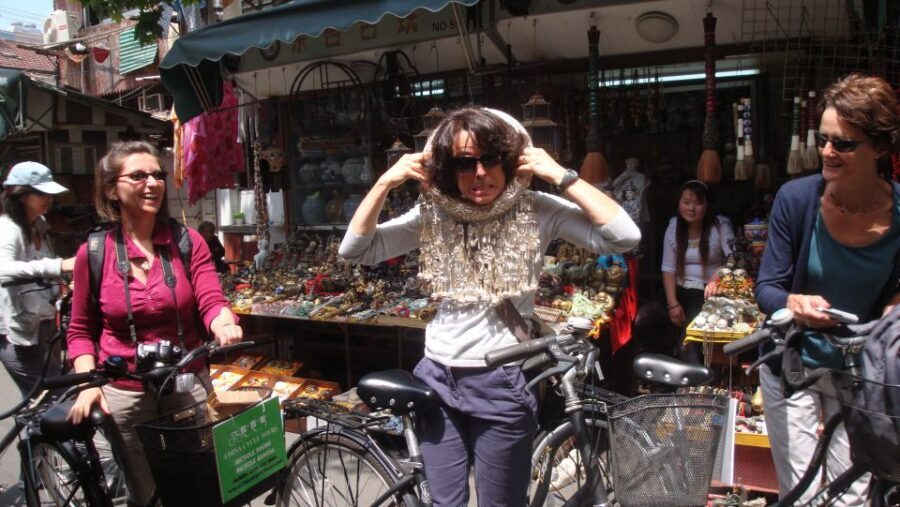
The ride also connects you to other areas you might not find easily, including the antique market of Dongtai Road. Even if you do zero shopping, markets like this help you understand what people do in the city between the famous landmarks. You’re not just collecting sights; you’re watching everyday rhythms.
A practical tip: bring a little patience. You’ll be weaving through streets at a human pace, and part of the fun is that you’re not always going for the quickest route. If you’re the type who likes to plan every minute, tell yourself that this is sightseeing-by-movement, not a checklist sprint.
Shanghai Museum: 5,000 Years of History Without the Full-Day Guilt
A standout stop is the Shanghai Museum, framed here as a way to uncover 5,000 years of Chinese history. That might sound like a lot for one day, but the goal is to bring context to what you’re seeing across the city.
This is a big advantage of having a guide. When you’re standing in a museum, it’s easy to see objects as isolated facts. A good explanation helps connect the museum visit to the streets you’ll ride later—why certain neighborhoods were shaped the way they were, how old industries and foreign influence show up in the story of Shanghai, and why architecture becomes part of the narrative.
You also avoid the common trap of being stuck inside while the rest of the city disappears. The bike format keeps the day balanced. You get a museum anchor, then return to the street-level feel of Shanghai.
People’s Square: A Central Pause Before the Neighborhood Story Continues
After you’ve worked through old streets and the museum’s context, you’ll pause at People’s Square. It’s the kind of place that works well for a bike tour stop because it gives you a reference point. From there, you can see how Shanghai’s modern identity sits next to older districts.
Think of it as a breather. You’ll stop, regroup, and reset your brain for what comes next: the architectural details and neighborhood texture that make Shanghai more than a skyline photo.
If you’re traveling with limited time and you want a tour that covers both the famous and the meaningful, this kind of anchor stop is smart. It helps you understand why certain neighborhoods feel the way they do—and why people still care about them.
Cite Bourgogne and Shi Ku Men: Stone Houses and the Meaning of Old Shanghai
The tour includes a visit to Cite Bourgogne to see stone houses of the Shi Ku Men style. This is one of those stops that’s much more satisfying in person than from a quick photo.
Shi Ku Men refers to a specific traditional residential style, and seeing it up close helps you understand Shanghai’s layered past. You’re not just watching architecture as decoration; you’re seeing how people lived in a city shaped by trade, foreign contact, and rapid change.
This is also where the guide’s storytelling becomes the difference-maker. The tour walks you through why Shanghai used to be called the Paris of the Orient, including its exotic past of opium dens and cotton production. Those details aren’t just trivia. They explain why the city developed the way it did—and why certain neighborhoods carry a memory even when new buildings rise nearby.
And yes, you’ll still be traveling by bicycle through all of this, so the experience stays grounded. You’re not stuck on one side of the city all day.
A few more Shanghai tours and experiences worth a look





Lunch and Shop Time: Typical Chinese Food, Not a Time Sink
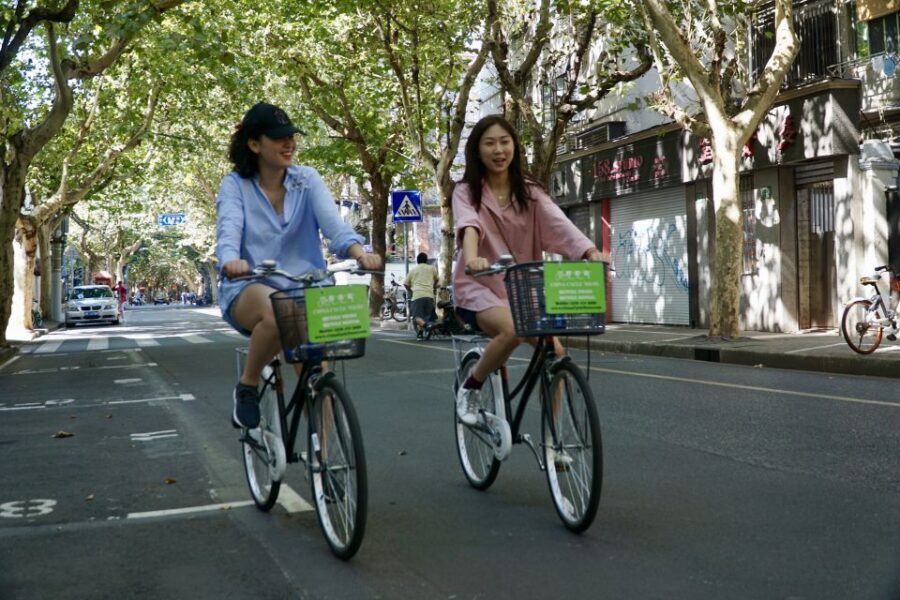
Lunch is included, with typical Chinese food, plus time to explore shops after the meal. This matters because a lot of tours either rush lunch or send you to a standard, far-from-local stop where you eat fast and disappear.
Here, the lunch break is built into the day’s flow. You’ll have water, then you’ll get back on the bike feeling human again. That can be the difference between a fun ride and a day you barely remember.
One smart travel move: eat at a comfortable pace and don’t over-plan your energy. You’ll still be cycling after lunch, and your best ride feels come from having enough stamina to notice details—doorways, small signs, street life—without feeling fried.
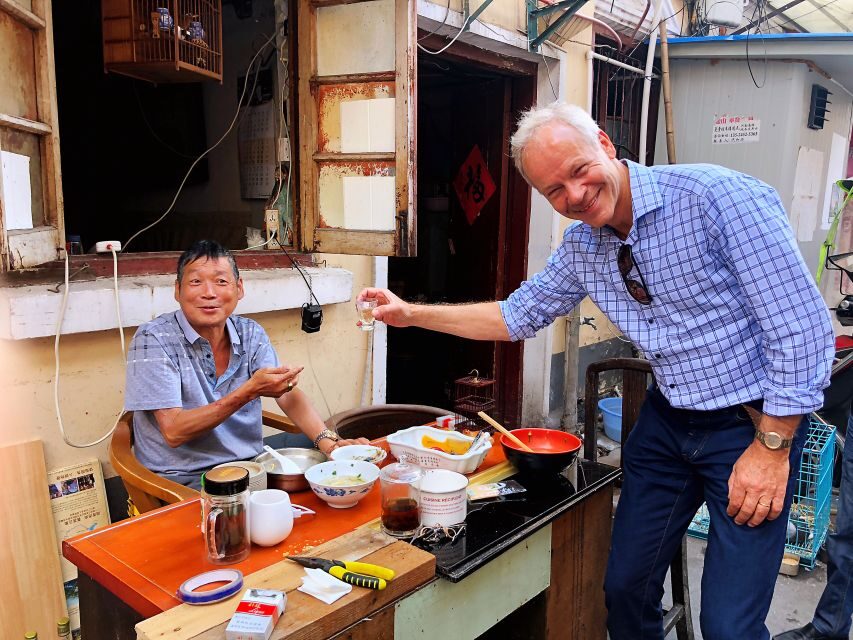
If you’re curious about local life, keep your eyes open during the lunch stop. Some days include a more social vibe, where you’re not just sitting in a tourism bubble.
Rain, Wind, and the Human Pace: How the Cycling Actually Feels
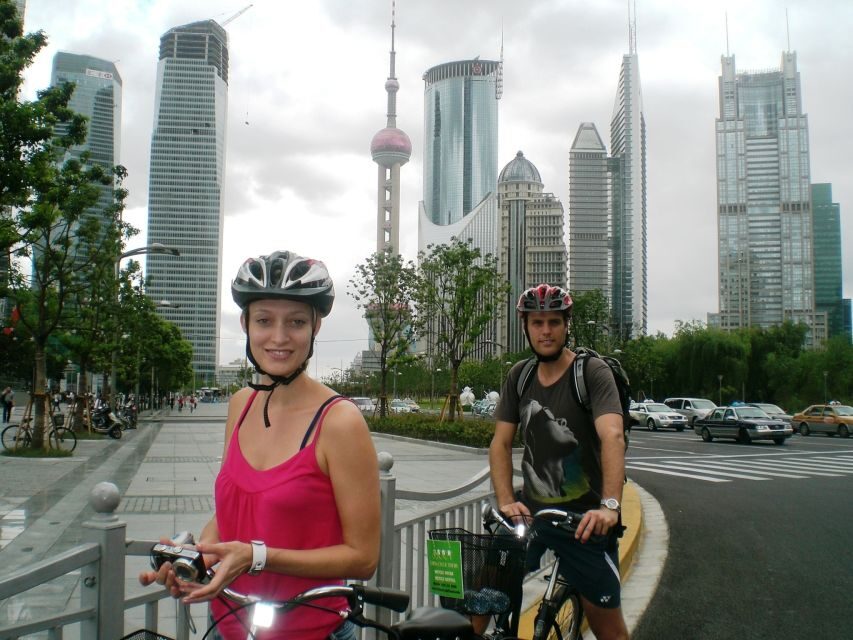
This tour is designed for a leisurely pace, cycling between sights instead of sprinting from one checkpoint to the next. That’s a big deal in a city like Shanghai, where traffic patterns and crowded sidewalks can turn independent sightseeing into a stress test.
Also, cycling has an underrated perk: even in warm weather, the airflow can make it easier to keep going than you’d expect. On a hot day, the wind off the street can feel like your little built-in air conditioner.
Still, you should dress for comfort first. Bring sun protection if it’s bright. Wear breathable clothing. And if you’re sensitive to seat time, make sure you’ve got comfortable shorts or layers. This is a full-day ride, and your future self will thank you.
Do You Reach Pudong? Ferry Tickets and What That Can Change
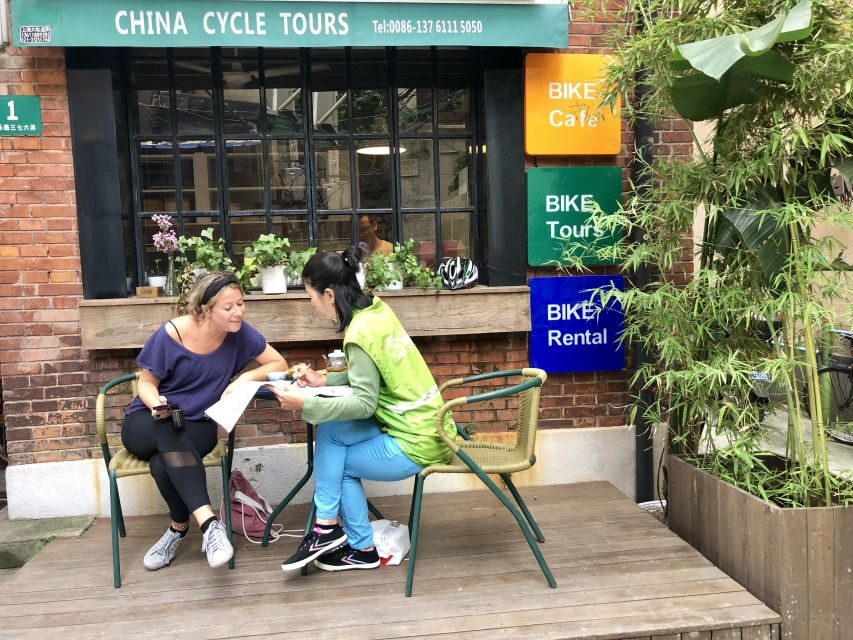
The tour includes ferry boat tickets if going to Pudong, which is important because your day could shift depending on your route that day.
If you’re hoping for serious skyline views on the Pudong side, this is the main consideration to keep in mind. Even with the ferry included on some routes, the tour still keeps a classic, central focus overall—so Pudong may not take over the whole day.
What I like about this setup is flexibility. Instead of forcing one rigid path, the tour can stitch together the best mix of old neighborhoods, major sights, and the moments that make Pudong worth visiting. Your job as a traveler is simple: confirm whether your specific schedule includes the ferry if Pudong is a top priority.
Price and Value: Why $153 Can Work (If You Hate Hidden Extras)
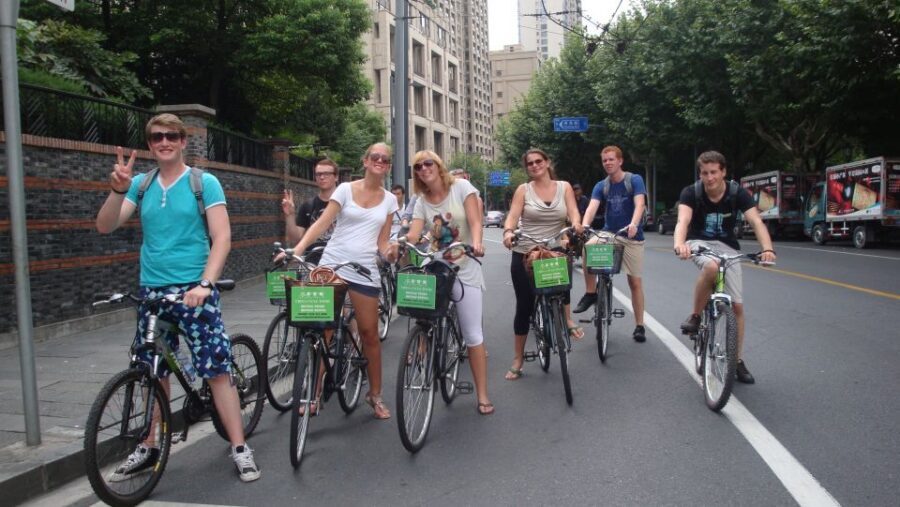
At $153 per person for a 6-hour full-day tour, the price looks reasonable only if you compare it to what’s included. In this case, it bundles a lot of the stuff that usually adds up fast:
- Bike rental, helmet, and ankle bands
- Lunch and water
- All entrance fees
- English-speaking guide
- Professional guidance
- Free photos
- Ferry tickets if the route goes to Pudong
Where this becomes real value is the time and decision fatigue it saves. You don’t have to figure out entrances, tickets, or transport between stops. You don’t have to guess which museum costs are worth it for your interests. You just show up, ride, and let the guide handle the sequencing.
Is it a budget tour? Not exactly. But it’s also not priced like a luxury day. It sits in that sweet spot where you’re paying for local expertise, access, and logistics—so you spend your energy on the city instead of managing the system.
If you’re doing Shanghai on your own, you’ll likely spend money on tickets and a guide anyway. If you don’t want to negotiate streets with maps and risk losing time, this pricing starts to make a lot of sense.
Guide Quality and Small-Group Cycling: The Difference Between Seeing and Understanding
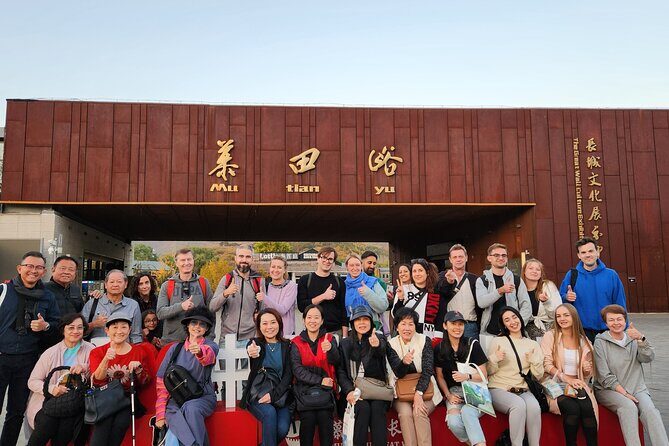
This tour runs with a guide and keeps the group small—limited to 10 participants. That matters because cycling through a city is smoother when everyone isn’t trying to go at a different speed or make constant stops for photos.
A big theme in the guide experience is clarity. Past guests have praised guides for being friendly and giving excellent English, with some having German too. One guide named Alyssa has been specifically noted for sharp explanations that make neighborhoods feel readable, not confusing.
Here’s the practical side: you’re going to stop often enough to hear stories, but not so much that the bike becomes a bicycle-shaped waiting room. The guide’s role is to connect what you see—longtang lanes, historic residential styles, and major central landmarks—into one day that makes sense.
Who Should Book This Bike Tour—and Who Might Prefer Another Style
This is a great match if you want a guided day that mixes famous Shanghai with real neighborhood detail. You’ll like it if you enjoy walking a bit, asking questions, and understanding the context behind architecture and street life.
It also fits well if you feel safer with a local guide in hand. Cycling in a large Chinese city can be totally doable, but having someone manage the flow and stop points helps you relax.
Who might want to choose something else? If you want a heavy focus on nightlife, shopping sprees, or a strictly one-district itinerary, this classic-sights approach may feel too broad. And if your dream is maximum Pudong skyline time, make sure your route includes the ferry.
Should You Book the Full-Day Shanghai Classic Bike Tour?
Yes, if you want a balanced day: old lanes, big-picture history, landmark pauses, and a neighborhood architectural stop, all at a human pace. The biggest reasons to book are the value of what’s bundled—entrance fees, lunch, bike setup—and the fact that you’ll be guided through details that are hard to piece together alone.
If Pudong is your top obsession, verify whether your specific route includes the ferry before you commit. Otherwise, this is the kind of tour that helps you leave Shanghai feeling like you understood more than you photographed.
FAQ
How long is the Shanghai Classic Bike Tour?
It runs for 6 hours.
What is included in the tour price?
The tour includes an English-speaking guide, bike rental with a helmet and ankle bands, lunch (Chinese food), water, all entrance fees, and free photos. It also includes ferry boat tickets if going to Pudong.
How big is the group?
It’s a small group limited to 10 participants.
Where do I meet the tour?
Meet in front of the Garden Hotel. Use Metro Line 1 South Shan Xi Rd Station Exit 3, then walk 1–2 minutes. Your guide will be standing with a ChinaCycleTours sign.
Does the tour run in bad weather?
Yes. The tour runs rain or shine.
Can I cancel or pay later?
You can cancel up to 24 hours in advance for a full refund. There’s also a reserve now & pay later option.