Trams, markets, and craft shops in 3 hours. This Old Hong Kong Island route strings together Quarry Bay architecture and ding ding tram rides, plus a lunch stop where you actually eat the food people queue for.
I like that the tour keeps things small (max 8), so your licensed English-speaking guide can answer questions as you go. I also like the mix of everyday Hong Kong stops, especially Chun Yeung Street’s local market feel and the short craft visit to a Chinese slipper embroidery shop that started in 1960.
One thing to consider is value-for-money: at about $118.08 per person for roughly 3 hours, you’ll want to be the kind of person who enjoys short stops and a guided pace rather than lingering a long time in just one neighborhood.
In This Review
- Key things to know before you go
- Tram and foot on Old Hong Kong Island: why this route works
- Meet in Quarry Bay, end in Causeway Bay: timing and logistics
- Montane Mansion in Quarry Bay: architecture with breathing room
- Chun Yeung Street wet market in North Point: daily Hong Kong in motion
- North Point Chinese slipper embroidery store: a fast craft stop
- Goose Neck Bridge in Causeway Bay: watching the beater tradition
- Wonton noodles in Causeway Bay: what’s included and how to make the most of it
- Price and value: is $118.08 for 3 hours fair?
- What the small group really changes (and why your guide matters)
- Who should book this Old Hong Kong Island walking tour
- Should you book this tour?
- FAQ
- How long is the Old Hong Kong Island small-group tour?
- Where do I meet the guide, and where does the tour end?
- What’s included in the price?
- Is the wonton noodles stop suitable for vegetarians?
- Do I need to pay extra for the activities at Goose Neck Bridge?
- What if the weather is bad?
Key things to know before you go
- Max 8 people keeps the group from feeling like a moving classroom.
- Quarry Bay to Causeway Bay means you cover ground without a full day of transit.
- On foot plus ding ding tram helps you see street life while still moving efficiently.
- Free stops at key locations keep costs from creeping upward.
- Wonton noodles included give you a straightforward, local food win.
- Comfortable shoes matter since it’s a walk-forward experience with a moderate fitness level.
Tram and foot on Old Hong Kong Island: why this route works

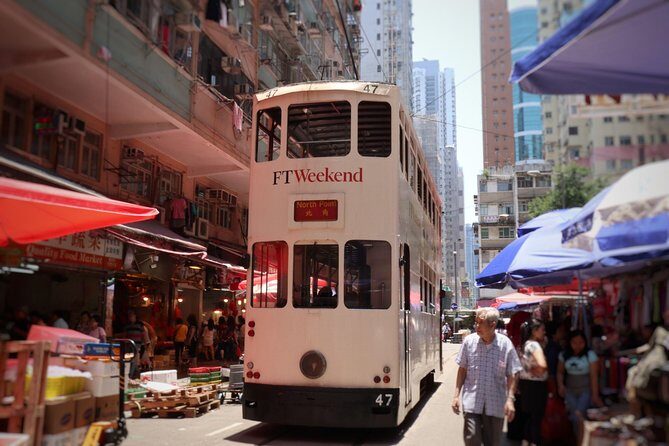
This tour is built around the idea that Hong Kong is best understood by moving like a local. You’re not stuck on a bus stare. You’re walking streets, crossing neighborhoods, and using the ding ding tram to connect the old-town feeling across the island.
The route also avoids the usual “big sights only” trap. You get architectural interest in Quarry Bay, market energy in North Point, and everyday neighborhood texture in Causeway Bay. The whole thing has a practical rhythm: look, walk, ride the tram, snack, then wrap up.
And that small-group factor matters more than you might expect. With only up to 8 people, the guide can slow down when something catches your eye, and they can steer you toward what’s worth noticing right now instead of reciting generic facts.
You can also read our reviews of more tours and experiences in Hong Kong SAR.
Meet in Quarry Bay, end in Causeway Bay: timing and logistics
The tour starts in the Quarry Bay area, with a start time listed as 11:00 am and a note that your guide meets you about 10:30 am (likely to coordinate MTR together to Quarry Bay). It ends at Causeway Bay MTR station.
Plan for a short “prelude” before you’re officially on the street. If you like clear timing, I’d confirm the exact meeting spot and whether your group departs as a walk-from-hotel plan or a direct start at the transit point.
It runs about 3 hours. With multiple stops and tram time, that’s a tight schedule in a good way. You’ll get a solid overview of old-town life, but you won’t have the luxury of wandering off for an hour by yourself between stops.
The tour also depends on weather. It’s scheduled except during Red/Black storm warnings or Typhoon #8 and above. If you’re booking during a rainy season, build in the idea that plans can shift.
Montane Mansion in Quarry Bay: architecture with breathing room
Your first major stop is Montane Mansion in Quarry Bay, with an allotted visit time of about 20 minutes and free admission. This is one of those Hong Kong places where the architecture is the point—connected buildings in a compact, urban arrangement.
Why this matters: Quarry Bay isn’t the first neighborhood people pick when they think of classic Hong Kong streets. Starting here sets the tone. It tells you this area has its own identity, and it’s not all skyscrapers and shopping malls.
The practical benefit is also timing. You get an early, low-stress photo and orientation window before the market and food parts kick in. If you’re someone who likes to understand a city’s “shape” first, this stop helps you connect later streets to the overall feel of the island.
One drawback is simple: 20 minutes goes fast, and you won’t be doing anything like a long architecture deep dive. Come ready to take a few key photos and notice the overall layout rather than expect a long explanation.
Chun Yeung Street wet market in North Point: daily Hong Kong in motion
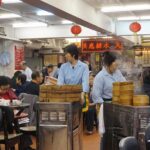
Next comes Chun Yeung Street in the North Point area, about 45 minutes and free. This is where the tour leans hard into the point of the whole experience: the places you’d miss if you only followed “top things to see” lists.
You’ll walk through a market space that still feels used by locals. The best part of this kind of stop isn’t a shopping spree—it’s that living, in-between atmosphere. You’ll see stalls lined up along both sides of the street, which makes it easy to get a sense of how a neighborhood actually functions day to day.
This stop is also a great chance to ask your guide what you’re looking at, since food markets are full of small cues that don’t always translate through photos. Guides like Lyona and Kenniess (both named in past experiences) are the type to keep the information grounded and easy to follow, not just read-from-a-script.
If you’re sensitive to crowds or strong smells, go in with that awareness. Markets are markets, and this is a working area. Wear shoes you don’t mind getting a bit warm or dusty.
North Point Chinese slipper embroidery store: a fast craft stop
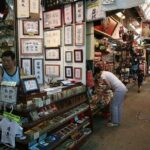
After the market, you’ll head to a family-run Chinese slipper embroidery store in North Point, scheduled for about 5 minutes and also listed as free. The shop is described as one of the last places offering handmade Chinese embroidery slippers in Hong Kong, started in 1960, and continuing with a made-in-Hong Kong focus.
This stop is short, so set expectations: think “peek and appreciate,” not “watch a full production process.” The value here is that you catch a craft tradition that’s shrinking under modern retail pressure. Even a brief visit can help you understand what the store is preserving.
One consideration: because the timing is tight, you’ll get more out of this stop if you’re curious in the moment. If you’re hoping for deep, slow pacing, you might find five minutes a bit abrupt.



Goose Neck Bridge in Causeway Bay: watching the beater tradition
Then you ride the ding ding tram again down to Causeway Bay, to an area called Goose Neck Bridge. The visit is about 25 minutes, and the listing notes admission ticket not included for this specific stop.
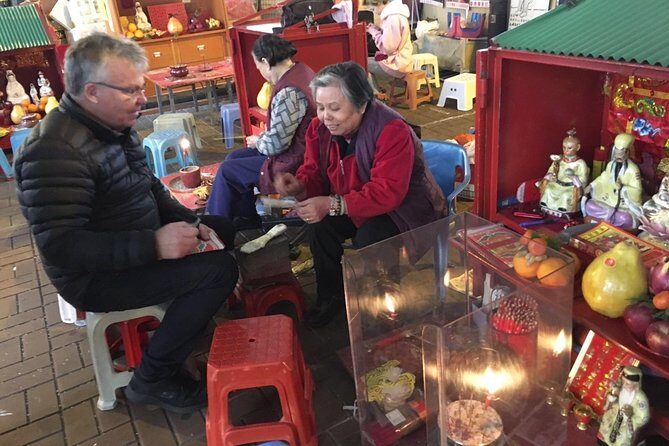
What you’ll do here: you’ll share the experience by watching how the beater activity works, in a busy real-world setting. The tour also includes 1 time petty person beating, which suggests you get a single turn as part of the experience.
Because the stop is marked with admission not included, I’d treat this as the one spot where you might be asked for a small extra fee for participation or a related activity. The safest move is to travel with a bit of cash or a payment option just in case—especially if you’re particular about not having surprises.
This stop adds a playful element to the day. After market walking and craft viewing, it’s a change of pace where the neighborhood itself feels like the stage.
Wonton noodles in Causeway Bay: what’s included and how to make the most of it
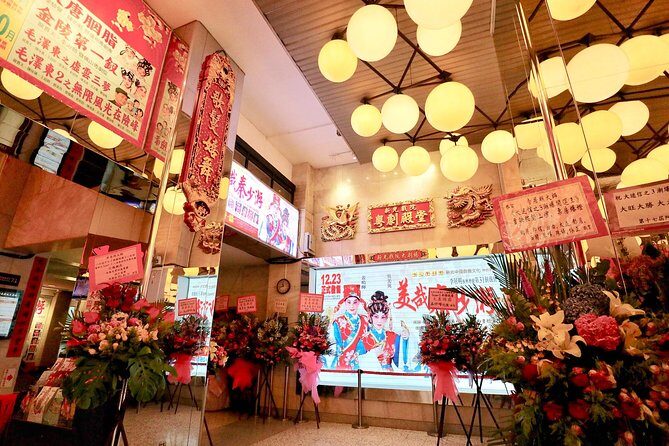
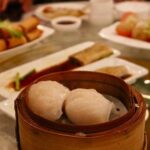
Finally, after the walking, you’ll eat at a family-run traditional noodle shop. The scheduled time is about 45 minutes, and the big win is that the meal is included: 1 bowl of wonton noodles and 1 kind of beverage, plus bottled water (one per person).
You’ll also get a mini food lesson. Wonton is Cantonese for small dumplings stuffed with filling, and here you’ll be eating the dumpling-and-broth combo that Hong Kong does so well.
How to make this stop work for you:
- Eat when you’re hungry. This part arrives after movement, so it’s not just a “check the box” lunch.
- If you have dietary needs, this tour lists a vegetarian option and asks you to advise at booking. Don’t wait until the last minute.
Because the included meal is only one bowl, it’s a good idea not to treat it as your sole meal for the day if you have a big appetite. But for many people, it’s the right amount after a 3-hour walk-and-tram route.
Price and value: is $118.08 for 3 hours fair?
Let’s talk money plainly. At $118.08 per person for about 3 hours, you’re paying for three things:
1) a licensed English-speaking guide,
2) transport help (tram fare and double decker bus fare are listed as included),
3) a meal (wonton noodles and beverage) plus bottled water.
For me, the value depends on how much you enjoy guided “micro-choices.” This isn’t a long, sit-and-watch tour. It’s a sequence of short stops where the guide’s job is to help you notice what you would otherwise walk right past.
If you’re the type who likes to get your bearings fast and learn the feel of a neighborhood, this price can make sense. You’re buying efficiency plus access to places that are more about everyday life than official monuments.
But if your travel style is slow and linger-heavy—more time in each spot, fewer transitions—then $118.08 may feel steep for the time you spend inside each location. The tour is short by design. Make sure that matches your pace.
What the small group really changes (and why your guide matters)
This tour caps at 8 travelers, which changes the “how” more than the “where.” With a bigger group, you spend time waiting and squeezing. With a small group, you can ask questions without feeling like you’re interrupting.
The guide is described as friendly and licensed English-speaking, and prior guide names like Lyona and Kenniess show up in positive comments about being attentive and engaging. Translation: you should expect someone who can keep the route coherent and answer the practical questions that come up when you’re walking through real markets and shops.
Also, you’re not just riding around. You’re walking enough that you’ll feel the city under your feet. That’s why the guide’s guidance helps: they help you connect what you see to what it means.
Who should book this Old Hong Kong Island walking tour
This fits best if you:
- like neighborhood detail more than “checklist sightseeing”
- enjoy short cultural stops that add up into an overall feel
- want a guided route that uses the ding ding tram without planning every hop
It may not fit as well if you:
- want lots of time to shop or linger at each stop
- hate walking or prefer mostly indoor experiences
- need very predictable timing at each location (because it’s a tight, moving schedule)
The tour calls for moderate physical fitness. You’re on foot and doing small stretches between transit segments, so comfortable shoes aren’t optional.
Should you book this tour?
I’d book it if your goal is to see how Hong Kong lives in a compressed window—Quarry Bay architecture, North Point market streets, a brief craft shop stop, a quirky Causeway Bay local activity, and an included bowl of wonton noodles.
I’d skip it if you’re looking for long stays, heavy museum-style explanations, or lots of free time to wander off schedule. This is a structured route, and the payoff is the flow.
If you do book, I’d come prepared with comfortable shoes, confirm whether the tram/bus segments you’ll use are fully covered by your tour day, and tell the operator about any vegetarian needs at booking so your noodle stop doesn’t become a last-minute stress test.
FAQ
How long is the Old Hong Kong Island small-group tour?
It runs about 3 hours (approx.).
Where do I meet the guide, and where does the tour end?
You start in the Quarry Bay area and the tour ends at Causeway Bay MTR station.
What’s included in the price?
The tour includes a licensed English-speaking guide, 1 bowl of wonton noodles and 1 beverage, bottled water (one per person), and the ding ding tram fare plus double decker bus fare.
Is the wonton noodles stop suitable for vegetarians?
A vegetarian option is available, but you need to advise at booking.
Do I need to pay extra for the activities at Goose Neck Bridge?
The stop lists admission ticket not included for that segment, but the overall tour includes 1 time petty person beating. If something requires extra payment on the day, you may want to be ready.
What if the weather is bad?
All tours run as scheduled except during Red/Black storm warning or Typhoon #8 or above. If it’s canceled due to poor weather, you’ll be offered a different date or a full refund.