REVIEW · HONG KONG SAR
Hong Kong Self-Guided Audio Tour
Book on Viator →Operated by Uvamai Niche Tourism · Bookable on Viator
Hong Kong, with your headphones, on your terms. This self-guided experience lets you roam the city at your pace, with a mobile ticket and an audio guide that works online or offline. You can start and finish whenever your schedule allows, up to a 72-hour window.
What I like most is the built-in flexibility: you can preview the audio before you go, listen as you walk, or re-play key stops later. The other big win is the interactive map link that connects each location to its matching audio, so you spend less time figuring out where to tap next. One trade-off: a few major sights are not included with admission or rides, so you’ll still plan and pay for things like the Peak Tram, Lantau cable car, and Hong Kong Disneyland.
In This Review
- Key things to know before you go
- What this Hong Kong audio tour is really good at
- Price and value: $9 buys you planning, not just noise
- How to use the tour playlist and the map link
- Victoria Harbour: start with Hong Kong’s waterline story
- Kowloon Park, Avenue of the Stars, and the Tsim Sha Tsui promenade loop
- Kowloon Park: from barracks to public space
- Avenue of the Stars: film culture on the walkway
- Tsim Sha Tsui Promenade: the waterfront angle
- Causeway Bay: shopping district with a backstory
- Hong Kong Park: tea house and aviary, plus modern design
- The Peak Tram and The Peak: one historic ride, one big viewpoint
- The Peak Tram: engineering with history
- Victoria Peak (The Peak): from colonial enclave to tourist magnet
- Quiet gardens and temple complexes for a breather
- Nan Lian Garden: classical Chinese garden design
- Chi Lin Nunnery: wooden architecture without nails
- Ten Thousand Buddhas Monastery (Man Fat Sze): Buddha statues with stories
- A Disney day option: Hong Kong Disneyland with local flavor
- Lantau Island spirituality: Po Lin and Tian Tan Buddha
- Po Lin (Precious Lotus) Monastery: an important sanctuary
- Tian Tan Buddha (Big Buddha): one statue, big symbolism
- Ngong Ping 360: scenic cable car and tourism engineering
- Why the audio format works in Hong Kong
- The one drawback to plan around
- Who this Hong Kong self-guided audio tour suits best
- Should you book this Hong Kong self-guided audio tour?
- FAQ
- How much does the Hong Kong self-guided audio tour cost?
- How long does the tour take?
- How do I access the audio guide?
- Do I need to download an app or use tracking?
- Can I listen offline and in multiple languages?
- How do I navigate between the stops?
- Are entrance fees and transportation included?
- Is the experience refundable if I cancel?
Key things to know before you go

- No guide group: you control the order, speed, and how long you stay at each spot
- Audio on any device: no app download and no tracking required
- Works online or offline: you can keep going even when signal gets shaky
- Map link connects everything: each stop on the Google My Maps shows the matching audio guide
- Short stop format: about 10 minutes per attraction, with the option to linger
- Messaging for extra info: you can request more details when something sparks your curiosity
What this Hong Kong audio tour is really good at
This is the kind of Hong Kong plan that makes sense if you like freedom but still want structure. For a modest $9 per person, you get private access to audio content for 15 attractions, plus an itinerary map where each point ties directly to its sound track. The result is a loop of Hong Kong highlights that you can follow—or break apart—without waiting for anyone else.
The tour is designed for independent walking and light navigation. It’s also time-efficient: the suggested pace is about 3 hours total, with roughly 10 minutes per stop. That doesn’t mean you’re forced to leave after 10 minutes; it just means the audio is chunked so you can “get the story” without turning your day into a lecture.
One more practical detail I appreciate: you can listen on your own schedule. The audio links arrive by email before your start time, and you can use them to plan ahead or revisit later. That’s useful in Hong Kong, where one decision—like whether to go up The Peak or save it for sunset—can change your whole route.
You can also read our reviews of more guided tours in Hong Kong SAR

Price and value: $9 buys you planning, not just noise
At $9, this tour isn’t priced like a full-service guided day. Instead, it’s priced like a tool. You’re paying for three things:
- Correct context for landmarks you’d likely see anyway
- An efficient route across Hong Kong’s key neighborhoods
- Convenience: one playlist for all 15 stops plus separate audio for each location
If you’re already comfortable with transit and walking, you’re getting strong value. If you’re hoping everything is handled for you—ticketing, transfers, and admissions—this won’t do that. Transport and entrance fees are not included, and several headline stops list tickets as not included.
Think of it like a self-guided “spotlight.” You choose where to shine your attention, and the audio helps you notice things you’d otherwise miss.
How to use the tour playlist and the map link
After booking, you get an email before your starting time. It includes two key pieces:
- a secure audio link (SoundCloud) to access the attraction guides or the full playlist
- a secure Google My Maps link where each stop corresponds to an audio track
Here’s the workflow I’d recommend: open the map first, then click through the stops in whatever order you like. When you arrive at a location, tap that point to play the matching audio. If you want a smoother day, listen to the full playlist at home first to understand the arc of the tour, then use the map to follow the stops that match your energy.
You also have flexibility beyond one day. The experience notes that you can take breaks, spend more time at favorites, or even split the tour across multiple days. That matters because Hong Kong can be intense: you’ll likely want a slower morning or a longer break somewhere green.
Victoria Harbour: start with Hong Kong’s waterline story
Stop 1 is Victoria Harbour, framed as the heart of Hong Kong’s development—from a fishing village into a global financial hub. This is a great opener because it sets the tone fast. You’re not just looking at skyline views; the audio pushes you to connect what you see with how the city grew.
Tip for your own pacing: spend a bit longer if the light changes. Even without extra admissions, this is one of those places where the view keeps shifting.
Note on tickets: the tour listing marks this as admission ticket not included, so you shouldn’t expect an entry fee covered here.
Kowloon Park, Avenue of the Stars, and the Tsim Sha Tsui promenade loop
Stops 2 through 4 form a tight cluster in the Tsim Sha Tsui area, perfect for an efficient walking stretch.



Kowloon Park: from barracks to public space
At Kowloon Park, you get the story of an urban oasis and how it transformed from a military barracks into a public park. This is the kind of contrast Hong Kong does well: city intensity, then a calmer pocket to reset.
The listing says it’s free. That makes it easy to add without worrying about timing or ticket costs.
Avenue of the Stars: film culture on the walkway
On Avenue of the Stars, the audio turns a simple stroll into a film-industry tribute. You’ll learn about the stars who shaped Hong Kong cinema and how that influence traveled beyond the city.
Free stop, and a good pick if you want something that feels more “Hong Kong” than just another view deck.
Tsim Sha Tsui Promenade: the waterfront angle
The Tsim Sha Tsui Promenade is the view side of the same neighborhood. The audio covers how this waterfront stretch evolved and why it matters in Hong Kong’s urban landscape. If you’re planning photos, this stop is your justification: the audio gives you a reason to notice the coastline, not just point your camera.
Free stop, and it pairs nicely with a harbor mood from Stop 1.
Causeway Bay: shopping district with a backstory
Stop 5 is Causeway Bay, one of Hong Kong’s busiest shopping districts. The audio includes the neighborhood’s shift from a quiet residential area into a commercial center.
This is a good stop if you want energy. It also works as a practical buffer: shopping areas are easy places to grab snacks or regroup, even if you don’t buy much.
Free stop.
Hong Kong Park: tea house and aviary, plus modern design
Stop 6 is Hong Kong Park, presented as an urban park that blends natural landscape with modern design. The audio points out specific features like a tea house and an aviary.
This is one of the most useful stops for pacing because parks reset your legs and your brain. If you’re walking all morning, this is where you can slow down for a bit and take in something calmer than the street scene.
Free stop.
The Peak Tram and The Peak: one historic ride, one big viewpoint
Stops 7 and 8 are the classic Hong Kong combo.
The Peak Tram: engineering with history
The Peak Tram is described as one of the world’s oldest and most famous funicular railways, with history reaching back to 1888. That’s not just trivia. It helps you interpret the experience as a piece of living infrastructure, not only a scenic ride.
Ticket note: the listing says admission ticket not included, so plan on paying for the ride itself.
Victoria Peak (The Peak): from colonial enclave to tourist magnet
At Victoria Peak, the audio covers the peak’s history—from an exclusive colonial enclave to the must-visit destination it became. This stop is built for arrival-vs-expectation moments: the audio helps you understand why the viewpoint is such a magnet.
Free stop. Even if you skip everything else later, I’d consider doing this one if views matter to you.
Quiet gardens and temple complexes for a breather
Stops 9 through 11 shift the pace toward calm. If Hong Kong feels like nonstop motion to you, this is where the tour earns its keep.
Nan Lian Garden: classical Chinese garden design
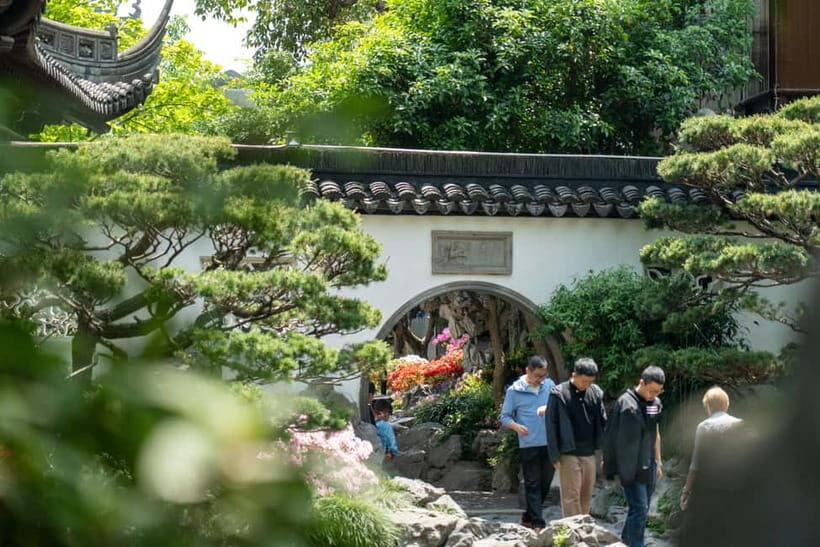
At Nan Lian Garden, you’ll learn about meticulously landscaped design and Tang dynasty-style architecture. You’ll also hear how classical garden principles guide what you see—paths, layout, and the deliberate feel of “arriving” instead of just walking through.
Free stop. This is a great midday detour when crowds elsewhere feel heavier.
Chi Lin Nunnery: wooden architecture without nails
Chi Lin Nunnery is a Buddhist temple complex with a focus on unique wooden architecture built without a single nail. That detail stands out because it gives you something to look for as you move through—construction choices you can actually imagine from the outside.
Free stop, and it’s a good counterweight to the shopping and waterfront stretches.
Ten Thousand Buddhas Monastery (Man Fat Sze): Buddha statues with stories
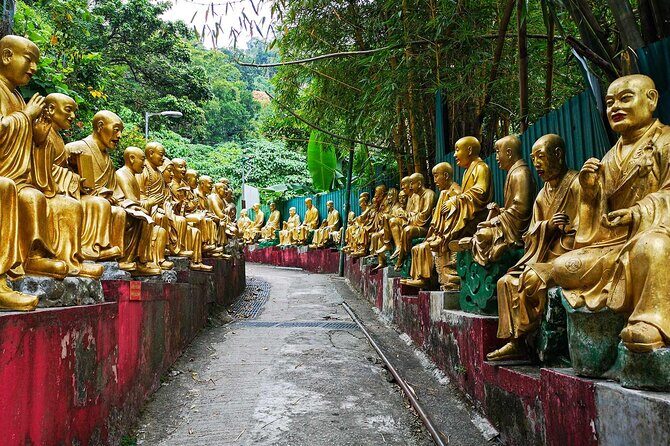
At Ten Thousand Buddhas Monastery, the audio focuses on the scale of Buddha statues and the stories behind their construction and unique features. This is the most “high-density” stop emotionally: it’s not just scenery, it’s meaning.
Free stop.
Practical note: temple complexes can have rules about behavior and movement, but the tour data you provided focuses on the sites and audio. When you arrive, follow on-site guidance.
A Disney day option: Hong Kong Disneyland with local flavor
Stop 12 is Hong Kong Disneyland. The audio guide is aimed at how Disney shows up in Hong Kong, including cultural adaptations for the Chinese market.
Ticket note: admission ticket not included. So you’re paying for park entry separately if you go.
When this fits best: if you’re traveling with kids, you’ll already need a plan for the park. If you’re traveling solo or as a couple, consider whether you’re in the mood for a themed day that can swallow the rest of your schedule.
Lantau Island spirituality: Po Lin and Tian Tan Buddha
Stops 13 and 14 take you to Lantau Island.
Po Lin (Precious Lotus) Monastery: an important sanctuary
At Po Lin Monastery, the audio describes it as an important Buddhist sanctuary and covers its history, artistic treasures, and role in Hong Kong’s religious landscape.
Free stop. This is the kind of place where the audio can make your visit feel more connected, because you’re not just looking at objects—you’re hearing why they matter.
Tian Tan Buddha (Big Buddha): one statue, big symbolism
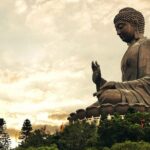
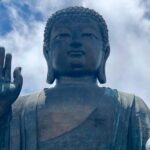
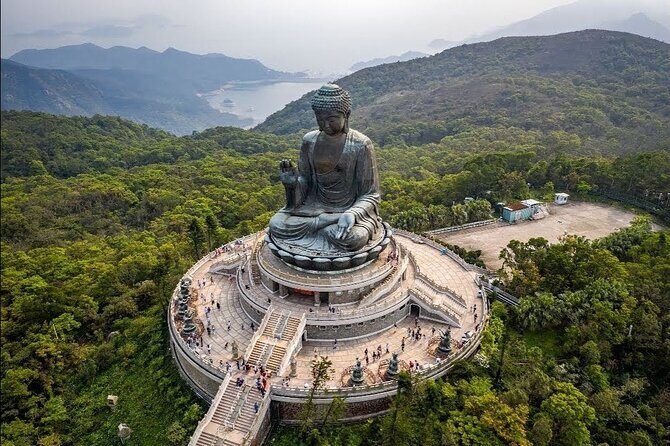
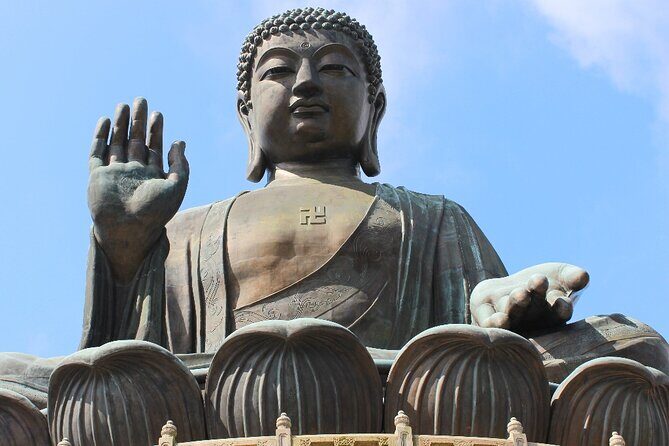
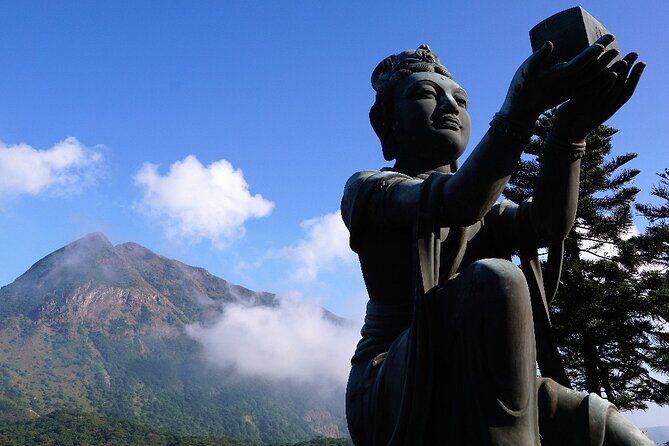
Tian Tan Buddha is one of Hong Kong’s recognizable landmarks, and the audio centers on its construction, symbolism, and cultural significance. It’s a straightforward story: what the statue is, how it was built, and what it represents.
Free stop.
Ngong Ping 360: scenic cable car and tourism engineering
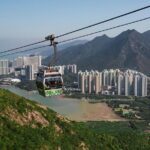
Stop 15 is Ngong Ping 360, described as a scenic cable car ride with panoramic views of Lantau Island, plus engineering behind the ride and its role in promoting tourism.
Ticket note: admission ticket not included, so budget for the cable car ride separately.
This stop is especially good if you want views and movement without a long, ground-based travel day. Even if you don’t plan to spend hours on Lantau, this ride can add a strong “Hong Kong contrast” moment.
Why the audio format works in Hong Kong
Hong Kong is full of compact attractions. The problem with most sightseeing days is you end up bouncing between places without context, or you join a tour and spend your best walking time in transit and queueing.
This audio format fixes that by giving you selective info per attraction. You don’t have to listen to everything. If you’re not interested in film history, you can skip the Avenue of the Stars audio and keep walking. If you do care about temple architecture, you can give extra attention to Chi Lin Nunnery or Nan Lian Garden.
You also avoid the tech friction. There’s no tracking app required. You listen on any device, and the tour explicitly includes online or offline options. That’s a big deal when you’re moving between waterfronts, parks, and higher-elevation viewpoints.
The one drawback to plan around
Because transport and entry fees aren’t included, a few stops can turn into a money-and-time decision. The Peak Tram (Stop 7), Hong Kong Disneyland (Stop 12), and Ngong Ping 360 (Stop 15) are marked as not included for admission tickets. Victoria Harbour is also marked as not included for admission tickets.
That doesn’t make the tour “not worth it.” It just means you should treat the audio guide as the foundation, then build the paid attractions around it.
If you want a lower-cost day, focus on the free stops and choose one ticketed “big moment” max.
Who this Hong Kong self-guided audio tour suits best
This works best if you:
- like autonomy and don’t want a group pace
- enjoy learning while you walk, but don’t want a live guide schedule
- plan to mix viewpoints with parks and temples
- want a route that’s already organized into 15 meaningful stops
It’s not ideal if you want a fully packaged day where someone handles transport, ticketing, and timing. This tour is about your pace, not theirs.
Should you book this Hong Kong self-guided audio tour?
Yes, if you want an easy way to turn a Hong Kong sightseeing day into something you understand. At $9, you’re buying helpful narration plus a map that keeps navigation simple, with the freedom to skip what doesn’t interest you. The strongest advantage is the audio structure: you can listen before you go, during your stops, or after, which is perfect for a city where you’ll likely want to revisit your favorite area.
Skip it only if you need the price to include entry fees and rides. This tour keeps those costs separate, so your “all-in” day budget depends on which ticketed attractions you choose.
FAQ
How much does the Hong Kong self-guided audio tour cost?
It costs $9.00 per person.
How long does the tour take?
The tour is listed as about 3 hours, with each stop’s audio timing shown as roughly 10 minutes per attraction.
How do I access the audio guide?
After you book for your selected travel date, you receive an email with access links to the audio guide and an interactive map. You open the audio via a secure SoundCloud link.
Do I need to download an app or use tracking?
No app download is required, and the tour does not require any tracking apps. You can listen on any device.
Can I listen offline and in multiple languages?
Yes. The audio guide is available online or offline, and it’s offered in multiple languages.
How do I navigate between the stops?
You use the included Google My Maps link. Each attraction appears as a point on the map, and clicking a point plays the matching audio guide.
Are entrance fees and transportation included?
No. Entry fees (where required) and transportation are not included. Some stops specifically note admission tickets are not included.
Is the experience refundable if I cancel?
No. It’s non-refundable and cannot be changed for any reason. If you cancel or ask for an amendment, the amount paid is not refunded.