REVIEW · HONG KONG SAR
Photography Workshop and Photowalk (FIND YOUR DIRECTION)
Book on Viator →Operated by Thomas Bertson · Bookable on Viator
Street photos start with a plan. This workshop pairs a coffee chat with Thomas Bertson and then turns your ideas into framing practice during a walk through local markets. One thing to consider: it’s much easier if you bring a camera that supports manual settings and you keep your gear light.
I like that the teaching is practical and personal. With a maximum group size of 6, you get real guidance instead of generic tips, and you can ask questions as you shoot. The vibe feels like learning with a working photographer who understands what makes a photo hold up.
You also leave with more than a memory. By the end, you’ll have a mini image portfolio from different slices of Hong Kong life, plus there’s an optional follow-up assignment if you want to tighten your results after the walk. If your goal is pure sightseeing without thinking about your camera at all, this may feel a bit too hands-on.
In This Review
- Key Highlights You’ll Actually Use
- Coffee-Shop Start: Setting Your Photo Identity Before You Walk
- Composition and Framing Tricks You Can Use on Any Street Scene
- Gear That Helps: Manual Settings, Light Load, and Limit-Smart Shooting
- The Photowalk Through Hong Kong Markets: How to Find Photos in Real Life
- Thomas Bertson’s Perspective: Documentary Thinking in a Street-Focused Workshop
- Small Group Size and a Tight 3-Hour Schedule
- Your Mini Portfolio: Turning the Walk Into Real Progress
- Price and Value for $196.46 in Hong Kong
- Practical Tips Before You Go
- Should You Book This Photowalk Workshop?
- FAQ
- How long is the Photography Workshop and Photowalk?
- Where does the workshop start?
- How much does it cost?
- Is the workshop suitable for beginners?
- What kind of camera gear should I bring?
- What should I wear?
- How many people are in the group?
- When will I get confirmation after booking?
- Is there a cancellation option if my plans change?
- Is it easy to reach with public transportation?
Key Highlights You’ll Actually Use
- Coffee-shop photo planning before anyone raises a camera
- Composition and framing taught in a way you can apply immediately
- Manual settings encouraged with advice for working around light and limits
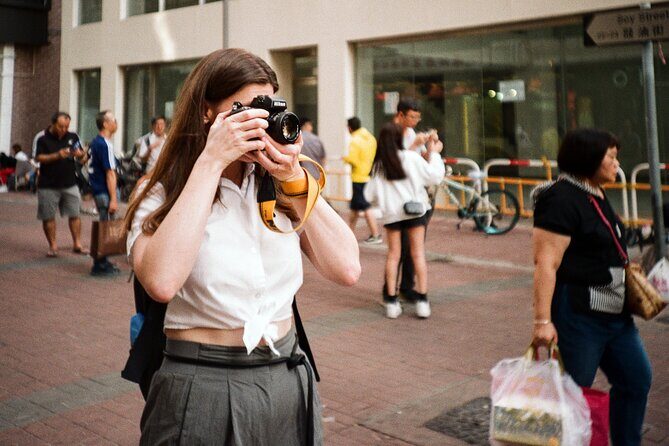
- Street markets photowalk focused on Hong Kong’s everyday energy
- Small group max 6 for more individual feedback
- Optional off-the-path used camera shops if you request it
Coffee-Shop Start: Setting Your Photo Identity Before You Walk
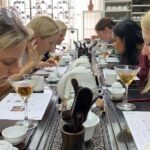
The experience kicks off at a Pacific Coffee. You’ll meet at Pacific Coffee Shops G04–05 on the G/F, Manhattan Mid-Town, 1 Po Lun Street, Mei Foo, Sham Shui Po, Hong Kong, and the activity ends back at the meeting spot.
Before you start shooting, you’ll spend time on the creative side: what photography looks like when it has direction. The workshop frames this around defining your photographic identity—basically, figuring out what you want your images to say and how your taste turns into choices in-camera. That matters because street photography can turn into random clicking if you don’t have a simple north star.
You’ll also talk through basic aesthetics—how certain visual qualities and composition decisions affect mood and meaning. It’s not meant to be academic. It’s meant to help you see fast, decide fast, and shoot with intent while the scene is changing around you.
A nice detail here is the format: coffee first, walking second. You’re not expected to learn theory while sprinting through a market crowd. You get the ideas, then you put them to work immediately.
You can also read our reviews of more photography tours in Hong Kong SAR

Composition and Framing Tricks You Can Use on Any Street Scene
After the initial chat, the workshop shifts into technique: composition and framing that make photos feel clearer and more deliberate.
This is the part I’d call the backbone of the whole experience. Even if you’re brand new, you can benefit because the concepts are the same ones pros use when they’re trying to make a small scene look intentional. The goal is to learn how framing choices can improve images—things like what you include, what you cut out, and how your subject sits inside the frame.
You’ll also work with the idea of using the tools you have to serve your vision. That doesn’t mean buying upgrades. It means learning to adapt. If you only have one focal length, you can still build strong compositions. If your shutter speed has limits in low light, you can change your approach instead of fighting the camera.
And because the workshop includes time for practice during the walk, these concepts stop being abstract. You can test them on real street scenes—at the pace Hong Kong actually moves.
Gear That Helps: Manual Settings, Light Load, and Limit-Smart Shooting
The gear guidance is straightforward: bring a camera with manual settings if you can, and keep the setup as light as possible.
That advice is smart for a street photowalk. When you’re carrying heavy gear, you shoot less, and your timing gets worse. Light gear also keeps you flexible for quick angles—turning corners, stepping back, or repositioning when the best moment appears and disappears.
Manual settings are suggested because the workshop’s whole point is creative control. If you can adjust shutter speed, aperture, and ISO, you can respond to changing light in markets—bright storefronts next to darker alleys, or sun hitting one side of a stall while the other side falls off fast.
There’s also a strong theme in the workshop: technical limitations can become part of your style if you treat them as constraints rather than problems to erase. That mindset is useful beyond the class, too. It helps you stop chasing perfect conditions and start making images with what you have.
If your camera is compact or you shoot with a phone, you might still learn a lot from the composition and framing parts. But since the workshop specifically suggests manual settings, you’ll likely get the most if your camera can do that.
The Photowalk Through Hong Kong Markets: How to Find Photos in Real Life
Now for the best part: the walk. This is where you move from “learning” to “doing.”
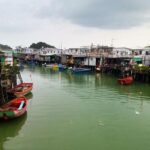
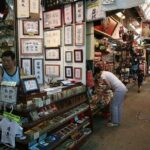
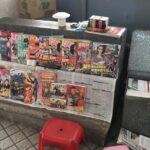
The photowalk focuses on local areas that show Hong Kong’s spirit, with time spent exploring street markets. These markets are ideal for a workshop because you get variety in a small distance: people, signage, textures, food stands, layers of detail, and constant motion.
As you walk, you apply what you just learned about composition and framing. You’re basically training your eye to spot:
- A clear subject in a messy scene
- Patterns and repeated shapes (stalls, windows, hanging items)
- Leading lines or borders created by buildings and storefronts
- Expressions and gestures that turn a photo from scenery into a story
Because the workshop is designed around theory plus practice, the market isn’t just a backdrop. It becomes a testing ground. You’ll have moments where your first idea doesn’t work—and then you adjust. That feedback loop is how you improve quickly.
One more practical note: wear comfortable shoes. The workshop expects you to have a moderate physical fitness level, which likely means steady walking and standing while you frame shots.
Thomas Bertson’s Perspective: Documentary Thinking in a Street-Focused Workshop
Thomas Bertson leads the session, and his background shows in the way the workshop is structured.
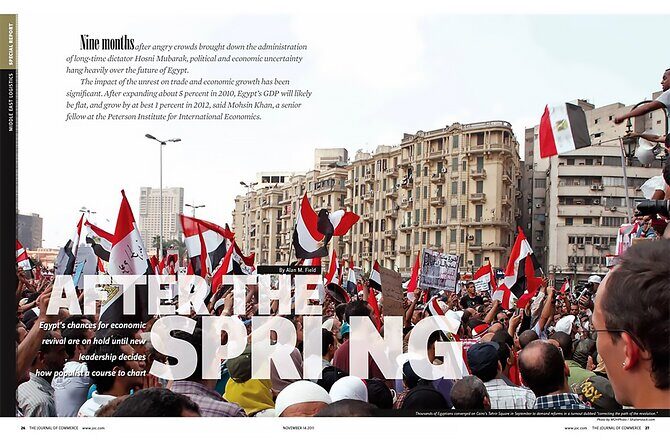
He’s a Hong Kong–based photographer and educator. He started with still life and portraits, then shifted into documentary projects—covering the Arab Spring in 2011 and later Prison Escape in 2012, with hundreds of images published. He’s also been a regular contributor for VOGUE since 2013, and he published his book Hong Kong in 2020.
Why does that matter for you? Because documentary work usually teaches two skills that street photographers need:
1) Respecting real life as it is
2) Finding structure and meaning without forcing it
In this workshop, that kind of thinking supports the creative goals. You’re not just chasing pretty pictures. You’re learning how to shape an image so it reflects an actual slice of Hong Kong life.
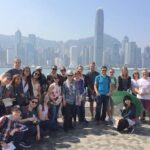
Also, you get guidance that feels individual. With a maximum group size of 6, it’s easier for Thomas to notice your framing habits and suggest specific fixes instead of broad advice.
And if you want to take it a step further, he may be able to take you to used camera shops off the usual tourist path if you ask. That’s a great extra if you want local gear tips or you’re hunting for something specific without paying big retail prices.
A few more Hong Kong SAR tours and experiences worth a look

Small Group Size and a Tight 3-Hour Schedule
The workshop runs about 3 hours, and the group is capped at 6 people. That’s not a random detail—it changes how useful the time feels.
A shorter, structured session means you’ll move quickly: coffee discussion, key technique, then practice during the photowalk. If you’re trying to improve fast in a limited time in Hong Kong, this format is efficient. You don’t need a full day.
The downside is also simple: there’s no room for slow wandering. You’ll get the most out of it if you’re ready to walk, shoot, and adjust on the fly.
And because it ends back at the meeting point, you can plan your next meal or metro ride without guessing where you’ll end up.
Your Mini Portfolio: Turning the Walk Into Real Progress
At the end of the photowalk, you’ll have created a portfolio of images that reflect different aspects of Hong Kong life. There’s also an optional assignment if you want to formalize your results.
This is a big value piece. A lot of workshops give you photos but not direction for what to do next. Here, the goal is to produce a set of images you can look at as a body of work, not just a collection of clicks.
If you take the optional assignment seriously, you can treat it like a first draft and improve your selections afterward. Even without extra coursework, you’ll likely learn what kind of scenes you naturally gravitate toward—and then you can plan your next photo day around that.
If you’re the type who usually takes photos but rarely edits with a purpose, this workshop gives you a reason to organize your output while the memory is fresh.
Price and Value for $196.46 in Hong Kong
The price is $196.46 per person for about 3 hours, and the experience uses a mobile ticket. On average, it’s booked about 24 days in advance, so it’s smart to reserve when you know your dates.
Is it worth it? For most people, I think the value comes from two things working together:
- Hands-on practice right after the theory
- Small group size, which makes instruction more direct
You’re paying for mentorship—someone helping you see composition choices, then helping you apply them while the city is right there. If you wanted the same level of feedback from a group tour, you usually wouldn’t get it. And if you tried to learn composition alone on your own, you’d waste time guessing what matters most.
Also, the workshop isn’t only about Hong Kong as a destination. It’s about you building a way to shoot that travels with you after you leave. That’s the kind of value that lasts longer than a single afternoon.
Practical Tips Before You Go
A few things to do before you meet at Pacific Coffee:
- Bring a camera that supports manual settings if you have one
- Keep your gear light so you can reposition easily
- Wear comfortable shoes for standing and walking
- Be ready to talk about your photo choices, not just take photos
If you’re newer to manual mode, focus on one or two settings rather than trying to control everything at once. The workshop is built to help you work within real constraints.
If you’re a return visitor to Hong Kong, this is still useful because it’s designed around street photography fundamentals and structured shooting, not generic sightseeing.
Should You Book This Photowalk Workshop?
Book it if you want street photography growth in a short time and you like instruction you can immediately test. The coffee start makes it easier to absorb ideas without feeling rushed, and the market walk gives you the chance to apply composition and framing in a real setting.
Skip it if your idea of a perfect Hong Kong day is zero structure and wandering without thinking about your camera. This is hands-on. You’ll be shooting with purpose, and you’ll likely want to ask questions.
If you’re somewhere in the middle—curious, motivated, and ready to improve—this is a strong bet. You get practical teaching from Thomas Bertson, a small-group feel, and a photo portfolio you can actually use.
FAQ
How long is the Photography Workshop and Photowalk?
It lasts about 3 hours.
Where does the workshop start?
The meeting point is Pacific Coffee Shops G04–05, G/F, Manhattan Mid-Town, 1 Po Lun Street, Mei Foo, Sham Shui Po, Hong Kong. It ends back at the meeting point.
How much does it cost?
The price is $196.46 per person.
Is the workshop suitable for beginners?
Yes. The workshop is suitable for beginners if you want to learn.
What kind of camera gear should I bring?
A camera with manual settings is suggested, and you should bring the lightest combination possible.
What should I wear?
A comfortable pair of shoes is recommended.
How many people are in the group?
The tour/activity has a maximum of 6 travelers.
When will I get confirmation after booking?
You’ll receive confirmation within 48 hours of booking, subject to availability.
Is there a cancellation option if my plans change?
Yes. You can cancel for a full refund up to 24 hours in advance of the experience’s start time.
Is it easy to reach with public transportation?
The meeting point is near public transportation.