REVIEW · HONG KONG SAR
Tea Tasting and Pairing Concept Workshop
Book on Viator →Operated by MingCha Tea House · Bookable on Viator
Tea tasting beats another night out in Hong Kong. At MingCha Tea House in Chai Wan, you sample four premium teas and learn how to taste with your nose, eyes, and palate, not just with your mouth.
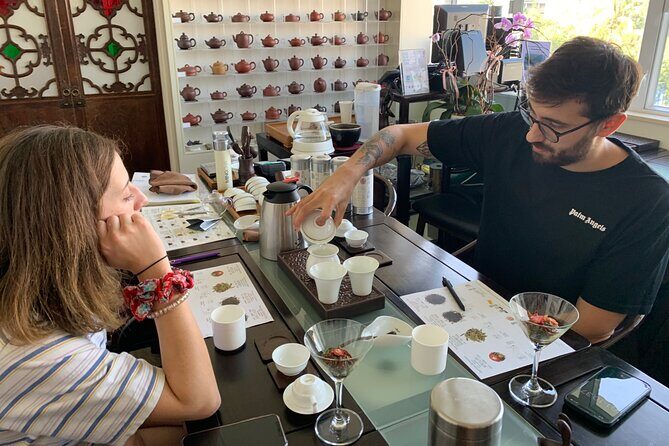
I love how hands-on it is, from smelling each tea to learning the right way to pour and seep using traditional tea ware.
Next, I love the food pairing part because it gives you instant, practical lessons you can use after the workshop. You taste teas alongside dried nuts, chocolate, and flower honey toasts, so you start noticing what tea does to sweetness, fat, and crunch.
One consideration: with only 1 hour 30 minutes, you’ll get a great sampler of tea styles, but it’s still not a full-on tea master’s course. If you want deep technical mastery, you’ll likely want to keep practicing on your own afterward.
In This Review
- Quick takeaways before you go
- Tea Tasting in Chai Wan That Actually Teaches You Something
- Finding MingCha Tea House (and Why That Matters)
- The 1.5-Hour Plan: From Smelling Leaves to Pouring Properly
- The Four Teas You Taste: Green, Scented Green, Red, and Oolong
- Gongfu Pouring Skills You Can Use at Home
- Food Pairing That Makes Tea Practical, Not Theoretical
- Group Size, Attention, and the Two Start Times
- Price and Value: Is $65.60 Worth It?
- Who Should Book This Workshop (and Who Might Skip)
- Should You Book This Tea Tasting and Pairing Workshop?
- FAQ
- How long is the Tea Tasting and Pairing Concept Workshop?
- What types of tea will I sample?
- Is there a family-friendly option for children?
- Where does the workshop start?
- How big is the group?
- Do I get a mobile ticket?
- What is the cancellation policy?
Quick takeaways before you go
- Four specific tea types: green, scented green, red, and oolong, so you can compare categories side by side.
- Gongfu-style hands-on brewing with traditional tea ware, including guidance on proper pouring and steeping.
- Use all five senses during tasting, including looking at leaves and watching how tea changes as it’s brewed.
- Pairing with real snacks (dried nuts, chocolate, flower honey toasts), not just a plain cup of tea.
- Small group size with a maximum of 20 people, which helps you get personal attention.
- Two start times and a family-friendly option if you’re traveling with kids.
Tea Tasting in Chai Wan That Actually Teaches You Something
Hong Kong is full of tea shops, but most are about ordering, not learning. This workshop is different because it turns tea into a hands-on experiment. You’re not just sipping and moving on. You’re trained to notice what’s happening in the cup as you pour, steep, and taste again.
What makes it work is the structure. You get a set of teas across multiple categories—green, scented green, red, and oolong—so your brain has comparisons to grab onto. The workshop pushes you to use all five senses, which sounds poetic, but it’s practical. When you smell the tea, look at its color, and then taste with intention, you start picking up patterns fast.
The other thing I like is the pace. It’s interactive without feeling chaotic. People can ask questions. You can do repeat sips and adjustments, especially because you learn the “how” of gongfu tea serving, not just the “what” of the tea types.
You can also read our reviews of more food & drink experiences in Hong Kong SAR
Finding MingCha Tea House (and Why That Matters)
Your workshop starts at MingCha Tea House, Block B, 40 Lee Chung St, Chai Wan, Hong Kong (Unit B2, 15/F, Fortune Factory Building). The location in Chai Wan is useful because it’s not just stuck in the most tour-heavy areas, so you get a more local feeling.
It’s also near public transportation, which matters in Hong Kong. Tea workshops are short, and you don’t want your whole day getting swallowed by transit. If you’re building an afternoon plan around the class, you can usually slot it in without major stress.
In one of the positive experiences shared afterward, the host Vivian also helped someone arrange a taxi back to their hotel and stayed until it arrived. That’s not something you should expect from every class, but it tells you the staff take care of practical needs when someone is unsure what to do next.
The 1.5-Hour Plan: From Smelling Leaves to Pouring Properly
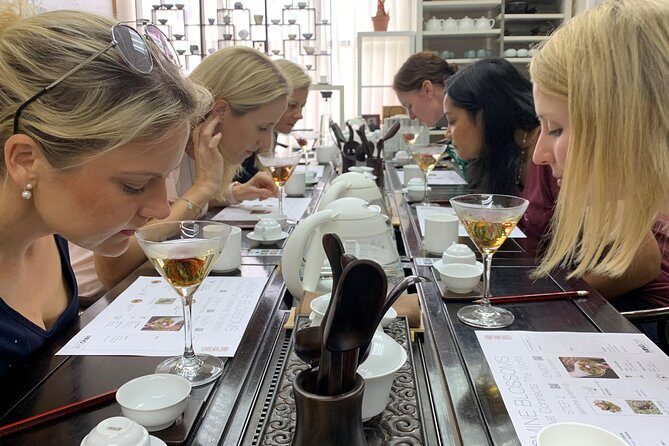
The workshop runs about 1 hour 30 minutes and ends back where it started. You’ll be there long enough to taste multiple teas, learn the basics of gongfu brewing, and do the pairing activity without feeling rushed.
Here’s the flow you can expect, in plain language:
First, you’ll get introduced to tasting. The emphasis is on using multiple senses, which means you’re likely asked to look at the tea and then smell it before you taste. That matters because tea aroma often tells you what to expect before your tongue even gets the message.
Then you move into hands-on gongfu-style tea ware. Instead of treating brewing like a one-time event, gongfu is about doing it properly and paying attention to how you pour and how long you steep. Multiple reviews highlight that you practice the basics of seeping and pouring tea properly, so you’re not just watching someone else do it.
Finally, you shift into pairing. This is where the workshop turns from “learning tea” into “learning how tea behaves with food.” You taste teas next to dried nuts, chocolate, and flower honey toasts, and you start noticing which combinations feel balanced and which ones fight each other.
The Four Teas You Taste: Green, Scented Green, Red, and Oolong
The workshop gives you four teas from selected categories: green, scented green, red, and oolong. That lineup is smart because these categories tend to show different flavor directions.
You’ll taste each tea and explore what changes when brewed correctly. One review mentions experimentation with the tea leaves before and after, which is exactly the kind of comparison that helps you stop guessing. Leaves can look one way dry, then shift dramatically once infused. When you see that transformation, it’s easier to understand why the tea tastes the way it does.
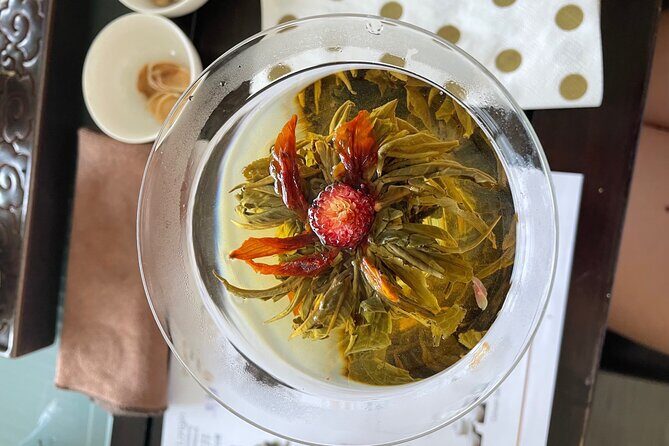
A standout mention in the reviews is a jasmine-blossom-style presentation connected to the scented green option. If you’re a fan of jasmine aroma, this part is likely to feel special because it’s not only about flavor. It’s also visual and fragrant—something you can notice with your eyes and nose before you even take a sip.
If you’re not sure what you like yet, this is a good sampler. After the workshop, you’ll have a clearer sense of what you enjoy: fresher, grassy notes; floral scents; roasted or deeper reds; or the layered, often smoother profile of oolong.
Gongfu Pouring Skills You Can Use at Home
The workshop doesn’t just serve tea. It teaches you how to handle it. That’s where the value hides, because brewing habits are what separate “good tea” from “wow, I made this.”
You use traditional tea ware and learn the gongfu way, with guidance on proper steeping and pouring. Even if you don’t go out and buy a full gongfu set immediately, you can still apply the key habit: be consistent with steeping and watch what the tea does from one pour to the next.
One review specifically praises learning how to seep and pour properly and mentions the host’s careful teaching. That’s important because small technique details affect extraction—the balance of aroma, bitterness, and sweetness. If you’ve ever made tea and thought, it tastes flat, this type of training helps you correct that feeling.
Also, the class vibe matters. People mention the host was friendly, funny, and engaging. That helps because tea is subtle. If the instructor makes the learning process comfortable, you’ll pay attention instead of zoning out waiting for the next snack.
A few more Hong Kong SAR tours and experiences worth a look


Food Pairing That Makes Tea Practical, Not Theoretical
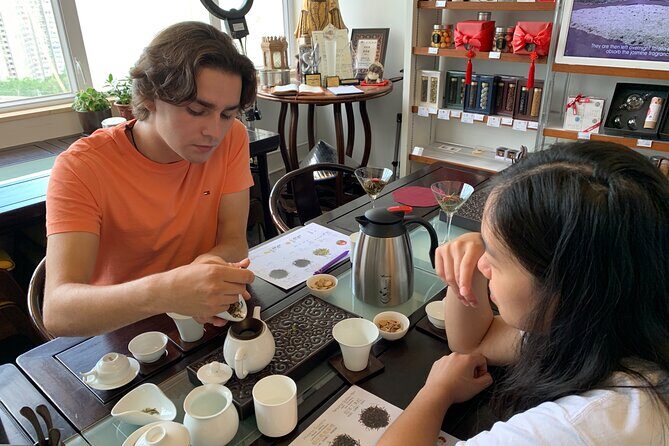
Tea pairing can sound fancy. Here, it’s grounded. You taste teas alongside three snack types:
- Dried nuts
- Chocolate
- Flower honey toasts
This combo teaches you how tea handles different food textures and flavors. Nuts bring fat and a toasty crunch. Chocolate adds sweetness and cocoa depth. Flower honey toasts add floral sweetness and sticky richness.
The pairing activity is a quick way to answer a question you might actually care about later: what tea should I bring to dessert or snacks? If you learn that one tea softens bitterness, while another tea cuts through sweetness, you can start choosing teas with confidence instead of buying randomly.
It’s also family-friendly in a very practical way. Kids often like familiar snack flavors like chocolate and honey toast, which gives them a way to participate without needing to have a refined palate on day one. If you want a workshop you can do without bribing everyone with sugary distractions, this format helps.
Group Size, Attention, and the Two Start Times
The workshop caps the group at 20 people. In a class built around tasting and practice, smaller groups make a difference. You’re not stuck watching from the back while everyone else gets the attention. You can ask questions and get feedback on your pouring and tasting.
You also get two start times, which helps if you’re trying to plan around weather, meals, or kid schedules. The activity is rated as requiring good weather, so having an option to switch start times (or dates if canceled) is a bonus for planning.
For timing, remember you’re only there about 90 minutes. Build in time to arrive a bit early so you’re not flustered. In Hong Kong, that calm arrival helps your senses because you’re about to smell and taste carefully.
Price and Value: Is $65.60 Worth It?
The price is $65.60 per person for about 1 hour 30 minutes, including tasting multiple teas and pairing with snacks. On paper, it can look like a “tasting fee.” In practice, you’re paying for three things at once:
1) Structured tasting across four tea categories, so it’s not random sampling.
2) Hands-on gongfu-style instruction, including pouring and steeping guidance.
3) Food pairing, which turns tea knowledge into something you can apply.
If you’ve done tea tastings before where you get handed a cup and told to guess notes, this feels more useful. If you’re the type who enjoys technique—how something is made, not only what it tastes like—you’re likely to feel good about the cost.
Also, the small group size helps justify the price. You’re not a ticket number. You’re part of an interactive class where you can practice. That’s typically where “value” shows up.
If you’re purely chasing the cheapest option or you already own your own gongfu gear and know what you’re doing, you might not get as much. But if you want a guided start, it’s a solid way to buy learning instead of just buying tea.
Who Should Book This Workshop (and Who Might Skip)
This is a great fit if you want a real skill, not just a drink. You’ll likely enjoy it if you:
- like learning how food and drink connect
- want to compare green vs scented green vs red vs oolong in a single session
- enjoy hands-on classes where you practice pouring and steeping
- are traveling with kids and want a family-friendly way to try tea
You might skip it if:
- you’re short on time and already have a packed schedule
- you only want an eat-and-sip activity with zero technique focus
- you’re expecting a long, multi-hour ceremony deep into tea history (this is more practical and structured)
Should You Book This Tea Tasting and Pairing Workshop?
Yes, if you want tea to make sense. This workshop is one of those rare experiences where the price buys instruction you can use later, not just a few sips. The combination of gongfu-style hands-on practice and real pairing with nuts, chocolate, and flower honey toasts makes the learning stick.
If you’re in Hong Kong and want something different from food tours and skyline photos, this is a smart choice. It’s also a good rainy-day option in spirit, since it’s an indoor workshop—though the activity does depend on good weather for scheduling.
If you’re choosing between “tea tasting” and “tea skills,” pick the one that teaches you how to pour and steep. That’s where this class earns its reputation.
FAQ
How long is the Tea Tasting and Pairing Concept Workshop?
It lasts about 1 hour 30 minutes.
What types of tea will I sample?
You’ll sample four premium teas: green, scented green, red, and oolong.
Is there a family-friendly option for children?
Yes. There is a family-friendly option, so you can enjoy the workshop with kids.
Where does the workshop start?
The meeting point is MingCha Tea House, B2, 15/F, Fortune Factory Building Block B, 40 Lee Chung St, Chai Wan, Hong Kong.
How big is the group?
The workshop has a maximum of 20 participants.
Do I get a mobile ticket?
Yes. The experience includes a mobile ticket.
What is the cancellation policy?
Free cancellation is available up to 24 hours before the experience starts for a full refund. If you cancel less than 24 hours before, the amount paid is not refunded. The cutoff is based on local time, and if the experience is canceled due to poor weather, you’ll be offered a different date or a full refund.