REVIEW · CHENGDU
Chengdu: Du Fu Thatched Cottage Museum Ticket for Adult
Book on GetYourGuide →Operated by Guangzhou Zhiwooyou Travel Agency Co., Ltd. · Bookable on GetYourGuide
Du Fu’s poems live here in Chengdu. I love how the Du Fu Thatched Cottage turns Tang poetry into a walkable story—An Lushan Rebellion, exile, shelter, and hundreds of lines written in place. I also love the setting: lush gardens, bamboo groves, and classical architecture that make the history feel calm instead of heavy.
One thing to consider: this site covers nearly 300 acres, so plan to move at your pace. If you rush, you’ll skim the gardens and miss the flow from gates, halls, and shrines to the reconstructed thatched hut.
In This Review
- Key highlights worth your time
- Du Fu’s Thatched Cottage: why this museum feels different
- Finding your way inside the complex on a single day
- Walking the main axis: Front Gate to the Poetry History Hall
- The Poetry History Hall: where Du Fu becomes a person, not just a name
- Reconstructed thatched hut area and the pastoral rhythm by Huanhua Stream
- Gongbu Shrine: poets honored together, not in isolation
- Ming and Qing-era preservation: why the building dates matter
- Inside the museum collection: over 30,000 items for real study
- Ticket value: is $15 for an adult day pass worth it?
- Timing smart: how to use 09:00–18:00 without feeling rushed
- Who should book this day experience?
- Should you book the Du Fu Thatched Cottage Museum ticket?
- FAQ
- FAQ
- What is included with the Chengdu Du Fu Thatched Cottage Museum ticket?
- Where is Du Fu Thatched Cottage Museum located?
- Do I need a physical ticket to enter?
- What do I need to bring for booking?
- How long is the ticket valid?
- What are the usable hours for entry?
- How many people are in the group?
- Can I cancel and get a refund?
- Where do I enter the museum?
Key highlights worth your time
- A poet’s exile turned into a real place: Du Fu lived here after fleeing the An Lushan Rebellion, writing over 240 poems during nearly four years in Chengdu.
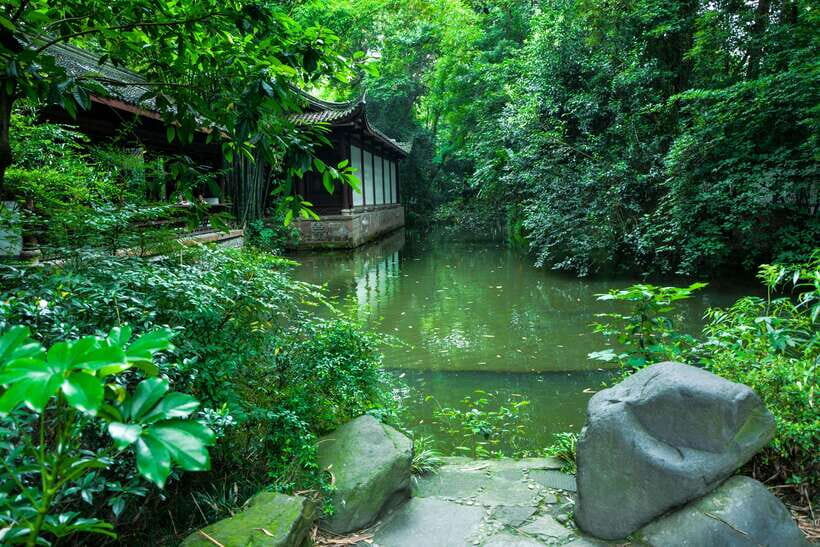
- A classical garden you can actually walk through: bamboo groves, flowing streams, and garden design tied to the Huanhua Stream area.
- Preserved Ming and Qing-era architecture: structures dating from around 1500 AD and 1811 AD help anchor the atmosphere.
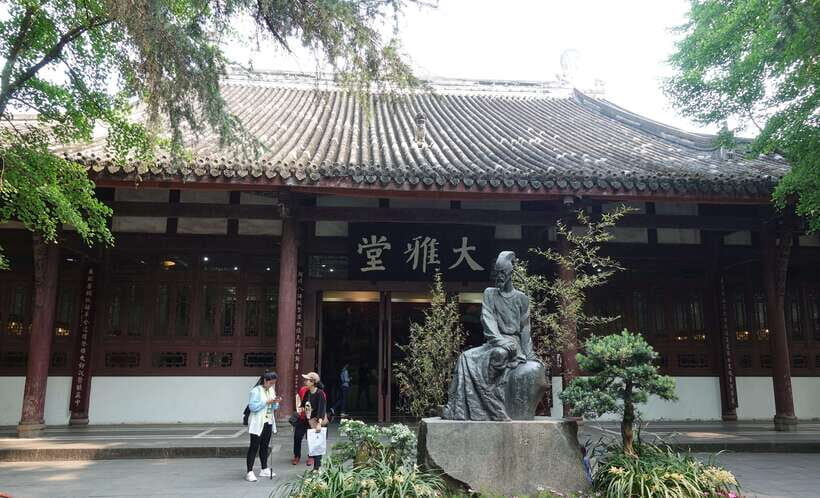
- The Poetry History Hall focus: Du Fu’s statue plus plaques featuring famous calligraphy.
- Gongbu Shrine and Sichuan poets: Du Fu is honored alongside Huang Tingjian and Lu You.
- A big collection for deeper study: over 30,000 items, including ancient editions and manuscripts.
Du Fu’s Thatched Cottage: why this museum feels different
If you think museums are mostly for looking at glass cases, this one is a pleasant argument against that. Du Fu Thatched Cottage Museum isn’t just a gallery about a poet; it’s a mapped-out memory of how his life in Chengdu shaped his writing. You’re in the same broad setting where the thatched hut idea began—by Huanhua Stream—and that matters.
I also appreciate how the experience balances two things that are often separate: poetry and place. The halls, gates, and shrines guide you through a sequence of meanings, not just rooms. At the same time, you get a garden environment designed for slow walking, so it doesn’t feel like a history lecture.
The final reason I’d call it worth your time is the scale of the collection. With 30,000+ items including ancient editions, manuscripts, and translations, you can go from first impressions to deeper reading without leaving the grounds.
A few more Chengdu tours and experiences worth a look


Finding your way inside the complex on a single day
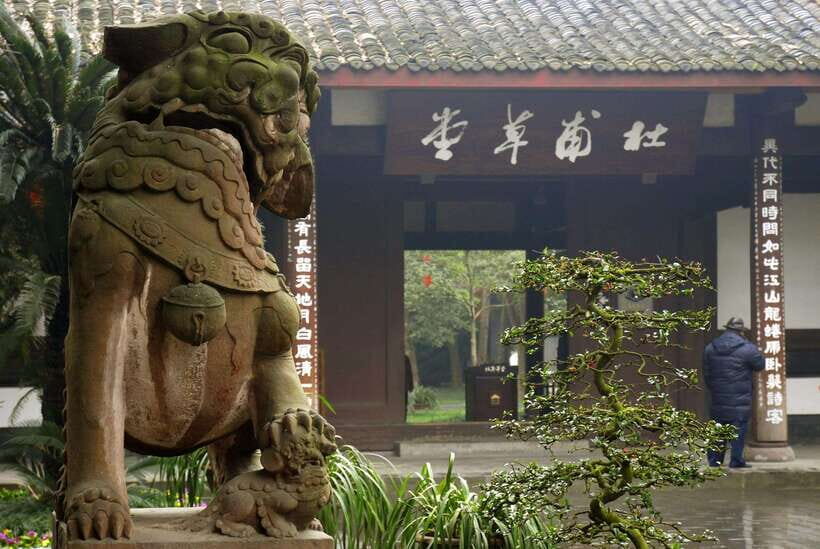
You’ll enter at any main gate, since there’s no physical ticket you need to show. Once you’re in, the site is organized along a central axis, with major buildings aligned in sequence. That’s handy for a self-guided visit, because you can keep moving forward instead of doubling back.
Here’s a practical way to structure your day, given your entry window (09:00–18:00):
- Start near the front structures and orient yourself to the axis.
- Move through the main halls and gates in order, with short pauses for photos and reading plaques.
- Break for garden time when you feel your attention fading, then come back to the museum exhibits for details.
Because the grounds are large, you’ll get more out of it if you treat it as two visits in one: a walking route through the historical layout, then a focused time for the museum collection.
Walking the main axis: Front Gate to the Poetry History Hall
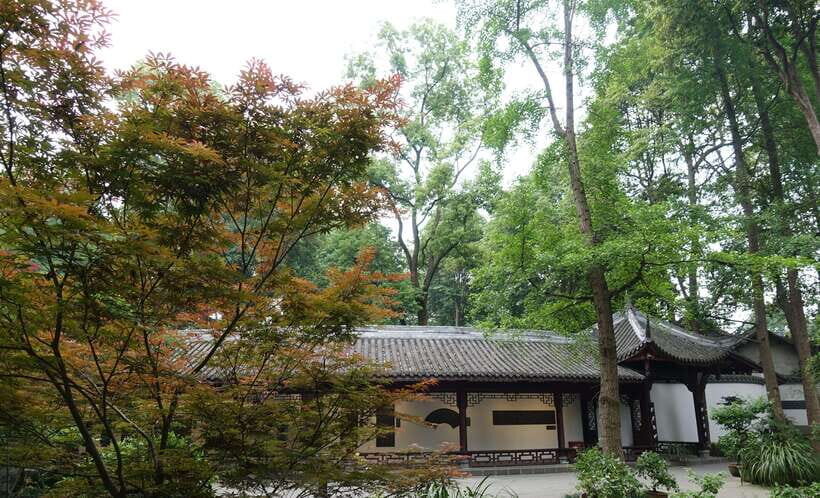
The big buildings line up in a deliberate way, and you’ll feel that once you start walking. You can expect stops such as the Front Gate, Grand Lobby, Poetry History Hall, Chaimen Gate, and Gongbu Shrine, plus symmetrical corridors and auxiliary buildings.
This axis design does more than look pretty. It gently keeps you moving through a storyline: arrival, reflection, literary focus, then commemoration. Even if you don’t read every inscription, the layout helps you understand what the site considers important.
The Poetry History Hall is the centerpiece, so it’s worth making it your anchor. If you do one thing thoroughly on your visit, let it be here.
The Poetry History Hall: where Du Fu becomes a person, not just a name
In the Poetry History Hall, you’ll find a statue of Du Fu and plaques inscribed with famous calligraphy. This matters because it shifts you from studying a historical figure on paper to encountering a cultural icon in a designed setting.
Calligraphy is not just decoration here. In Chinese cultural spaces, it often functions like interpretation—an emotional tone, a historical voice, and a way of compressing meaning into a few strokes. Standing in front of those plaques, you get a clearer sense of how Du Fu’s writing was valued as literature and also as memory.
If you’re the type who likes to connect art to context, spend time matching the physical calm of the hall with what Du Fu’s poems are known for: looking at real life, not only ideal scenes. Even without doing heavy study, the contrast makes the poetry feel more grounded.
Reconstructed thatched hut area and the pastoral rhythm by Huanhua Stream
After the main halls, shift your pace. The reconstructed Thatched Hut Area is specifically meant to replicate Du Fu’s rustic dwelling, giving you a visual idea of how simple shelter could become a writing workspace.
The historical backdrop is strong: in winter 759 AD, Du Fu fled chaos tied to the An Lushan Rebellion and settled in Chengdu. By the following spring, with help from friends, he built a thatched hut by Huanhua Stream and lived there for nearly four years, writing over 240 poems.
That timeline is useful when you wander. Instead of thinking about architecture first, think about survival first. Then the garden, streams, and bamboo can feel like a setting for endurance, not just scenery.
Also, the site’s classical garden design is a big part of why this museum stays memorable after the photos fade. Bamboo groves and flowing water create a pacing effect—your eyes and mind slow down. It’s one of those places where your break time improves the rest of the visit.
You can also read our reviews of more museum experiences in Chengdu


Gongbu Shrine: poets honored together, not in isolation
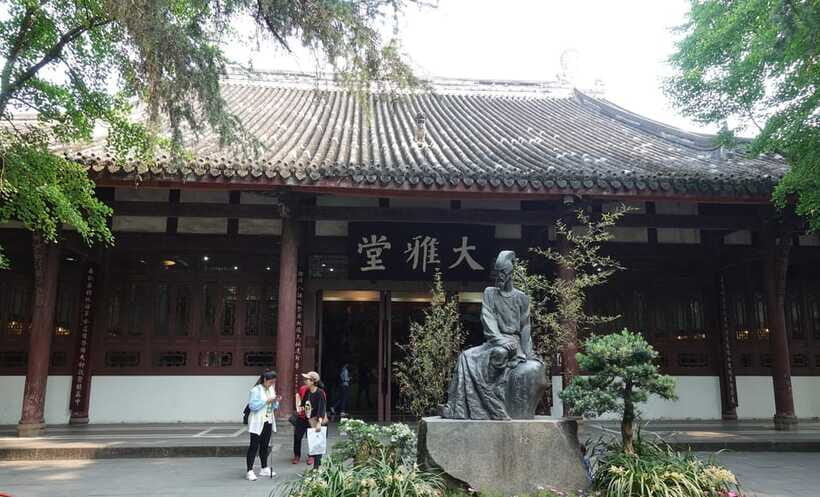
Gongbu Shrine honors Du Fu alongside Huang Tingjian and Lu You. Seeing Du Fu placed in conversation with other Sichuan-residing poets adds a layer that many single-poet museums miss.
The practical takeaway: if you walk through with the idea that poetry communities mattered, you’ll read more meaning into the space. Shrines and hallways like this aren’t just for individual commemoration; they reflect how culture groups remember and organize literary legacy.
This is also where you’ll feel the site’s role as both museum and memorial. The architecture and placement encourage respectful attention, and the shrine gives you a natural stop point before you move deeper into the collection.
Ming and Qing-era preservation: why the building dates matter
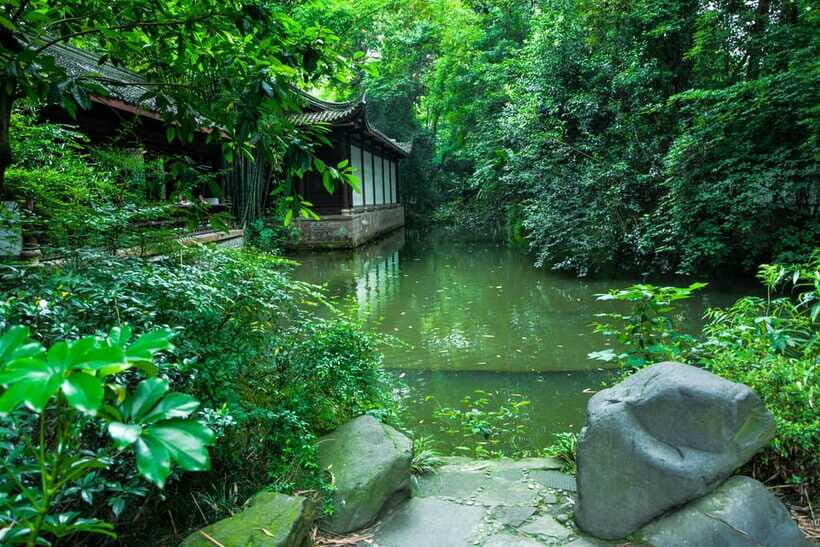
A surprising strength here is that the site preserves architectural features from the Ming Dynasty (around 1500 AD) and the Qing Dynasty (1811 AD). The main structures—plus corridors and auxiliary buildings—are arranged along that central axis.
Why does that matter to your visit? Because these buildings create continuity. You’re not only seeing a modern interpretation of a poet’s home; you’re stepping into an environment that has carried its own history across centuries. That makes the reconstructed hut feel like part of a longer cultural conversation rather than a standalone set piece.
If you enjoy architecture, try to notice transitions: gate to lobby to hall to shrine. The materials and design choices can help you understand the way Chinese commemorative spaces guide movement and mood.
Inside the museum collection: over 30,000 items for real study
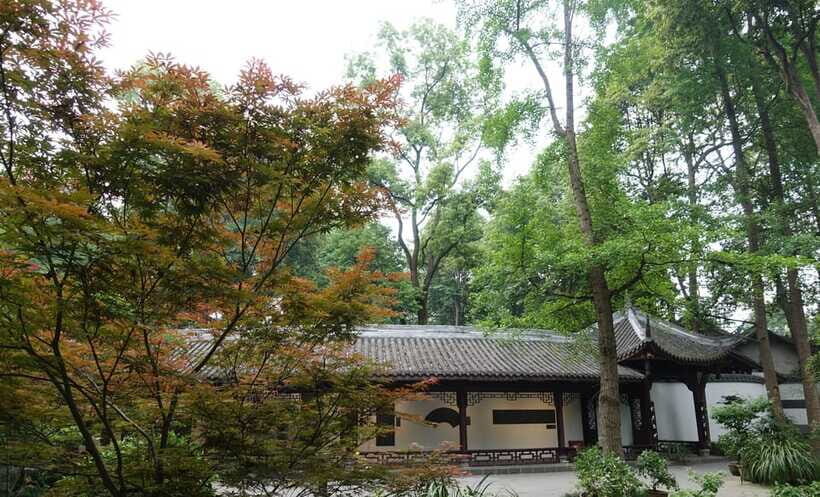
The museum collection includes more than 30,000 items, such as ancient editions, manuscripts, and translations of Du Fu’s works. That’s big enough to matter, even if you only skim parts of it.
Here’s the value for you: if you come with any interest beyond a postcard-level story, the collection lets you build depth without changing locations. You can spend time on a few items that catch your attention and still feel like you used your day well.
If you’re choosing how to allocate time, don’t try to read everything. Instead, choose your mode:
- If you’re a poetry reader, spend your museum time on manuscripts and editions.
- If you’re more history-focused, spend time on items tied to Du Fu’s life and the Tang period context.
- If you want a middle path, use translations to connect what you see to what you might want to study later.
Even just knowing the collection’s scale helps you avoid that regretful feeling of rushing through details you could have enjoyed.
Ticket value: is $15 for an adult day pass worth it?
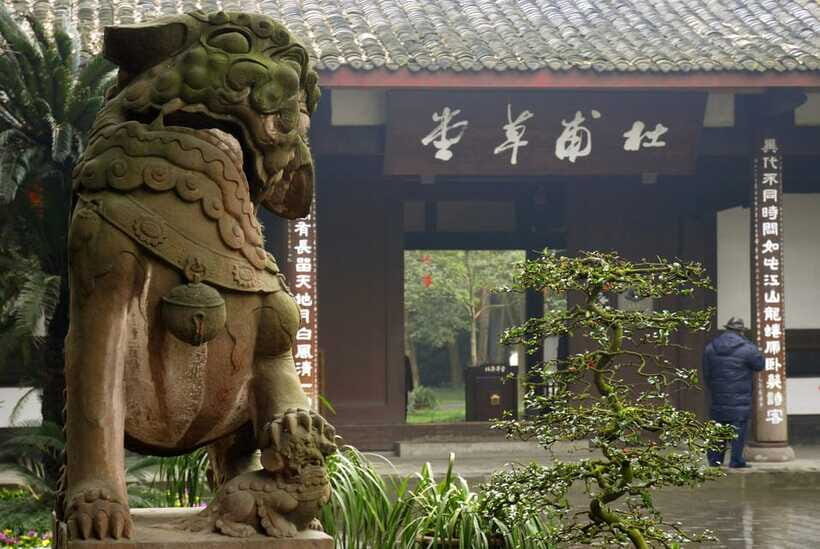
At about $15 per person for admission with a 1-day validity, this ticket looks like strong value for two reasons.
First, you’re paying for more than a single gallery. You get a large grounds experience—nearly 300 acres—with major structures and garden spaces, plus museum content. That combination is different from a small, indoor-only ticket.
Second, the collection depth is the kind that rewards longer attention. With 30,000+ items, the experience can support a light pass or a deeper study day. If you’re the type who likes to return to one place and really read, this is one of the better uses of a day in Chengdu.
Where it might not feel like great value is if you only want very short visits. If you have a strict schedule and can’t spend time walking and reading, the site’s size can make the day feel like a time squeeze.
Timing smart: how to use 09:00–18:00 without feeling rushed
You can enter and enjoy the grounds during 09:00–18:00, which gives you a full day window. For a place this size, you’ll get the best experience by splitting your time into blocks, not one continuous sprint.
A solid approach:
- Morning: main axis route through the Front Gate, halls, and shrines.
- Midday: garden breaks and the reconstructed thatched hut area.
- Afternoon: museum collection time, focusing on a few items you can actually read or interpret.
If you’re traveling with limited stamina, take more breaks than you think you need. With that many acres and a lot of reading opportunities, your energy will drain faster than you expect.
Who should book this day experience?
This is a great fit if you:
- Like Tang poetry, or even just like the idea of connecting literature to the real physical setting.
- Want a slower Chengdu day with gardens, bamboo, and water rather than only streets and markets.
- Enjoy museum spaces that double as memorials and outdoor walks.
It may not be your best choice if you:
- Prefer very compact attractions where you can finish quickly.
- Dislike reading plaques or spending time with calligraphy and inscriptions.
If you’re somewhere in the middle, don’t worry. The design helps you enjoy the place even if you only catch some details.
Should you book the Du Fu Thatched Cottage Museum ticket?
I’d book it if you want an authentic-feeling Chengdu experience that connects poetry, history, and gardens in one place. The value comes from the combination: a meaningful historical story tied to the An Lushan Rebellion era, preserved Ming and Qing architecture, and a museum collection with over 30,000 items.
Skip it only if your schedule is too tight or you know you won’t spend time reading and walking. But if you have even a flexible day, this is one of the most efficient ways to understand why Du Fu remains such a central figure in Chinese culture.
FAQ
FAQ
What is included with the Chengdu Du Fu Thatched Cottage Museum ticket?
Admission to the Du Fu Thatched Cottage Museum is included.
Where is Du Fu Thatched Cottage Museum located?
It’s at 37 Qinghua Road in Chengdu’s Qingyang District.
Do I need a physical ticket to enter?
No. You can use your ID or an e-voucher for direct verification.
What do I need to bring for booking?
You’ll need a passport, since passport ID is required to book.
How long is the ticket valid?
The ticket is valid for 1 day.
What are the usable hours for entry?
Entry is available from 09:00 to 18:00.
How many people are in the group?
It’s limited to a small group of up to 10 participants.
Can I cancel and get a refund?
Free cancellation is available up to 24 hours in advance for a full refund.
Where do I enter the museum?
Entry is available at all main gates of Du Fu Thatched Cottage Museum.