REVIEW · LHASA
10 Days Tibet Everest Base Camp and Namtso Small Group Tour
Book on Viator →Operated by Tibet Vista · Bookable on Viator
Tibet hits you fast: monasteries, high passes, and Everest views in one sweep. This 10-day small-group tour is built around an easy pace for foreigners—permits, tickets, transport, and an English-speaking Tibetan guide are handled for you, so you spend less time on logistics and more time watching the world change at 5,000 meters. You also get the full Lhasa warm-up before the big altitude days, which makes the whole trip feel more manageable.
I especially love how this trip balances culture and nature without feeling rushed. The guide-led temple visits and the chance to join the Barkhor kora in Lhasa are the kind of details that make Tibet feel lived-in, not staged. The other thing I like a lot is the way the itinerary keeps you moving by road in a minibus, with practical stops that line up with viewpoints and short walks instead of demanding hikes.
One possible drawback: you are still dealing with real high altitude. Even with oxygen in the vehicle and multiple passes on the route, you need to take acclimatization seriously and accept that bad weather can shift plans.
In This Review
- Quick hits before you book
- How “easy” pacing works in Tibet (and what you’re really signing up for)
- Lhasa arrival: acclimatize first, then do the famous temples
- Dadong Village and Sera Monastery: culture that feels grounded
- The road to Shigatse and Gyantse: the best “window seat” day
- Everest Base Camp: long day, big altitude, and sunrise at Rongbuk
- Shigatse to Lhasa: Tashilunpo and the Friendship Highway unwind
- Namtso Lake from Lhasa: holy water, nomads, and high-pass viewpoints
- Tsurphu and Chimelong Nunnery: Karmapa roots and quiet, meaningful corners
- Price and value: what $1,299 really buys you here
- Practical altitude tips that match this itinerary
- Should you book the 10 Days Tibet Everest Base Camp and Namtso tour?
- FAQ
- What is the group size for this Tibet Everest Base Camp and Namtso tour?
- What is the starting point and start time?
- Do you pick up passengers from the airport or train station in Lhasa?
- Are Tibet permits included, and do I need a Chinese visa?
- Is oxygen provided during the trip?
- What are the Everest and Namtso highlights on this itinerary?
- Where do you stay near the Everest area?
- What kind of walking and fitness level does the itinerary require?
- What is the cancellation window for a full refund?
Quick hits before you book
- Permits and tickets handled for you (Tibet Travel Permit and site entrance fees are included)
- Small group size (max 12) with a minibus and an English-speaking Tibetan guide
- Everest Base Camp at about 5,200 m, plus a sunrise viewpoint from Rongbuk
- Namtso Lake and Tashi Dor Island walk with a lakeshore route designed around protection rules
- Oxygen cylinder in the car and bottled drinking water during the trip
- Meals and lodging structure based on twin-sharing hotels; you’ll also sleep at Rongpuk Guest House (dorm bed) for the Everest area
How “easy” pacing works in Tibet (and what you’re really signing up for)
Easy in Tibet usually means one thing: less complicated logistics. This tour is set up so you don’t have to organize permits, entrance tickets, or inter-city transport while you’re already adjusting to altitude. That matters because Tibet is not the place where you want to solve paperwork problems at 4,500 meters.
It also helps that the group stays small. With up to 12 people, you can actually hear your guide, ask questions, and get quick advice when you feel slowed down by altitude. You’ll also travel by minibus with an experienced local driver, which makes the long road days less exhausting than constant train transfers or do-it-yourself rides.
Now the honest part: easy pacing doesn’t mean easy bodies. The route includes serious elevations—passes like Gyatsola Pass at about 5,248 m and Lagenla Pass around 5,190 m, plus Everest Base Camp near 5,200 m. If you’re sensitive to altitude, plan your days on rest as well as sightseeing, not just on big photo moments.
You can also read our reviews of more tours and experiences in Lhasa.
Lhasa arrival: acclimatize first, then do the famous temples
Day 1 is all about landing in Lhasa and getting used to the height. The tour has you transfer from the airport or train to GangGyan Lhasa Hotel (or your reserved hotel), then settle in and take it slow. This is smart. Lhasa can feel like a thumping headache machine if you rush out immediately.
If you do want a quick photo mission, the plan suggests Potala Square for colorful fountain views of the Potala Palace area. The key advice here is simple: don’t try to “win” the city on day one. A good sleep beats an extra temple every time.
Then on Day 2, you hit the big classics in a logical order. You start with Potala Palace, including the winter palace of the Dalai Lama and its gilded burial stupas. The palace’s interior admission ticket is not included, so it’s worth knowing your time and budget for that add-on. Even outside, the scale of the buildings and the way the hill dominates the skyline are the point.
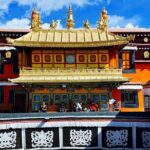
After lunch you go to Jokhang Temple, one of Tibet’s spiritual magnets. You’ll see the twelve-year-old Sakyamuni Buddha statue inside, and outside you’ll watch pilgrims prostrating as part of everyday devotion. It’s one of the most powerful “real Tibet” experiences because it isn’t a performance for visitors—it’s movement of faith in public space.
The day finishes on Barkhor Street, where you can join the kora (religious walking circuit) around Jokhang with locals and pilgrims. This is where your trip stops feeling like sightseeing and starts feeling like you’re moving with the city. You can also taste Tibetan tea at tea houses on or near the route, which is a small stop that helps the day feel human.
Dadong Village and Sera Monastery: culture that feels grounded
Day 3 takes you out of the city center in a way that’s easy on your pace. Instead of Drepung Monastery, you visit Dadong Village, described as one of Lhasa’s well-protected ancient village areas, about 25 kilometers southwest of downtown. You’ll tour the Nyimatang Monastery (built in the 11th century), take a light village walk, and see rural life at a slower speed than the temples.
One of the most valuable pieces here is the family lunch. It’s not just food; it gives you a basic window into daily rhythms—how people live, how they host, and what “normal” looks like when you’re not surrounded by tour buses.
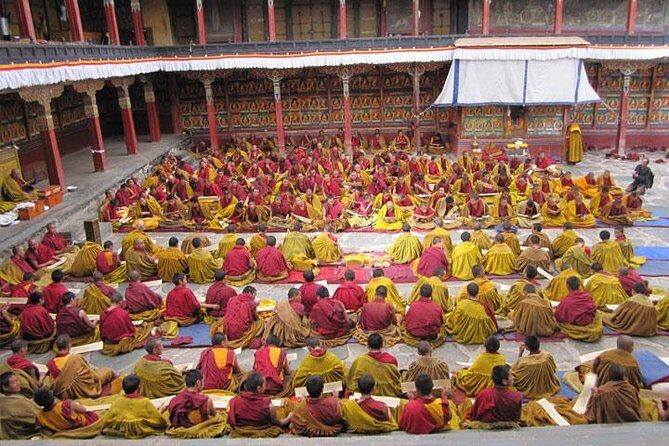
In the afternoon, you shift back to monastery life with Sera Monastery, one of Tibet’s Gelug “great three” monasteries. The standout activity is the monks’ debate session, usually around 3 to 5 in the afternoon. Even if you don’t catch every word of the arguments, the energy is clear: chanting, clapping, quick call-and-response, and constant movement.
You’ll also have time for other monastery features like the scripture printing house and to see the sand mandalas and colorful Buddhist rock paintings. This is a good day for photos, but it’s also a good day for questions. A strong English-speaking guide makes the difference between just seeing buildings and understanding why those spaces matter.
The road to Shigatse and Gyantse: the best “window seat” day
Day 4 is where the scenery starts stacking up. You drive from Lhasa toward Shigatse and cross the Gampala Pass (about 4,790 m), with a glimpse of Yamdrok-tso around 4,400 m. Yamdrok-tso is surrounded by snow-capped mountains, and on clear days it can look unreal—like the lake was dropped into the mountains by design.
You then pass the Karola Glacier by the roadside, hang prayer flags around Simila Mountain Pass at Manak Dam Lake, and continue to Gyantse. Gyantse is historically Tibet’s third largest city after Lhasa and Shigatse, and you feel that in the way the town sits and connects to the surrounding roads.
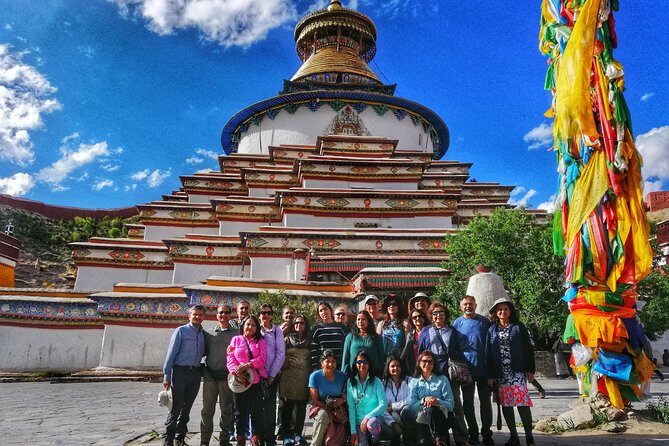
Pelkor Chode Monastery and Gyantse Kumbum are major stops here. The Kumbum is the “must see” part, and you’ll get a far view of Gyantse Fortress as well. You’re also likely to see the barley mills and barley fields (especially in summer). It’s not just pretty—it’s a reminder that Tibet’s religion and farming coexist in the same real landscape.
Everest Base Camp: long day, big altitude, and sunrise at Rongbuk
Day 5 is the heavy hitter. After getting your necessary permits, you drive toward Mt. Everest National Nature Reserve via passes including Tsola Pass (about 4,600 m) and Gyatsola Pass (about 5,248 m). The Gawula Pass (about 5,198 m) viewpoint is part of the approach, and then you ride the New zigzag road up to Everest Base Camp (about 5,200 m).
This is not a short outing. The plan gives you a full road day (around 12 hours), so you’ll want to treat it like a steady climb, not a sprint. You’ll get closer views of the Everest peak and, if time and weather cooperate, a sunset on the golden peak area from the lodging zone.
That lodging note is important. You’re not sleeping in a hotel with warm hallways down here—you’re sleeping closer to the Everest approach area, and the included details specify Rongpuk Guest House dorm bed for accommodation. That’s part of what makes it feel real, but it also means you should pack like you mean it for cold nights.
Day 6 starts early with sunrise from Rongbuk Monastery. The idea is to see the first light come over Everest from a vantage point with the mountain rising like a snow-capped pyramid. It’s one of those moments that can’t be replicated from a phone screen, because the scale hits your chest.
Then you drive back toward Shigatse. Even if your schedule feels tight, remember: the main job of day 6 is to move safely after the altitude day before, not to cram in extra walking.
Shigatse to Lhasa: Tashilunpo and the Friendship Highway unwind
Day 7 is a steady return day with a major monastery stop. Tashilunpo Monastery is the highlight, seat of Tibet’s second highest incarnation, the Panchen Lama. You’ll visit this religious center and then drive about 280 km back to Lhasa via the Yalong Valley and Friendship Highway (around 6 hours).
This drive matters. It’s not just “getting back.” It’s your buffer time to breathe, hydrate, and let your body reset after the Everest area. If you’ve felt altitude fatigue in the past, you’ll appreciate the rhythm here: monastery first, then road time, then Lhasa.
Namtso Lake from Lhasa: holy water, nomads, and high-pass viewpoints
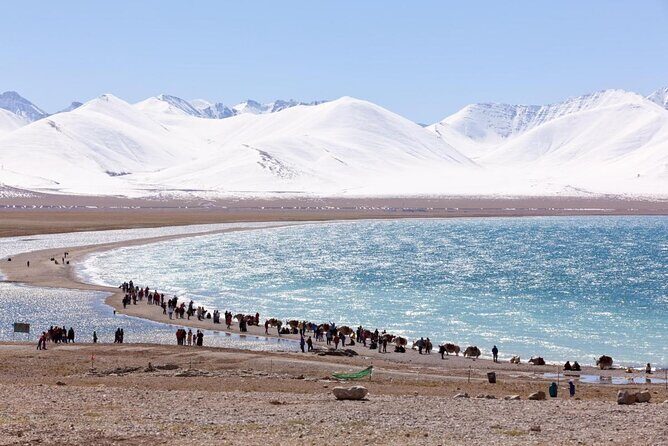
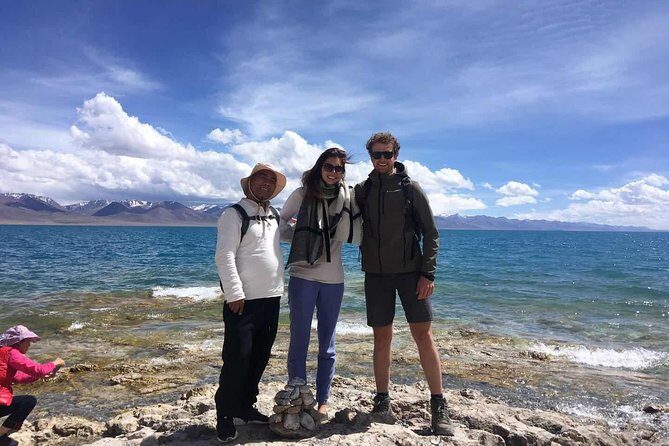
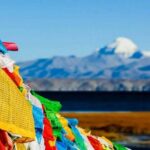
Day 8 takes you to Lake Namtso, one of Tibet’s four holy lakes and also described as the highest saline lake in the world. The route is scenic and seasonal. You’ll pass through areas where you might spot nomads with tents, grazing yak and sheep, and views of snow-capped mountain ranges like Nyenchen Thanglha.
A standout viewpoint is Lagenla Pass (about 5,190 m). From there, you get the stunning vista of Namtso Lake, and the “why” behind these routes is obvious: Tibet’s best views often reward the patience it takes to cross a pass.
The plan also includes time to do a leisurely trek around Tashi Dor Island and along the lakeshore. There’s a practical environment note here: for protection, lakeshore guesthouses were closed by the government, which is why you stay overnight in Damxung. That’s a good sign. It means your visit is planned to reduce pressure on the most sensitive areas.
Day 8 also includes a stop on the Zhaxi Peninsula and time at “Tashi Island,” noted as the largest of the holy islets inside Namtso for panoramic views. This is where you slow down for photos and just watch light shift across water and sky.
Tsurphu and Chimelong Nunnery: Karmapa roots and quiet, meaningful corners
Day 9 is more spiritual, more reflective, and less about big road scenery. After breakfast, you visit Chimelong Nunnery (Phyirmil Lung Nunnery). You’ll roam the quiet nunnery grounds and you may spot a sky burial site in the distance. You should expect this to be a “view from afar” moment, not a theme-park attraction.
Then you go to Tsurphu Monastery, seat of the Karmapa branch of the Kagyupa order. You’ll learn more about the Black Hats and the Karma Kagyupa school of Tibetan Buddhism. If you’ve liked the debate energy at Sera, you’ll probably enjoy this one too—different flavor, same sense of structured practice.
In summer (June to September), there’s also a possible Linka outing—a Tibetan-style picnic in the small village at the foot of Tsurphu Monastery. It’s seasonal, so it depends on timing and conditions, but it’s the kind of add-on that makes the day feel warm even when the air is thin.
Then you drive back to Lhasa and stay overnight in the city. That last night helps you avoid the travel-stress spiral that can happen if you fly out right after Everest or Namtso.
Price and value: what $1,299 really buys you here
At $1,299 per person, this tour isn’t cheap, but it’s also not trying to pretend Tibet is a budget destination. The real value is in what gets handled for you: Tibet Travel Permit and necessary permits (with the Chinese L visa excluded), site entrance tickets where listed in the plan, and transport by minibus with an experienced driver.
You’re also paying for altitude support, not just sightseeing. The tour includes an oxygen cylinder in the car (4L or 7L) and drinking water during the trip. Those are small items that can matter a lot when the body feels cranky at 4,000-plus meters.
The other value piece is the small-group setup with an English-speaking Tibetan guide. In practice, this means fewer dead-end moments like trying to figure out where to go inside a complex or missing the meaning of a ceremony. It’s hard to measure in dollars, but it’s easy to feel in the flow of the day.
One thing to double-check in your own paperwork: the tour details list meals and lodging under both Included and Not Included sections in a way that looks contradictory. Before you go, make sure your final confirmation spells out what’s included for your departure date. That’s a boring step, but it prevents surprises later.
Practical altitude tips that match this itinerary
This trip repeatedly takes you to high points and long road segments. So your best strategy is to plan your energy like a slow marathon, not a highlight reel.
- Take day 1 in Lhasa seriously. Sleep and gentle movement are part of the schedule for a reason.
- On Everest Base Camp day, treat it as a long climb by road. You’ll likely feel winded; that’s normal at these elevations.
- Dress like cold is guaranteed, not optional. The Everest-area overnight at Rongpuk Guest House dorm bed is not the place to rely on a thin jacket.
- Use the oxygen cylinder if you need it. It’s there for a reason, and you shouldn’t feel guilty about using it.
- Hydrate. The trip provides drinking water, but you still need to drink consistently, not only when you remember.
If you’re traveling with any medical conditions or have had altitude issues before, talk to a clinician at home. One past traveler noted a reaction while dealing with altitude medication in Lhasa, which is a reminder that your body can surprise you even when you plan ahead. Your safest move is to handle health decisions before you land.
Should you book the 10 Days Tibet Everest Base Camp and Namtso tour?
You should book if you want a structured small-group route that covers Lhasa temples, Everest Base Camp, and Namtso without forcing you to wrestle permits, tickets, or transport. This is also a good fit if you like monastery life and want an English-speaking guide to connect the dots—especially on days like Sera’s debate session and Tsurphu’s Karma Kagyupa focus.
Skip it (or choose a different style of trip) if you need a very low-altitude itinerary. Even with oxygen and a logical pace, the route takes you to serious elevations and includes a long Everest Base Camp day.
Also, consider your comfort with basic lodging near Everest. Rongpuk Guest House dorm bed is included, and that’s not the same as a city hotel bed with room service.
If you’re the kind of traveler who can enjoy a mountain sunrise, a kora around Jokhang, and long road days as part of the experience, this tour is a strong value for what it covers.
FAQ
What is the group size for this Tibet Everest Base Camp and Namtso tour?
The tour has a maximum of 12 travelers.
What is the starting point and start time?
It starts with pickup/drop-off connected to Lhasa, and the start time is listed as 9:00 am.
Do you pick up passengers from the airport or train station in Lhasa?
Yes. Airport/Train station to Lhasa city pick up/drop off is included.
Are Tibet permits included, and do I need a Chinese visa?
The Tibet Travel Permit and other necessary permits are included, but the Chinese L visa is excluded. An invitation letter for the China L visa is provided if needed.
Is oxygen provided during the trip?
Yes. An oxygen cylinder is included in the car (4L or 7L).
What are the Everest and Namtso highlights on this itinerary?
Everest Base Camp is reached by road (about 5,200 m), and you also get a sunrise viewpoint at Rongbuk. For Namtso, the tour includes a drive to Lake Namtso and time for a leisurely trek around Tashi Dor Island and along the lakeshore.
Where do you stay near the Everest area?
The included accommodation for the Everest area is listed as Rongpuk Guest House dorm bed.
What kind of walking and fitness level does the itinerary require?
The tour says you should have a moderate physical fitness level. It includes walking elements like the Barkhor kora, monastery visits, and a leisurely trek around Tashi Dor Island.
What is the cancellation window for a full refund?
You can cancel up to 6 days in advance for a full refund, with the cutoff based on local time.