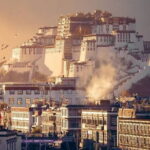
Lhasa to Kathmandu overland is one of those trips that feels like a moving postcard. In seven days you’ll go from Potala Palace and Jokhang Temple to high mountain passes, including a classic route toward Everest Base Camp, with most driving and planning handled.
I especially like that this is built around real daytime sightseeing, not just transit. You get six nights of lodging and hotel breakfasts, plus a licensed vehicle and English-speaking local guide who can explain what you’re seeing as you go.
The main consideration is altitude and basic comfort, especially around Everest Base Camp. Even with an included oxygen container, you still need to treat altitude seriously and accept that the tent night won’t feel like a city hotel, plus lunches and dinners aren’t included.
In This Review
- Key Highlights You’ll Feel in Your Bones
- Why This Lhasa-to-Kathmandu Route Works So Well
- Day 1 in Lhasa: Airport Pickup and Getting Oriented
- Lhasa City Day 2: Potala Palace, Jokhang Temple, Barkhor Street
- Day 3 Monasteries: Drepung and Sera in One Strong Day
- Day 4 Out of Lhasa: Yamdrok Lake, Karola Glacier, Gyantse, and Shigatse
- Day 5 Shigatse to Everest Base Camp: Tashilunpo, Rongphu, and the Everest Route
- Day 6 Everest Morning to Gyirong Town: Sunrise and the Drive Back
- Day 7 at Gyirong Port: Crossing into Nepal and Ending the Service
- Price and Value: What $1,703.95 Covers and What It Leaves Out
- Altitude and Comfort: The Real Rules of Tibet
- What I’d Watch Before You Book (and How to Choose Well)
- Should You Book This Lhasa-to-Kathmandu Overland Tour?
- FAQ
- What is included in the Lhasa to Kathmandu tour price?
- Are lunches and dinners included?
- Does the tour include entrance tickets to sightseeing places?
- Is breakfast provided on the Everest Base Camp morning?
- What kind of accommodation is provided at Everest Base Camp?
- Where does the tour end?
- How does the Tibet permit process work if I’m entering from Nepal?
- How does the tour handle altitude sickness risk?
- Do I need to tip the guide and driver?
- What if I need to cancel the tour?
Key Highlights You’ll Feel in Your Bones
- Potala Palace + Jokhang Temple on the first full sightseeing day, paired with an evening stroll on Barkhor Street
- Drepung and Sera Monasteries in one go, with your guide helping you decode Tibetan Buddhism through daily life
- Yamdrok Lake and Karola Glacier stops from high mountain passes where you’ll want your camera ready
- Gyantse Kumbum as a standout architectural stop, before pushing on to Shigatse for the night
- Everest Base Camp tent night and an early sunrise moment, plus a drive back toward the main road afterward
- Service ends at Gyirong Port border, which is a practical way to connect to Kathmandu without retracing steps
Why This Lhasa-to-Kathmandu Route Works So Well
This overland trip is basically a guided storyline across Tibet, starting in Lhasa and finishing at the border into Nepal. The pacing matters: early days focus on Lhasa’s sacred core, then you gradually climb into the big scenery days, then you cash in on the Everest portion before moving toward Gyirong and Kathmandu.
If you want an experience where the logistics feel managed, this route is designed for that. Airport pickup, a licensed driver, hotel stays, and breakfasts are included, which means your time goes to seeing temples, monasteries, and viewpoints rather than figuring out transport.
It also helps that this trip is made for the through-journey concept. You end at the Gyirong Port border for the next leg to Kathmandu, so you’re not stuck doing an awkward backtrack. One extra plus: reviews rate the experience highly, with 100% recommendation and a 5/5 rating reported across 21 reviews, and names like Chris, Mandy, Jamie, Norbu, Blair, Teri, Dawa Tsering, and Wang Jinhui show up repeatedly in different roles, suggesting the operator tends to staff experienced people.
You can also read our reviews of more tours and experiences in Lhasa.
Day 1 in Lhasa: Airport Pickup and Getting Oriented
On arrival day, you don’t have to wrestle with your first ticket, first taxi, or first confusing meeting point. A guide picks you up at Lhasa Airport and helps you get checked into your hotel. It’s a small thing, but it matters at high altitude when you’re trying to conserve energy.
This day is also your chance to do the unglamorous essentials: hydration, easy walking, and taking it slow. Tibet visits are won or lost on day one, because altitude is real even if you feel fine.
The tour includes airport (or train) pickup and drop-off, so if your plans change between flying and rail, you’re still covered for that core transfer piece.
Lhasa City Day 2: Potala Palace, Jokhang Temple, Barkhor Street
Day 2 is the classic Lhasa introduction, and it’s a good one.
You start with Potala Palace, described on this itinerary as the highest palace in the world, and you’ll also have a reservation fee for Potala Palace included. Just note the fine print: entrance tickets aren’t listed as included, so you may still face separate entry charges depending on how access is handled on the day.
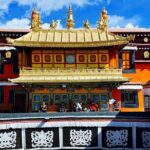
Next is Jokhang Temple, one of Tibet’s most spiritually important sites. This is where you’ll see devotion in motion—people moving through the area with purpose. If you take the time to watch rather than just photograph, your understanding tends to click faster.
Then you finish with Barkhor Street, the lively market loop around the temples. You’ll get a chance to pick up Tibetan, Nepalese, and Indian handicrafts and souvenirs. Practical advice: go with a relaxed pace, and buy only what you really want—street pricing can vary.
Day 3 Monasteries: Drepung and Sera in One Strong Day
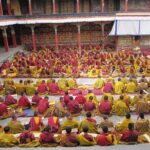
Day 3 is built around two major monasteries: Drepung Monastery and Sera Monastery. This combo works because the days before and after set your foundation, and then your guide can help connect the dots between temple buildings, monastic life, and Tibetan Buddhism traditions.
A monastery day isn’t only about architecture. You also want to notice daily routines—how people move through spaces, how chants and practices shape the atmosphere, and how the site feels lived-in rather than museum-like.
If you’re sensitive to long walks, plan for it. Monastery visits often involve uneven ground and stairs, plus the altitude. I’d rather you arrive ready for a “good tired” day than expect it to be easy.
Day 4 Out of Lhasa: Yamdrok Lake, Karola Glacier, Gyantse, and Shigatse
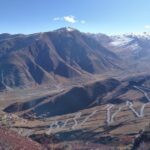
This is the big scenery day, starting with a drive up to Karo La / Kampala Pass at 4,797 meters (the itinerary’s wording uses Kampala Pass). Even at the stop itself, you’ll likely feel the thin air, so slow breathing and lots of water help.
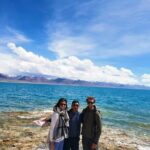
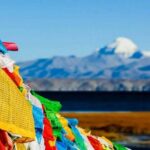
From the pass you’ll look down to Yamdrok Lake, described as turquoise and one of Tibet’s holy lakes. This stop is all about the color shift and the scale—water far below, mountains all around, and a sense of openness that’s hard to replicate anywhere else.
Then the itinerary moves to Karola Glacier and later continues along the Friendship Highway toward Gyantse. Expect more viewpoint time and photo stops between towns.
At Gyantse you’ll visit Gyantse Kumbum, noted as one of Tibet’s most stunning architectural wonders. This is a strong “wow with meaning” stop: it’s not just a pretty structure, it’s a visual map of artistic and religious symbolism.
Later you drive on to Shigatse for the night. Shigatse is your base before the Everest push, so this is where you recharge for a long sequence of days.
Day 5 Shigatse to Everest Base Camp: Tashilunpo, Rongphu, and the Everest Route
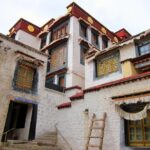
Day 5 starts with Tashilunpo Monastery, described here as the home of Panchan Lama. It’s a solid cultural warm-up before the big mountain days, and it helps keep your trip grounded in Tibet’s lived religion rather than turning it into only a photo mission.
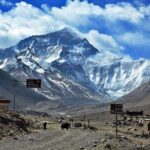
After that, you head toward Everest Base Camp via Lhatse and Tingri. This part is where the itinerary leans into the “peak of the world” idea: blue skies, high clouds, long grasslands, and mountain silhouettes that seem to multiply the farther you drive.
You’ll also stop at Rongbuk Monastery, described as the world’s highest altitude monastery. Even if you don’t want to linger, it’s worth stepping out briefly and feeling how high you are relative to everything else around you.
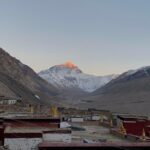
Then you overnight at Everest Base Camp in an EBC tent for one night. If you care a lot about comfort, one practical tip from prior advice is that you may prefer an overnight in a lodge at EBC instead of a tent night—just know that this depends on what your exact package offers.
Day 6 Everest Morning to Gyirong Town: Sunrise and the Drive Back
Day 6 begins early with a sunrise moment connected to Everest. The itinerary frames it as an Everest sunrise experience, and this early timing is the whole point: you’re chasing light, not sleep.
After that, the tour drives back to the main road (the itinerary cites the 318 National Highway) toward Gyirong Town. This is a long day of motion, so keep your expectations simple: you’re transitioning out of the Everest zone and into the border approach.
You’ll spend the night in Gyirong Town, which positions you well for Day 7’s border work.
Day 7 at Gyirong Port: Crossing into Nepal and Ending the Service
Day 7 is straightforward. In the early morning you cross the Gyirong Port border, and your service ends at the border.
This is one of those moments where you’ll feel how the whole trip is designed: it’s not trying to drag you all the way through Nepal on the same schedule. Instead, it cleanly hands you off at the border so you can continue to Kathmandu using Nepal-side transport.
If you’re the type who hates last-minute confusion, this structure is a plus. You’ll want to have your next-stage plans ready, because border crossings can be time-variable and you’ll be moving on from the tour afterward.
Price and Value: What $1,703.95 Covers and What It Leaves Out
The price listed is $1,703.95 per person for roughly seven days. That number is easier to judge if you break down what’s included versus what’s not.
Included value you can feel:
- Private English-speaking local guide
- Licensed vehicle with driver
- 3 nights in Lhasa, 1 in Shigatse, 1 tent night at EBC, 1 in Gyirong Town
- Hotel breakfasts (with the important exception below)
- Airport pickup and drop-off
- Tourist accident/casualty insurance
- A container of oxygen for emergency use
- 2 bottles of drinking water per person per day
- Potala Palace reservation fee
What costs extra or may cost extra:
- Meals other than the specified breakfasts: lunches and dinners aren’t included.
- Entrance tickets: the itinerary says entrance tickets aren’t included, even if Potala has a reservation fee covered.
- Flights/rail into and out of Tibet aren’t included.
- Tips aren’t required, but they’re expected.
- Single room supplement is not included.
So the big value question is this: do you want a guided, handled logistics experience with transport and most meals simplified into breakfasts? If yes, this fits. If you prefer to control every meal and ticket yourself, you’ll end up paying more attention to day-to-day add-ons.
Altitude and Comfort: The Real Rules of Tibet
Altitude here isn’t a theoretical risk. The itinerary includes high passes (like 4,797 meters at the Kampala Pass/Karo La area) and an Everest Base Camp night, which means you should build your plan around your body, not the schedule.
The tour explicitly recommends:
- Take the first day slowly
- Rest well and drink plenty of water
- Contact your guide or staff immediately if symptoms become severe or worsen
It also includes a container of oxygen for emergency use, and that’s exactly the kind of backup I like seeing on high-altitude itineraries.
Comfort reality check:
- Expect basic standards at EBC and sometimes around public facilities. One practical note from prior advice says public washrooms can be messy and are often squat-type. Pack accordingly.
- If you’re worried about sleep quality, the “tent night” detail should be part of your decision, not an afterthought. The itinerary doesn’t promise a lodge at EBC—so plan for the tent experience unless your booking details say otherwise.
Also: if you’re picky about vehicle seating, one tip from prior advice notes that you may get better views on the right side of the bus. You can’t control everything, but it’s an easy thing to try.
What I’d Watch Before You Book (and How to Choose Well)
This tour suits you best if you want:
- A through-trip that starts in Lhasa and connects to Nepal via the border at Gyirong Port
- Guided cultural time in Lhasa’s temples and monasteries
- One organized shot at the Everest region without building your own route day by day
- A group format that’s private to your group
It may not suit you if:
- You hate early mornings (Everest sunrise requires it)
- You need hotel-style comfort every night (EBC tent is a different category)
- You’re not comfortable with high altitude and long driving days
Also, check your comfort with extra costs. Entrance fees and non-breakfast meals aren’t included, so budget for them. And if you’re going solo, ask about the single room supplement early so you don’t get surprised.
Should You Book This Lhasa-to-Kathmandu Overland Tour?
If you want one package that handles transport, guides, and the main structure of a cross-Tibet journey, I think this is a smart pick. It’s strong on key cultural stops in Lhasa, then it delivers the classic high-country route toward Everest Base Camp, and it ends at the Gyirong Port border in a clean, logical way.
I’d book it if you can handle altitude responsibly and you’re okay with basic conditions at EBC. I’d hesitate if you’re very comfort-sensitive or you’re trying to keep your budget purely “tour price only,” because lunches, dinners, and entrance tickets can add up.
FAQ
What is included in the Lhasa to Kathmandu tour price?
The tour includes a private professional English-speaking local guide, a licensed vehicle with an experienced driver, airport (or train) pickup and drop-off, and six nights of accommodation across Lhasa, Shigatse, Everest Base Camp (tent), and Gyirong Town. It also includes hotel breakfasts, tourist accident/casualty insurance, an oxygen container for emergency use, taxes/fees/handling charges, guide/driver lodging and meal allowance, reservation fee for Potala Palace, and 2 bottles of drinking water per person per day.
Are lunches and dinners included?
No. Only breakfasts are provided by the hotels. Lunches and dinners are not specified in the itinerary, so you should plan to pay for them.
Does the tour include entrance tickets to sightseeing places?
Entrance tickets are not included. The Potala Palace reservation fee is included, but the itinerary notes that entrance tickets to sightseeing places are not part of the package.
Is breakfast provided on the Everest Base Camp morning?
The itinerary notes there is no breakfast on Everest morning, even though hotel breakfasts are included on the rest of the days where specified.
What kind of accommodation is provided at Everest Base Camp?
You get 1 night at Everest Base Camp in a tent as part of the included lodging. The tour data also suggests some travelers may prefer a lodge for more comfort, but that lodge option is not listed as included here.
Where does the tour end?
Your service ends at the Gyirong Port border after crossing into Nepal. The itinerary then moves you toward Kathmandu on the next stage.
How does the Tibet permit process work if I’m entering from Nepal?
If you enter Tibet from Nepal, you need a group visa applied for at the Chinese embassy in Kathmandu. The process requires an invitation letter from Tibet Tourism Bureau, and the tour data says you should allow at least 3 working days for the group visa process.
How does the tour handle altitude sickness risk?
The tour recommends taking things slowly, resting on the first day, and staying very well hydrated. It also includes a container of oxygen for emergency use, and it instructs you to contact the guide or staff immediately if symptoms become severe or worsen.
Do I need to tip the guide and driver?
Tips are not required, but they are expected.
What if I need to cancel the tour?
You can cancel up to 24 hours in advance of the experience for a full refund. If you cancel less than 24 hours before the start time, the amount you paid will not be refunded.