REVIEW · LHASA
Tibet Tour 15 Days Lhasa to Kailash Trekking Small Group via EBC
Book on Viator →Operated by Tibet Vista · Bookable on Viator
Tibet feels bigger than maps. This small-group Lhasa to Kailash adventure links classic monasteries with the sacred Kailash Kora circuit, plus an Everest Base Camp day. It’s the kind of trip where the planning matters, because the distances and altitude are real.
I love how much is handled for you: airport/train transfer into Lhasa, comfortable minibus driving, and Tibet travel permits and entrance fees covered. I also love the guide factor—people highlighted guides like Lhakpa Tenzin, with clear explanations and a relaxed, safety-minded pace during the long days.
The one thing to think about is effort: you’ll be at altitude for days, including a very high pass trek, so this isn’t a “sit back and watch” tour. Also, meal inclusions can be confusing because the details list lunch/dinner in one place and mark them as not included elsewhere—confirm what’s on your voucher before you go.
In This Review
- Key highlights worth circling
- Why this 15-day Lhasa-to-Kailash route feels efficient
- The “behind-the-scenes” value: permits, oxygen, and guides
- Day 1 in Lhasa: get settled, then get acclimatized
- Lhasa core: Potala Palace, Jokhang, Barkhor, plus Sera and Drepung
- Potala Palace (winter palace of the Dalai Lama)
- Jokhang Temple and the Buddha statue
- Barkhor Street and the kora rhythm
- Drepung Monastery (Zhebang Si) and Sera Monastery
- Road to Gyantse and Shigatse: pass views and Kumbum at Pelkor
- The Everest Base Camp day: Rongbuk sunrise and careful pacing
- Saga transition and the Shishapangma-area views
- Manasarovar to Darchen: wetlands, grasslands, and spiritual gravity
- Mount Kailash day and how the Kora starts
- Kora hiking rhythm: Zongto, mani stones, and turning back at the right time
- Days on the return: Saga, Sakya, Shigatse, and Yalong Valley
- Price and logistics: is $2,069 good value for this route?
- Who should book this tour (and who should not)
- Quick booking checklist (the stuff that actually affects your trip)
- Should you book this Tibet Tour 15 Days Lhasa to Kailash Trekking Small Group via EBC?
- FAQ
- How many travelers are on this small-group tour?
- Are Tibet travel permits and entrance fees included?
- How many nights are included in Lhasa and Namtso?
- Is oxygen provided during the trip?
- Does the tour include airport or train pickup in Lhasa?
- Are meals like lunch and dinner included?
- How far in advance should I book, and what’s the cancellation timing?
Key highlights worth circling
- Permits + entrance fees included, so you’re not chasing paperwork on arrival
- English-speaking Tibetan guide with real context at monasteries and sacred sites
- Everest Base Camp Echo bus and a Rongbuk sunrise moment if weather allows
- Oxygen cylinders in the vehicle (4L or 7L) plus drinking water during the trip
- Kailash Kora hiking days with a high point over Dromala pass (5630m)
- Max 12 travelers, which usually means less waiting and more space to ask questions
Why this 15-day Lhasa-to-Kailash route feels efficient
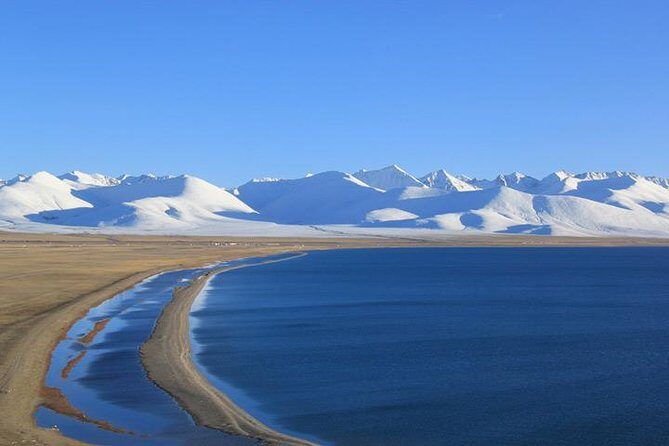
This tour is long enough to feel like a full circuit, but it’s still organized as one flow: Lhasa sights first, then the big road push toward Everest and Shishapangma-area views, then the spiritual “main event” around Mount Kailash and the Kora. That structure helps you avoid the stress of piecing together separate tours when Tibet logistics can be time-consuming.
You also get a steady rhythm of travel and stops rather than endless museum days. Some days are pure driving with key viewpoints along the way; other days are built around monasteries or a specific trekking goal. It’s a good match if you want meaning, not just checkboxes.
And because it’s capped at 12 travelers, you’re less likely to feel like a number. Smaller groups make it easier to manage timing around weather, prayer schedules, and the practical realities of high-altitude travel.
You can also read our reviews of more tours and experiences in Lhasa.
The “behind-the-scenes” value: permits, oxygen, and guides
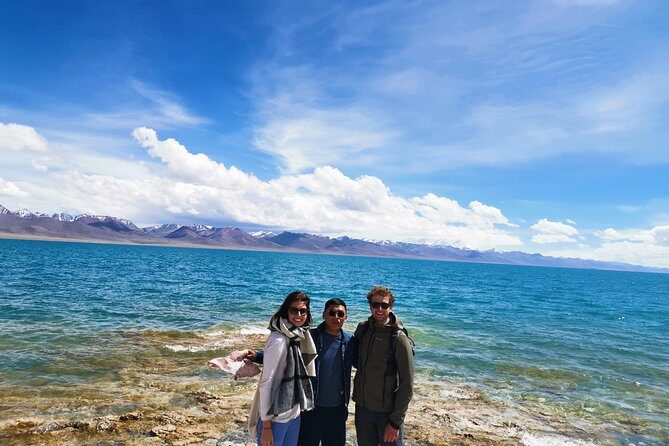
Let’s talk about what saves you energy. Tibet permits and entrance fees are included, which is a big deal in a place where rules can change and paperwork takes time. You also get a handy map, and the tour includes the Chinese visa invitation letter if needed.
On the comfort side, you’ll travel by experienced local driver in a comfortable van or minibus, and gasoline is included. Drinking water is provided during the trip, and you’re given oxygen cylinders in the car (4L or 7L). That doesn’t remove altitude risk, but it can make a noticeable difference on the vehicle days.
Most important, you’re not doing this solo. You’ll have an English-speaking Tibetan guide who’ll connect the sites—Potala Palace, Jokhang, the monasteries on the “big three” Gelug circuit, and then the Kora tradition. In the reviews, guides like Lhakpa Tenzin and Dickey were repeatedly praised for keeping things organized and helpful, which matters most when you’re tired, cold, and trying to understand why certain places feel the way they do.
Day 1 in Lhasa: get settled, then get acclimatized
You start with a straightforward arrival plan. When you land or arrive by train, you’re transferred to your reserved hotel in Lhasa (the tour names GangGyan Lhasa Hotel as one option), then you report once you’ve checked in.
This day is built for reality: rest and acclimatization. Lhasa altitude hits many visitors quickly, even if you’re in shape. Use day one to keep things calm: hydrate, go slow, and avoid “hero walks” just because you feel curious.
Also, the tour supports pickup/drop-off arrangements in Lhasa. If your travel is coming from outside China, you’ll want to follow the visa guidance carefully (more on that later in the FAQ).
Lhasa core: Potala Palace, Jokhang, Barkhor, plus Sera and Drepung
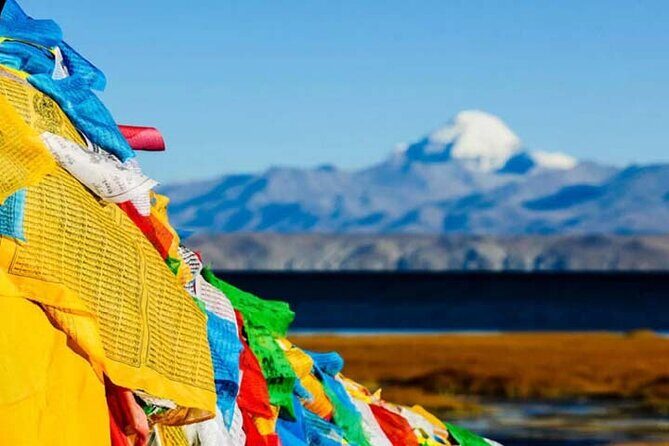
This part of the trip gives you the spine of Tibetan religious life in a compact time window.
Potala Palace (winter palace of the Dalai Lama)
The first major stop is Potala Palace, presented as the winter palace of the Dalai Lama. It’s tied to history reaching back to the 7th century in the way the guide frames the story of Tibetan kingship and governance. Even when you don’t know the details, the scale and layout communicate power and devotion at the same time.
A practical note: the time budget here is about 1.5 hours. If you’re the type who likes to linger, you may wish you had longer—but on a multi-day tour, you’re usually better off not burning your best energy on just one building.
Jokhang Temple and the Buddha statue
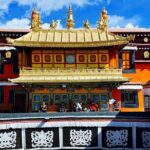
Next comes Jokhang Temple, founded in the 7th century. The tour highlights a statue of Buddha Sakyamuni at age twelve. That detail is useful because it gives you something to look for beyond architectural basics.
Again, plan on around 1.5 hours. This is a place where crowds and prayer activity can change the vibe moment to moment, so flexibility helps.
Barkhor Street and the kora rhythm
After Jokhang, you walk into Barkhor Street, where the route supports a religious circle (kora) for pilgrims and locals. You’ll also have time to explore the old market areas nearby, and there’s a small cultural touch: Tibetan tea with locals.
This is one of my favorite parts of Lhasa-style touring because it’s not about a single building. You get the street-level religion—people moving with purpose, shops and daily life orbiting around sacred space.
Drepung Monastery (Zhebang Si) and Sera Monastery
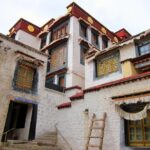
On the next day you visit Drepung Monastery and a stop at Dadong Village (southwest of Lhasa). Dadong Village is framed as an ancient Tibetan village that’s well protected. It’s a nice change of pace because it shifts you from monumental religious architecture to lived heritage.
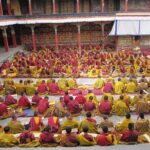
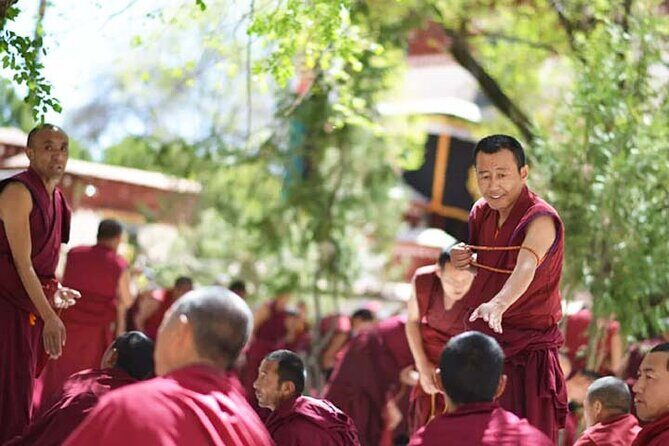
Then later comes Sera Monastery, one of the “great three” Gelug monasteries. The afternoon focus is the monks’ debate around 3–5pm (timing depends on schedules and conditions). If you like watching traditions in motion, this is usually the highlight: structured debate, chant-like cadence, and a visible education system inside the monastery walls.
Road to Gyantse and Shigatse: pass views and Kumbum at Pelkor
Leaving Lhasa, you start racking up viewpoints. This tour uses the driving time well, with multiple scenic stops that also teach you what you’re actually looking at.
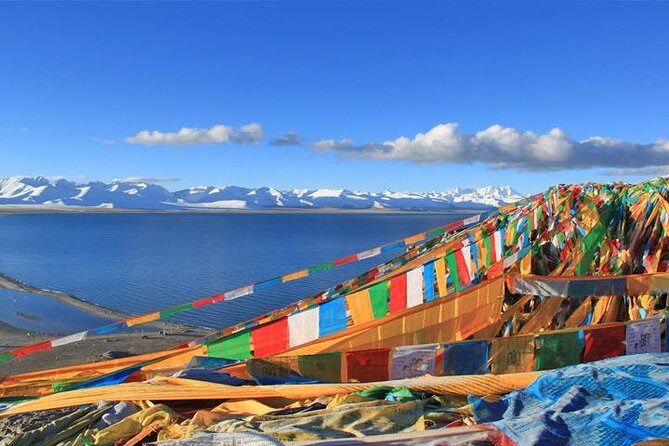
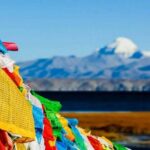
You’ll pass by Yamdrok Yumtso Lake (and see it from the road), then enjoy the Karo La Glacier roadside and hang prayer flags near Simila Mountain Pass at Manak Dam Lake. It’s a classic Tibet road-day format: stop often enough to be inspired, but not so much that the trip drags.
In Gyantse, you visit Palkhor Monastery and the Kumbum Stupa. The Kumbum is the kind of place where the details reward patient looking. You also get far views of Gyantse Fortress, which helps you connect the monastery to the geography that sustained it.
These stops are not random. They map the way Tibet’s faith, travel routes, and mountain environment all overlap.
The Everest Base Camp day: Rongbuk sunrise and careful pacing
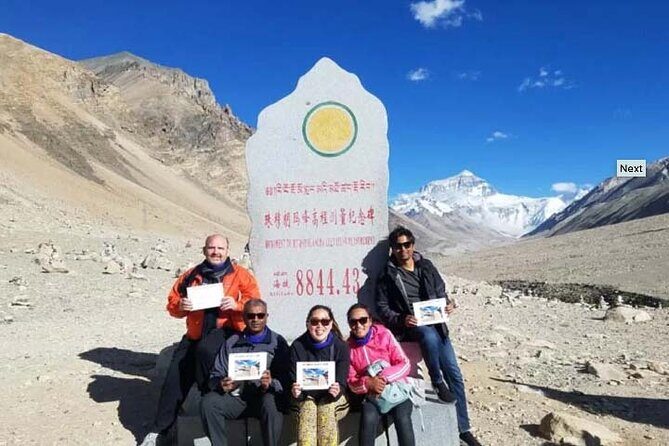
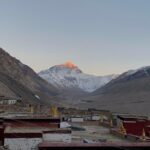
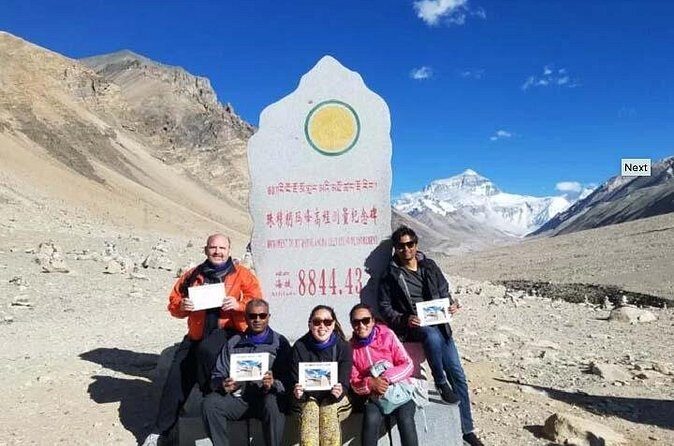
This tour reaches Everest-area sites by road, with a big travel push. You’ll move from Shigatse onward toward the Mt. Everest National Nature Reserve panorama at places like Gawula Pass (5198m).
Then you get Rongbuk Monastery in the morning with an Everest sunrise attempt if weather permits from the lodging area. The value here isn’t only the view; it’s the pacing and safety logic of the day. When you’re at altitude, the smartest tourists are the ones who don’t rush their way into problems.
You also include the Everest Base Camp Echo bus. The tour frames this as part of the site entry and platform service fees, so it’s built into the day rather than something you need to figure out last-minute.
One caution: in high-altitude areas around Everest, “if weather permits” is not a small line—it’s the difference between a dramatic moment and flat gray clouds. If you can handle that uncertainty, you’ll enjoy the experience more.
Saga transition and the Shishapangma-area views
After the Everest area, the route continues toward Saga. Along the way, you have extra scenery opportunities, including views of Mt. Shishapangma and Pekutso Lake.
This section matters because it breaks up the monotony of long driving with meaningful sight stops. It also shifts your altitude exposure gradually over days, rather than putting all the extremes on one single day.
Manasarovar to Darchen: wetlands, grasslands, and spiritual gravity
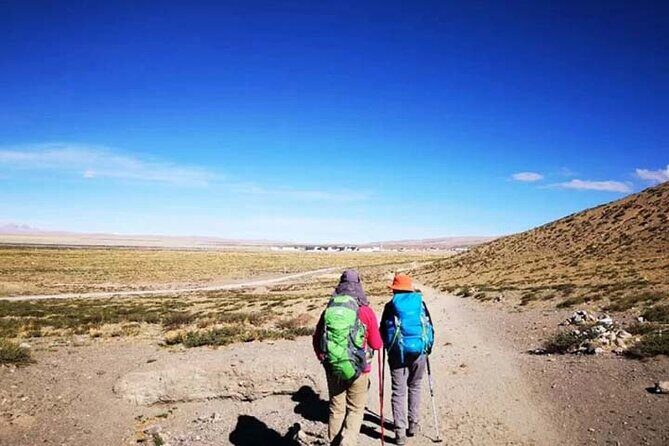
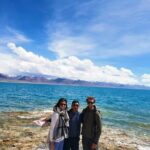
Before you reach the Kora itself, you pass through the Saga valley and stop at Manasarovar Wetland en route to Darchen. The tour frames the views between the Gangdise Range and Himalayan ranges, plus grassland and village scenes.
You’ll also drive toward Darchen, which is your staging area for Mount Kailash. At this point in the journey, I find the mindset changes. The monuments you saw in Lhasa start feeling like context, and now the focus is on a lived sacred path.
Mount Kailash day and how the Kora starts
Mount Kailash is treated as the main spiritual goal. In the morning, you take an eco-bus from Darchen to Sarshung valley, then you connect with yaks and porters at Sarshung village. The cost of yaks, horses, and porters is not included in the pack, so if you want that help, plan for it.
This matters because it affects how heavy you carry. Even if you’re in decent shape, altitude hiking with a pack can feel like a different sport.
The tour then pushes into a Kora day built around Dromala pass (5630m)—the highest pass of the Kora route. The day includes a teahouse stop for rest and you’ll see locals Tibetans prostrating along the Kora path, plus Kadoe Lake along the way. Those aren’t just pretty photos; they’re part of why people choose this route instead of a basic trek.
Kora hiking rhythm: Zongto, mani stones, and turning back at the right time
On the next Kora day, you trek about 7km to Zongto, where you can take a bus back to Darchen. Along the Kora you’ll see mani stones piles, which connect the path to prayer practice.
The trek ends around noon at the lodging place, which is smart planning at high altitude. If you’re the type who wants to keep moving until you’re spent, this tour gives you a built-in cutoff time so your recovery doesn’t get sacrificed.
The Kora is also where you’ll feel the tradeoff of a fixed route. You don’t control weather, and you don’t control people pace. But that’s also why small groups matter: fewer people means fewer slowdowns, and your guide can adjust timing when conditions change.
Days on the return: Saga, Sakya, Shigatse, and Yalong Valley
After the Kora, the trip turns back into road mode.
You drive Darchen to Saga via Lake Manasarova, then Saga to Sakya. In Sakya, you visit Sakya Monastery and the ancient Sakya town area. The stop is focused on murals, scriptures, and statues. This is a good contrast after Kailash: less about hiking effort, more about absorbing art and religious storytelling.
Then you head back toward Shigatse. The final return day follows the Yalong Valley back to Lhasa, with a viewing platform for the riverbed and a stop to visit a water mill making Tibetan incense material in summer if time permits.
On day 15, you finish back at the meeting point after completing the 15-day loop of more than 2000 km.
Price and logistics: is $2,069 good value for this route?
At $2,069 per person (based on double occupancy), the biggest question is what’s actually included—and what you’d otherwise have to pay for.
What you are getting in this package:
- Tibet travel permits and entrance fees for listed sites
- Minibus transportation and airport/train transfers in Lhasa
- English-speaking Tibetan guide
- Oxygen cylinders in the vehicle and drinking water
- Accommodations (twin-sharing) in Lhasa and Shigatse; three nights in Lhasa and one night in Namtso are specified
- Everest Base Camp Echo bus (plus platform service fees)
Single rooms cost extra and are subject to availability. Meals are the one item I’d treat carefully: the information you have mixes inclusions and exclusions for lunches and dinners, while breakfast is clearly listed as included for 7 days. Before you book, ask the operator to confirm exactly which meals are covered so you don’t end up paying twice or underplanning cash.
Value-wise, this price makes the most sense if you want a “one deal” solution. In Tibet, arranging permits, entrances, and drivers separately is where time and stress pile up. If you’d hate to coordinate multiple moving parts, packaged logistics like this usually pay off.
Who should book this tour (and who should not)
This works best for you if:
- You want Lhasa culture plus Kailash without doing heavy planning
- You’re comfortable with altitude days and high passes
- You like the idea of an English-speaking guide making sense of what you’re seeing
- You appreciate a small group pace (max 12 travelers)
It may not be your best fit if:
- You’re expecting a mostly easy sightseeing plan
- You’re very sensitive to altitude and want a trip with fewer high-elevation demands
- You need crystal-clear meal inclusions without asking questions (confirm first)
Quick booking checklist (the stuff that actually affects your trip)
Here are a few practical notes that can make or break readiness:
- Plan for permit timing: you should book at least 20 days in advance so your Tibet permit can be arranged.
- You’ll need to provide passport and China L visa photocopies at least 20 days before travel.
- Permits delivery is described as going to your address or hotel in one city of China.
- Your voucher includes contact info so you can send documents to the tour supplier.
- If you’re flying in from Kathmandu, the guide notes you may need to apply for a Tibet group visa via the China Embassy in Kathmandu, and the China L visa guidance changes depending on your routing.
Should you book this Tibet Tour 15 Days Lhasa to Kailash Trekking Small Group via EBC?
If you want a single trip that covers Lhasa’s major spiritual landmarks and then turns into the Kailash Kora you came for, this is a strong option. The inclusion of permits, site entrances, transport, oxygen in the vehicle, and a small group size is exactly what helps this kind of route feel manageable instead of chaotic.
I’d book it if you’re ready for real altitude days and you’re okay with weather uncertainty around sunrise and views. I’d hesitate if you want total flexibility on trekking pace or if you haven’t confirmed meal coverage clearly enough to plan your budget.
If you do book, email the operator before departure and ask for the meal breakdown shown on your voucher, plus whether you should plan extra costs for yaks/porters on the Kailash portion.
FAQ
How many travelers are on this small-group tour?
The tour has a maximum of 12 travelers.
Are Tibet travel permits and entrance fees included?
Yes. Tibet travel permits and entrance fees for the listed tourist sites are included.
How many nights are included in Lhasa and Namtso?
The package includes three nights’ accommodation in Lhasa and one night in Namtso.
Is oxygen provided during the trip?
Yes. Oxygen cylinders are provided in the car, listed as 4L or 7L, and drinking water is provided during the trip.
Does the tour include airport or train pickup in Lhasa?
Yes. Pick-up and drop-off service from the airport and train station to Lhasa is included, with arrangements noted as needing coordination by the tour supplier.
Are meals like lunch and dinner included?
Breakfast is included (7 breakfasts are listed). For lunches and dinners, the information you provided shows mixed details, so you should confirm what your voucher states before you travel.
How far in advance should I book, and what’s the cancellation timing?
You’re advised to book at least 20 days in advance so the tour operator can arrange your Tibet permit. For cancellations: a full refund is available if you cancel at least 6 full days before the start time; a 50% refund applies if you cancel 2–6 full days before; no refund if you cancel less than 2 full days before.