REVIEW · HONG KONG SAR
Private Half-Day Walking Tour of the New Territories Region in Hong Kong
Book on Viator →Operated by Big Foot Tour · Bookable on Viator
Hong Kong’s New Territories has a quieter soul.
This private half-day walking tour threads together the Ping Shan Heritage Trail and some of the area’s oldest religious sites, including Tsui Shing Lau pagoda. I like that it’s built for people who want real local context, not just photos from a tour bus, and I also like the smart mix of temples, ancestral halls, and street-level village life. One possible drawback: you’ll cover about 5 km with some steep slopes, so comfy shoes matter.
Because it’s private, you can set the pace with your guide. I particularly enjoy how the route strings together multiple stops along Tsui Sing Road, so each turn feels like a new chapter instead of a checklist. The walking is also very manageable for a half day, especially since most site entry is free.
My only caution is timing and weather: this experience requires good weather, and the schedule runs in the morning with a fixed start (10:00 am) from Tin Shui Wai MTR. If your day depends on flexible plans, you’ll want to be ready to adapt.
In This Review
- Key highlights worth your time
- Why Ping Shan’s heritage trail beats a city-only Hong Kong day
- Walking route: what the 4 hours really feels like
- Tsui Shing Lau pagoda: your first old-world anchor
- Tsui Sing Road stops: Earth God Shrine and classic village details
- Temples and ancestral halls: Yeung Hau, Hung Shing, and the family architecture
- Sheung Cheung Wai: pausing inside a 200-year-old walled village
- Private guide reality: English-speaking, licensed, and tuned to your group
- Price and value: what you’re paying for at $213.20 per person
- Getting there: Tin Shui Wai start and Yuen Long finish
- Who should book this New Territories walking tour
- FAQ
- FAQ
- Where does the tour start and end?
- How much walking is involved?
- Is this tour private, and can I choose my group size?
- Are admissions included?
- Is food or drinks included?
- What if the weather is bad?
- Should you book this tour?
Key highlights worth your time
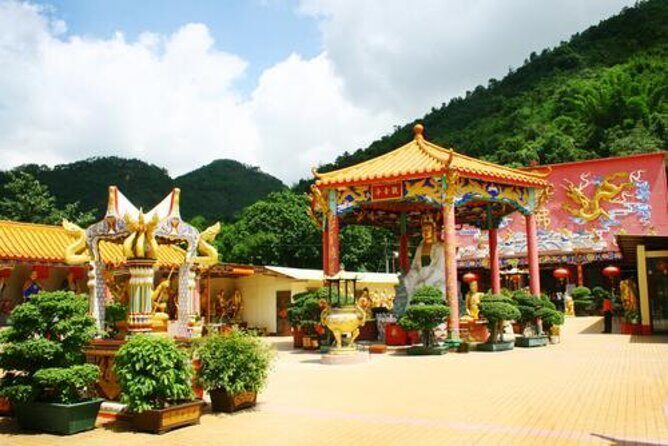
- Tsui Shing Lau: one of Hong Kong’s oldest pagodas, your first big visual anchor on the trail
- Ping Shan Heritage Trail: a long, steady stretch (about 3 hours) through multiple villages and sacred buildings
- Earth God Shrine moments: a photo-friendly stop along Tsui Sing Road
- Yeung Hau Temple, Hung Shing Temple, and more: a concentrated dose of temple-and-family architecture
- Sheung Cheung Wai: a 200-year-old walled village you pass through
- Private, English-speaking guide: licensed guide plus local commentary, tailored to your group size
Why Ping Shan’s heritage trail beats a city-only Hong Kong day
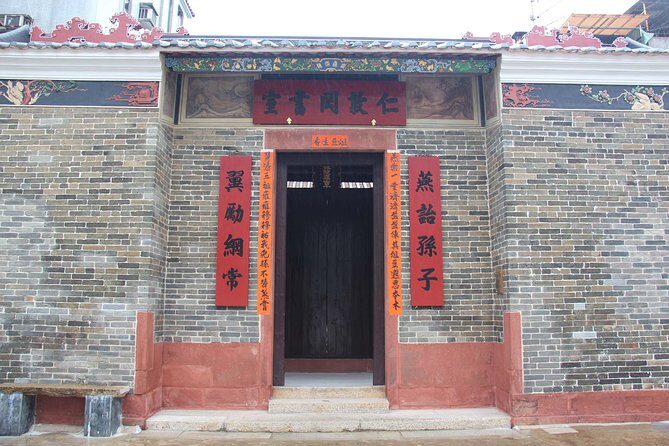
A lot of Hong Kong itineraries focus on skyline views and fast museum stops. This one slows things down in a good way. You’re walking through the Yuen Long district on a route locals would recognize, passing through villages and sacred sites that still shape daily life.
What makes it feel different is the structure. The tour starts with a landmark (Tsui Shing Lau), then keeps feeding you “small but meaningful” places: temples, ancestral halls, study halls, and shrines. Instead of spending your energy figuring out what to look at, your guide helps you connect the names and functions to what you’re seeing on the street.
Also, you’re not stuck in a huge group. It’s a private tour, and you can choose your private group size. That matters here because the pace is part of the point—you get time to ask questions and keep moving without feeling rushed.
You can also read our reviews of more walking tours in Hong Kong SAR

Walking route: what the 4 hours really feels like
The tour runs about 4 hours total and is paced as a true walking experience, not a drive-by. The anchor block is roughly 3 hours on the Ping Shan Heritage Trail, then you have shorter stop-and-look segments around 10 to 20 minutes each.
The walking distance is about 5 km, with some steep slopes. That’s not “traumatic hike” territory, but it is enough that you should plan like a walker, not like a casual stroller. If you’re the type who wears worn-out flats and hopes for the best, don’t. I’d treat this as a real walking day.
You also get a clear start and finish plan: the meeting point is Tin Shui Wai, Hong Kong (with a start time of 10:00 am), and the tour ends at Yuen Long Railway Station. After your last stop, your guide leaves you at the MTR, and they’ll help with directions if you ask.
Tsui Shing Lau pagoda: your first old-world anchor
You begin on the Ping Shan Heritage Trail with Tsui Shing Lau Pagoda, described as one of Hong Kong’s oldest pagodas. This is a strong opening move because it instantly gives the area context. You’re not guessing why the rest of the route matters—you can see that this place has long spiritual and community roots.
From there, the trail meanders through villages such as Hang Tau Tsuen and Hang Mei Tsuen. That “meander” detail is important. The route isn’t trying to impress you with speed. It’s designed for slow observation: old structures, how buildings sit in the village layout, and where people gather around temples and halls.
If you like heritage that feels lived-in (not staged), this first stretch is the kind of place that makes your camera work easier. You’ll naturally want to stop, look, and then ask the guide what you’re seeing.
Tsui Sing Road stops: Earth God Shrine and classic village details
As you continue along Tsui Sing Road, you’ll catch sight of the Shrine of the Earth God. The tour even frames this as a moment to snap pictures. That’s practical: if you come prepared with a camera-ready mindset, you won’t miss the small, high-reward corners that can disappear on a rushed walk.
You’ll also pass by other notable stops tied to the Ping Shan Heritage Trail experience, including areas like Ching Shu Hin and a historic police station in the vicinity. Not every heritage tour includes the “everyday and civic” pieces alongside temples, so I like that this route acknowledges more than purely religious architecture.
The guide’s commentary is a big part of why these stops connect. Religious sites and ancestral halls can feel confusing if you just look at them as buildings. Here, you’re given context for how these places fit into local life and how people relate to them as part of the village scene.
Temples and ancestral halls: Yeung Hau, Hung Shing, and the family architecture
This is where the tour earns its name as a heritage walk. You’ll visit and pass by several major places, including:
- Yeung Hau Temple (time on site is about 20 minutes)
- Hau Wong Tang Hall (listed among the key sights)
- Kun Ting Study Hall (about 20 minutes)
- Hung Shing Temple (about 20 minutes)
- Yu Kiu Ancestral Hall and Tang Ancestral Hall (short time stops, around 10 to 20 minutes)
What I like about clustering these is that you see different “roles” in one route. Study halls and ancestral halls represent learning and family lineage. Temples represent worship and community rhythms. When you see them close together, you start to understand the logic of the village layout and why these structures show up repeatedly along the heritage trail.
There’s also a practical side. Since many stops are free to enter, your time goes into looking and learning rather than managing admission lines. The itinerary lists ticket entry as free at multiple points, so you’re mostly just paying attention and keeping your feet moving.
You can also read our reviews of more private tours in Hong Kong SAR




Sheung Cheung Wai: pausing inside a 200-year-old walled village
Not every walking tour gives you a “pause moment,” but this one does. You pass through Sheung Cheung Wai, a 200-year-old walled village.
A walled village isn’t just an interesting structure on a map. It’s a clue about how communities organized space, safety, and identity over time. In plain terms: it helps you see that the heritage trail isn’t only about temples—it’s about how people built their everyday lives and then kept those patterns recognizable.
This stop also fits the tour’s overall tone: gentle, observant, and rooted in real neighborhood geography. If you want a break from constant reading labels, this is the kind of place where you can let your eyes do some work and let the guide explain the rest.
Private guide reality: English-speaking, licensed, and tuned to your group
This is a private tour with an English-speaking licensed tour guide. You get expert commentary and local insights, and the guide can tailor the group experience because you can choose your private group size.
The best sign of quality here is how the guide approach is described: extremely knowledgeable and kind. That combination matters on a heritage walk, because you want accuracy, but you also want a guide who can make the details feel approachable instead of lecturing.
In practice, that means you’re more likely to ask questions like:
- What does this building type do in village life?
- Why are these landmarks connected on this trail?
- What should I notice as we walk?
And when you finish, your guide doesn’t dump you in the middle of nowhere. You end at Yuen Long MTR Station, and if you need help with directions, you can ask.
Price and value: what you’re paying for at $213.20 per person
At $213.20 per person for a roughly 4-hour private walking tour, you’re paying mainly for two things: a licensed guide with commentary and the privacy that lets you move at a human pace.
Here’s the value logic I’d use:
- Many site entries are listed as free, so you’re not paying admission at every turn.
- The tour includes a long, structured walking block (about 3 hours on the heritage trail), so you get more “on-foot time” than short hop-on/hop-off style tours.
- You can choose your private group size, and there’s mention of group discounts, which can soften the per-person cost if you’re traveling with others.
What is not included is also part of the value equation. Transportation to/from attractions (if any) isn’t included, and you should expect personal spending (the guide suggests around $20 USD or $150 HKD for the duration). Food and drinks are also not included if needed, so plan on grabbing something nearby before or after.
If you’re the kind of traveler who hates wasting half a day figuring out where to go, a guided private walk like this can feel like a good bargain even before you factor in the guide’s context.
Getting there: Tin Shui Wai start and Yuen Long finish
The tour starts in the morning at 10:00 am from Tin Shui Wai MTR Station. Hotel pickup is offered, which can save you time if your base is close enough for a convenient pickup.
After the walking sequence, the tour ends at Yuen Long Railway Station. This is handy because it gives you an easy end-point for onward travel. And since the guide stays helpful through directions, you’re not left playing guesswork with the last train.
Because the tour is close to public transportation (it notes it’s near public transportation), you shouldn’t feel trapped in a remote corner. Still, I’d plan your day so you’re not rushing right after the tour—think “head to lunch,” not “make a strict appointment in five minutes.”
Who should book this New Territories walking tour
This fits best if you:
- Want a private experience with an English-speaking guide
- Enjoy walking and want heritage that feels connected to everyday village life
- Like temples, ancestral halls, and meaningful places more than theme-park attractions
- Prefer a half-day plan that doesn’t drag into a full sightseeing marathon
It might be less ideal if:
- You struggle with steep slopes and want minimal walking
- You need fully flexible timing, since it runs on a fixed morning start
- You’re traveling with limited mobility and want an itinerary without any hill work (this is described as moderate walking, not easy strolling)
FAQ
FAQ
Where does the tour start and end?
It starts at Tin Shui Wai, Hong Kong with a 10:00 am start time, and it ends at Yuen Long Railway Station.
How much walking is involved?
The tour involves around 5 km of walking, with some steep slopes.
Is this tour private, and can I choose my group size?
Yes. It’s a private tour, and you can choose your private group size.
Are admissions included?
Many of the listed stops on the Ping Shan Heritage Trail are marked as free, so you likely won’t pay admission at each site.
Is food or drinks included?
No. Food and drinks aren’t listed as included, so you should plan to cover your own.
What if the weather is bad?
The experience requires good weather. If it’s canceled due to poor weather, you’ll be offered a different date or a full refund.
Should you book this tour?
If you want an authentic slice of Hong Kong beyond the usual skyline routine, I think this is a smart pick—especially because it’s private, guided, and built around iconic local landmarks like Tsui Shing Lau and Sheung Cheung Wai. Just go in with sturdy shoes, accept that it’s a real walking day with some slopes, and you’ll come away with a clearer sense of how the New Territories still works.